

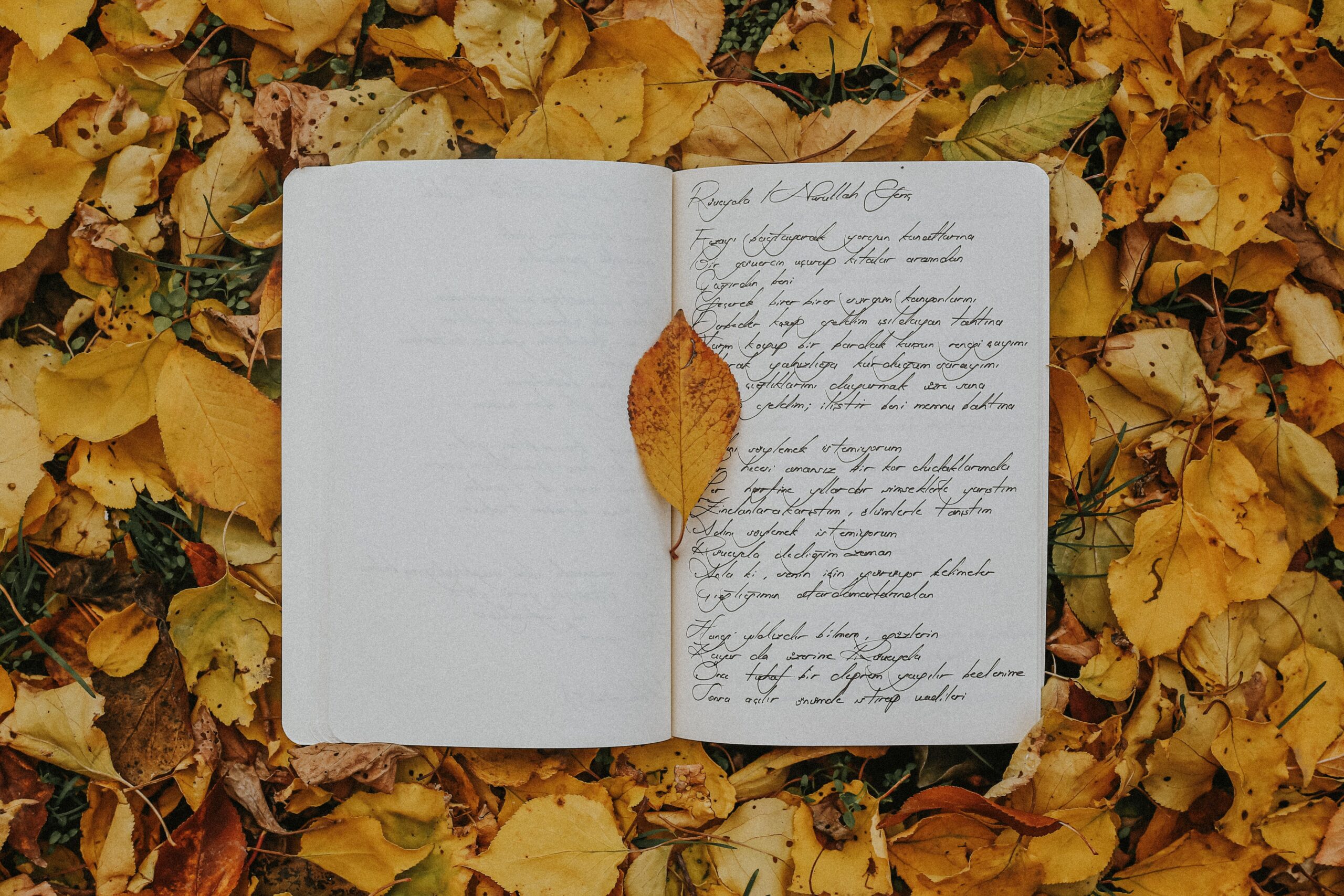
“No nature poems, please.” It seemed an odd request for a poetry magazine. I don’t even remember the name of it now. It was one of many thousands with listings in the 1994 Poet’s Market, a compendium of poetry journals and their submission guidelines. There at the end of its blurb, italicized for emphasis, was the strange plea—no nature poems, please.
If it was just the one publication, I might not have noticed. But as I leafed through the pages, I saw it again and again, always at the end of the blurb, always italicized for emphasis—no nature poems, please. I didn’t quite know what to make of it. Was this merely a device to turn away a kind of stereotype, the rhyming ode to butterflies and sunshine? Would a spared down, mytho-poetic take on bear scat, à la Gary Snyder, be more acceptable? Was the nature poem merely falling out of fashion, or was something more profound going on?
What stuck with me most, though, was the very notion of a “nature poem.” What is such a thing? How in this age of collapse and dislocation do we define it? How were these editors defining it?
We have some inherited notions of the nature poem. It comes out of a long tradition. It is about a “nature” that is out there, an object for the poet’s gaze. And that gaze peers largely from the Western canon. We might place the nature poem beside nature photography as it is highly observational. Traditionally, it bears the feeling of adulation, with the poet cast as a small thing interpreting a large and mysterious apparition.
But in the present age, as we push the biosphere into the final stages of collapse, does the nature poem still mean what it used to mean?
Of course, to define the nature poem you first must define nature, which is tricky. The human defining nature takes the pose of someone pointing away from themselves at something else. Yet nature is also the pointer and the pointing. Nature, if granted its full measure, is properly construed as everything. It is space and time and all the relationships and particulars in between, including stars and sand grains, songbirds and weather, photosynthesis and seahorses, love and anger, lions and gravity, trees, house timbers, kitchen tables. Nature, we could say, is that entity, process and mystery out of which everything arises, including us.
With this rounder, more inclusive view of nature, the notion of a separate category of poem called the nature poem feels odd. If there is to be a special category, perhaps it should be the non-nature poem. We could call it the anthro-poem. But again, where would you find such a thing? That is, where does nature end and the human begin?
***
A few weeks after my encounter with “The Poet’s Market,” I was on a Greyhound bus on my way to Denver. It was night. Our darkened tunnel with its hooded aisle lights raced through an even darker tunnel of highway. I looked around at the tilting, bobbing heads and thought, “I could write it now,” the non-nature poem, that is. There we were, humans only, encapsulated in a machine, the world outside our windows hidden by night, indecipherable. No nature in there, right?
But someone must have had an apple in their bag, which was filling the cabin with the sweet tang of an apple orchard. And there was the watery chorus of our own breathing, and with it the watery reminder of our reciprocal intimacy with plants. Our craft was built with steel dug from mountains, fueled by the compressed and composted residue of ancient life layered on ancient life. Our wheels were round, the signature shape of nature.
And we were rolling on a planet rolling toward a rising sun. Out my window a thin line of red appeared on the horizon, as if it had been slit and risen with blood. Milky pools of mist hung in the folds of a pasture. The bus banked a long curve and through the shoulders of two hills a shaft of light found a chestnut mare standing alone in a field, igniting in the haze around her a halo of rainbow luminescence.
I gasped, and then looked down the rows to see if anyone heard me, but everyone was asleep. I wanted to nudge the person ahead of me and tap the glass, saying, “Hurry, look.” Instead I gathered pen and journal and followed an instinct familiar to poets, to record the sublime indication, the brief revelation, to not let such magic be lost to a world literally racing by. And then I laughed to myself; writing a nature poem again.
When the bus arrived in Denver, Colorado, I had a couple hours to kill waiting for my ride, so I wandered over to Tattered Cover Books, Denver’s largest bookstore, and found the poetry section in the magazine racks. I was curious to see how no nature poems, please was playing out there.
As for nature, human and non-human, things were not looking good. It was the beginning of globalization, when a raft of exploitative trade laws greased the rails for a whole new level of exploitation. It was not a good time to be a rainforest, a river, a local dialect, or a small-scale farming culture. And Bill McKibben’s once lonely cry about climate change, first uttered in 1988 with the publication of The End of Nature, was being echoed by a loudening chorus of very alarmed scientists.
So I was naturally curious about what poetry was seeing. What did it have to say about all this? I picked up one journal then another, scanning the contents, looking for clues. Gradually I realized, at least according to what I could detect in my little, informal sample, the answer was nothing, nothing at all.
These were publications popular enough to earn a place in the racks of Denver’s largest bookstore, and included such stalwarts as the Paris Review and Poetry. Like Poet’s Market, they arrived via the marketing of poetry, the business end of the stick, and as such I felt they represented poetry in an “official” sort of way. If we can speak of a poetry establishment, the publications before me seemed its product.
Hearing echoes of no nature poems, please, I put the last quarterly back on the rack and stood there feeling strangely dislocated, and a little ashamed, “Who am I, some sort of poetry cop?” These were poems, and as such they had to be whatever they wanted to be. And many were brilliant. But I felt I had stumbled onto something. Or more accurately, I felt I had stumbled onto the absence of something, a silence where there should have been a clamor.
A couple racks over, toward the back of the store, I noticed some magazines I recognized and walked over. It was the environmental section, and as a lifelong environmentalist, it was familiar territory for me. Here was the clamor, if not the poetry. Science, not literature, was the language tradition here. Having studied Environmental Health in college, I had long become used to scientific terminology. It was only later, when I became a poet, that I discovered the difficulty of trying to put any of this terminology into poems. And that struck me as significant. I often wondered, what if we were to relate to nature through a poetic lens, rather than a scientific one? Might our relationship with nature be less objective, more familial? I looked back at the poetry stacks. Only ten paces away. How did this happen?
Then I looked over and saw a cluster of magazines about woodworking, another about computers. There was an especially long section on cars and hot rods, but also a place for knitters, bass fishers, body builders, gardeners, gamers.
How odd it seemed. All these varied categories of human interest, each depending on the same invisible: nature. Without nature, no wood to work, no wool to knit, no bass to catch, no body to build, no poems to write. And yet the awareness of and concern for this nature was concentrated and divided off into a tiny section. We may need nature, may breathe and be nature, but unless our identity includes “environmentalist” we’re not likely to fight for it, let alone visit the little rack at the back of the store.
Our notion of wilderness is marked by an absence of fences. Where the fences end, wilderness begins, and goes until the fences start up again, where the land becomes demarcated and divided, contained and tamed. What we don’t realize is this same thing has happened inside us. In modern society we are as mapped and subdivided as the landscapes around us. When the editor stipulated no nature poems, please, who was stipulating what?
***
A few years later I noticed “no nature poems, please” disappeared as a submission guideline from the Poet’s Market. I also began noticing MFA programs offering special disciplines in things like “eco-poetics” and “environmental literature.” As someone who would be placed in the category of “environmentalist,” I should have been pleased to see these new disciplines coming into existence. But what I felt was yet more categorization and division, more demarcation. Nature seemed reduced to me by these categories, not enlarged. I was listening for a defense of nature by poetry at large, poets defending nature as if by, well, second nature. That is, defending nature not because they are eco-poets, but because they are poets.
Writer and translator Robert Bly describes just such a defense in his book News of the Universe: Poems of Twofold Consciousness. In Europe, in the late 1700s and into the mid-1800s, an increasingly analytical and utilitarian view of nature was sweeping through the culture. Poets like William Blake, Novalis, Gérard de Nerval and Goethe fought back.
Free thinker! Do you think you are the only thinker on this earth in which life blazes inside all things? Your liberty does what it wishes with the power it controls, but when you gather to plan, the universe is not there.
— Gérard De Nerval, 1854
This movement has been lumped in with Romanticism, but Bly saw something more combative there. Bly saw poets defending the integrity and divinity of nature itself, which was being systematically undermined by a system of rationality that Goethe described as “grey, monstrous and death-like…as if facing a ghost.”
That ghost is everywhere now. What could be more “grey, monstrous and death-like” than a data center, or breezy techno-optimism in the midst of such widespread biotic collapse? 226 years later we can still feel Novalis’ prophetic longing…
when geometric diagrams and digits
are no longer the keys to living things...
***
Is the answer to no nature poems, please more nature poems, please? It couldn’t hurt. But that still leaves us with the false category of the “nature poem.” I think it’s something more like—tear down the walls, break up the categories, open the channels. Allow poetry to flow into science, science into prayer, prayer into nature, nature into poetry, and around and around let it go. Interpenetration is in the nature of things. We could use some now amongst the ranks of disciplines which clamor to explain the world to us: science, environmentalism, politics, psychology, religion.
In his essay Nature, Ralph Waldo Emerson describes walking down a country lane outside Boston amongst twenty or thirty farms. “Miller owns this field, Locke that, and Manning the woodland beyond. But none of them owns the landscape.” There is only one, he says, “whose eye can integrate all the parts, that is, the poet.” The poet, beholden to no particular category or ideology, is a natural integrator. Perhaps this is why poetry seems to resist environmentalism. It doesn’t want to be categorized, to own one farm or another, so to speak. It wants the freedom to roam the whole landscape.
To varying degrees, we all have Emerson’s poet inside us. Whenever we approach the world with feeling and receptivity, we invoke it, and society needs that part of us right now. It is an age of irony and contradiction and this is one of them. If we have forgotten what air is, have lost sight of its divine formula—plant and animal breathing life into each other—who but the poet to remind us? If we have lost our enchantment with nature, who but the poet to re-enchant us, to retune our senses to nature’s hidden energies and mysteries? For every scientific explanation of nature, there is a poetic explanation.
The poetic approach engenders certain skills and expectations: a deep intensity of observation, the freedom to see the sacred anywhere and everywhere, the courage of intuition, the determination to make words meet their subjects with fidelity and power. Useful qualities for a craft viewed as having no practical use.
But it’s not just human society that needs the poet, it’s societies of birds and reptiles, forests and coral reefs. Nature, slowly collapsing into silence, calls out louder than ever for the poet. Now we all need what the poet brings: the broken-open hearts of words, the wild articulation, the howl.


Comments
It’s not so much that we “don’t” but “how” we talk about nature. It all goes back to the Greek language problem and Plato. Once before there was written language, most spoken languages did not make a distinction between the speaker what was spoken to/about. When these languages began to be written down, they were derived directly from the spoken word. The big exception was Greek, where the written language was fundamentally different from the spoken. Greek written language introduced a fundamental duality of subject and object. This duality created a separation – rupture – between the speaker and the other, that is today manifest as the separation between the doer (us) and the receiver (nature) – no nature poems please! Poetry however, has remained the one realm of the written word that was able to transcend this duality.
P.S. Written European languages were heavily influenced by the Greek and continued this duality between subject and object. It is interesting, that Plato’s writing attacks the bards and poets for crippling the mind. Also worth noting is that the “New Testament” of the Bible was written in Greek.
Yeah, I see this as an aspect of language we should just accept. "Nature" may be subject to the duality inherent in language, but remains a fine word, in my opinion, a much better alternative to "the environment."
I like “nature” too, especially in the sense of human nature. What i’m trying to get at is the nonduality of spoken language before Greek written language introduced duality.