

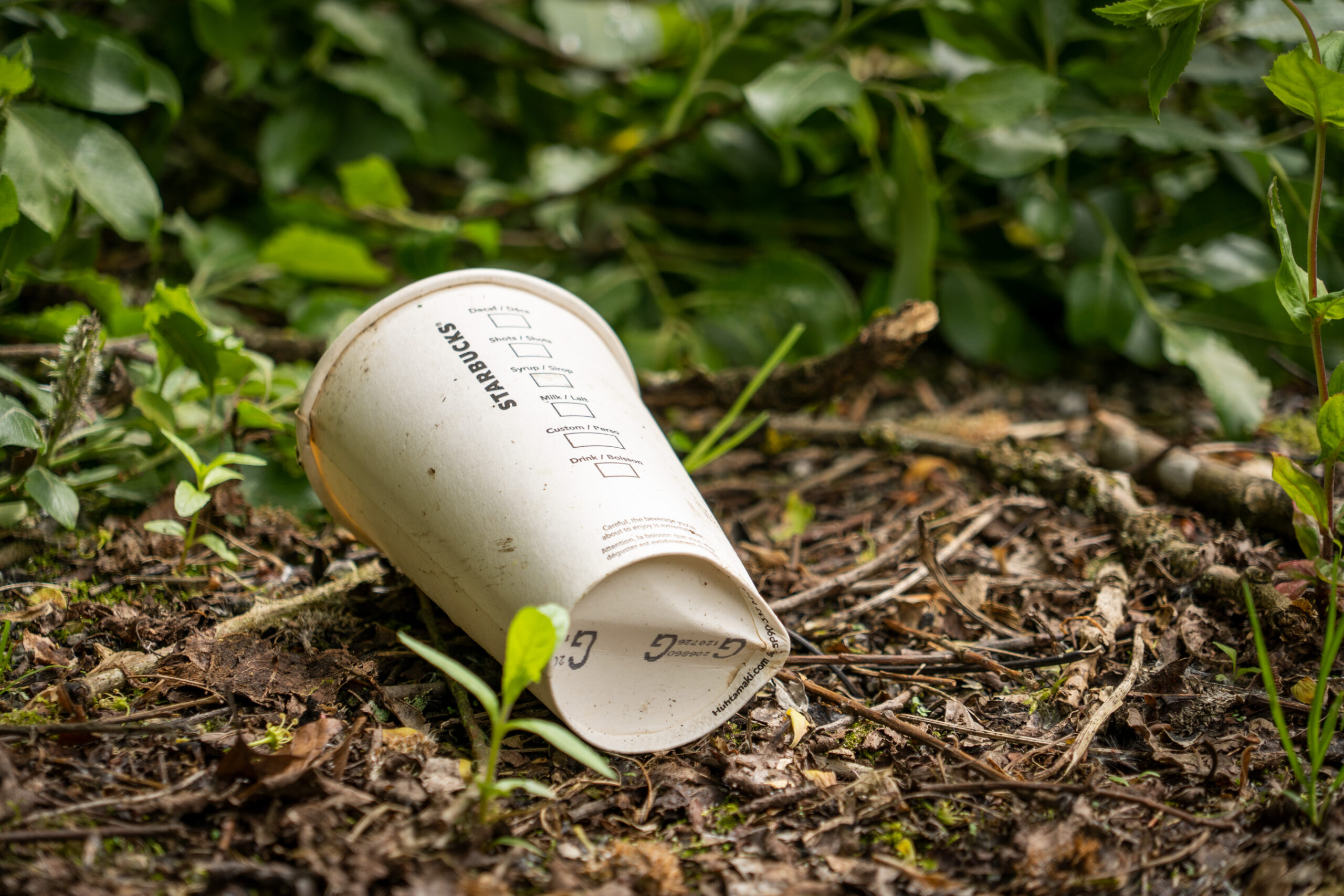
Walking through Toronto last autumn, I found the presence of Tim Hortons to be the most striking feature of the urban landscape. It felt as though I was never more than a ten-minute walk from the next branch. If you are looking for coffee there, you don’t need a map: simply follow the continuous chain of people carrying those iconic cups like a colony of ants fanning out from a nest. During our trip, we became part of this cycle. The brownies at Tim Hortons became my holiday guilty pleasure, while my partner came for the caffeine.
Because both of us were struggling with a massive case of jet lag after arriving from Italy, we explored the city at hours when the streets were still nearly empty. This was the moment when the hidden side of this Canadian ritual finally became visible. Giant trash bags were lined up along the sidewalks for collection, packed with Tim Hortons waste.
The scale is easy to understand once you look at the numbers. According to the company’s own figures, the restaurant can see sales of over five million cups of coffee daily and boasts that as many as “80% of Canadians” patronize a branch at least once a month. Industry estimates suggest that even a small independent coffee shop can sell around 200 cups of coffee a day. With an estimated 120 Tim Hortons locations in Toronto alone, even using a modest estimate of 200 cups per location per day, Toronto could be generating more than 24,000 disposable cups and lids every single day, and in reality, the number is likely several times higher for a big chain like Tim Hortons.
This mountain of trash is the direct result of a culture of convenience. It has become so ingrained that even if you sit down inside the shop, you are handed a paper cup by default. This is not a problem unique to one brand, as the competition, from Starbucks to McDonald’s to Dunkin’ Donuts, follows the same pattern.
However common the sight, these piles of waste are not an inevitable part of modern life. There is indeed a proven alternative in coffee culture that massive chains could adopt if they chose. This model can be found in the traditional bars of Italy.
Across Italy, bars are everywhere, even in remote villages. In my own Italian town, home to around 15,000 people, there are ten such establishments, and the products are similar to what we found in Canada. The bars offer every variety of coffee and a selection of croissants, though they unfortunately do not serve brownies.
The fundamental difference lies in the consumption model. In an Italian bar, you do not take your coffee with you. Instead, the barista prepares your espresso or cappuccino and serves it in a real cup made of porcelain or glass. You stir in your sugar with a little spoon, eat your pastry, pay, and eventually leave. The entire process takes no longer than the wait at a North American chain. If you have a moment to spare, you can take your coffee on a small tray to a table as you look through the daily newspapers.
When you’re finished, you leave your cup and spoon on the counter. The barista pops them into a high-pressure dishwasher that sanitizes everything with heat in just a few seconds. Then the cycle begins again. This system eliminates the use of disposable containers while fostering a sense of community. Most people have a regular bar they visit every day. You become a familiar face and, after a few visits, the barista greets you with, “The usual?”
Some bars have started offering syrups to keep up with modern trends, but most regulars view those additions with the same suspicion they reserve for pineapple on pizza.
Visiting a bar is a small moment of peace before work or a fixed ritual at the end of a lunch break. It is fast, efficient, and uncomplicated, but it does not require you to carry a cup as you rush to your next meeting. It is an act of intentional slowing down.
Implementing such a system would be feasible for large coffee chains. The initial cost of porcelain cups can be offset by coffee suppliers providing branded chinaware in exchange for visibility and exclusive supply agreements, as is the case in the European coffee sector. The commercial dishwashers used to handle this high turnover typically cost a few thousand euros per unit. For a global corporation, this represents a minor investment, especially considering the significant discounts they often receive when purchasing equipment in bulk.
The transition would also be an easy sell to the public. Marketing campaigns centered on the authentic Italian lifestyle have a proven track record of success. By framing the move to reusable cups as a sophisticated new trend, promoting “La Dolce Vita” rather than a logistical change, chains could transform the consumer experience overnight.
This is not mere theory; the resilience of the Italian model strongly suggests that the disposable ‘to-go’ culture is a choice, not an inevitability. While big chains have successfully trained consumers worldwide to prioritize mobility over the vessel, they have struggled to break the Italian habit of staying put (the spirit of “il dolce far niente” or the art of doing nothing). This cultural preference is so strong that even when international brands try to enter the Italian market, they encounter local resistance and expand more slowly than they do in other countries.
A Starbucks opened in Bologna two years ago, but the experience there feels foreign. The staff only speak English, and it seems as though very few locals ever go inside. Most people stay loyal to their regular bars because the relationship and the ritual cannot be replaced by a disposable alternative. The contrast between the trash bags lining Toronto’s streets and the reusable porcelain of Italy shows that we do not have to choose between speed and sustainability. We only have to choose which culture we want to support.





Comments
We changed commenting systems on September 10, 2026 as part of a site-wide functionality and security upgrade. Your past comments have not disappeared, and you can still log in with your old Disqus account credentials if you wish. Contact us with any questions.