

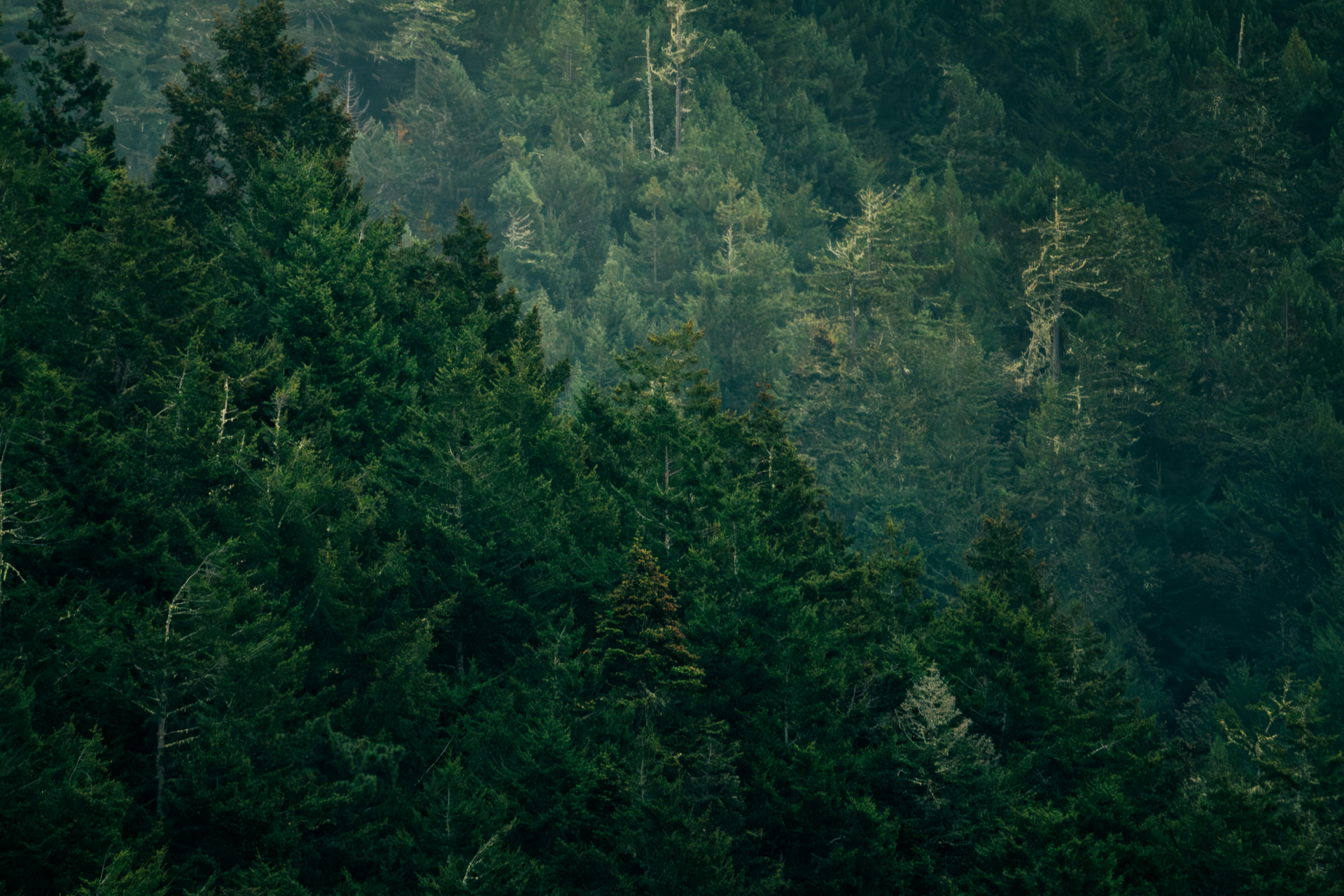
Brooke Rollins, the USDA Secretary who called the Roadless Rule an “absurd obstacle” to forest management, declared an emergency just over a year ago on 112 million acres of your national forests — 59 percent of the entire National Forest System. In the Tongass, the “obstacle” she wants removed is 800-year-old cedars. The declaration has been operating since April 2025, exempting logging projects from the environmental reviews, public comment periods, and administrative objections that have governed federal forests for fifty years.
She did this unilaterally, using an authority buried in the 2021 Infrastructure Investment and Jobs Act — an authority Congress wrote for discrete wildfire emergencies. She applied it to more than half of America’s forests, all at once.
Tom Schultz is the Chief of the Forest Service. Before that, he was a logging industry executive who co-authored papers advocating for state takeover of federal forests. Prior to this administration, the idea of a man like him running the Forest Service was unthinkable. Schultz has publicly argued that “declining timber harvest” is fueling the wildfire crisis. His theory of wildfire prevention, in effect: you prevent wildfires by not having trees.
He has been directed by Executive Order 14225, the Immediate Expansion of American Timber Production, to increase federal timber production by 25 percent over the next four years. On top of that, the One Big Beautiful Bill Act, passed in July 2025, imposed statutory timber quotas locking in industrial-scale federal harvests through 2045.
Michael Boren is the Undersecretary for Natural Resources and Environment, Tom Schultz reports directly to him. Boren is an Idaho software billionaire and Trump megadonor who spent years ravaging your national forests before being put in charge of them. He built a private airstrip on his ranch inside Sawtooth National Recreation Area and operated it for years without a permit, over intense local opposition. He was caught diverting a hot-spring-fed stream from Forest Service land onto his property, this after his company had already been hit with a cease-and-desist letter for building an unauthorized cabin on National Forest land. Then, in some kind of deranged show of force, he flew a helicopter dangerously close to a Forest Service trail crew, prompting federal officials to seek a restraining order against him. When his neighbors spoke up against his airstrip, he sued them for defamation. Every Senate Democrat voted against his confirmation. Republicans confirmed him anyway.
This is the administration running your national forests right now. They’ve already abused every piece of legislation they can find. They’ve ignored the law, where they couldn’t abuse it. They’re already using wildfire as the pretext to open protected lands to industrial-scale logging. And Congress is about to hand them the Fix Our Forests Act (FOFA).
The good faith assumption
The Fix Our Forests Act, sitting on the Senate Legislative Calendar as Calendar No. 212, ready to be called to the floor at any moment, was drafted for a Forest Service that does not exist.
It was drafted in 2023, assuming career civil servants working in good faith. Line officers exercising discretion in the direction of ecological restoration. Expanded authorities are, in practice, tilting toward prescribed fire, thinning small trees near communities, and protecting watersheds. The bill’s authors imagined an agency that wanted to do the right thing and just needed Congress to help ease the way. That Forest Service is gone. It’s been gone since January. It’s not coming back any time soon.
The agency running your national forests today is led by scoundrels who despise the very idea of public land. It’s lost more than 25% of its workforce since Trump took the oath for his second term. Its chief has publicly said the nation’s forests are in trouble because they’re not being logged enough. That’s his theory of wildfire prevention: you prevent wildfires by not having trees. The agency is running statutory timber quotas under a 112-million-acre emergency declaration. And it’s openly using wildfire as the legal cover to log protected lands that have been off-limits for fifty years.
You don’t give this agency more discretion. You don’t give it expanded categorical exclusions, exemptions from the National Environmental Policy Act (NEPA), or relief from endangered species consultation. You don’t strip its plaintiffs of judicial remedies. You don’t write it a 150-day statute of limitations for projects designed to cut down 10,000 acres at a time.
You don’t hand a clear-cutter a chainsaw and a court order forbidding anyone from stopping him.
That’s what FOFA does.
What the bill does
Six provisions. Every single one of them puts more power in the hands of the same people who have already shown us what they do with power.
Categorical exclusions get tripled — from 3,000 acres to 10,000. A categorical exclusion is the Forest Service’s shortcut. It lets the agency approve a logging project without an environmental impact statement, public comment, analysis of alternatives, or consideration of how the project will affect water, soil, wildlife, or the cumulative impacts of everything else happening in that forest. The agency just signs off. Today, the cap is 3,000 acres. FOFA pushes it to 10,000. Ten thousand acres is nearly the size of Manhattan. That’s one project, on one forest, decided by one Forest Service official, with no environmental review and no public input. And the Forest Service official deciding it works for Tom Schultz.
Fireshed management areas of up to 250,000 acres — designated by the agency. This is the centerpiece of the bill, and it’s the part the Democratic sponsors don’t want to talk about. A fireshed management area is a chunk of national forest that the agency unilaterally designates for accelerated logging. The designation itself is exempt from environmental review. Once an area is designated, the agency can log inside it for years without going back through the public process. 250,000 acres is bigger than Chicago and Atlanta combined. The agency picks the boundaries. The agency picks how big. The agency decides what gets cut. And the agency right now is run by a logging executive.
Emergency authority gets written into permanent law. Under FOFA, anytime the Forest Service declares an emergency on a piece of land, it can begin logging before environmental review is finished. Review happens later, if it happens at all. Rollins has already declared an emergency on 112 million acres, 59 percent of the entire National Forest System, using a power Congress wrote for narrow exceptions to wildfire response. She blanketed it across more than half of America’s forests. FOFA takes the administrative trick she pulled and gives it the force of statute. Think about what that will mean for this administration.
The Endangered Species Act stops applying to forest plans. Section 7 of the ESA requires federal agencies to go back and reconsider their plans whenever a new species gets listed or new science emerges about a species already on the list. For the Forest Service, that means: when the next spotted owl, the next marbled murrelet, the next wolverine gets listed as endangered, the agency has to revisit the forest plan that authorizes logging in that species’ habitat. FOFA strips that requirement. The forest plan stays on the books. The logging keeps happening. New listings can’t interrupt it. New science can’t interrupt it. The biological reality on the ground, the species being driven toward extinction by what the plan is allowing, doesn’t interrupt it.
The courts can no longer stop a project. This is the most technical provision in the bill and the most devastating. FOFA does three things to judicial review at once. First, it reduces the time period to challenge a project from 6 years (the standard federal window) to 150 days. If you don’t sue within five months, you can’t sue at all. Second, it changes how federal judges weigh requests for injunctions. When a court is asked to halt a logging project, the judge is now required to weigh “public interest” factors that favor wildfire mitigation. The statute tells the court to assume the project will reduce fire risk, which is the exact question most of these lawsuits are contesting. FOFA gives the court the answer before the plaintiff gets to speak. Third, it strips the Ninth Circuit’s thirty-year presumption that violations of the Endangered Species Act are categorically harmful. By the time a case rules, the trees are down.
Forest plans never have to be updated. The 1974 Forest and Rangeland Renewable Resources Planning Act required the Forest Service to update its forest plans every fifteen years. FOFA says failure to update is no longer a violation, as long as the agency is “working expeditiously in good faith.” That standard means nothing. It can’t be enforced. So forests will operate on outdated plans for as long as the administration wants.
No Forest Service in the agency’s 120-year history — not Pinchot’s, not Eisenhower’s, not Reagan’s — has ever been handed this much unilateral power over America’s national forests.
FOFA hands every one of those new powers to the most lawless administration in American history. To a White House that is asset-stripping the United States government in broad daylight — handing over public lands to billionaires, gutting the agencies built to protect them, and ignoring the laws that get in the way. To a Secretary who calls protected forests “absurd obstacles.” To a logging executive who runs the Forest Service and thinks the wildfire crisis is caused by trees. To an undersecretary, the Forest Service previously tried to get a restraining order against.
These are not public servants. They’re crooks operating an extraction racket on the public estate. And FOFA gives them legal cover to run it without limits, without review, and without consequences.
They’re not protecting the forests from wildfire. They’re protecting themselves from accountability. And Democrats are eagerly handing them a legislative get-out-of-jail-free card.
Everyone else is saying the quiet part out loud
Utah Governor Spencer Cox endorsed the bill with the quiet part stated plainly: “The Fix Our Forest Act, along with the tools provided by President Trump’s executive order, will help us actively manage our forests — protecting our watersheds, improving wildlife habitat, reducing wildfire risk, and providing the timber we need to build strong homes and neighborhoods.”
FOFA plus Trump’s executive order equals timber production. Utah’s anti-public lands governor knows this. The logging industry knows this. Brooke Rollins knows this. Tom Schultz knows this. Michael Boren knows this.
The only people pretending otherwise are the Democratic supporters of the bill.
The democrats who will vote for this
John Hickenlooper and Alex Padilla are the bill’s Democratic lead sponsors. They’re operating under political assumptions that were suspect in 2023 and are catastrophically wrong in 2026.
They drafted the bill imagining a Forest Service that wanted to tilt toward ecology but was boxed in by paperwork. They imagined fireshed management areas the agency would use to prioritize prescribed fire and community protection. They imagined emergency authorities used sparingly, for actual emergencies. They imagined an ESA Section 7 fix that would streamline noise-level bureaucratic delays without compromising species protection.
Every single one of those imaginings has been overtaken by events.
Brooke Rollins used the emergency authority Congress wrote for narrow wildfire response to declare a 112-million-acre blanket emergency. That’s what this administration does with discretion.
The Democratic co-sponsors know this. They know Rollins. They know Schultz. They know Boren. They know this administration. They know about the emergency determination. They know about the OBBBA quotas. And they’re about to hand this administration a blank check to log America’s national forests under the guise of wildfire prevention — for a bill they first introduced in a completely different political universe.
The House vote was 279 to 141. 64 Democrats voted yes. In the Senate Agriculture Committee, the bill passed 18-5. Amy Klobuchar, the ranking Democrat, voted yes.
These are the votes that matter. Thune doesn’t need to persuade a single Republican. He already has them. He needs a handful of Democrats. He has them too. Unless those Democrats reconsider, the bill passes. And the authorities it creates become permanent — not just for this administration, but for every administration that follows.
A Congress that can’t hold its breath for a single term before handing this administration a blank check to log America’s national forests will not hold the line on anything. Not on forests. Not on public lands. Not on anything.
What happens the day this passes
The day Fix Our Forests becomes law, the 112-million-acre emergency Brooke Rollins declared a year ago becomes permanent. Tom Schultz starts carving it into 250,000-acre logging zones. Each one exempt from environmental review, each one approved without public comment, each one shielded from the lawsuits that used to stop projects like these. The OBBBA timber quotas — 250 million additional board-feet every year through 2034 — require the cutting anyway. FOFA gives Schultz the tools to meet the quotas without the inconvenience of environmental law.
The lawsuits get filed and lose. Section 121 makes sure of it. The 150-day clock runs out before the cases are heard. The injunction standard tells the judge to assume the project will reduce wildfire risk — the exact question the lawsuit is contesting. The Ninth Circuit’s thirty-year ESA presumption is gone. By the time any case reaches a final ruling, the trees are down.
The vote is coming
Fix Our Forests sits on the Senate Legislative Calendar as Calendar No. 212. Thune hasn’t scheduled a floor vote yet. The Senate has been consumed by the Boundary Waters CRA, the budget resolution, judicial nominations. But the bill is sitting there, ready to be called at any moment.
Brooke Rollins is waiting. Tom Schultz is waiting. Michael Boren is waiting. The logging industry is waiting.
This is a bill drafted in good faith for an administration that exists only in memory. It will be implemented by an administration that has already used wildfire as the pretext to open 112 million acres of protected forest to industrial-scale logging. They’ve told us, in memos and executive orders and statutory quotas, what they intend to do. Congress is about to make it legal. No administration in American history has been this open about its contempt for the public lands. None has been this brazen about its intent to plunder them.
You don’t give this administration discretion. You don’t give it expanded authorities. You don’t give it relief from judicial review, exemption from NEPA, or statutory protection from endangered species law.
Kill this bill.
Urge senate democrats to kill this bill
This bill won’t become law unless Democratic Senators vote for it. Right now, it has more than enough Democratic votes and is poised to sail through the Senate. We need to change that.
Below is a sample email you can send to Democratic Senators. Visit our new Public Lands Scorecard to easily find contact information for every Senator and see how they’ve been voting. I’d also encourage you to use this email as a call script and call them. The Capitol switchboard is 202-224-3121.
Sample Email
Subject: Vote No on the Fix Our Forests Act (S. 1462)
Dear Senator [Name],
I’m writing to urge you to vote NO on the Fix Our Forests Act (S. 1462) and to oppose any unanimous consent motion to bring it to the floor.
This bill was drafted in 2023 for a Forest Service that no longer exists. Today, the agency is run by a logging executive, supervised by a billionaire whom the Forest Service once tried to get a restraining order against, and overseen by a Secretary who has already declared an “emergency” across 112 million acres — 59 percent of the entire National Forest System — to bypass environmental review.
FOFA hands this administration permanent statutory authority to do what it is already doing administratively: log America’s national forests at landscape scale, with no public input, no environmental review, no Endangered Species Act constraints, and no meaningful judicial remedy.
A bill written under the assumption of good-faith implementation cannot survive contact with this administration. Please vote no.
Sincerely,
[Your name]





Comments
We changed commenting systems on September 10, 2026 as part of a site-wide functionality and security upgrade. Your past comments have not disappeared, and you can still log in with your old Disqus account credentials if you wish. Contact us with any questions.
The headline, I thought, was hyperbole. Until I read the details– with increasing horror. Maybe the worst part is that it has enough Democrat support to pass. Which gives the lie to the notion that if we just get Democrats back in power, everything will be okay. The ratchet game they play with the Republicans, where Republicans drag everything to the right, Dems get in and block movement back to the left, hold things basically in stasis, so Republicans get back in and move everything further right–has broken, as this administration is determined to do it all at once, to gallop right off the cliff. The amount of environmental damage they're doing seems sometimes not to be explainable merely by greed and corruption; seems like Trump wants to put his hands around Mother Earth's neck and squeeze till She's dead. They're also decimating the agencies that do the science that shows the horrible effects.
And of course it isn't just the environment–they're also doing as much harm as they can in terms of starting multiple wars, making the entire world hate this country; stoking division at home, disempowering women and people of color; and drenching themselves in corruption, breaking laws and violating the Constitution daily, secure in the knowledge that SCOTUS will protect them. Many are counting on Dems sweeping the House and Senate in November, but that may not happen even if MAGA continues to lose support. They're working to be able to win most seats with say 40% of the vote through gerrymandering; if they can't get 40%, if they can't get 35%, if they can't get 30%, they will try, first cancelling the election and if SCOTUS won't go along with that, they'll do some outrageous thing like seizing ballots in Dem-leaning districts or just announcing that the outcomes are fraudulent and they actually won. Then SCOTUS will say that this was illegitimate and mustn't happen again–but for now, till 2028, the R's will be allowed to keep the seats they gained through open fraud.