

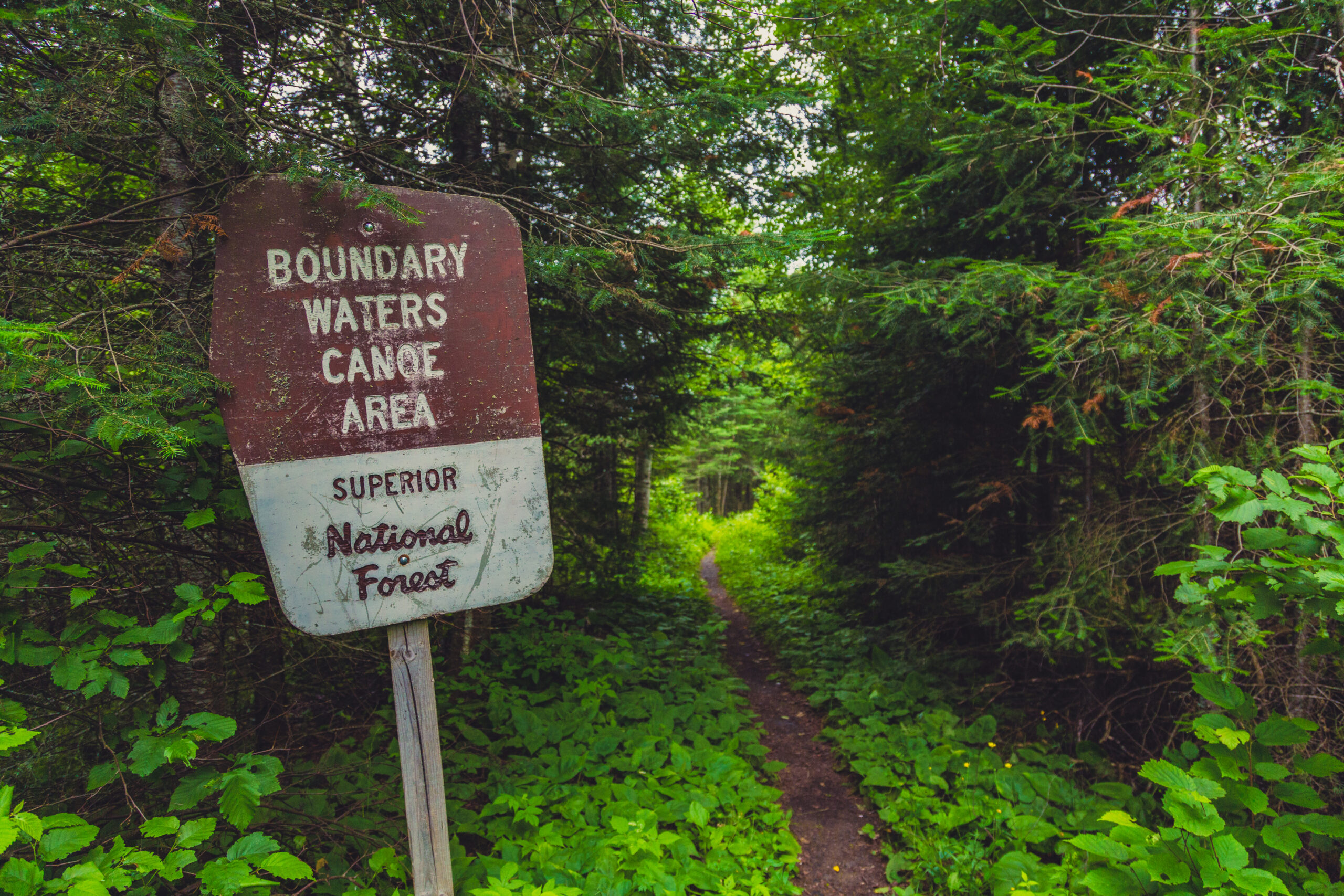
The Boundary Waters Canoe Area Wilderness (BWCAW) is a critically protected wilderness region in northeastern Minnesota, encompassing over one million acres of the Superior National Forest. Beyond recreation, it is a critical freshwater ecosystem, containing 20% of the freshwater in the entire National Forest System. It forms part of the larger Quetico-Superior ecosystem, which stretches across the U.S.-Canada border. In protecting these lands, Minnesota historically has had one of the most expansive state-level environmental safeguards.
In April, this conserved area was placed on the chopping block by the U.S. Senate, which passed a resolution, voting 50-49, to overturn a 20-year federal suspension on mining across roughly 225,000 acres of the Superior National Forest, including parts of the BWCA watershed. The measure effectively grants approval for sulfide-ore copper-nickel mining projects, primarily Twin Metals Minnesota, a subsidiary of the Chilean mining giant Antofagasta. Opposition groups have fought for years to block the proposed mine, saying it could contaminate the region’s interconnected lakes and rivers with heavy metals, sulfuric acid, and other toxic substances. Twin Metals claims in its ”Mine Plan of Operations” that “We know this land. We’ve studied it for years,” mentions indigenous tribes, and outlines alleged plans for responsible mining. However, scientific evidence shows something different; for example, the Environmental Protection Agency identifies sulfide mining as one of the most toxic industries in the country.
The primary concern surrounding the proposal is its reliance on sulfide-ore mining, a process widely known to generate acid mine drainage, which produces sulfuric acid (commonly known as battery acid). Minnesota Senator Tina Smith explains, “What happens is copper sulfur rock is brought up to the surface, hundreds and hundreds of millions of tons of it. And when sulfur is exposed to air and oxygen, oxygen and water, which we have a lot of in northern Minnesota, it basically turns into sulfuric acid, and then it flows into the watershed. This mine is literally a mile or so from water that drains directly into the Boundary Waters and then into Voyageurs National Park. ” This form of copper mining has consistently resulted in spills or the complete release of toxic substances. This is particularly alarming in the BWCA because of its highly interconnected watershed and the immense scale of freshwater at risk.
For decades, organizations like Friends of the Boundary Waters have argued that pollution from sulfide mining is nearly impossible to contain and could persist for centuries. The region’s abundance of water, which makes it so ecologically valuable, also makes it especially vulnerable. Streams and lakes could serve as direct conduits for contamination across millions of acres. In addition to local impacts, pollution could travel through related watersheds into larger systems, including parts of Hudson Bay or even the Lake Superior basin, depending on the drainage path.
Additionally, Save the Boundary Waters, another leading organization, highlights the region’s indigenous rights. The BWCAW lies within the ancestral homelands of the Ojibwe and Dakota peoples, whose treaty rights, established in agreements such as the Treaty of LaPointe (1854), guarantee access to hunt, fish, and gather on these lands. Indigenous leaders and lawmakers, including Representative Shelley Buck, have condemned the Senate vote as an attack on Tribal sovereignty and environmental justice, stating, “Today is a dark day for our people and homelands – this battle is far from over. For thousands of years, our ancestors navigated these interconnected lakes and rivers. Today, millions come to paddle, fish, hunt, hike, dog sled, and pray. This is one of the most visited wilderness areas in the country. And it belongs to the public — not to foreign mining corporations.” The controversy also raises broader human rights and environmental concerns. The United Nations has recognized access to a clean, healthy, and sustainable environment as a fundamental human right. Environmental degradation from mining, especially contamination of drinking water and food sources, directly threatens rights to health, livelihood, and cultural practices.
The Senate’s decision raises fears of setting a national precedent. Senator Tillis acknowledged this in an interview, saying, “I think we’re setting a precedent,” and warning that “some of my colleagues will come to regret it” in reference to the use of the Congressional Review Act. His concern aligns with that of Ingrid Lyons, Executive Director of Save the Boundary Waters, who described the move to undo mining protections through the Act as “an unprecedented legislative scheme … that opens a scary Pandora’s box.” By using the Congressional Review Act to reverse long-standing environmental protections, lawmakers have created a pathway for similar rollbacks on other protected public lands nationwide. This strategy could erode decades of conservation policy and weaken future efforts in protecting vulnerable areas.
To conclude, Kabrit Green, Director of Federal Affairs for Nature at the Natural Resources Defense Council, condemned the move, calling it “a direct attack on one of America’s most iconic wilderness areas.” She emphasized that the Boundary Waters belong to the American people, not to mining companies seeking profit at the cost of “clean water and irreplaceable ecosystems”. She argued that Congress should be protecting these regions, “rather than opening it to pollution and irreversible damage that can’t be undone.” The resolution now heads to Donald Trump for signature, where it is expected to face no resistance in selling out Minnesota’s premier wilderness.


Comments
We changed commenting systems on September 10, 2026 as part of a site-wide functionality and security upgrade. Your past comments have not disappeared, and you can still log in with your old Disqus account credentials if you wish. Contact us with any questions.
I can't tell you how upset I am. My grandparents honeymooned for 2 months in the Quetico wilderness in the 1930's and saw only 2 homesteaders. In a birch bark canoe and would have been stranded if they'd punched a hole in it. they could catch fish with a torn piece of tablecloth. what an ecosystem to destroy!!! This is such a beautiful ecosystem, I'm not as tough as grandma but have spent time up there, and been down one of the iron mines Grandpa discovered when he was a geologist in the region.
In my next book, the chapter on mining discusses how the mining to make net-zero "renewables" will require an unparalleled surge in mining affecting 37% of earth’s land (Sonter 2020). The key word is affecting. Even a large mine may take up a small area. But nearby land is often covered with millions of tons of tailings and waste rock, processing & milling buildings, crushing and storage areas, maintenance shops, warehouses, administrative offices, parking lots, living areas, laboratories, septic systems, wastewater treatment plant, emergency and stormwater ponds, filtration facilities, central pumping station, diesel generators, diesel, lubricant, antifreeze, and gas tanks, hazardous waste storage facility, hauling and digging trucks, roads, railways, pipelines, pumphouses, powerlines, conveyor belts, derelict equipment, trash, exploration drill pads, dikes, ditches, fire station, sulfuric acid production plant (for copper, lithium, uranium, and nickel). And that’s not all folks, check out the 3,576-page NorthMet Minnesota copper-nickel environmental impact statement (NorthMet 2015). Hoo boy is there a lot of stuff going on to get that copper ore and ship it out.
Copper is the most essential metal, and there may not be enough of to make a transition. Though the Northmet copper mining company is here to save the day by ripping off 400 million tons of rock and 225 million tons of ore by blowing up 300,000 tons of rock every few days for 20 years. This is just one of several mines proposed in this wilderness and wetland area of Minnesota and Canada with significant Lake Superior, and Mississippi river water sheds (SBW 2021). After the mine closes the waste and tailings will leach sulfuric acid, arsenic, lead, nickel, and methylmercury, requiring maintenance and water pollution treatment forever (Levang 2021, CDCNIOSH 2023, EPA 2000, Hufty 2019). Nobody believes that, which has slowed approval down. But stay tuned. Trump erased Biden’s 20-year Minnesota mining ban and has gotten rid of other pesky regulations (CBS 026, USDOI 2025, WH 2025).
Renewable advocates like to point out that just 7 million tons of minerals are mined for low-carbon technology a year, while the volume of fossil fuels extracted is a whopping 65 billion tons (15 billion tons of oil, coal and natural gas, 13 billion tons of coal tailings, 36.8 billion tons of CO2) (Ritchie 2024).
But metal rock waste and tailings from mining add up to 100 billion tons a year (Tenviro 2025). Or more. Most mining companies do not report the tons of waste rock, tailings, or releases from tailings dam failures (Whieldon 2024). Globally, there are 223 billion tons of reported mine tailings held in about 35,000 active, inactive, and abandoned tailings areas (Bowker 2016, LePan 2021, WTMF 2020).
Tailings dams hold back a sludge of dust and toxic chemicals used to leach metals out. They are stored behind “permanent dams” that are failing at alarming rates from natural disasters like floods, storm surge, wildfires, and hurricanes, and perhaps even more often as climate change worsens (Bowker 2015, GAO 2019, WTMF 2020, Okewale 2023).
Sacrificing irreplaceable freshwater wilderness for corporate profit exposes the fragile vulnerability of federal conservation policies to geopolitical shifts. gtu
"At risk" my a** – I don't know of a single mining operation that didn't destroy nearby land.
And that was back when regulations existed and were often enforced.
______