

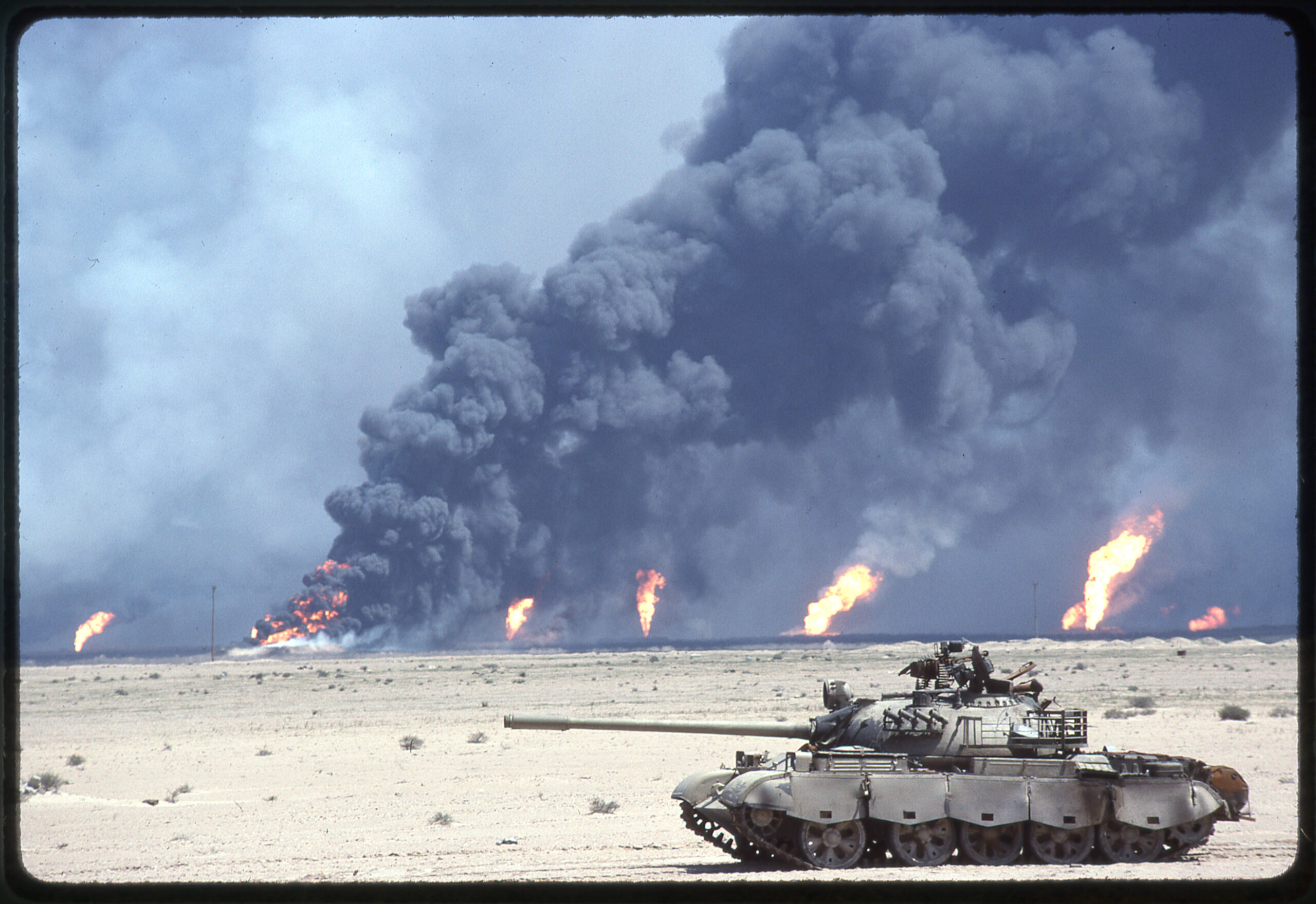
On March 10, 2026, Pakistan’s Prime Minister Shehbaz Sharif addressed the nation in an emergency broadcast. The Strait of Hormuz had been closed for less than a week. Liquefied natural gas (LNG) shipments from Qatar collapsed from 12 a month to two. Petrol prices had jumped 20 percent in seven days. His announcement: a four-day work week for government employees, schools closed for two weeks, and all in-person meetings banned. In India, households were burning kerosene and wood because liquid petroleum gas (LPG), the cooking fuel for hundreds of millions, transits the Strait. In South Korea, four airlines entered emergency management, and strategic reserves fell to 26 days of supply. The Philippines declared a national energy emergency. At least 60 countries introduced emergency measures within the first month. The International Energy Agency (IEA) called it the “greatest threat to global energy security in history.”
Oil is a global commodity. Its price is set on world markets according to aggregate supply and demand across all nations. Iran’s closure of the Strait of Hormuz removed roughly 20 percent of global oil trade from the market. At one point, Brent crude oil surged past $120 a barrel. By the end of March, American gas prices had hit $4 a gallon. The United States exports oil and has achieved, by most measures, energy independence. Yet American drivers absorbed the same price shock as those in import-dependent economies because U.S. economic activity depends on global oil prices rather than domestic oil supplies. The mechanism is the same in South Korea as in Ohio. This is not a problem of imports. It is a problem with the commodity itself.
The wider consequences have followed directly. Fertilizer costs are spiking because approximately 30 percent of internationally traded urea and ammonia transits the Strait, a shock that reaches farms in South Asia and sub-Saharan Africa before it reaches supermarket shelves. In Vietnam, farmers are reducing rice plantings because diesel and fertilizer have both become unaffordable. The disruption that began when Iranian forces declared the Strait closed ended up in a fuel bill in Ohio, a cooking gas queue in Mumbai, two weeks of school cancelled in Lahore, and an empty field in the Mekong Delta.
The United States launched Operation Epic Fury on 28 February 2026. The stated objectives were military: Iran’s nuclear program, its missile infrastructure, its command architecture. Oil was not the primary target. Within days, the global economy was absorbing a supply shock of historic proportions. A war fought for reasons unrelated to oil becomes an oil crisis the moment it touches a strategic chokepoint.
The U.S. approach to energy security long predated the war, built on sanctions and domestic supply expansion. Operation Epic Fury extended that logic militarily; when Iran closed the Strait of Hormuz, Washington reached for the same tools—pressure, production, and a partial easing of Venezuelan supply—exposing the limits of the strategy itself.
These measures share a premise: that energy security is a competition for scarce resources, and that the United States can prevail by managing supply within a global commodity market. The premise is false. You cannot win a competition for a global commodity by producing more of it. Every barrel enters the same world market. Every disruption anywhere moves the price everywhere. The crisis does not expose a failure of execution. It exposes the limits of the premise itself.
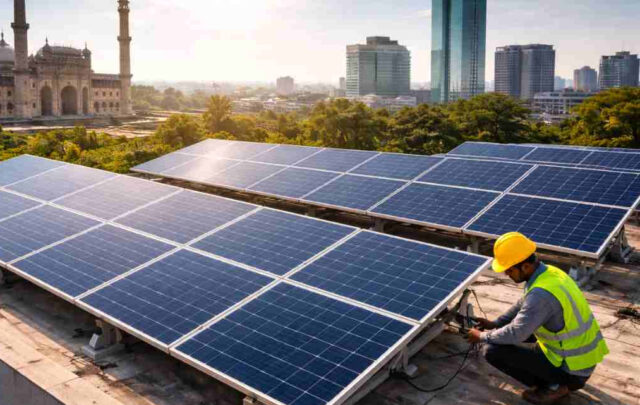
Renewable energy operates on different principles. Solar panels generate electricity from sunlight; wind turbines harness wind. None of these resources is traded on global markets. Their price is not set in Dubai or determined by geopolitical incidents in the Persian Gulf. A fully renewable grid (solar, wind, geothermal, with battery storage and smart distribution) produces energy where it is consumed. It is not disrupted by wars thousands of miles away. In practice, however, it is only partially available. Not because the technology is lacking. But because the system is designed to prevent it.
The energy market does not reward energy independence. It rewards dependence. Utility companies profit from consumption, not from self-sufficiency. Net metering policies, which once compensated distributed generators at market rate for surplus electricity fed back to the grid, have been progressively repriced downward across multiple states. The economic logic is simple: a customer who generates and stores their own energy stops paying the utility company. The regulatory frameworks that govern grid access, storage incentives, and compensation structures are, in significant part, shaped by the interests of the established utility companies they are supposed to regulate. The barrier to genuine energy independence is not technological. It is structural.
This is not abstract. In early 2021, I installed a 37-panel, 12-kilowatt solar system on the southwest-facing roof of my previous home in Louisville, Kentucky. The system was certified to produce nearly 13,000 kilowatt-hours annually, equivalent to a full year of household consumption. From April through September, most days generated more power than I could use. But the installation was grid-tied with no battery storage. Any surplus was fed back to Louisville Gas and Electric, and the grid came back every night. The compensation I received for that surplus was not the retail rate that earlier adopters had received. Kentucky had already changed the rules. State legislation in 2019 changed the rules for new customers. Instead of being credited at the rate they charged everyone else for electricity, utilities were now allowed to pay only a fraction of that rate. Customers who had installed earlier were grandfathered into more favorable terms. I was not. The permit documentation for my system explicitly excluded battery storage: not an oversight, but the standard configuration under a regulatory regime that had closed the door on full self-sufficiency. With storage and retail-rate compensation, I would have been largely independent of the grid. The policy that prevented that was not incidental. It reflected a consistent incentive operating throughout the energy market: a customer who generates and stores their own energy stops paying. The barrier was not the technology; it was the system.
What I experienced at household scale happens at every level. Utilities resist decentralization because decentralization destroys their business model. Regulatory frameworks are shaped by the interests they govern. Fossil fuel incumbency is not simply a market reality. It is a political one, sustained by the same forces that drove the sanctions, the military posture, and the doctrine the current war was meant to enforce.
The war in Iran has made the paradox inescapable. The pursuit of energy security through fossil fuels produced the very disruption it was meant to prevent. Instead, the transition to renewables offers the genuine insulation that oil never can: from global price shocks, from the geopolitical risks embedded in that dependence, and from the carbon emissions driving the climate crisis. But that transition will not happen through market logic alone. The political and economic power of the established energy industry must be confronted directly—in net metering regulations, storage incentives, grid governance, and regulatory frameworks that protect centralized supply at the expense of local generation. The countries that are best positioned to weather this latest crisis are not those that drilled more, but those that reduced their exposure to the global oil market.
Not “drill, baby, drill,” but generate, store, and keep it local.




Comments
We changed commenting systems on September 10, 2026 as part of a site-wide functionality and security upgrade. Your past comments have not disappeared, and you can still log in with your old Disqus account credentials if you wish. Contact us with any questions.
Indiana followed similar rules to Kentucky, although I don't believe there is a law against installing batteries. We installed our first 10 kW PV system in 2011 and included backup batteries. We were grandfathered in for net metering. We sold that house and moved to our current home. We installed an 11 kW system in our current home in 2016 with backup batteries. Again we beat the new laws and are grandfathered in for net metering. We bought new land for our business and built a large pole barn. We had a 7 kW PV system installed on the roof but no batteries. We currently receive net metering but this ends in 2032, at which time the utility company will only have to reimburse us for wholesale electricity prices for all the energy we send out to the grid.
People who live in the Midwest have good sunlight and day length from April through September but limited the rest of the year. This means that solar energy will cover air conditioning but is limited for heating with heap pumps. The other recommendation I have is to use electricity during the day when the sun is shinning brightly. Run your dishwasher, washing machine, dryer if you have one, oven, etc. Before you install a heat pump check your home's insulation, and heat retention. There are many energy efficiency measures we can take that will reduce heat loss and help reduce the amount of energy we need to heat our home. In the Midwest this makes a big difference when the laws don't favor home owners who want to have renewable energy.
we felt it the most with our summer air con bill for sure. The utility bill fell enormously which I was grateful for. At the time we could not afford the battery installation but costs have come down since. We got a lot of people stopping to stare and ask questions and that was before today's energy crisis. It would not have been possible at the time without tax credits so to see those rolled back is such a crying shame.
The loss of tax credits is indeed a shame, but when I consider the rapid drop in prices from our first installation to our last solar is really affordable even without credits.
Can renewables support current levels of consumption?
For those who can afford it, yes.
Here in South Australia I believe we have the greatest uptake of solar systems in the world. However we are paid about 3 cents per kW that we generate and send to the grid. Meanwhile the provider bills around A$1.10/day in connection fees plus around 40c/ kWh for electricity used. It was a no brainer to install a battery. We still get a bill but nearly half is connection fees and it is greatly reduced compared to pre-solar days.
The more that solar is installed the higher the costs for retail electricity become. Those that rent pay the price sadly.
It is 'cheaper' to stay on-grid if the property is already there. Or so I used to argue.
But having been off-grid (from a greenfields start) for well over 20 years, I suggest the missing discussion is efficiency.
We run our house on 300 watts, using 4x 100 amp/hr batteries. Admittedly water-heating is solar and firewood; cooking ditto and admittedly others may not have planted a forest 30 years ago…
But most folk could get by on much less than they do, power-wise. And efficiency improvements are a forever-return.
"These measures share a premise: that energy security is a competition for scarce resources, and that the United States can prevail by managing supply within a global commodity market. The premise is false."
Well, on 7 May in the US Congress, the Stop Oil Exports to Lower Gas Prices Act was introduced.
https://sherman.house.gov/media-center/press-releases/congressman-brad-sherman-introduces-bill-halt-us-oil-exports-shield
That would be good for US oil consumers in the short term, although it would reduce profits for the US petro companies that financed Trump's 2024 presidential campaign with $450 million.