

I’m going to make reference to one particular columnist from a well-known outlet – a familiar antagonist of mine who I’m a bit loth to bring up again. It’s not so much that I want to renew public hostilities as that his articles capture a certain sense of the moment that I’m minded to share with regular readers here in the hope of getting some feedback on your own thoughts about the current state of play. At the expense of awkward phrasing, I’m not going to mention him by name, because the polemical to-and-fro is a bit boring. It’s the underlying issues that are important.
The first of his articles concerns food, involving a well-founded fear of food system collapse and an appropriate, if familiar, critique of the corporate players who bear major responsibility for its present malaise. In response to this, he writes,
“We know what needs to happen: break up the big corporations; bring the system under proper regulatory control; diversify our diets and their means of production; reduce our dependence on a handful of major exporting countries; build strategic food reserves, accessible to people everywhere.”
The hyperlinks first take us to a research paper that suggests various substitutes for wheat flour in ‘developing’ countries, mostly involving other flours from tropical plants. And then to the author’s own 2022 column heralding bacterial protein powder, which we now know has an extraordinarily high cost in electrical energy (see here for more background on this issue). Our author should know this, too, since I wrote to him pointing it out. Furthermore, it’s a constraint that can’t ever really be overcome.
These are both, at best, esoteric ways of improving the resilience of the food system. The other suggestions in the cited paragraph make more sense – especially breaking up corporations, reducing dependence on imports, and building food reserves accessible to everyone. A good way of doing that, I’d argue, would be distributist land reform and the creation of local small farm economies that give everyone the chance to build their own accessible food reserves by farming for themselves. But our author has rejected such possibilities rather forcefully.
Our author goes on to observe, rightly, that governments are beholden to corporate and financial power and are therefore unlikely to tackle the fragility of the existing food system. You might think this would lead to a discussion of hyper-complexity and collapse of the kind that features regularly on this site. Instead, we get only the hope that the braver politicians will protect us from the worst impacts, providing the lead-in to the article’s concluding section and its big idea – a shift to plant-based diets. Well, it’d probably help, just as putting your weekly recycling out probably helps. But I get the sense of someone who’s boxed himself into a corner through his repeated scorn for agroecological politics and through his intimations of systemic collapse that he can’t actually bring himself to take seriously for fear of not being taken seriously in the rarefied political circles he moves in. This pretty much seems to be the state of play in our political culture. Full steam ahead and no insubordination, despite the all-too-visible iceberg that’s looming.
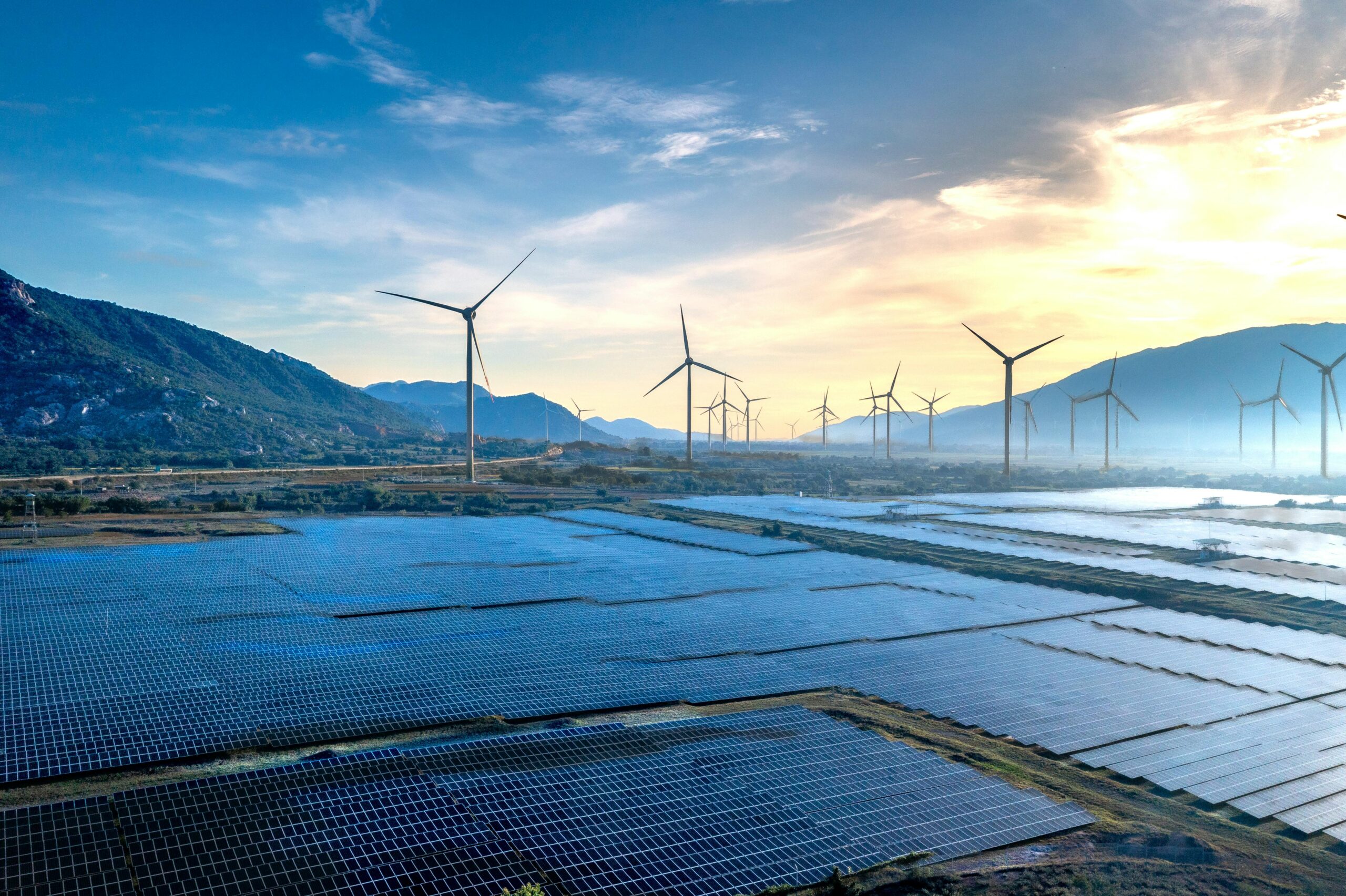
Hang on, though. Maybe I’ve got this all wrong, and help is at hand in the form of “vast, cascading shifts in energy supply and storage” favouring low-carbon renewables.
Here in the UK, you wouldn’t think so on the face of it, given that the war with Iran has highlighted the dependence of our electricity supply (and price) on gas. But as our author explains in this article, this high price is an artifact of marginal-cost pricing, in which the supply of last resort (gas) sets the price for the rest of the electricity in the supply stack. He’s right to criticise the fossil fuel ultras who use this to argue the case for more gas, but he never really gets to grips with the complexities of how to deal with the problem, which are laid out more clearly here. I’d be interested in any comments on this latter article.
But going back to our author’s original article, it prompted three concerns on my part. First, implicit in it is a concern about the high cost of domestic energy bills and their impact on poor people. There are parallels to concerns about the impact of higher food prices on poor people, which our author doesn’t understand well. Energy is a bit different, since, unlike food, it’s not a labour-intensive, low-paid sector. Nevertheless, I think there’s a potential evasiveness here. In pointing the finger at fossil energy as the source of high domestic bills, it’s easy to shift blame onto the usual corporate baddies for the plight of the poor. But the real problem is poverty itself, and the unequal distribution of income and wealth. It’s not just the fossil energy companies that need to take a hit. We richer folk, the kind apt to be reading articles like this in The Guardian, probably need to be poorer too. The best amelioration for poverty isn’t cheap food or energy, but a fairer share of resources.
The second problem is the one known as energy cannibalism, which is the other side of the coin to marginal cost pricing and the high cost of energy due to gas as the final or marginal supplier in the stack. This creates a situation which is bad for energy consumers but good for renewable energy suppliers, who get paid over the odds for their product. As renewables assume a greater share of supply, the unit price decreases, making renewables a less attractive investment option. Solving this is not all that straightforward. Especially because, as Brett Christophers shows in detail in his book The Price Is Wrong, electricity pricing is a complex field, and the typical easy answers reached for on the left – cut out fossil energy, tax it, nationalise everything, etc. – don’t really cut it. Ultimately, Britain might have to nationalise China to make this work, and possibly not even then. It essentially did that a couple of hundred years ago with a degree of success, but I suspect it wouldn’t work as well if it tried again now.
Stop press: it looks like the government is planning to limit the benefits of marginal cost pricing to renewable suppliers, which could hasten the experiment with energy cannibalism.
All this points to the third problem. There are a series of real-world issues underlying all this, like the variability of renewable supply, the difficulties of storing electrical energy, the costs of grids and electrification, the difficulties of hard-to-electrify industrial sectors, and so on, which don’t really go away just by being angry with the rich and powerful. Meanwhile, the continuation of civilization-as-we-know-it, but with less impact on Earth systems, depends on ever-greater low-carbon electricity for vehicles, data centres, industry, domestic heating and cooling, and even for food production, if you accept the case for bacterial protein. Governments fiddle ineffectually around the edges of this, as they’ve long done in the food and farming system, with various fiscal carrots and sticks. I find it increasingly hard to take it seriously as the iceberg fills ever more of the horizon.
Hang on again, though. Maybe I’m wrong, again. In this article, our author heralds solutions to at least one of those problems – the difficulties of storing electrical energy. If we had cheap, grid-scale battery storage, then things could look rosier. According to this article by Bill McKibben, which he cites, California’s grid-scale battery systems recently stepped in to prolong the renewable energy component of its supply by a few hours. Job done. Almost.
Here’s where it gets a bit uncomfortable being a sceptic of the craze for a transition to what Jeff McFadden calls “renoobles”. I’d genuinely like humanity to transition rapidly away from fossil fuels while preventing the world as we know it from falling apart chaotically. But at this stage of the game, a few hours of battery-stored renoobles in one of the richest parts of the world seems too little too late. For this to work, there would need to be an almost unimaginably massive technology transfer from the rich to the poor countries, which still rely overwhelmingly on fossil-generated electricity. But we seem to prefer military adventurism instead. And even if we succeeded, we’d still have a high-energy, high-tech, high-impact, resource extractive world that was busting its limits in numerous other ways.
So I’d suggest redeploying most of the technical expertise involved in renewables, bacterial food and so on, instead of easing the bumpy landing into a lower-energy, more localized world that seems likely to be our lot despite all the clever tech and journalistic boosterism to the contrary.
Finally, shifting gears somewhat, while I suppose I’m still, in some sense, broadly of the left – and also, in some other sense, broadly a small-town and small-c conservative – writing this piece has somewhat sharpened my disillusionment with much that currently passes for radical writing. So too did this piece by Nancy Fraser about Jürgen Habermas in the London Review of Books, albeit I have more time for her than for firebrand radical journalists who, paradoxically, connive at the status quo.
As a one-time academic sociologist, I used to write a bit like Fraser does (some might say I still do). At least I still pretty much understand what she’s saying. But I find it rather contradictory and problematic. We have to ‘historicise’ the way capitalist society works, but also ‘problematise’ it – implying some firm ground of judgment to stand on, which Fraser seems to find only among oppressed people (‘subalterns’) and not in wider ‘normative foundations’ or human possibilities. I do think there’s a ‘who feels it knows it’ aspect to the life experiences of those who are marginalized and oppressed, but I’m not convinced it necessarily leads to a generally emancipatory politics, nor provides firm normative grounds for ‘problematising’ capitalism in the first place. For some years, I’ve been toying with natural law ideas and their ‘historicisation’ – as for example in the hands of Alisdair MacIntyre, who ultimately rejected the contradictions of Marxism in favour of a more inclusive and spiritual account. Fraser’s article underlines for me why that shift makes sense.
Another frustrating aspect of Fraser’s piece is the cancel culture element – with Habermas’s stance on Gaza, the light he cast “seemed to go out”. Well, I don’t agree with the stance he took on Gaza and I’ve played this ‘who’s hot and who’s not’ game that disfigures so much leftist thought myself, but I’m tired of it. You can disagree with someone without thinking their lights are out, although that’s now the case biologically with Prof Habermas. RIP.
A version of this article was published in The Small Farm Future Blog.


Comments
We changed commenting systems on September 10, 2026 as part of a site-wide functionality and security upgrade. Your past comments have not disappeared, and you can still log in with your old Disqus account credentials if you wish. Contact us with any questions.