

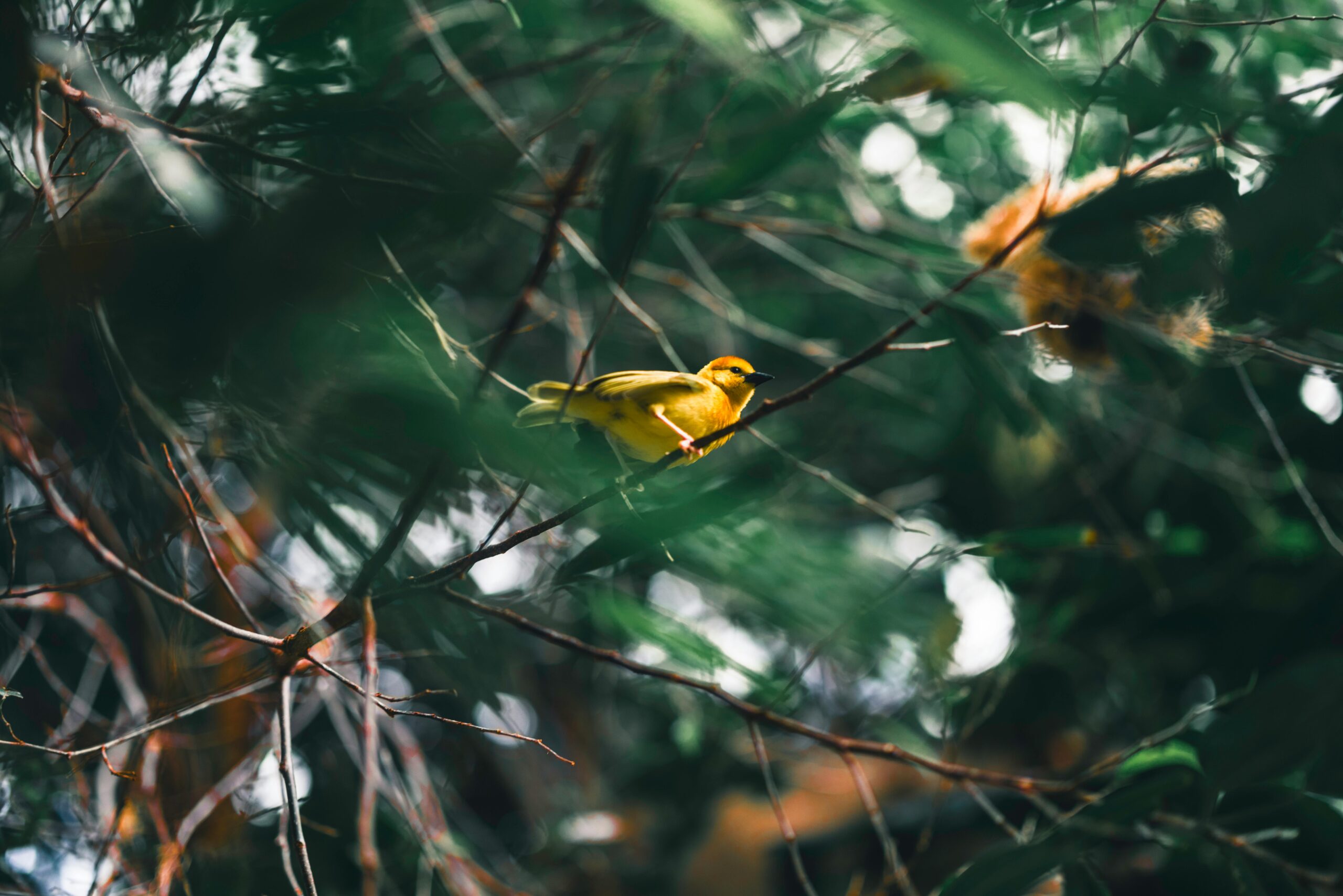
Efforts to restore nature language are already taking shape in education, art, and everyday observation. One of the most widely recognized examples emerged from the controversy surrounding the Oxford Junior Dictionary’s removal of nature words.
British illustrator Jackie Morris saw the problem firsthand. Inspired by the dictionary debate, she collaborated with nature writer Robert Macfarlane to create The Lost Words: A Spell Book, a children’s book celebrating plants, birds, and animals that had disappeared from the dictionary’s pages. Illustrated by Morris and published in 2017, the book quickly became a bestseller and a cultural phenomenon.
The project aimed to rekindle children’s familiarity with the natural world; however, Morris soon realized that the challenge extended beyond young readers. When television crews visited schools and asked students to identify plants and animals from pictures, many struggled. Morris believes the problem runs deeper than children’s education.
“What I said was, ‘Well, you should have taken them ’round your own office, really,’” she recalled. “‘Because the reason kids don’t know is because the parents don’t know.’”
For Morris, addressing this disconnect begins with “rewilding our imagination.” As a child, she remembers noticing birds for the first time—seeing the brightness in their eyes and feeling an almost physical longing to join them in flight. “Watching birds was just such a joy to me when I was young,” she told Grist. “And it shocks me that there are many people who just don’t see them.” Relearning the names and stories of the living world, Morris suggests, is one way to restore that sense of attention.
Cultural projects like The Lost Words demonstrate how art and storytelling can revive attention to the natural world. Books, films, and digital media that foreground the natural world play a crucial role in preserving and reintroducing rich ecological language into everyday life. But reconnecting language with nature can also happen through recreation and everyday observation.
Researcher Erik Aschenbrand explains that although society at large is losing its economic connection to nature, it is increasing this connection through recreational activity. As populations become more urbanized, interactions with the environment are shifting from agriculture-based economic activity to leisure-based engagement. He suggests that governmental and tourist organizations can cultivate this growing recreational interest to rebuild our relationship with nature.
Hanson emphasizes that meaningful encounters with nature often begin in familiar places: a backyard, neighborhood park, or city sidewalk. Paying attention to local plants and animals—learning their names, noticing their habits—can transform ordinary spaces into sites of discovery.
Citizen science projects have expanded these opportunities. Platforms such as iNaturalist and eBird allow people to photograph plants, birds, insects, and fungi and identify them with the help of global communities of observers and scientists. Participants gradually build a vocabulary for the living world around them, turning curiosity into both knowledge and data that researchers can use to track biodiversity.
Gardening offers another powerful entry point. Native plant and pollinator gardens—featuring species such as milkweed, coneflower, goldenrod, or bee balm—invite butterflies, bees, and birds into everyday spaces while introducing their names into daily conversation. Replacing a generic lawn with diverse native plants not only supports local ecosystems but also encourages people to learn the language of the landscapes they inhabit.
Even in dense cities, practices such as urban birdwatching or neighborhood tree mapping are helping residents rediscover the living systems around them. Each observation—naming a sparrow, identifying a maple, recognizing a monarch butterfly—strengthens the connection between language and environment. Through these small acts of attention, people begin to rebuild the vocabulary of nature, one encounter and one word at a time.
Reversing the trend: Strategies for individuals and communities
If language both reflects and shapes our relationship with the natural world, then revitalizing nature-oriented vocabulary requires intention. The good news is that small shifts—repeated widely and consistently—can influence cultural norms.
Education is a powerful starting point. Encouraging children to use descriptive language for flora, fauna, weather patterns, and landscapes builds ecological literacy alongside verbal skills. Instead of simply seeing a “bird,” students can learn “cardinal,” “warbler,” or “hawk.” Instead of “tree,” they can identify “sycamore,” “elm,” or “pine.” These distinctions cultivate curiosity and strengthen memory. What we can name, we are more likely to notice again. As botanist and Citizen Potawatomi Nation member Robin Wall Kimmerer writes in Braiding Sweetgrass, “Names are the way we humans build relationship, not only with each other but with the living world.” Learning the names of plants, animals, climates, and landscapes can transform them from background scenery into meaningful presences in our daily lives. Language becomes a bridge between observation and care, helping people see their surroundings not as an abstract “environment,” but as a community of living things.
Technology, often blamed for distancing us from nature, can also be part of the solution. Field-guide apps, digital mapping tools, and online biodiversity databases make identification accessible to anyone with a smartphone. If humanity is indeed in the midst of an information revolution, conservation must engage with it. As conservation scholars Paul Jepson and Richard J. Ladle observe, “The rise of nature conservation as a cultural, scientific, and policy imperative was one of the defining features of the twentieth century… If humanity is embarking on an ‘information revolution,’ then it is vital for nature conservation to engage with new technologies in progressive and experimental ways.” Digital tools can help reintroduce precise, place-based language into daily life.
Communities can also foster linguistic reconnection through storytelling. Local newspapers, neighborhood newsletters, podcasts, and community science projects can spotlight seasonal changes, migration patterns, or restoration efforts. When residents describe the return of fireflies, the blooming of dogwoods, or the nesting of swallows, they normalize the use of attentive language. Over time, such descriptions shape shared expectations about what matters.
Individual actions may seem small: planting native species, learning five new bird names, teaching a child the difference between a moth and a butterfly. But cultural change is cumulative. Taken together, these small actions accumulate into broader cultural shifts, gradually reshaping how societies perceive and value the natural world. As Hanson emphasizes, shifts in norms begin with a personal belief that individual actions add up. Language follows the same principle. Each time a specific, nature-related word is spoken, written, or taught, it reinforces the presence of the living world in collective consciousness.
Reversing the trend does not require a return to a preindustrial past. It requires noticing where we are—and choosing to describe it fully.
Reclaiming the language of nature
Surprised about the recent upturn in nature words after such a consistent decline, Richardson, in his interview with the Guardian, contemplated, “Is it a genuine eco-awareness? Is it the British trend for nature writing? Is it ‘real’ or is it an artifact of the data? I don’t know.” Changes in language use are complex; they are influenced by a myriad of factors, from cultural and historical to economic and technological. Richardson’s questions highlight the difficulty of explaining the shift from the historical decline in the use of nature words to the recent increase. There simply isn’t enough data to pinpoint the exact causes.
What is clearer is that we are stewards of our natural environments. We are responsible for taking care of our surroundings and passing this knowledge along to the next generations—a value system that is enacted through storytelling, urban green space planning, citizen science programs, technology use, and evidence-based reporting to drive policy decisions.
More importantly, rebuilding this connection does not require sweeping systemic change at the outset. It can begin with simple acts: learning the names of local species, spending time observing nearby ecosystems, and incorporating the language of nature into everyday conversation. Environmental stewardship can be compared with and achieved through language stewardship. Just as we work to protect endangered species and ecosystems, we can also protect the words that help us recognize them.
Danica Tomber is an applied linguist with a Master of Arts in Teaching English to Speakers of Other Languages from Portland State University.


Comments
We changed commenting systems on September 10, 2026 as part of a site-wide functionality and security upgrade. Your past comments have not disappeared, and you can still log in with your old Disqus account credentials if you wish. Contact us with any questions.