

Show notes
What happens when technology and competition start to invade our experiences in nature? For example, what if you’re so focused on documenting a bird sighting in your iPhone app that you fail to appreciate the majestic songs of the bushtit or dickcissel on the branch in front of you? In this episode, Jason, Rob, and Asher explore the world of competitive birding, the relationship between those who love nature and the technology they use to connect to it, and how even the most gentle of shared passions can get corrupted by status-fueled competition. Bear with us through the maddening tech and over-the-top competition as we rediscover how to observe and just exist within our home ecosystems. Originally recorded on 3/5/26.
Sources & links
- Holding the Fire podcast
- Owen Reiser, Listers: A Glimpse Into Extreme Birdwatching, 2025
- David Frankel, The Big Year, 2011 film
- Nature photographer Hannah Seilhan
Credits
Production and editing by Alex Leff. Editorial assistance and transcripts by Taylor Antal.
Theme music is “Way Huge” and “Don’t Give Up” by Midnight Shipwrecks, used with permission.
Thanks to all the Crazy Townies, our listeners who are trying to understand humanity’s overshoot predicament and do something about it.
Transcript
Rob Dietz:
I am Rob Dietz.

Jason Bradford:
I'm Jason Bradford.

Asher Miller:
And I'm Asher Miller. Welcome to Crazy Town where getting shat on by a pigeon is the least of your problems.

Rob Dietz:
What happens when technology and competition start to invade our experiences in nature? For example, what if you're so focused on documenting a bird sighting in your iPhone app that you fail to appreciate the majestic songs of the bushtit or dicksissel on the branch in front of you. In

this episode, we explore the world of competitive birding, the relationship between those who love nature and the technology they use to connect to it, and how even the most gentle of shared passions can get corrupted by status fueled competition. Bear with us through the maddening tech and over the top competition as we rediscover how to observe and just exist within our home ecosystems.

Jason Bradford:
So Monday at 7:00 AM, Will shows up. He's been birding with me for years, and he shows up at 7:00 AM, soon after sunrise, and we start doing our regular routine of going to these spots on the farm and listening and observing for five minutes. And we get to this one spot by the river, I have to talk myself into getting into the zone. And especially when you're in the forest. It's no longer as much of a visual thing in the forest. You really have to focus on the sounds because you can't see very far. So I kind of have this sort of staring into nothing, like an unfocused stare, so that I can really just listen. I'm like, okay, there's chickadees, there's a flicker over there, there's a Stellar's jay, oh that's a scrub jay, and there might be a creeper over there. And it's great. You're like, you can tell direction, you can sort of think if they're close or far. And then I hear something that I don't recognize and that's when it gets exciting. And I perk up and I look at Will. And he says, "Oh, Hutton's Vireo. I'm like, what?

Asher Miller:
A what?

Jason Bradford:
A Hutton's vireo.

Asher Miller:
Oh right, of course. What?

Jason Bradford:
So this is the thing. I'm not good enough to know what a Hutton's vireo sounds like. I only -

Asher Miller:
I've never fucking heard of this thing.

Jason Bradford:
I hear this bird maybe once a year, and so it hasn't really ingrained, but these other ones are just so common. But Will is that good. This is what he does. But that was an F-O-Y.

Asher Miller:
What's an FOY dude?

Rob Dietz:
FOY?

Jason Bradford:
Oh, First of year.

Asher Miller:
First of year.

Jason Bradford:
Yeah. And see, the thing is I track these birds in my yard and that's important to keep track of how many you're getting in your yard and to get this for my yard for the year, it's really helpful because I don't always get this bird.

Asher Miller:
So I mean, I think any listener, previous listener to our pristine podcast here would know that Jason is a fucking geek about birds.

Rob Dietz:
Yeah. A certain level of obsession came into the picture during the pandemic and now you could tell when he was telling the story.

Asher Miller:
Kind of full blown.

Rob Dietz:
Yeah, he gets really excited about an FOY.

Asher Miller:
Yeah, but it's not just FOYs. He's like thinking - He is tracking his list and trying to keep up with how many he spotted in the year and then his yard . . . Is his yard kicking other yard's asses?

Jason Bradford:
Yes. The thing about you and the Boston Red Sox.

Asher Miller:
Okay.

Jason Bradford:
You get all excited when they win a game or they have a good rookie.

Asher Miller:
You've taken it to a whole different level than me, buddy. Sorry.

Rob Dietz:
When ou get an FOY, Hutton's vireo, what do you do with it?

Jason Bradford:
I put it on my -

Asher Miller:
He puts it on his wall.

Jason Bradford:
I put it on my eBird list. Of course, for God's sakes.

Rob Dietz:
Alright, so what's eBird?

Jason Bradford:
EBird is this globally accessible public database of bird observations. So you record what you saw, when you saw it. You could record sound, you could record pictures, it tracks your movement. You can talk about breeding plumage, sex, anything weird about it as well. I mean, there's all kinds of little things you can do.

Rob Dietz:
You've sold me. I had no idea you could talk about breeding plume.

Asher Miller:
Why didn't you lead with that, Jason.Come on. Well look, it's an amazing technology. I think we went on eBird when we were doing the podcast that we did, "Holding the Fire," which was interviews with indigenous leaders from around the world.

Jason Bradford:
Yes, I helped with that.

Asher Miller:
You did. And we added birdsong in at the end of every episode of birds that were located from the region that the person that we spoke with was from.

Jason Bradford:
And that was my job to figure that.

Asher Miller:
Right. And eBird was great for that, but let's be honest, okay? There's kind of a dark side, or there's this other aspect of eBird and some of this technology, which it's like how it kind of feeds a little bit of this competition we're talking about. And it makes me think of that movie "Listers" that came out. I don't know how long ago that came out.

Rob Dietz:
It's recent. That's a great movie year. We all watched it.

Jason Bradford:
Yeah, last year.

Asher Miller:
And it was funny. So the movie is called, "Listers: A Glimpse into Extreme Birdwatching," but it was just put on YouTube. And I actually convinced my 15-year-old son to watch it with me. And I was like, you'll probably like it because the guys in it are kind of young, you know. And he loved it.

Jason Bradford:
Yeah.

Asher Miller:
He loved it, and I loved it too. It was great.

Jason Bradford:
Amazing movie.

Asher Miller:
But it gets into a little bit of what I'm seeing in you, Jason.

Rob Dietz:
Yeah, so let me tell our listeners about the movie and the three of us have watched it recently. We all three loved it. Totally recommend it. It's a story of two brothers, Owen and Quentin Riser. Owen's kind of the filmmaker. And I'd say Quentin's, sort of the main character of the movie. But they decide that they want to explore Jason's world, the weird world of birding. They decide to do it up in the biggest baddest way that they possibly can. They take their crappy minivan and they decide, we're going to go on a Big Year. And I guess a Big Year is you pick a geographic

area and you see how many birds you can observe over the course of a year. The budget for this movie was about $16,000 to do this Big Year.

Asher Miller:
Is that all it was? Wow

Rob Dietz:
That's what it says in the internet movie database, which you can take that as genuine fact every time. So they take their half broken down minivan and they travel the country trying to see how many birds they can get, and they're hilarious as they go about this. I would also point out there's a lot of cool animations in the movie and little just, I dunno, flourishes that make it really worth watching. We'll obviously have the link in there and recommend that folks go take a look at it. But a key tension in the movie exists between, there's people who have this shared passion about birds and ecosystems and they mostly want to connect with that and feel the awe. But then there's also the people who are just in a competition and want to get the highest number of birds that they can in the course of in their Big Year. And some people do this year after year.

Asher Miller:
Do you think the Mormons when they go on their missions, they think the same way like a Big Year of how many conversions they can get in a year? You think it's the same?

Jason Bradford:
Yeah. It's identical.

Asher Miller:
Is there an EMormon app for this? Sorry.

Jason Bradford:
We should make it.

Asher Miller:
We can look that up later.

Rob Dietz:
This could be a money maker right here. Don't advertise it. So in one of the questions that came up for me when watching this movie and laughing my ass off was about my friend Jason Bradford over here.

Asher Miller:
Is this an intervention?

Rob Dietz:
Well, I wonder what it is with you. Maybe do a little self-examination. Are you more about putting the numbers into eBird, or are you more about connecting with nature?

Jason Bradford:
I think we should talk about it and see where this goes. Alright? I honestly, I'm going to try to open up and be vulnerable here. And I want to understand what you think. I want to get some outside views, some reflection. I will say that it's hard what I do. It's hard. Okay, every winter -

Asher Miller:
Cue the violins.

Jason Bradford:
Every winter, I'm so high on the state list for yards. I am kicking butt right now. I've got eight more bird species for the year so far in my yard than any other yard. I'm way ahead. Okay, that's a good lead. Alright. I'm in the upper sixties right now. I think what I'm competing against are people who have similar, if you look at where they're -

Asher Miller:
Landed gentry.

Jason Bradford:
There's like this guy Rich Hoyer, okay, Rich Hoyer.

Asher Miller:
Rich. Of course his name is Rich.

Jason Bradford:
So Rich has this place out on the eastern side of the Cascades.

Asher Miller:
Uh huh, yeah.

Jason Bradford:
It's called Calliope Corner. And I know where it is. I've mapped it out. He always passes me.

Asher Miller:
You're usually Google Earth.

Jason Bradford:
Yes, I have. I scout Rich out and he passes -

Asher Miller:
And you know he's done that with you too.

Jason Bradford:
He probably doesn't care about me. Do you know why? Rich is a world-class birder. He's seen over 6,000 species of birds in the world. He takes trips to South America. It's like me competing against Roger Federer. Okay, so this is not fair.

Asher Miller:
Roger Federer now or in his prime?

Jason Bradford:
Now.

Rob Dietz:
It wouldn't matter. So there's another guy, I don't think you know about him, Jason, and his name is Wealth McMoneyBags, and he owns 400,000 acres in his yard.

Asher Miller:
Wait, wait, wait. We're giving you Jason a hard time here, but I just want to say compared to Richie McRichardson, this buddy of yours that you spy on who's, you said seen 6,000 bird species in his life traveling around, right?

Jason Bradford:
Yeah.

Asher Miller:
At least you're doing this in your own backyard. I mean, you've done a little travel, let's be honest. You've doubled up on some travel and seen some birds while you've been traveling. But for the most part, you're here in this place doing it here. And one of the issues I had, or one of the tensions that they didn't talk about explicitly in the movie "Listers," but you just hear in the stories that people that they're speaking with in interviewing are just the lengths that people are going to travel around to get their list. So guys talking about driving 20 hours to go see one bird, you know? Or getting on planes or going on tours.

Rob Dietz:
These two guys did that too. I mean they -

Asher Miller:
In a car, yeah.

Rob Dietz:
And their purpose was to see what is this world about? And of course a lot of people are doing it in this Big Year. And the movie is named appropriately, right? It's called "Listers," not Birders. So I don't know. Jason, are you a birder or a lister? The question still sits.

Jason Bradford:
I want to admit something. I have done a Big Year, okay? So there is a little bit of that in me. I did this and I am going to tell you about it. It was in 2023 and my goal in 2023, I said, "I'm going to get as many species as I can." I focused. I said, "I'm going to get as many species as I can in Benton County, Oregon." And I would study eBird for rarities. I would go on eBird sometimes before bed. I'd go on eBird and I'd be checking what's new, what's hot, what's coming in, right? And where I -

Asher Miller:
What's the inventory?

Jason Bradford:
And where I was on the Benton County birder list.

Asher Miller:
Oh, so there's a list for the county too.

Jason Bradford:
Yes. Yes. And I was top 20. I was top 20 that year in Benton County. And I would scout the Philomath Sewage Ponds because if you go to the Philomath Sewage Ponds you're going to see some amazing stuff, some amazing stuff.

Rob Dietz:
Like sewage.

Jason Bradford:
Well, I mean the stuff eating the sewage, the northern shovelers, there's hundreds of those. But you're going to get phalaropes in there and stuff. And maybe some gulls and terns once in a while. Some grebes, some cool stuff, some sandpipers.

Asher Miller:
It's too bad you didn't extend your range a little bit. You could have gone up to the outlet malls up north because there's so many birds that hang out there.

Jason Bradford:
Oh.

Asher Miller:
Oh my God, it's incredible.

Jason Bradford:
Yeah, they're probably gulls and ravens and crows.

Asher Miller:
Yeah.

Jason Bradford:
But I feel like, yes. I could see myself slipping a little bit, right? Caring so much about getting every little bird in Benton County. And look, I worked my butt off in Benton County and I was like 15 or 16 at the end of the year. I don't know. Maybe I'm even padding that a bit for all I know. I can't remember.

Asher Miller:
This is almost like your rookie year, or something.

Jason Bradford:
I was trying to be rookie of the year.

Rob Dietz:
It's hard though. They don't make 15th place trophies.

Asher Miller:
They don't? I thought everyone gets a trophy, like a participation trophy.

Jason Bradford:
But I would get my vehicle and I would drive out to those sewage ponds, and they're like two miles away.

Asher Miller:
That's a long haul. So if we're keeping track here -

Jason Bradford:
Help me.

Asher Miller:
Points for and against Jason. I would say the fact that you focused in your quote unquote "yard" in Benton County, those are points I would give to you. But let's talk about this whole relationship with technology for a second because we're talking about the lengths that people go to travel and get their lists. But let's talk a little bit about, frankly, some really amazing technology that exists now that didn't exist. I don't even know how far back you need to go, but maybe talk a little bit about something like the apps that they were using in "Listers," or that you use Jason, or people that are using. And I want to just talk a little bit about, is there a balance there? Because they're obviously pretty cool. You could pull up the bird song. So you're able to recognize birds by recording the sound and then it will tell you what it is?

Rob Dietz:
Yeah, Merlin.

Asher Miller:
Merlin. Merlin. That's a companion app to eBird. And you saw this in "Listers" quite a bit.

Rob Dietz:
Well, and I've used it. I've had Merlin on my phone for a few years. It's like you just hold up your phone, the microphone hears the birds, and it tells you what it is, which is pretty cool.

Jason Bradford:
Yeah, it's mostly accurate. It does make mistakes. It gets fooled. Like Stellar's jays, for example, mimic other birds.

Asher Miller:
What happens when we get AI birds and they're, it's like fake. It's like AI slop bird calls. What's going to happen do you think with Merlin then?

Jason Bradford:
You have to train it. You have another data center to train things.

Asher Miller:
Right. Well, and that's part of the downside that I'm talking about here. So everyone's got their phones, they've got their apps that they're using, they're uploading recordings to be able to recognize different songs. I don't even know how big these databases are. People are recording all kinds of stuff constantly and then uploading it to the cloud. And you just think about not just the lengths that people go to travel, so the fossil fuel that's being burned in their cars or if they get on airplanes. But also just the invisible stuff that we've talked a lot about on this podcast, which is the embodied energy that goes into even these little small devices that we tend to use in our thing. We tend to think they are not environmentally polluting, but they are, right?

Rob Dietz:
Well, Owen and Quentin explored this in the movie "Listers" when eBird went down. It was like having a database reboot or something like that.

Jason Bradford:
That was so hard to watch. That was so hard to watch.

Asher Miller:
Yeah, you were anxious, weren't you?

Jason Bradford:
Oh my God.

Asher Miller:
Trauma.

Jason Bradford:
I kept checking my eBird to say, is it down? Like no, no, that happened to them in the movie a while ago. I'm safe.

Asher Miller:
This is fiction. It's not real.

Jason Bradford:
I'm safe.

Rob Dietz:
Well, it is funny. They explored how back in the day there used to be some dude or some woman in an area who would record a message about what birds were in the area. And you would have to call up this person and find out, rather than having this worldwide database of just hundreds of thousands, or even millions of users inputting what's there.

Asher Miller:
So actually that to me is an interesting question. So that I found really quaint because they try to call all these old numbers. I guess they found these old lists or magazines, or whatever.

Rob Dietz:
Old birding hubs.

Asher Miller:
Yeah. And they try to call all these numbers and they're all down, except for one was still functioning. And there's something so quaint and nice about listening to this dude listing off these birds that were located. And that's sort of like -

Rob Dietz:
Well and he's even listing the people. He is like, "Bill Johnson saw the Wilson's Phalorope out on Old Cedar Road."

Asher Miller:
Right. There's still technology associated with that, right? It's just a more simplified form of technology. The key thing to me in all of this is both a positive and negative, which is the technology that we have now allows so many more people to be involved. Who's going to go to the effort of calling whatever Jim Joe, you know, who's the guy who gets all this information and creates a new recording to tell them what they saw. And who's going to call the number and hear about it and then travel to go to - It's just a much smaller scale of people. So on the one hand, there are a lot more people involved in birding. On the other hand, more, probably more environmental impact honestly, from people doing this.

Rob Dietz:
I see this a lot too with technology and people going out into nature. You've seen, at least I have, a really big uptick in people exploring trails and out in the forest, or in the river than I used

to see. And part of it, I think, is the technology and the ability to share what somebody else has done on a trip. So for example, I am going to embark on a long hike this summer with my daughter. We're planning to hike about 650 miles on the Pacific Crest Trail. And it used to be -

Asher Miller:
Bet he's going to see a lot more birds than you will, buddy.

Rob Dietz:
But we won't know it because we will be too tired to even recognize that a bird is chirping. But now you can get an app on your phone that has every quarter mile of this trail mapped out and tells you where every single water source, every single campsite, every single thing that you care about is. And in some ways it's helpful because it makes it easier for you to get out, maybe makes it safer. There's now Garmin GPS units that I can use satellites to call for Jason to come pick me up when my leg breaks in half.

Asher Miller:
He will be out birding. He's too busy.

Jason Bradford:
No, I think if I go up into the mountains in the right time of year, I can get a mountain bluebird up there and that would be pretty exciting.

Asher Miller:
He's actually really hoping that you break your leg.

Jason Bradford:
And a Clark's Nutcracker, maybe. Probably a Townsend Solitaire up there.

Asher Miller:
Nutcracker is what Rob did to himself.

Rob Dietz:
You'll probably get a Dietzed leg breaker. You might get a . . . But no, I appreciate how technology has allowed more people maybe to be drawn out into nature. But then there's also the risk of it lacks the sense of adventure because I've got it all laid out because of how somebody else experienced it and then they put it down in an app and now I can just follow the app.

Asher Miller:
Well, I'll tell you, I mean, I've used All Trails. I think it's great and it has helped me feel more comfortable going on some long hikes sometimes. But you do find yourself kind of checking it maybe more than you need to, right?

Rob Dietz:
You're just watching an animation of your dog walking down the trail.

Asher Miller:
Exactly.

Jason Bradford:
Yeah.

Asher Miller:
Just watching myself and then I fall off a cliff. But there's also, it's not a competition factor, but there's a tracking your progress and seeing how far you've gone. And it pulls you out of being just in the moment in the space that you're in. But there's lots of people who are using technology for really wonderful things out of a deep love of nature. And that I think is one of the interesting contradictions here that "Listers" also gets into. Because I would venture to say some of those people that they've talked to, some of the listers out there, they're doing it because they're really drawn to the competition. But I bet a lot of them got drawn in because they just found a hobby. They wanted to be outside. They started hearing bird calls and were curious about it. And they learned about eBird and downloaded it, and it just sort of sent them on this little path. And their initial motivation was one of wanting to be really in nature. And it's like you find yourself suddenly in a place where it becomes bigger than all of that. And some people are even using technology in ways that I find equally, if not more loaded or fraught. People are now using AI to see if they could decode animal language so that we can communicate with blue whales. And it's like, on the one hand you say, well, this is great. It's amazing for us to be able to- We could learn if we communicate with them.

Rob Dietz:
I do want to know what blue whales think of humans. Okay? I do not want to know. It would be horrendous.

Asher Miller:
Or what would do to them by communicating with them. If we're suddenly now using their language to communicate to them.

Jason Bradford:
That could mess 'em up.

Asher Miller:
I mean, God knows.

Jason Bradford:
Yeah. Who knows?

Asher Miller:
And where does this go?

Jason Bradford:
Maybe we can give them AI companions.

Asher Miller:
That's what we should do for the last blue whale. That's a great idea.

Jason Bradford:
Yeah.

Asher Miller:
It's called a submarine.

Jason Bradford:
Well, and so there's this theme then that also runs through "Listers" of there's a risk of becoming some sort of hyper competitive asshole while following a passion. That is bizarre. And of course -

Rob Dietz:
Jason! Excuse me guys, sorry, I had a little cough.

Asher Miller:
He's not an asshole, but it is a little worrisome that you're like Google Earthing your competition, trying to see what -

Jason Bradford:
Well, I mean, why does he pass me up every summer? I want to understand where he lives. I can kind of tell by the list, oh he's getting these eastern things.

Rob Dietz:
Oh shoot. This means Jason's going to sell this farm so he can get a ranch in the best of birding flyway.

Asher Miller:
No, he's going to drive over there and light a fire.

Rob Dietz:
You need to live in the Mississippi Flyway.

Jason Bradford:
He'll get that - If he gets a fire, he might get that three toed woodpecker, the American Three Toed Woodpecker. They follow fires.

Asher Miller:
Damnit. I didn't think this through.

Jason Bradford:
Yeah. So yeah, it's like the status points of finding rarities leading you to then also fly all over the world. And there's this one character in the movie, this woman who's constantly reacting and saying, "Yeah, this is a little"- She's like a birder. She's like, "This is a little over the top."

Asher Miller:
She's a biologist.

Jason Bradford:
Yeah. Okay.

Rob Dietz:
Isn't there a fictionalized movie about this too called "The Big Year?"

Jason Bradford:
Yes. Great movie.

Rob Dietz:
And they go out to the Ellucian Islands.

Asher Miller:
Oh, is that true?

Jason Bradford:
Owen Wilson, Steve Martin, Jack Black, great cast.

Rob Dietz:
I saw this in real life before I had any knowledge that people did this. So as you guys know, I used to work for the Fish and Wildlife Service. Jason continuously makes fun of me for calling it that, even though that's what it is. Because fish and wildlife is kind of redundant.

Asher Miller:
Should be fish and other wildlife.

Jason Bradford:
But you're stocking fish maybe and they're domesticated now is the difference.

Rob Dietz:
But I worked with this guy. In fact, my boss, when I was in the Albuquerque office of Fish and Wildlife, was a guy named, let's call him Jim because his name was Jim. I remember I'd come into the office Monday morning and I'd say, "Hey Jim, how was your weekend? What'd you do?"

And he'd be like, "Well, this weekend we drove out 400 miles and I got to this marsh out in the desert, a little oasis, and I heard the Yuma clapper rail clapping."

Jason Bradford:
Yeah!

Rob Dietz:
I was like, "Oh, did you see it?" "No." And this is in "Listers" too. They go looking for a yellow rail I think.

Jason Bradford:
Yellow rail, yeah.

Rob Dietz:
But tt's like, and I was seriously like, wait, you did what, Jim? You drove your vehicle, your car 400 miles to hear some bird in a sweaty desert and then you came home. That's what you did.

Jason Bradford:
I'll tell you what, the Hutton's Vireo's song is much nicer, much more interesting, and it was just right down - It was like a mile away on the farm.

Asher Miller:
The other thing is, if he's not doing that, he's cooking meth, right? Because that's all else you could do in Albuquerque.

Rob Dietz:
We were in Albuquerque. I was cooking and taking a lot of blue meth while he was out getting the Yuma Clapper rail.

Jason Bradford:
Well, I think where this can really go wrong in some cases also, it's not just these planetary things you're doing, spewing carbon, whatever, but relationships to other people. Do you have time to hug your child when you're doing all this? I think this is another problem is people screw up marriages. And then the movie, "The Big Year," one of the marriages fails because he's just so, she just leaves.

Rob Dietz:
Well, and we know from your own perspective, this started in the pandemic and then the year after, that whole year, you didn't hug either of your two boys.

Jason Bradford:
No.

Rob Dietz:
I mean it was just weird.

Jason Bradford:
It was weird. Right. Or my dog. He doesn't want that anyway. Yeah.

Asher Miller:
There's competition. So in the impact of that, which by the way, I just have to say, it's so easy to see how you get drawn into that. And again, back to the technology thing. When Prius's first came out and they were showing you your fuel efficiency when you're driving -

Jason Bradford:
Oh yeah. I love that.

Asher Miller:
It helped people change their behavior. They got more efficient in their driving because it was like this real time feedback on what they were doing.

Rob Dietz:
Do Hummers have that too? And they would see how fast they burn the fuel.

Asher Miller:
Right. But then you got these hyper milers, and I don't know if you guys have ever followed those, but there were these competitions.

Rob Dietz:
Yeah, it was like, pump your tires up to 100 psi.

Asher Miller:
Right. You can't turn on the air conditioning. You can't have the windows open because there's a drag effect there.

Rob Dietz:
And you can't sweat because -

Asher Miller:
Well, they're just sweating buckets and they're rolling through stop signs and they don't stop. It just gets so competitive.

Jason Bradford:
Yeah, they're going 20 miles an hour to 40 miles zone.

Rob Dietz:
And they're drafting like five feet behind a semi to get the wind.

Asher Miller:
So there's a competition piece, but there's another aspect to it, which is related, but a little different. And we did a whole season where we talked about hidden drivers. Remember that? And we had talked about cognitive biases is one of those. And one of the things that I think is a play sometimes is status seeking in our relative status. And so the competition is not just that competitive instinct, but it's like wanting to be recognized, wanting to know what your status is. And sometimes it's a question of what we reward in terms of status? So I was very involved. I've talked about this a lot. Not as often as you talk about birds, about the Grateful Dead. And I was big into the Dead.

Rob Dietz:
Yeah. When are we going to do the Grateful Dead episode? We're doing a bird episode for crying out loud.

Jason Bradford:
You can have an episode.

Asher Miller:
I won't show up for that.

Jason Bradford:
You can have an episode.

Asher Miller:
Can I play one song during it?

Jason Bradford:
Oh, of course.

Asher Miller:
It's 90 minutes long. But I got into tape trading.

Jason Bradford:
Oh yeah.

Rob Dietz:
Can you explain to our younger listeners what a tape is.

Asher Miller:
Yeah, I know. They have no idea what, so not only what is a tape, but the fact that tapes were analog. And so when you recorded from one tape to another tape, there was loss. And so the generation you had to the original source made a big difference. And it became a status thing for people in tape trading circles. It's like the closer you got to the first generation, which was a

soundboard, usually the soundboard tape, the reel to reel.

Jason Bradford:
Reel to reel too. That's one people don't know what that is.

Asher Miller:
So don't forget that.

Jason Bradford:
My dad had a reel to reel.

Asher Miller:
To get to the as close as you can to the first generation was sought after. And it was partly because it was the crispest closest, the best quality sound you can get. But also you could tell people I have a third generation of 5877.

Rob Dietz:
Question. How many generations before the tape is just silence?

Asher Miller:
Oh, it takes a while.

Jason Bradford:
But it gets kind of hissy, right?

Asher Miller:
Oh, it gets super hissy. And so people were, it wasn't like a competition. And then I will say at least in those circles, there was a status thing there, but the way you exercise your status was by being generous. So you would actually -

Jason Bradford:
Like a potlatch.

Asher Miller:
Yeah, you would be like -

Jason Bradford:
The Grateful Dead take potlatch.

Asher Miller:
Oh, you're getting into taping. Let me give you these shows. Let me expose you to these shows. And I have a second generation, I'll get you. Now you'll get the third. And there was a definite status thing there. Maybe you got a free burrito out of it.

Jason Bradford:
Or a little dime bag or something like that.

Asher Miller:
Maybe.

Rob Dietz:
I feel like that competition has some redeeming qualities, so at least there's a little bit of healthiness maybe in there. I worry about when the competition just saps the healthiness that you'd have. So in the things that I like to do, I love going outdoors and I've always been drawn to the mountains. I didn't grow up in a mountainous place, but I wasn't that far. It wasn't hard to get to the Appalachians from where I lived. And I just first time going out there, I was like, what is this? This is awesome. I can be in the woods and then I can get up high and find a clearing and look at that view. And then I found out about the whole western part of the U.S. and just incredible. The Rockies and the Cascades and all that. And if you get into hiking in the mountains and just being in nature, that's one thing. But then you can kind of get into peak bagging. This competition of who could climb the most mountains, who can climb the highest mountains? Did I climb the highest mountain in all 50 states? Did I get a top Mount Everest? And it's like a competition mostly just to say, see what I could do. And I think that's when it becomes really unhealthy. It's like you're not even there for the experience anymore, or the connection that you would have with that mountain or that feeling of something bigger than yourself. It's like unhealthy. I'm just trying to get the stats. I've been on top of a mountain that was this high, and I think it gets really weird.

Asher Miller:
And social media feeds that, the ability for people you don't know to know that you've done that and you can crow about it. I think it just, it supercharges it.

Rob Dietz:
Yeah. You see this in, I've seen videos of people, they're like, they love basketball. And so then their thing becomes, I'm going to make the world's highest basketball shot. So they're like throwing a basketball off of the Burj Dubai into a bucket or something. How many months did they have to shoot video before one actually went in?

Asher Miller:
Yeah. Well, I personally am getting uncomfortable with where this conversation is going because I'm working pretty hard right now on building out my unboxing list. I'm trying to unbox the most packages from Amazon in a single year right now. And I don't want you guys judging me for that.

Jason Bradford:
No, no. We would never judge you.

Rob Dietz:
No judgment. No. Jason's an asshole for overdoing it with the birding, but you go ahead and unbox.

Jason Bradford:
Hey, Crazy Town listeners, we wanted to talk to you about a great new company that sponsors the show. It's called Nostalgia Sense and reimagining and expanding options in the fragrance industry, which let's face it, has been giving you the same old lineup of perfumes and colognes for several decades now. They have a completely different business model where you go onto their website, you answer a few simple questions about your childhood, and they send you a customized package of 5 cents tailored to the specific experiences of your formative years. So I wanted to check in with you guys, Rob, Asher, why don't you tell us about some of the favorites from your Nostalgia Sense package?

Rob Dietz:
Yeah, I love trying out Nostalgia Sense. So my parents were big time smokers in those long car trips to the North Carolina beaches during the steaming summers. Those were super special to me. And I'm amazed at how well this custom cologne captures the combination of car ash. Sorry.

Asher Miller:
Keep going. Combination of . . .

Rob Dietz:
I'm just amazed at how well this custom cologne captures the combination of car ash tray, freshly lit Marlboro and even Marlboro lights and the sticky backseat vinyl from my dad's Toyota Corolla that my sister and I sweated our asses all over the place. There's even a hint of scotch in the scent, which I could catch off my dad's breath. You can't do that to me. There's even a hint of scotch in there, which -

Jason Bradford:
Is this too real? Hits home.

Rob Dietz:
Okay, hold on. There's even a hint of scotch in there, which I could catch off my dad's breath when he turned around to yell, "I'll turn this car around right now."

Asher Miller:
Likewise, Rob. I'm stunned by the realism that was captured by the teenage laundry hamper scent. It's incredible. My brother, my sister and I, we shared a single large plastic hamper that was kept in this really small hall closet. God, by the end of the week, that thing was ripe. They even somehow captured the scent from when I was younger and I used to pee my bed. How did they recreate all of that?

Jason Bradford:
It's just amazing. I mean, I'm with you guys. When I took my first whiff of Naughty Kitty, I had an immediate vision of my dear Cat Harvey who sprayed all over the shag carpets and dark corners of our home in 1983. So guys, Nostalgia Sense is a genius, a real treat. I mean, anything that takes your mind back 40 or 50 years ago and away from the crazy stuff going on today is going to be a fabulous sensual pleasure no matter how stinky the original experience was.

Asher Miller:
So I know we're giving Jason a lot of shit in this episode for his bird obsession, birding listing obsession. But I have to say one, I find it sometimes endearing. For example, just the other day we were on a call together, we were prepping stuff. Our listeners don't know how hard we work behind the scenes by the way.

Rob Dietz:
I think we were even planning this very episode.

Asher Miller:
We could have been. Yeah.

And then all of a sudden, Jason, he's in the middle of saying something, he's like, oh my God. And he has this enraptured look on his face, I don't know, like a unicorn just showed up or something. And he's staring out the window and it's like, "Oh my God! It's here. It's here."Some fucking bird. And he's like, "Oh my God. I guess it's that time of year. They arrived."

Rob Dietz:
And me and Asher are like, oh God. Now we got another 15 minutes of -

Jason Bradford:
It didn't take that long. I just got my phone. I opened up eBird. I recorded the first rufous hummingbird of the season and I was super happy. So rufous hummingbirds are over wintering. Can you believe this folks? Okay. They're in southwestern Mexico. They fly 3,000 miles to get here and they start arriving in early March, and they fly at 25 miles an hour. They can cover up to 500 miles in a day.

Asher Miller:
These little tiny hummingbirds?

Jason Bradford:
Yeah, during migration. There's little tiny hummingbirds. Their heart rate gets over 1,200 beats a minute. Okay, so you guys, you fuckers try doing that on a diet of insects and nectar.

Asher Miller:
They're way cooler than me. I'm just talking about you geeking out about them. Jason Bradford:
Well I mean, once you know all this.

Asher Miller:
I was complimenting you because -

Jason Bradford:
Okay. Okay.

Asher Miller:
It was a genuine passion. It was clear, even though you fucking whipped out eBird and you're like, I've got to write this down. You were very excited in the moment.

Rob Dietz:
Yeah, I do agree with you. Jason has a clear connection, reverence, dare I say to these birds. And I'll say too, when I lived in New Mexico, the rufous hummingbirds would come through and I loved them. You watch hummingbirds fly up, they go straight up into the sky and then they turn around and dive bomb the males to impress the females watching their, I guess, mating displays. They're pretty incredible.

Asher Miller:
The only rufous I ever saw was the guy that worked at the gas station missing two front teeth.

Jason Bradford:
I know the exact spot in the river where they're going to do that. They do that every year in the same spot.

Rob Dietz:
Nice, nice.

Jason Bradford:
I'll take you there.

Rob Dietz:
Well, so I mean, I think this reverence, this idea of connecting with a rufous hummingbird, or maybe the broader idea of connecting with nature, we're making a bit of a turn here to think about, how do you do this maybe without getting so wrapped up in the technology, maybe putting the competition aside. It's really about trying to figure out how can you just be. Simply be in an ecosystem and observe. Oftentimes I think our minds, especially those of us in the United States where competition is such a big part of the culture, where your education, it's all about naming things. It's like your mind can get stuck on this whole categorization. And then the competition piece, it's about how many did I get? How many did I see? And I just think we need to start thinking about, we're in an ecosystem. How can I be a part of this thing rather than being apart from it? And if you can just set aside the technology every once in a while, if you can just set aside the competition, you might get there.

Jason Bradford:
Don't take my phone with me when I go birding?

Rob Dietz:
Maybe. Give it a try.

Jason Bradford:
I'll think about it.

Asher Miller:
There's the technology piece. There's also the bit about being in place. And another way of shifting is not feeling the need to travel around and to capture these experiences, these sounds, these photos or whatever in different places. But really, really discovering the place that you are in. And the great Wendell Berry had a great quote about this. He said, "No matter how much one may love the world as a whole, one can live fully in it only by living responsibly in some small part of it." And I think that even people live in cities just trying to be attuned. I would imagine it's harder with all the other fucking sounds going around, but trying to attune to what's around you and the life that's there. There's still a lot to discover.

Jason Bradford:
Oh I mean, it was driving me crazy. So I hardly ever get Townsend's Warblers out here, but if I want to see a Townsend's Warbler, I can just go into town and there'll be a Townsend's warbler, seriously on Monroe, sometimes out in front of a pub.

Asher Miller:
They're big drinkers.

Jason Bradford:
And I'm just like, how come they're there? And I don't get 'em very much?

Rob Dietz:
Well the town is right there in their names.

Jason Bradford:
It's very frustrating. Sometimes birds, I don't understand sometimes. So this is the thing. There's always this puzzle, and it's this puzzle of what are they doing and why are they doing it? And so it's spending time in this observation, these keen observations. And every year is a little different too, and figuring out these relationships. One thing I've really noticed this year is how much the

finches are really just chowing on the Oregon ash nuts that are on these trees. And thinking about ash borer and what might happen.

Rob Dietz:
Emerald ash borer is an invasive insect that's crushing the ash trees, right?

Jason Bradford:
It hasn't happened here yet, but it's on the way. And so I'm thinking about what might be the repercussions of this, all these relationships. And so while there's also this joy of understanding, there's also this, what's going to happen as things change, as climate changes and rainfall patterns change.

Asher Miller:
Something you just said really struck me, Jason, which is miraculous because that hardly ever happens. And that is that you might fall in love with a particular part of the world around you, and it could be a tree, a bird, a particular forest, whatever it is that you fall in love with. And you start realizing the relationships and the co-dependencies, I think. So your entry point may be singular, but then you realize the web of life connects to that singular thing, to all these other things. And that the codependence that exists there and the vulnerability exists helps us extend our care and concern to the broader web of life so that we really become concerned and feeling importantly connected to just a whole host of things that may even be these insect species that are invisible to us, we don't like, they bite us or whatever. But we realize that the birds we love, you know . . .

Jason Bradford:
Yeah, they need all those. Exactly. I mean back to that movie "Listers" there was the Amish, the reason the Amish, they were speculated, they don't use the electronics technology, but they're allowed to make phone calls. Another person said that the Amish communities are great places to bird because their farms aren't these mega industrial farms using all these pesticides. And so I kind of feel like I am here. This farm is a little bit of an oasis, maybe too, surrounded by industrial farms that all use pesticides. I don't know. We haven't done the research. But yeah, there is a sort of a sense of care for this place. Like Wendell Berry's quote I think is a great one. And getting to know you care even more and more. And that's the thing I feel like. Rob was naming things like. Is it important to name things? I don't know if you need to know the scientific names, but to have a name for something allows you to log it in your brain and it becomes sort of a hook at which you can then draw relationships between these different entities. And so I think the way the human brain works linguistically, the name is actually important to have. Okay?

Asher Miller:
That's why they call them bushtits.

Rob Dietz:
I was going to say something serious, but now we're talking about dickcissels and bushtits and . . . Well, so this idea of naming Jason, when you and I would be out on walks, I would often, you're the botanist. So I'd say, "What's this plant?" I recognized it and I've seen this plant over and over. But you would then say, oh, that's a blah di blah, that's a snowberry, that's a I don't know, whatever. I can't remember the names.

Jason Bradford:
Pacific nine bark.

Rob Dietz:
Right. But one of the things that - A mock orange.

Jason Bradford:
Yeah. I love mock oranges. Oh my God.

Rob Dietz:
So one of the things that's happened with me, I've moved around a lot in my life and I've noticed the Wendell Berry quote, it takes that time and observation to really get to understand the place you live. A lot of times people move and it's just like, it's the urban environment and the buildings and the cars that they're in that they become familiar with. But I was talking about going out in the mountains. I love getting out. So in New Mexico, you start to recognize not just the plants and animals, but the patterns in that part of the country, the southwestern U.S. You'd get this monsoon season. So it's like it's hot and hot and hot. And then all of a sudden, late August, these green thunderheads come in and it starts to rain. It's like breaking a sweat after a fever or something. And then plants have their responses. And then I moved out here to the Pacific Northwest, and again, getting to know the patterns has been, I don't know, something that I feel in my body. I love going out to the Salmon River when the Chinook are coming in October. It's like a, you know, a seasonal migration, or the slow, unrolling spring that we have. We're recording this in early March, and it's just getting going, like the plants are beginning to leaf out, the trees and the flowers are, you know, just kind of like starting that wave that's gonna pick up steam here. And you, I don't know, you become aware of it, then you become expectant of it, and then it's like a relative is coming to greet you. I think maybe that's how you feel, Jason, when the Rufus shows up.

Jason Bradford:
Yeah, no, it does feel like that, like, like they're relatives, in a sense. And it does remind me a bit of, you know, the writings of Robin Wall Kimmerer. I think that's why her book was so popular, because - "Braiding Sweetgrass." I think it really ties into what you're saying, the feeling about it, right, and describing it, and sort of the indigenous ideas of kinship with other species becomes important. And so, when you view these other species as relatives, then it's harder, it probably is harder, to exploit them, right?

Rob Dietz:
I can still eat me some salmon, but I do have gratitude and reverence at the same time.

Jason Bradford:
Yes. Exactly you realize there's a reciprocity. Like, for the salmon to feed me, I have to take care of its waters.

Rob Dietz:
Yeah, no, totally. Like I do feel a responsibility, like I can't just go and pluck salmon out of a habitat without helping to take care of that habitat, right?

Asher Miller

Some of us, there are relationships with animals that can boil down to like the pets that we have. And I would say that for many, many Americans, let's say, they may not relate to a lot of what we're talking about here with birding and reverence for nature and all that, but they do love their pets, right? They love their animals. And I always found it kind of annoying when people would say like, "Well, I'm so and so . . . Spots human," or whatever. But I actually have, I have a very loving relationship with my dog, Willow.

Jason Bradford:
Such a cute dog.

Asher Miller

And I do think, back to language, I do think that language is important, and even in those relationships where this dog is completely, let's be honest, completely dependent on me. You know, he must think I'm dependent on him, because I follow around behind him, picking up his poop. He's probably thinking, I guess he eats his stuff. I don't know, but he keeps picking up and taking it somewhere.

Rob Dietz:
I think he's right. I think you are dependent on him.

Asher Miller

I am dependent. 100%. And in that that relationship, and that kind of codependence, or whatever, that is not just material for him, is also emotional for him and for me, is like, yeah, I do think not thinking about that relationship as in he's my dog and my property and I own him, but he's a member of my family. You know? It's how I feel.

Rob Dietz:
Yeah, I think we, the three of us, all, feel that. I want to give the shout out to Willow and to Dylan and to Bijou. I thought about bringing Bijou, but I thought she might disrupt this podcast. But yeah. I mean, I agree with you Asher. They feel like family members, and that's what we're hoping that we can feel with all of the organisms out there in the ecosystem. I mean, obviously a lot of people out there do feel deeply connected to birds. I think part of the reason is because you can see and hear them much more easily than a lot of other species. But, you know, it's a thing to be out there herping, you know, looking for reptiles and amphibians, or to be mammaling. I love seeing mammals. I've recently had some experiences with a juvenile possum that was just hanging out in my backyard, and we were just eye to eye about three feet away, just kind of checking each other out. I love those encounters.

Asher Millerz:
I like humaning. I like to go to malls and to see people walk around, you know, with their 64 ounce Big Gulps.

Jason Bradford:
A tailgate party for a Beavers game. That's always exciting.

Rob Dietz:
And Jason, I'm glad that from some conversation you and I had about getting off of screens. You know, I was gonna work on some craft projects, and you were gonna work on identifying and getting to know the lichens and mosses around here. So we're expecting you to go from birding to lichening.

Jason Bradford:
Okay, that would be a riveting episode in 2027.

Asher Miller

I'd bet you get high up on the lichen list pretty quickly, considering where you live and how few people are doing this.

Rob Dietz:
Jason could be number one in Benton County for lichening.

Jason Bradford:
I don't think so. There's a world expert here that -

Asher Miller

Oh really?

Jason Bradford:
Damnit.

Asher Miller

Well, we can go take him out.

Rob Dietz:
Or silver medal. That's not bad. Yeah, no, I seriously . . . Talking about that possum or I had an experience with a short tailed weasel not too long ago and a praying mantis. I was like eyeball to eyeball with this praying mantis. I feel -

Jason Bradford:
Compound eyeballs to eyeballs.

Asher Miller

Yeah, how many eyeballs is that?

Rob Dietz:
I just, I mean, I seriously feel lucky when that happens. Like, you get to share an encounter or a moment with some other like, I wonder about, like, what does that praying mantis think of my eyeballs that are up in its face, you know? And it's just like a feeling of curiosity and reverence. And I'd like to get to that next level where I feel like they're part of my family. I don't think I'm there yet, but that's where we need to be.

Jason Bradford:
For sure. So watch "Listers" if you're stuck indoors, but otherwise, you know, get out there and go visit other members of your family.

Rob Dietz:
Yeah, yeah, do so, but maybe don't take it to Jason's level of obsession. Or maybe do!

Melody Travers:
That's our show. Thanks for listening. If you like what you heard and you want others to consider these issues, then please share Crazy Town with your friends. Hit that share button in your podcast app, or just tell them face to face. Maybe you can start some much needed conversations and do some things together to get us out of Crazy Town. Thanks again for listening and sharing Crazy Town.



Comments
You're also welcome to comment directly on this post, if you prefer:
So I got a concurrent A.S. in Metallurgy in high school and I can't look at, say, a car without thinking of the insane complexity of ball bearings**, Martensite, alloying elements, gamma and delta iron, vanadium, oil films, body-centered-tetragonal lattice, cross-slip… I say that because our brains, like you say, use names to recall such complexity. And the hummingbirds came back to Arizona this year, although I wasn't sure they would because this is the second "year without a winter" we've had here. (!!!) The Hummingbird nest on my back porch swing's chain is getting used again, little poops are everywhere and the mom doesn't like me using the back door. I feed them plain sugar RO water, for better or worse. Sugar (and everything else) comes into my town by diesel tractor-trailer trucks on highways – which makes me concerned about ball bearings and oil films and wars.
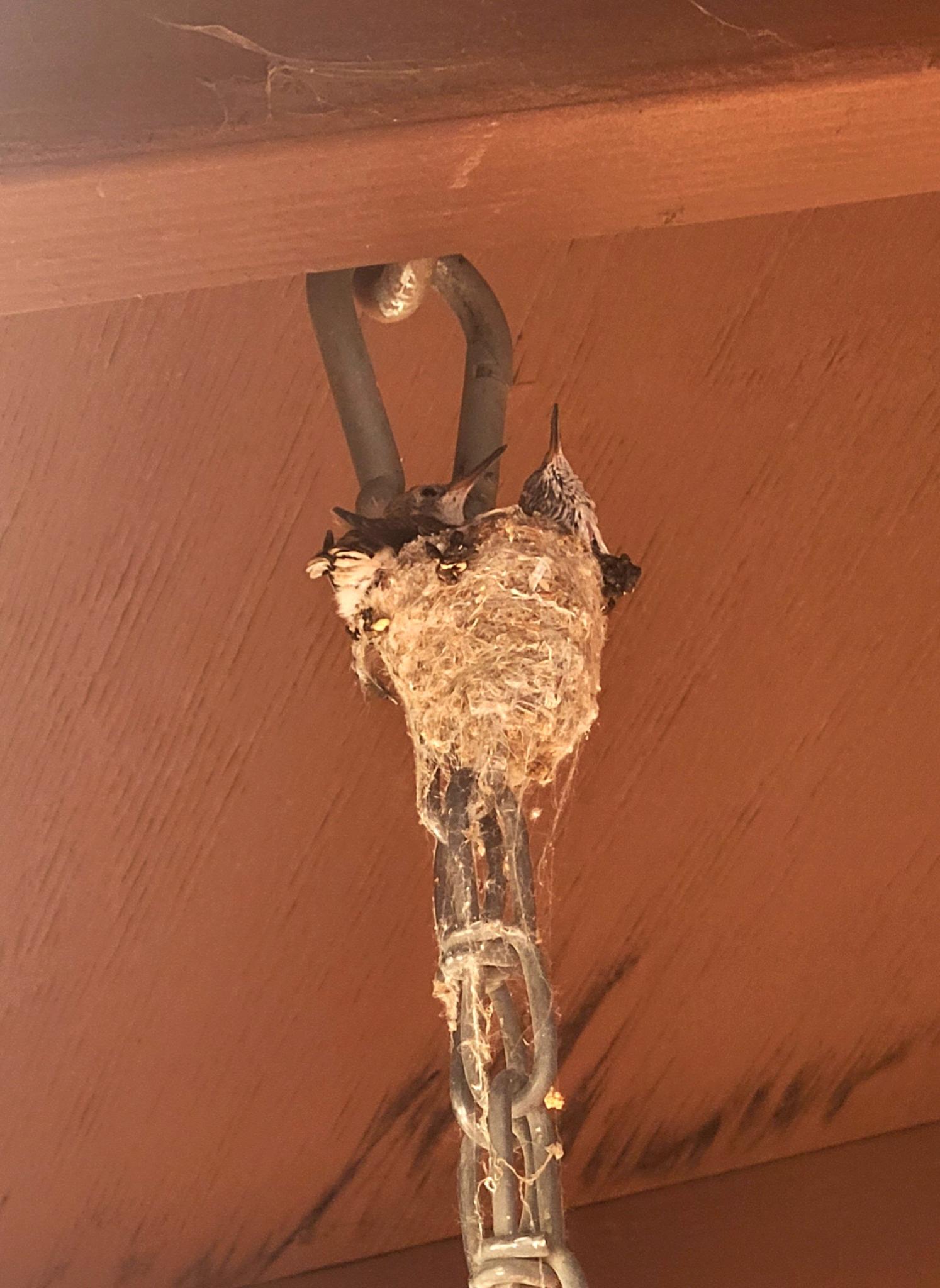
My older brother and I used to go on walks in nature. I remember he liked to, as he would say, "mess with things." I think much of the bad that happens is from such people. I call them "Exploiters," although I am unaware of any systematic research on the damage these types of people do (as Chomsky suggested, someone needs to look at the republicans), other than references-to, in, say, more-recent deep reviews of the Stanford Prison Experiment, etc. (The condition may be related to an addiction to excitement/chaos, but that research is very young.)
__________________
** Of course, I also realize our tech is a very small thing compared to quadrillions of F0/F1 ATP synthase turbines fueled and running in our mitochondria
…this is to say, Life . Nowadays I also can't look at another person without wondering about the quadrillions of synthase turbines.
______________________
Wow. That visualization is incredible. Thanks for sharing.
Is there any way to make birding/listing a team sport? While watching the NBA playoffs, I caught an interview with a few of the Denver Nuggets (home of Nikola Jokic, noted on Crazy Town and elsewhere for his unselfish play) and it got me thinking about more constructive ways to channel the competitive spirit, and bring some collaboration/cooperation into the picture. Maybe Jason could pair up with the guy who's always outbirding him – I assume he's not far away – and they could compete against another bioregion. Just a thought.
P.S. best commercial ever
I was amused at how Jason's voice got all high-pitched when he got defensive about his bird jones.
On the question of insect numbers on farms in your area–isn't it near Corvallis? Carol Deppe has an interesting story in one of her books about a bean expert at the U there who told her she didn't need to worry about different bean varieties crossing, so she didn't. Grew a bunch of different varieties in one area. The next year she discovered that every variety had crossed with every other variety. When she told the prof this, he came out to her place–and was amazed at all the insects everywhere…because she gardens organically, but his research farm is not organic. And it made so much difference that he thought beans were strictly self-pollinated.
Wow, what a crazy story. Some strong ties between OSU (here in Corvallis) and Big Ag.