Two kingdoms, once close allies, are now locked in a sprawling contest — fought through proxy armies, megaprojects, and competing visions for a post-oil future. The party isn’t ending tomorrow, but both of them know it’s ending.
The rise of ‘Hybrid War’
The term ‘hybrid war’ gets thrown around a lot nowadays. Russia’s hybrid war against Europe, China’s hybrid war against Taiwan, America’s hybrid war against seemingly everyone but its adversaries. This is a new phenomenon. The term was rarely used before the start of the Ukraine war, but has since skyrocketed into common parlance across both mainstream media and policy circles.
The sudden explosion of the term can give the impression that, up until this uniquely tumultuous period, all warfare was restrained to well-planned pitched battles, and no forms of economic, political, or technological interference were ever tried. This is obviously not true — “the idea of combining military force with other resources to sap an opponent’s will to fight is as old as war itself.” But there is something to be said for the idea that, given the staggering interconnections of the modern, digitised world, the avenues for attack beyond military force have proliferated explosively, into the murky realm of ‘grey-zone aggression’: where economic, digital, and cultural tools are used as much as kinetic weaponry.
If I had to pick one contemporary conflict that characterises this new type of political struggle, it would be the Saudi-UAE feud. But to understand why two former close allies are now at each other’s throats, you first have to understand what’s happening to oil.
Friends to enemies
This current conflict has emerged relatively suddenly. Though the relationship between the two countries has not always been entirely sanguine, it was generally genial and, until recently, extremely close. Indeed, the only open conflict between them was a border dispute when the UAE was still a British protectorate and Saudi soldiers were fighting from camelback. Aside from this minor historical fracas, the nations cooperated economically and militarily, and even their respective monarchs shared a close personal relationship — with the Saudi monarch Mohammed bin Salman (MBS) viewing the Emirati prince and president, Mohammed bin Zayed Al Nahyan (MBZ), as a mentor in his own nation’s political and economic modernisation.
So what went wrong? Why did the road they were both once travelling suddenly become too narrow for both of them? And why now?
There are many potential reasons: economic competition for regional dominance, diverging foreign policy priorities, proxy conflicts in multiple countries, and the suddenly emergent personal rivalry between MBS and MBZ — what hatred is worse than a former friendship? Saudi commentators claim the feud is almost exclusively about national security concerns, with UAE meddling in Saudi border regions like Yemen. But the signals suggest a much wider struggle — one with a deeper structural cause. To understand that cause, we first need to trace how the rupture has actually expressed itself.
Petrostate proxy war
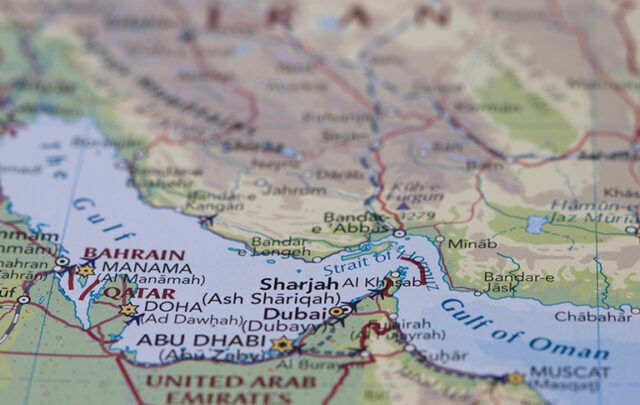
In many ways, this conflict is a classic proxy war. Both countries support contending sides in multiple regional conflicts with arms, money, and political clout. In Yemen, both back different government factions, with the leader of the recently crushed Southern Transition Council (allegedly) fleeing to his UAE backers, whilst Saudi Arabia supports the Presidential Leadership Council (PLC). In Sudan, the UAE ‘unofficially’ supports the paramilitary Rapid Support Forces, and Saudi Arabia supports the ‘official’ military dictatorship in the Sudanese Armed Forces (SAF). The UAE’s involvement is an unofficial open secret — verging on an Emperor’s New Clothes sort of affair. That planeloads of drones from Abu Dhabi land in RSF strongholds, and planeloads of gold make the return trip, is, of course, a complete coincidence. Neither Saudi Arabia nor the UAE wants to see bombs dropping on Dubai and Riyadh (Iran had thoughts otherwise), but there are still ways to gain a military advantage that, fortunately for both, only spills the blood of foreigners.
But the hybrid war they are waging extends far beyond this. Economic, cultural, and ‘narrative warfare’ are all mainstays of this conflict. Both are on an aggressive charm offensive, wooing foreign capital, high-net-worth migrants, and hegemonic favour. Saudi Arabia now requires companies to move their regional headquarters to Riyadh to win government contracts, and applies higher tariffs and regulatory barriers to Emirati businesses. Both are launching massive AI strategies and competing for the same clients. Both are going hard on renewable energy. Both are positioning themselves as low-tax, low-regulation paradises for Western businesses. Both, by offering to host diplomatic agreements, are looking to situate themselves as the region’s pre-eminent political powerbroker. And both are, not coincidentally, petrostates desperately seeking to diversify away from their dependence on black gold — a resource that is declining, albeit gently, in production, demand, and security.
That dependence, and its slow unwinding, is the root of everything.
The writing on the wall: oil’s slow decline
The electrified, renewable economy is emerging fitfully into view — driven mainly by China, but signals from places as diverse as Kenya, Pakistan, and Lithuania are showing a decisive shift in the energy economy. “The nascent global energy transition”, as Joshua Lappen and Emily Grubert write:
“Involves two parallel processes: the retirement of existing fossil fuel–based infrastructure, and the widespread deployment of [renewable] alternatives in its stead.”
I feel honour-bound to temper the enthusiasm by noting that this does not mean we will see the end of oil in the near future (and climate change will continue to worsen as a result). But inevitably and irreversibly, this trend is going to start grinding away at fossil fuel profitability. Though it is an industry prone to huge swings in profitability, any ‘crash’ in oil has historically been a stagger on its endless upward march. A world where this pie is shrinking — no matter how gracefully — will be a profoundly different one.
Both Saudi Arabia and the UAE are only moderate petrostates, meaning that roughly 60% and 40% of their respective government revenues come from oil, compared to, say, Iraq, an ultra-petrostate at over 90%. But this constant stream of revenue underlies much of their diversified economies, just as it does (to a lesser extent) in Norway. It is what allows the UAE to charge no income tax and only 9% corporate tax on companies earning over $100,000. Fluctuations in the price of oil immediately alter the economies built on top of them. When prices drop in Saudi Arabia, for example, budget deficits rise sharply. As fluctuations, these are manageable. As a prolonged trend, price decline represents a different challenge entirely.
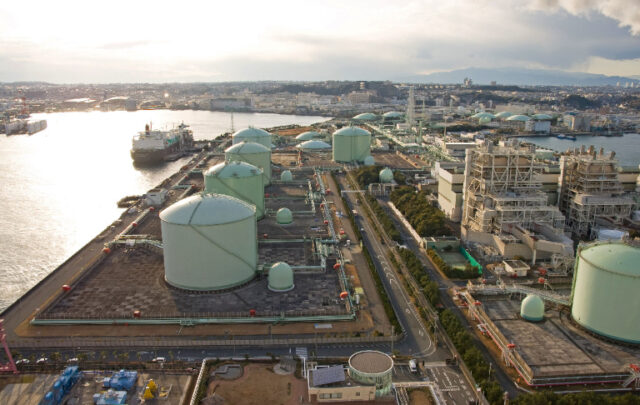
There is also such a thing as a minimum viable scale. Oil demand needs to be high enough to support the continued cost of operations, extraction, exploration, refinement, and labour. Oil is an expensive industry that lends itself to scale, hence why state-run businesses dominate the market. But it doesn’t decline gracefully forever — once demand, price, and production drop below a certain threshold, profitability drops to zero. This cliff edge is a long way off, but to such sophisticated modellers and manipulators of oil markets, it cannot be invisible to either Riyadh or Abu Dhabi. MBS has openly spoken about breaking his country’s “addiction” to oil, but has achieved rather lacklustre results.
So they are not staring down the barrel of their oil wealth becoming worthless. But they are staring down the barrel of a world where it is of depreciating value, and where the massive costs required to extract it deliver lower and lower returns on investment. Their entire political economy would be thrown into confusion in such a scenario. In this context, it’s no surprise that the core aim of Vision 2030, Saudi Arabia’s main policy strategy, is to cut its economic dependence on oil. The party’s not ending tomorrow — but it is ending.
The diversification race
This is why the UAE and now Saudi Arabia have spent so much building gaudy international business and tourism hubs powered by renewable energy. These are where they are betting the future. But as staggeringly wealthy as a place like Dubai is, it is still a niche market. There is only so much internationalised luxury and 50°C-loving tourism to go around, at least at a scale viable enough to power either country on reduced oil revenues.
It is why projects like the pharaonic NEOM can be seen as a direct front in the UAE-Saudi feud. Dubai has the tallest skyscraper in the world? Saudi Arabia will build the longest — and tallest — and it will have a chandelier so large that the Earth’s rotation spins it. It is a direct, if somewhat childish, challenge to the UAE’s pre-eminence in the ultra-luxury mega-project sector.
For a front in the grey war, NEOM has probably had the most casualties. Local Bedouins have been executed, and as many as 21,000 deaths have been reported among the construction crew. Pharaonic, indeed.
Ultra-petrostates like Iraq, meanwhile, are looking into a truly bleak future. Iraq has no realistic chance of diversifying away from oil revenues, which make up something over 90% of government revenue in what is already a dysfunctional, basket-case state — one currently witnessing the extinction-level collapse of its ecosystem and agriculture. For those keeping track, that is the land whose name means ‘well-watered,’ now withering into permanent drought. The thing it was historically reliant on has shrivelled away, and the thing it is currently reliant upon is about to take an irreversible economic hit.
Saudi Arabia and the UAE are not facing the same kind of existential threat. But they are facing an uncertain future in which diversification into business, finance, services, and tourism is their only option to fill the slowly widening fiscal gap in their oil-backed state revenues. Their proxy conflicts, their charm offensives, their competing mega-projects — all of it is the diversification race made kinetic. They need the slice of the pie that the other has, or wants, because the oil revenues both currently rely upon are set to enter a drawn-out decline.
Tighter deadlines
The future of this conflict is difficult to read, not least because the old kind of war keeps disrupting the new kind. The Iranian strikes on both countries exposed a fundamental contradiction at the heart of the Saudi and UAE strategy: you cannot simultaneously exist as a conflict zone and an international business haven. The strikes were a shock to the investor and tourist classes both countries have spent years cultivating, and their competing charm offensives may now be battling over businesses and visitors too afraid to venture to the region, at least for the foreseeable future.
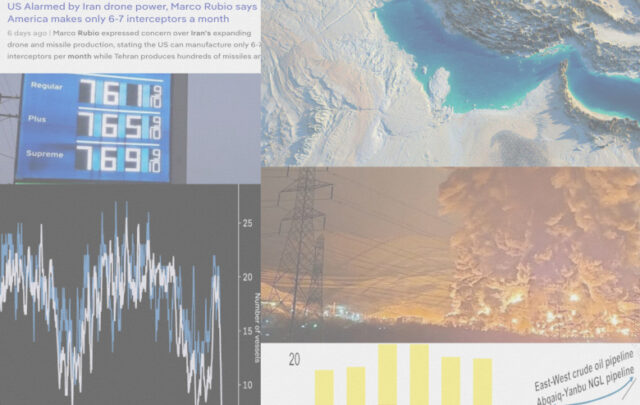
The strikes have also likely accelerated the clock on oil revenue decline. Whilst the Iranian disruption has suddenly supercharged oil prices, as the green energy entrepreneur Dale Vince loves to point out, oil is becoming an increasingly volatile asset. As it grows less attractive, its renewable alternatives will start to look correspondingly more appealing. Self-serving logic of a green energy mogul aside, there is a core truth here: oil price instability leads to fiscal chaos, and a multipolar world is not a recipe for oil price stability.
This is the paradox both Saudi Arabia and the UAE are now navigating. The grey war they are waging — economically, culturally, through regional proxies — is a race to secure the post-oil future before the other does. But the guns and bombs of the older order keep intruding, making that future harder to build and harder to sell. They are racing against a deadline that keeps getting brought forward.
The party’s not ending tomorrow. But it is ending. And they both know it.
Originally published in The Geopolitical Climate, a new blog covering the two mega-trends of our time: geopolitical multipolarity and climate breakdown.