When my post-60s generation sought to do good in the world, a common career path—and the one I followed—was to go to law school, work for a public interest group, and learn how to get by on a salary of $10k per year. What was not advertised is how much time you would spend begging for money from deep-pocket individuals and foundations. I became pretty good at it, but gradually became annoyed at letting my agenda be set by precisely the privileged institutions that most needed to change.
As Merrian Fuller and I wrote in “Profits for Justice” for the Nation in 2005, nonprofits are actually the worst vehicles for social change. They are generally poorly managed, treat their employees like indentured servants, and are legally limited in their ability to lobby and participate in electoral politics. The better path, we argued, was to create a new generation of local businesses that delivered the goods and services communities most needed. Worker co-ops, renewable energy companies, co-housing projects, health clinics, you name it.
It was that thinking that led me, ten years ago, to start teaching at Bard’s Green MBA Program, where I now teach classes in economics, economic development, community investment funds, and “sustaining mission.” And what I can report is that the several hundred students I taught have created, run, or improved an amazing assortment of mission-oriented enterprises. Unlike most business schools that relegate sustainability to one day in a 15-week course, every hour of every course—from economics to marketing to finance—teaches how business can change the world.
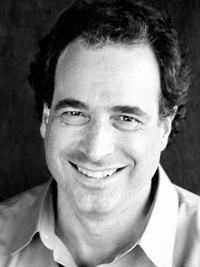
This week’s interview is with the program’s co-founder and Dean, Eban Goodstein. If you know anyone who is thinking about grad school and wants to support local economies, please share this interview with them. We’re always looking for the next generation of great business leaders.
— Michael H. Shuman, Publisher
Publication of The Main Street Journal depends on your support. If you like what you’re reading, please consider becoming a paid subscriber today. If you can afford to send a gift, better still!

MS: When you and Hunter Lovins set up Bard’s MBA in Sustainability Program, what was your vision? Why did the United States need another business school?
EG: A lot of people think about driving social change through policy or education. But no matter how many rules we change through policy, or minds we change through education, business ultimately has the power to change the game. This means radically reinventing how we get food on the table and keep the lights on by designing out waste, pollution, and the exploitation of nature and people. Almost all business schools today are trapped in a profit-first paradigm. Bard’s MBA supports students in building businesses (and nonprofits) that are in business to solve today’s profound social and environmental challenges. You have to make money, of course—“no margin, no mission”—but we teach our graduates how to put mission and sustainability first, with confidence that financial success will follow.
MS: So now, in the program’s 14th year, how is it going? Is the need as great now as it was?
EG: Definitely now more than ever. Fundamentally, there are eight billion of us on the planet, soon to be nine and then ten. Half of those people are barely getting by, living on less than ten dollars a day. And everyone is aspiring for more and a better quality of life. At the same time, the planet continues to heat up, our oceans and our bodies are filling up with plastic, and we are losing major ecosystems at an accelerating rate. At the heart of these problems are businesses—and business schools—still centered around profit-first, linear systems: “take, make, waste.”
We are on the cusp of a circular economy revolution, grounded in ecological design, where all waste from one production process is food for another. It’s been an incredible privilege to work with faculty like you to design this new kind of business school that teaches students how to lead that revolution.
MS: How many students have gone through the program? And what kinds of careers have they gone into?
EG: We have around 650 alumni from our three sustainability grad programs. We were recently recognized as the MBA ranked #1 for Impact in the World. The ranking outfit looked at 170 MBA programs worldwide, and we were #1 by far in the percentage of our alumni working on business sustainability teams, or for companies well known for a focus on sustainability.
Career success is at the core of our program, grounded in our “Individualized Career Planning,” in which students meet regularly with our career advisor, Ayana Pilgrim, to map out their two or three-year career journey with us.
Our grads are working in finance, food systems, energy, fashion, the built environment, affordable housing, supply chain, and nature-based solutions. And as entrepreneurs, consultants, in conventional business roles in mission-oriented local businesses and nonprofits, and on sustainability teams. You can see where all of our graduates are working—and get a sense of what a sustainable business career looks like in our online alumni profile book.
The sustainability job market grew at a ferocious pace from around 2012 to 2024. Now, with the economy reeling from chaotic government policies plus AI, hiring has slowed. But work on climate, energy, food systems, justice, toxics, and biodiversity—all this continues. Especially in this environment, the Bard MBA—with a strong alumni and professional network—is among the best graduate programs in the world for launching or retooling a mission-driven career.
MS: Tell us a little about the curriculum. In what ways is it similar to a traditional MBA program, and in what ways is it different?
EG: We teach a lot of conventionally sounding MBA courses: marketing, strategy, finance, economics, operations, supply chains. But in every course, we focus on how to use those business skills to build or transform companies into a mission-centered orientation.
We have three verticals. The first is Sustainability Vision: how to see profitable opportunities where others see social and environmental costs. The second is Leadership: once you have the vision, how do you get your people aligned? This means personal leadership, leading teams, designing organizational systems, and—as in your capstone course “Sustaining Mission”—how do you keep a mission-oriented approach when competing against profit-first companies? The third vertical is Business Execution, covering the standard MBA toolkit.
In addition, we have a curricular commitment to ensure that all of our students are effective leaders for what we call JOI—Justice in Organizations and Impacts—with a particular focus on ensuring racial equity in organizations and in business impacts.
Finally, the curriculum is highly experiential. We are the only MBA in the world to offer a year-long course in sustainability consulting where students work in teams for corporations, startup and nonprofits; students also participate in two different semester-long business model projects culminating in pitch competitions; in addition, our students conduct B-corp assessments as part of their coursework; and finally in our year-long capstone, students do more hands on work as they build out the experience needed for a resume bridge to their desired career outcome.
MS: Plus, I should mention that we recently created a student-run consultancy, actually a worker-owned co-op, called the Bard Innovation Group or BIG. Let’s shift to the structure of the program, which is an interesting mix of residential and online learning. How exactly does that work?
EG: Classes meet in person one weekend each month in Dumbo, Brooklyn, for four ten-hour days, plus online, synchronous classes on Tuesday and Thursday nights. So I think of the program as twenty 4-day retreats spread out over two years, or thirty 3-day retreats spread out over three years, and tied together online. This kind of intensive retreat-based learning is really the best approach for a skills-based curriculum. We are big believers in the power of in-person learning, and overall, the program is ⅔ in person and ⅓ online.
Our students are all working professionals. The three-year program is for people working full-time, and the two-year intensive is for those working half-time. Students attend from the NYC area and from all over the US—LA, Houston, Denver, Boston— flying or driving in monthly for the weekend sessions.
MS: Bard College is based in Annandale-on-Hudson, NY, about a two-hour trip up the Hudson River from New York City. Why did you base the program in Brooklyn?
EG: New York is the US center of sustainable finance and consulting, home to a vibrant startup community, and also the location for Climate Week. This creates a very deep talent pool for our faculty, guest speakers, and internship and conference opportunities. NYC is also easy to get to for students travelling in for the weekend intensives. Plus—great food and bars! We do have one weekend each year in September on the main Bard campus, with accommodations and food included as part of tuition.
MS: How would you describe the profile of the typical student in the program in terms of age, gender, racial diversity, and background?
EG: “I never thought I’d get an MBA” is the common refrain. We have very few who were undergraduate business majors. The students all share a desire to build a meaningful career in for-profit or nonprofit organizations, helping to create a better world. Our students include artists, bankers, biologists, actors, engineers, writers, and entrepreneurs. More than 70% of the students are women, which is very unusual for an MBA program, which is typically 60% male. About 40% of our students identify as non-white, and about a third are first-generation college attendees. Most students are 26-34, with a couple of folks right out of undergraduate, and a few in their 40s and 50s.
MS: The cover of a 2022 issue of The Economist was titled “ESG: Three Letters that Won’t Save the Planet.” It discussed the growing critiques from both conservatives and progressives about how to nudge businesses to perform with higher environmental, social, and governance standards. Where does the Bard program stand in this battle, especially given the deep hostility of the current administration to these ideas?
EG: Michael, let’s imagine a future 50 years from now where we get a lot of things right. In particular, businesses have figured out how to design out both pollution and exploitation of workers, communities, and suppliers, and a just, circular economy is really beginning to emerge. On climate, businesses have largely transitioned to solar plus storage for energy and transportation, and CO2 levels have stabilized. This shift will take good state and local policy. It will take better education. But ultimately, businesses have to figure out how to deliver all this innovation in a financially successful way. Some of our students are doing this work now in large corporations—Walmart, Target, McDonald’s. Some of them are doing it in worker-owned cooperatives and other local businesses, some in small and large nonprofits.
ESG value creation was the Wall Street term for sustainable business. It’s the idea that companies pursuing social and environmental benefits could outperform companies focused on short-term profits. For the last twenty-five years, there was a lot of hype—but also a lot of genuine experimentation—on business strategies to solve pressing social and environmental challenges, and transitioning to circularity. From a base of roughly zero in say 1999, at an intellectual level, we have made huge progress in advancing these ideas within the C-suites of big corporations—even replacing profit-first capitalism with stakeholder capitalism as a declared purpose of business at the Business Roundtable.
This has triggered a ferocious, politically led backlash, with many companies abandoning their stated commitments and most American business schools retreating into their comfort zone of profit-first business education. Who wins this battle of ideas? Time will tell, but it is important to recognize we are just getting started. In this particularly dark moment, Bard continues to champion and prove out the idea that “business for good” is ultimately, “good business.”
MS: If readers of The Main Street Journal know of prospective students who might be interested, how can they get more information? And are scholarships available for those who cannot afford the tuition?
EG: Here is a video, and our website. We are also having an online information session on February 10, at 7 pm, and you can register here. Scholarships and financial aid are available, including need-based aid, as well as dedicated scholarships for first-generation college graduates, for people who seek to pursue careers driving social equity, and for higher education sustainability professionals. More details on tuition and financial aid are here.
MS: A growing number of your professors—myself included—teach students about the virtues of local investing and how to do it. So how do you invest locally where you live?
EG: I bank and borrow through a local credit union. I don’t yet do any direct local investment, but I work with a local sustainable investment firm to manage my retirement savings.