Show Notes
Picture the future 100 years from now. What do you imagine? Flying cars? Space colonies? AI talking toasters?
But if we can’t sustain an endlessly growing economy – even with a transition to green energy – what does a realistic and positive future look like?
Alex Leff of the Human Nature Odyssey podcast joins Jason, Rob, and Asher to imagine life in the 22nd century: walking from our family farms into communal villages, living off the land in a low-energy lifestyle, taming our pet donkeys, and resisting our local warlords.
It’s not the future the movies told us to expect. But it might be a future we enjoy living in.
Sources/Links/Notes
- Human Nature Odyssey podcast
Related episode(s) of Crazy Town
- Episode 3 “1.21 Jigawatts: Energy Literacy and the Real Scoop on Fossil Fuels”
- Episode 5 “Solar Freakin’ Roadways: How Technological Optimism Undermines Sustainability”
- Episode 106 “Blinded by the Light – Facing Reality with Renewable Energy”
Transcript
Rob Dietz:
I’m Rob Dietz.

Asher Miller:
I’m Asher Miller.

Jason Bradford:
I’m Jason Bradford.

Alex Leff:
And I’m Alex Leff. Welcome to Crazy Town where living within walking distance to your friends and family, eating healthy food grown right in your background, and not contributing daily to the mass extinction of life on earth sounds like some kind of idealistic fantasy.

In today’s episode, I talk with Jason, Rob, and Asher about what a potentially positive vision of the future could look like, if we manage to live within our means, practice a low energy lifestyle, and change our expectations about what living a good life is.

Hey there. I’m Alex Leff. This is part 2 of a 2 part collaboration series between Crazy Town and Human Nature Odyssey.

What will the world look like 100 years from now? What do you imagine? Flying cars? Space colonies? AI backscratchers? Well what’s powering all of that stuff? Are we still burning fossil fuels? Or did we finally make the switch over to renewable energy?

Or are you imagining a bleak, post-apocalyptic hell scape—where you’re lucky to scrounge a few edible scraps from the mountains of microplastic and toxic waste.

But what if the future is wilder than our high-tech daydreams or end time nightmares?

In the last episode, I strung together highlights from the podcast Crazy Town, hosted by my colleagues, friends, and mentors Jason Bradford, Rob Dietz, and Asher Miller at the Post Carbon Institute.

They discussed the sheer amount of energy our civilization has been built on, the challenges of a renewable energy transition, and the consequences of exponential growth on a finite planet.

And where we left off, Rob was saying “we’ve got to change our expectations of the future.” So today, I step into the time machine with Jason, Rob, and Asher, to find out what a future based in reality might actually look like. Don’t worry, we saved you a seat. They just got here too. Come on in!

Alright thanks for joining me today guys.
Previously on Crazy Town…

Maximilleon Tyranery the 4th,:
I, Maximilleon Tyranery the 4th, am proud to unveil the launch of a marvelous new invention: the world’s first time travel device.
I can hardly wait to see the gleaming cities, listen to the glorious hum of endless AI data centers, and behold the marvel of unlimited renewable energy making it all possible. An abundant techno-utopia awaits us my friends.

Oh um, one thing, only one person can fit into the machine. It’s… well… a bit cramped. We hit some budgetary constraints. But don’t worry – I will go it alone. But please hang tight. Rest assured knowing that it does get better and that there’s nothing you can’t do if you believe in yourself. And have enormous sums of money.

All right, it’s time to make history. One small step for man, one giant leap for-

Max: What the- what is this?

Kid: Great-granddad?

Max: Ughh, there must be some mistake, who the hell are you?

Kid: I’m you great-grandson, 100 years in the future.

Max: No, that can’t be. This can’t be the- why are you so filthy?

Kid: I was helping in the garden. Tomorrow is the Turnip Festival.

Max: The garden? No, no, no. You shouldn’t be doing peasant work-

Kid: I like helping in the garden. Come on, great-granddad, I’ll take you to the village. You can sit in on our local council. We’re discussing the next mutual-aid skill exchange and watershed celebration.

Max: What?! No, no, where are the skyscrapers? The data centers? The solar powered jet planes? Where is the city?!

Kid: Most people don’t live in cities anymore. And it would take days to get there.

Max: Days? God, no. So the doomers were right! You’re all miserable now—

Kid: Miserable? I don’t know about that. Some days it rains and storms, some days are clear and warm. There’s family and friends and lots of things to do and explore. Is… is that what miserable means?

Max: Nooooooooo!!!!!

Alex Leff:
A hundred years from now, what does the world even look like?

Jason Bradford:
Yeah, no, I'm ready to go. I'm ready to - I'm all in this.

Alex Leff:
Let's start. Let's spit ball. What do you got Jason?

Jason Bradford:
So here's what happened to me. I grew up in suburban California, a fairly depoporate place related to nature. I mean it was pavement, ball fields that were just tall fescue. But you know what really, what I was really stunned by was when I went on a school trip at the end of my sixth grade year where we spent a week at this marine center, Marin Headlands, and I cried when we left. I was literally on the bus with tears flowing down my face as we went away. Cause I'm like, you mean I don't get to live here? And so when I think about the future, I think about this modern world we created that has dissociated us and distanced us from nature has fallen by the wayside and we have no choice but to be the people living in real connection with the natural world. And so part of me is actually hopeful about that, about people being that way again and having that opportunity. The opportunity that was denied to me. So if I think a hundred years from now when we don't have all these trappings, you have kids growing up in a different culture completely where they're not hooked on social media, they're not getting fed junk food and they're not pre-diabetic and inactive. They are literally outside playing and learning to live with the world, which were some of the best moments of my young life. But not my day to day.

Alex Leff:
Should we be imagining that a hundred years from now is just, you know, several hundred years in the past. We always have this linear video game level view of technological advancements. So it's like, are we going to be more advanced or less advanced? Those are kind of the options we're given. Should we be imagining ourselves regressing technologically? What aspects of modern technology and modern knowledge would exist in a low energy future?

Asher Miller:
I think this is almost the impossible question to answer, and it's not just because of the challenge of our imagination. It's that I have a question that I've never seen really answered in a really analytical way, and that is how much complexity in society has to exist for a single solar panel to be manufactured? And I don't have an answer to that question because a single solar panel right now requires this entire train of complex civilization to manufacture it. So even if we have far fewer solar panels in the future and they're built in a way that they're easier to repair, do we still need to have the entire scaffolding of civilization exist in order to have that single solar panel? And I don't have an answer to that question. So I don't know. I would like to think that first of all, there are a lot of amazing technologies pre-industrial age. So when we think about technology, we have to recognize that technology has lots of forms. We just tend to think of it now as in the form of the computer in our hand. That's incredibly powerful, right? But we've done all kinds of amazing forms of technology for millennium on millennia. I imagine that we are using a lot more muscle power and the proportion of biomass that's being used for energy might not actually increase overall. That's a good question. But proportionally, it will increase. If that makes sense?

Alex Leff:
And biomass is like burning wood. It's chopping down trees. Putting it in the furnace.

Asher Miller:
I don't know if we'll be burning more wood in the future as humans. It's a question of how many humans are around in a hundred years. That's an open question. But as a proportion, muscle power and biomass, I think, will play a bigger role in our energy future. I would love to think that we have some forms of communication technology that still exists. Really open questions for me about the internet. Does the internet exist in a hundred years? I would like to think it would. Pretty amazing thing. It can be a pretty amazing thing. We use it for a lot of stupid shit, but I don't know about that.

Jason Bradford:
I want a flag that we've dealt with this question in episodes and the guy that keeps coming up is Chris DeDecker. So just to flag Chris DeDecker.
He has partial answers to this. What's crazy is that there's not a whole team, like the university system isn't turned towards this. I think some of this could be really wonderful, almost like a solar punk kind of situation where, you know, it ain't that bad. We don't have all the trappings we've had. We know a lot about how electricity works and boy, isn't it nice to be able to coil wire and get things spinning and transmit power through these little tiny cables as opposed to having giant mechanical gearing for everything. I mean, it's kind of cool. And I wouldn't want to give all that up. I think we're going to have a combination of scavenging from the excess, finding metal roofs and just repurposing them for hundreds of years without having to smelt as much because overbuilt so many things. And then people being really clever and really figuring out and understanding how things work and keeping a lot of this stuff, this relictual technology going. But then there's also stuff that is hearkening to the past. So for example, one of the big fears I had when I understood the situation was that all the beautiful forests that surround, I grew up in the San Francisco Bay area, and you've got these urban areas and then these beautiful hillsides in Oven, Bay Laurel, and Redwoods, and that all just got cut down quickly because people will get desperate for energy. And I think there were ways that people managed wood resources. They're so different than what we have now. We've completely forgotten . . . Compassing systems - But they also use wood very inefficiently. They didn't understand how to trap them well, and the stove design . . . We've had these appropriate technology people that have figured out how to help people cook without having smoke inhalation in their home using small pieces of wood that they collect and convert more of that into useful work. We're way better than we were in the middle ages at actually making use of biomass efficiently, so to speak. So again, it's not a world that's not interesting and doesn't have amazing problems to solve, but we're making TikTok videos and now AI is just spiraling out of control as opposed to paying any attention to what really will matter. And so that's what is frustrating, but that's also kind of exciting if you get into it.

Alex Leff:
Rob, I wanted to ask you, you know, you come from an ecological economics background. What does the global economy look like at the end of the energy transition that you would be rooting for?

Rob Dietz:
Yeah. Well the question in economics, I worked with my professor friend Dan O'Neill on a book called "Enough is Enough," which laid out the whole set of policies that you would need to have a sustainable economy. But that was looking mostly I would say at the national scale. So all these things that you could do, we were joking about it in a recent episode. We were talking about quotas and rationing and taxes. Wildly unpopular things that essentially put restraints on how much energy we're taking, how much material we're consuming, how much we're burning. All those things are not likely to happen short of some horrendous collapse. So when I think about the future of the economy that's actually going to work for people, what we're talking about is moving downward from this global scale to the bioregional scale or even something really local and what that means for the future, you can kind of think, oh, well, I'm not going to have as much access to this massive flow of goods and services. Well that may be true, but did that massive flow actually make you better off or happier? There's a case for and against in that, but it does allow for sort of a slowing down instead of goods and services whipping around the world at breakneck speed to make sure your Amazon shipment gets to you in 14 hours. You are sourcing more of your goods and services from the ecosystem where you live. And to me, that's really exciting. If you want examples in a sector, you can look at the food sector. So instead of eating Ho Hos that arrive at the local gas station that were created in a factory in some other spot around the world and had to be put on a cargo ship, well now you're joining your local community supported agriculture set up, right? You're dealing with people who are growing food locally.

Jason Bradford:
You have local Ho Ho recipes. Indigenous to place.

Rob Dietz:
I often think about it in the transportation realm. You know, Asher was talking about more muscle power, using your body more. We've done episodes where we talk about the efficiency of the bicycle for getting from point A to point B, and if you sort of slow down and base your economy on a transportation system that is more resource and energy efficient, but maybe not quite as fast, there's all kinds of benefits that come with that. Your own personal health, the ability to rebuild ecosystems. If you don't have a massive highway and road network that you're dependent on and that you're always having to pave and then pave more, you can imagine having a far greener, better air to breathe, not as much sound pollution, all of that kind of stuff. It just means the economy moves at a little bit different pace than what we've become accustomed to.

Jason Bradford:
Is donkey braying sound pollution, noise pollution? Like a braying donkey? It's kind of a pretty loud.

Alex Leff:
Whoa, that was good.

Jason Bradford:
Is that okay? I figure we will have donkeys again. And I love donkeys. I think they have great personalities. They are really good livestock protectors because they're instinctively very anti coyote and wolf and you can hook 'em up and take 'em places.

Rob Dietz:
Well this gets to Asher's question about what we're going to be able to keep and how much civilization do you need to build a solar panel? How much civilization do we need to genetically engineer donkeys not to bray anymore.

Jason Bradford:
Okay, see, this is the stuff we should start working on right here right now.

Rob Dietz:
Can Chris DeDecker and his low-tech do donkey genetic engineering? Is that still on the low-tech?

Asher Miller:
That's just called breeding, dude. That is a low tech way of doing that. People have been doing that for a very long time. Now, there are people that are looking at this question of how do you engineer for an energy transition? Very few of them are looking at it with the built-in assumption of less energy available in a decomp complexified economic system or societies. There is a woman, I think she's in Australia, Susan Krumdieck, who has this whole approach that she's been looking at in terms of, she calls it transition management engineering. And I think she's trying to get at this question and think it's one of the most important areas to look at. Honestly, because we published this book, "Our Renewable Future" years ago. I wish we could do an update on it. And part of the reason we did that was because we felt like in the discussion about the energy future, the ones who were actually engaged in it needing to change, right?

Alex Leff:
Away from fossil fuels, towards renewable energy?

Asher Miller:
Away from fossil fuels was very pro concentrated large scale, complex, advances in efficiency in technologies, blah, blah, blah, blah, blah. You know, high speed rail, these kinds of things. And there's very little that said, okay, what does the energy future look like if we're using a lot less energy because we don't have a choice but to use a lot less energy.

Jason Bradford:
It's low speed donkey.

Asher Miller:
Low speed donkey. I think maybe. There's still sailboats that could move pretty quickly.

Jason Bradford:
Yeah, yeah. Catamarans and stuff with the fancy sails.

Asher Miller:
You know, hand carts on rail. There are things that we could do.

Jason Bradford:
I think so.

Asher Miller:
All I'm getting at is this is a really important area. So if anybody's listening to this is an engineering type of person or wants to go into engineering, there's a lot of space to think creatively about how to solve these problems. And when I do think about the future, and we recognize trade has existed for millennia as well, right? We're not saying trade will go away, but it may be that certain things, if we're able to still have complex technology in the future that people can use batteries, for example - Jason, you had interviewed this guy, Martine, I think, who is doing this whole engineering project of what are the tools that people need in the future? And it was designed in a way where you could take the same parts, it's modular and you could like, now you've got your brick laying machine and you take the same sort of battery or engine out of this other machine, your tractor or whatever, and you put it into that. So you can think about designing smartly to be able to repurpose things, but let's say we still need batteries in the future. Will it be a situation where our communities are well placed because they could source the raw materials for that. And what makes the most sense is to actually industrialize in place. It's just going to be that it takes a long time to get that battery and it's going to cost a shit ton more money than it currently does now. Not in terms of dollars, but in whatever the value of things are. Do you know what I mean? And so you'll take that battery very seriously. It'll be built in a way hopefully that you could fix it pretty easily, or whatever. So it's like our colleague Richard Heinberg has talked about - Everyone being giving a cell phone in the future that they have for their life.

Jason Bradford:
Yes.

Asher Miller:
Which is like an insane concept. Anybody listening is like, fuck that. I get a new one every year, or whatever. So that's so different. I don't even know if we can actually achieve that. But it's more thinking in those lines. It's like the technology that we build, the energy that we're consuming, is going to be designed to be durable and to last and to be used in wise ways, not in stupid ways.

Rob Dietz:
The real issue here though is that the incentives in the economy are not geared toward let's have super durable products that you never have to replace. Let's consume locally rather than getting the cheapest thing that we can from the entire global supermarket. What's going to happen, and those kinds of ideas like relocalize the economy have been around for a long time, you know? Think globally, act locally, whatever. The idea that we're going to do this wholesale is it's kind of dreamlike until something happens where the international order and globalized capitalism starts to fall away

Asher Miller:
And then it won't be global or ordered either, right?

Rob Dietz:
Well, you can't fix all this yourself, obviously. So it's where can you step into the game? What percentage of your food can you obtain from within the local region and what are the ways that you can prop up the local economy that we're going to transition to probably involuntarily at some point. But that scene will be much more robust if we're starting to flex those muscles now. And you see that some. There's a lot of Main Street supporting people who want to shop locally. They want to go to the mom and pop store instead of the big box. They want to shop at their local food co-op instead of the Costco. Those are good starts. Those are good pathways into the economy that we need to have that actually has a future where these durable goods that we're dreaming about could actually exist.

Alex Leff:
Yeah. Okay. Well, I'm going to try to riff on a vision here since I have three experts with me. I want you to let me know what you think about this.

Asher Miller:
Not experts.

Alex Leff:
I've not prepared this. I'm going to try to imagine you have communities around the world that, like Rob is mentioning, are living within their, what's called a bio region. They're engaging with their local resources. The communities are more rural, people are having to spend portions of their day obtaining resources, but I'm imagining that they're much more communal. These are not small nuclear family units. People are living in villages with extended family. I experienced something really beautiful recently this fall. It was an ancestral skills gathering in Massachusetts called the Ground Nut Gathering. It was to learn from each other about all these things. Like there was workshops throughout the weekend, people would camp there and there's over a hundred people, mostly young people, and they had camped out from all over the northeast. There was a spoon carving workshop that I participated in, and we were just sitting around in a circle whittling a spoon, making spoons that are way cooler than any metal spoons that I got in the -

Jason Bradford:
Oh, I've seen these. These are good spoons.

Alex Leff:
My spoon, I have to work on it a little bit longer. But as we're whittling these spoons, we're just hanging out and we're just talking. And then there's edible plants workshop and there's how to weave your own baskets from the plants that you can find by the river. And it was just so much fun to get to really be around people working on these things that are so immediately tied to us existing. And so the line between playing and hanging out - People for fun to go fishing, people for fun to go hunting, people like to cook during the pandemic when people had free time. It turns out actually lots of people like baking. Also, I think the funny thing is people imagine like, oh my God, I'm going to have to do manual labor. It's like people really love going to the gym in the world we have now. It's like, well, imagine a gym that was also helping you and your community survive.

Jason Bradford:
I think it is a very good point. In fact, there's been anthropological studies on time and people spending time to do certain things. And what's interesting is that the hunter gatherers make their livelihood in the shortest amount of time in general if they're living in decent places. Agrarian populations that are emphasized more towards local subsistence and horticulture, small animal husbandry and stuff, it's not too bad. Like the hours you work to get what you need is fine. In other words, we as wage laborers making money end up spending so much of it on the complexity. So what that means is that you're actually working a lot to pay the machines and all the intermediaries. And in a simplified society, you cut all that out. The amount of time you have to spend working with the land and other people isn't egregious.

Asher Miller:
I don't like this conversation. My only skill is to be a middle manager, Jason.

Jason Bradford:
Yeah, exactly.

Asher Miller:
You're cutting me out of the future. I don't know how to grow anything, but I know how to tell people what to do and make spreadsheets and stuff.

Jason Bradford:
I mean, we're going to need some of that. A tiny, tiny amount. So if you're really good at it, you might get fed.

Asher Miller:
I appreciate that.

Alex Leff:
So Jason, you wrote a book, "The Future Is Rural." and given that, I am curious into what Asher's bringing up. Do you imagine that in the future everyone is going to have to be involved in farming to some extent? I think what people imagine is one of the great benefits of our society now is specialization. So a young person can leave home, find themselves in the big city, work for a magazine, get into graphic design. People can experience all these other things.

Rob Dietz:
What's a magazine?

Alex Leff:
An online magazine. When you say the future is rural, what does that mean for the average person?

Jason Bradford:
Well, I think it's about proportionality. So right now you have 1% of the population living on farms to produce the goods, the raw materials that go into -

Asher Miller:
In the US?

Jason Bradford:
Yeah, in the US - into industrials, food systems. And that's way too low. Most societies over time had about 90% of the population living in rural areas. And then there's 10% could be considered like urban people. And it's because the machines stepped in between and you could do that. Now if you have a lower energy future without as much of this machine energy available, then I believe there is a reversion back to some of that historic levels. More people are in what's called the primary sector of an economy, actually working for the base level of needs of securing food, fiber, biomass for energy materials, for making these spoons, that kind of stuff. Much higher percentage. And the other thing I'd say is that people's roles tend to shift over their life. We have this situation now where we think, oh, I'm going to specialize and have a career in something. And of course, maybe you start at a lower level and move into upper management, whatever. But there are five-year-old kids I remember in Peru who are pretty good at herding sheep, right? And this is a traditional thing. The kids would be the ones that would go out and just keep animals in the right places and move them around and be their protector and watch for anyone that's sick or injured. And then as you get into these more powerful, stronger muscular time of your life, you might do more of the physical stuff. But then you're learning skills with your hands. You are learning to carve, you're learning to weave. You're becoming adept at botanical stuff and making medicines. And so things change and people actually shift roles. You evolve as a person in the context of the system you're in. And that's actually interesting. It's not boring and it makes sense.

Asher Miller:
Very few people see the world the way that Jason described or even would agree to the proposition he makes about the future being rural. Because everyone thinks that the future is urban, and that's been the trend line. And even people who are concerned about sustainability see cities as being more sustainable. So the narrative and the general assumptions that people have, like this is already outside of the scope of typical conversations. But within our circles, I think we also have to be cognizant of something, which is that we're actually doubling down on everything. And we'll probably double down even more.

Alex Leff:
Doubling down on high intensive industrial energy civilization?

Asher Miller:
Yeah. So a hundred years from now I think is an interesting exercise because maybe that's enough time for some things to shake out. But if you think about the next 10 to 20 years, when you start thinking about the impacts of things like climate change and you have communities, places in Africa that are being devastated by climate impacts, where you have cultures where there has been more, there's still more of a legacy of people being in primary, what Jason was talking about, primary roles. They're doing maybe more subsistence farming or -

Alex Leff:
They're in countries where the majority of the people are still living in rural communities.

Asher Miller:
Or larger than you could say, here. I mean they have enormous cities in Africa as well. But what you're seeing is when you have climate impacts or other shocks that are happening, right? Shocks to supply chain. We decide we're not going to provide any humanitarian aid or whatever because somebody just decides they want to be an asshole. Whatever it is, what the response is likely to be is let's get more people into cities, let's concentrate people more so that we can actually use the system to meet their needs. So I actually think we have to recognize that the trend lines are going to probably continue to go bad and potentially worse for a while. And so the question is for those of us, not all of us can actually go and park ourselves on a piece of land. But those of us who maybe have a situation to do that or to have some of those experiences, our job in a sense is to prepare that ground for that transition when it happens. It's just going to be really messy and ugly for a while. And the other thing I wanted to bring up was something that Jason had talked about earlier when he was saying, we're more efficient. We understand things better about how to burn biomass. We could do it more efficiently. We've learned some things. If we actually internalize that the future will be less complex, that we cannot maintain the economy that Rob was talking about and the complexity and the specialization and all that stuff, how do we preserve the gains that we've made? Whether there's social gains, gains around the rights of people, equality, the knowledge that we've gained, some of the sophistication we've gained in terms of actually how to help people take care of their bodies and all that stuff in a world that is actually operating within limits. And so I think it'd be fantastic if there are people that were working on these tests. I actually like having phones. I like having the internet. I like having some of these complex technologies. Is there a way that we could figure out how to maintain these things in a future that's much more downscaled. There is a role for that, and those people can live in cities for now. Are you cool with that, Jason, if they live in cities working on those problems?

Jason Bradford:
Yeah, actually I'm going to okay that.

Asher Miller:
Thank you. Appreciate it.

Alex Leff:
There's so many sci-fi questions, speculative, futuristic questions that I'd want us to explore. So what would governments look like? What would corporations look like? All these things that just are almost impossible to imagine. Certainly hard to imagine what their next phases will be. But then just jumping ahead, having to skip that inbetween section. What's the role of a state? What's the role of the market?

Jason Bradford:
Yeah, I have some thoughts on that. I sort of think of it as there are places you can go in the world where the government is omnipresent and very important in the daily lives of people. And there are places where the government isn't, where the power of the government is small in terms of say the national scale. And people are much more left to fend for themselves, so to speak, and make decisions at this local level. For example, you're in a village in Bolivia, in sort of a traditional setting. There isn't some planning board you go to that has elected officials or whatever, but you're getting together with other people that in your village and you are making decisions. It's not the same powers is pushed down towards who's going to implement, who's affected, who has good knowledge of the place. I mean, think about it now. How much of our taxes go to this federal level? Imagine a hollowing out of that which is happening purposefully, but just imagine over time a hollowing out. So you still have a territory that's big, let's say, but there isn't the capacity for government to really interfere as much. And there's an upsides and downsides to that perhaps. And the problem is when you have very complex cities that require unbelievable management to deal with the mechanisms of delivering power, water, food, maintaining infrastructure, transportation systems -

Asher Miller:
Dealing with waste.

Jason Bradford:
- Removing the waste. You can't afford not to have this huge bureaucracy. You have to have that in place. We'll see more and more of breakdown of these systems, and more and more people going to places where you kind of can get by in a more relaxed setting where instead of having a complex toiletry system related to huge pumps and plumbing, you have a composting toilet that you can fix and you can use the compost on fruit trees or whatever. So that's how I see over a hundred years governance, right?

Alex Leff:
Yeah.

Asher Miller:
The truth is I think we're going to see basically a big diverse range of experiments happening. We will see authoritarian territories, if you want to call them -

Alex Leff:
Warlords.

Asher Miller:
We're going to see those. A hundred percent. But will we also see experiments in different forms of governance where people are practicing anarchic ways of doing governance.

Alex Leff:
More direct democracy, more egalitarian.

Asher Miller:
I just think we're going to see all of it to be honest. And the question for us is, which of those futures do we want to be part of and how are we working towards that?

Rob Dietz:
And there's also been a movement towards empire building, right? Whoever has the power grabs as much as they can and adds to the size of their empire. And that's what's got us into this overshoot situation. We've got too many people consuming so much that it's undermining life support systems of the planet. So if this empire building is what's gotten us into this mess, and you can think about it, trying to administer a territory from some white house on one coast of a massive area, you're not going to have the local ecosystem in mind when you're trying to do that. So we really need to be looking at this bioregional scale. Can we manage in a watershed or in a set of ecosystems that are related to each other so that you can communicate well with one another? You can develop consensus around an idea that you want to live under. And that's very different from the scales that we have seen develop in this empire building phase of the world.

Alex Leff:
Well, and the empire building phase is fascinating too because obviously our fossil fuel industrial society helped cultures that wanted to empire build do that on an insane scale. But empire building has been going on for thousands of years, even all the way back to Sargon the Conqueror and Ancient Sumer. And in the future that Asher is talking about where we're seeing all these different experiments, the thing that kind of bums me out, but I just think is probably the case, there's always going to be those assholes around the world that are trying to create their little empire. We're never going to get to a point where we're finally done with that pattern. And that is frustrating, but the limits of energy that will cause a collapse of the current global civilizational system, those limits of energy are, even though they're going to force us to end our industrial capitalism, they're not going to force us to end that kind of exploitation of each other and empire building that's going to always have to be some kind of conscious local fight that people are engaged in.

Asher Miller:
I completely agree with that. And I would say a couple things about it. One is I want to reintroduce the topic of death into this for a second, right? So like you're talking about, Alex, you're talking about how unfortunately we're never going to reach this final state of utopia where we're all enlightened and we behave well, and there's never going to be issues of power dynamics or whatever. We're always going to have to deal with that. We're also always going to have to deal with death. And I think part of the obsession with a future that's more technological and better is basically this sometimes spoken, but oftentimes unspoken hope that through all this progress in technology, we'll eventually escape death. And I think we just have to, on some level, have to accept certain things about what life is, right? Life is messy, human relationships are messy. Power dynamics, even maybe things like people being sociopaths might be just something that are part of the reality that we have to deal with. So I would say there's a couple things about that. One, it's back to the scale question because societies in the past, hunter gatherer societies, communities, they had to deal with people who overstretched. And if somebody went too far, they would get ostracized. And that was a life and death sentence in many cases. So they had these corrective things. Some of them were ugly and not things that we would necessarily say, oh, that's a beautiful way of handling someone stepping outside of the boundaries. But they did that. But we can only do that at a certain scale when we actually have those human relationships where there's that kind of a consequence. The other thing I think we have to grapple with, which I think a lot of times, progressives in their utopian visions of the future don't have to grapple with. And that is the question of security. And that is just part of the contract that societies make and people make with their quote unquote leaders or whatever structure of governance and decision making that happen. Which is those systems have to provide us with safety and security. So that is something, especially in the context of a world that's going to be unraveling more, and there's going to be more fear, more people trying to claim power. How do those of us who want to live in more egalitarian ways deal with the need for security? And it's something we don't tend to talk very much about because it's icky but it's a reality.

Jason Bradford:
I think historically, if you look at, if you're closer to the center of the empire in terms of urban centers, maybe ports, the floodplain where you can grow the most rice, those tend to be the centers. That's where you're more likely going to get then this imposing kind of bureaucratic apparatus that is going to make promises to you in exchange for obedience and fitting in. And for some periods of time, a lot of people may be happy with that. But as these things start to unravel, the authoritarian tendencies come in, life gets unpleasant. There's wars that they do, ridiculous things to try to maintain themselves. It starts to spiral. And what you see is that as these empires collapse, there's good records showing, for example, as the Romans retreated from the British Isles, the health and wellbeing of the typical person there got better because they weren't paying tribute, they weren't being conscripted. And so if you want to position yourself maybe geographically, you can think of the center periphery perspective and figure out what places are more likely going to be tightly controlled, or I'm going to be under the thumb of these authoritarian tendencies. The other thing to think about if you're talking about security, like Asher was talking about, is there's been periods of time where what happens with a lot of these empires is they professionalize military and security forces, which is great. Specialization, someone else is doing the dirty work. What cultures do that feel under threat from those sort of systems is they basically embed security throughout everybody. The idea being that the farmers in Japan all can wield these tools like ninja warriors and they go through training.

Asher Miller:
So you're pro guns. You want everyone in the US to have a gun is what you're saying.

Jason Bradford:
Well, I would say that if there was a way to turn that into a system for caring for your bio region, then yes. Is it a way of we're going to kill the people that aren't like us and that are intruding on our territory, indiscriminately or throughout fear? No. These are things that are of course at the scale of the power we have with these firearms, maybe it's a little different. But I guess in Finland, they're all worried about Russia crossing that border. And the Fins know that they can't defeat the Russian army. But since every Finnish person goes through training and is armed, the Russians know it won't be fun. But these are the kinds of things like you're saying, Asher.

Asher Miller:
Yeah, nobody wants to talk about it.

Jason Bradford:
No one wants to talk about. But there are historical ways of thinking about it.

Asher Miller:
We could start a bioregional eco gun nut club.

Rob Dietz:
Well, the corollary of your premise, Alex, that there's always going to be assholes who are trying to build the empire. There's also always going to be, maybe it's the same people, maybe it's different people, there's going to be folks who are going to scapegoat. They're going to go through the thinking of othering because it's one way of uniting your allies. We're all together in this because we're all against them. And one of the things you lamented earlier Asher is wanting to hang on to some things as high energy modernity fades away, and the progress that's been made on treating people like people. And it's not like we've gotten to the end of that where we live in some awesome egalitarian society where nobody scapegoats. And we've seen a lot of ugliness that's erupted in the United States, especially over the last decade. But compared to how it used to be, things are far better and people are more protected under the same set of laws. It's not perfect. But in a world where you're facing more natural disasters, a hotter world, a world that's more resource constrained, where the things that we thought we were going to have are falling away, it makes the possibility of scapegoating, I think, far more likely. And that's something that, you know, it doesn't take necessarily guns and arming yourself to resist that. I think we need to be working on that culture all the time of preventing that kind of scapegoating. That's just the political playbook of authoritarians and empire buildings going back to, who did you say? Sauron the Great from Middle Earth? What was your guy from Sumer?

Alex Leff:
The Lord of the Rings guy must've been named after him, but yeah. Sargon the Conqueror is considered the first empire builder, the oldest.

Jason Bradford:
Wow.

Alex Leff:
I think one of the things that comes up when I've discussed this with friends is, well, people are always thinking they're living through the worst possible time. This is just another case of that. And, you know there's maybe some truth to that, but I think what that's missing is we are living through a pretty unprecedented time of how the entire global economy and political systems are intertwined. It's on a scale that's never been done before, and we are facing mass extinction of life on earth in a way that humans have never lived through. So it is unprecedented. And at the same time, there have been these patterns throughout history of civilizations, even if they're agricultural based, if it's based on surplus and exponential growth, they collapse. That's just what they always do. They grow, they spread, they collapse. And then there's what we refer to as dark ages or the warring states period. A lot of the Native American tribes in the Northeast that the European settlers first encountered that were living in these small scale egalitarian communities, actually hadn't been living that way. Their ancestors hadn't been living that way for eternity. There's interesting archeological evidence, they talk about this in the dawn of everything, that actually there were collapses from civilization that was around modern day St. Louis, and those egalitarian tribes were kind of like from the St. Louis civilization. Maybe that was like a dark age. They were a retribalization. The Tower of Babel story is a myth about exactly that. So there's always been this kind of buildup of empire unifying globalization, even on a regional level and then a collapse of that. But what's never happened before is the entire world forming a tower of Babel and that tower collapsing. So yes, can totally imagine. There's going to be people that are always trying to pick up the pieces and create that tower again. There's going to be people who are like, oh, thank God it is so much chiller this way, but because this version of our global tower used up all the frickin fossil fuels, all the easiest forms of it, and all the other forms of energy now require a fossil fuel built infrastructure what's interesting to me is the future wanna be empire builders are gonna have a hard time recreating global industrial civilization like we have it now. Like, I don't know if in 1000 to 2000 years from now we will have been able to create this again and exceed it and create an even more, you know, industrial civilization. What are your what's your thoughts on that?

Rob Dietz:
Well, my thought is good. Good that there's not going to be another massive pool of fossil fuels to make the same mistakes that we've made this time around. I've often lamented, like, what if we had the fossil fuels, but it was a much smaller pool? Like we weren't able to access them on the scale that we were able to and move so fast that we started breaking down the biosphere. And like you said, Alex, we're in a in a mass extinction event. Like, if that doesn't scare you, then you're you're just not paying attention, and you don't understand what's going on. So if this tower of Babel, as you call it, falls apart in some ways, and we start living more bio regionally, and then the would be empire builders at that point aren't able to, you know, sort of do the same kind of things that we've done, we're in a way better place. Now, I think this is what scares the billionaires today, and why they’re, you said earlier Asher about doubling down. It's why there's this doubling down happening. And they're like, we've got to get to Mars before it's too late to be able to get to Mars. We’ve got to we got to build the nuclear fusion power plant before we don't have, you know, the specialized engineers and all the fossil fuel that we would need to work on that project. And it's it kind of screams of desperation to hang on to power, to try these stunts, to keep from dealing with reality. Keep from facing that you cannot grow a system on Earth infinitely without breaking the Earth. So can we can we not do that? Instead of growing the system, can we grow up? Can we evolve our thinking enough to where we say, hey, yeah, mature. There's some limits. We can live awesome lives within those limits. And guess what? So can all the other creatures on earth if we do this well. And that's why I say good. I'd love to see that.

Asher Miller:
Can I just offer a response to what you had said, Alex, just around - We have a tendency to think we're living in the worst possible time. Or people will say, you know, we're catastrophizing, or whatever. There are multiple truths here simultaneously. Like humans are currently on this planet experiencing things that are inconceivable to us in terms of their hardship and cruelty and suffering that's happening right now. People have gone through that in the past. It has been part of the human story and human condition. Even in this country, in the United States, people have gone through very, very challenging, difficult times. I would say, historically, we've lived in an anomalous period within an anomalous period. In the sense of like, we've been quite buffered. In my generation, in my particular context, growing up like in the US in a middle class household in the late 20th century, early 21st Century, it’s a pretty anomalous time. And we are dealing with unprecedented changes that are coming. I think that if you look at the data, if you look at the evidence that's out there, it is, I think, myopic to say, oh well. Everybody, you know, these things happen normally or whatever. This is just a cycle. There are cycles and there's something unprecedented at the same time in terms of what we're facing. The other thing I would say about it is, humans have survived unbelievable hardship. We would like to think, I would like to think that we don't have to anticipate hardship or prepare for hardship. That might not be a reasonable expectation. But what has gotten people through that you could say is common factor or common characteristics of what have gotten people through? And that is connection, working together. We do not survive as a species isolated. We are a social species, and so banding together, whether it's in opposition to other people, and it's hostility or we're just doing it to survive, that's how people have gone through. So forming connections with others, to me, is key, right? And it also happens to be something that is fulfilling to us, because we are designed as a species that way. So emphasizing those human relationships and those connections, ideally, trying to make some of those connections with people who don't think exactly like us, to tamp down on the prospects of scapegoating is really helpful. But building those relationships and those connections right now, that's the thing that we've gotten the weakest at frankly. And probably the area that no matter what else you do, work on food production, work on trying to figure out how the fuck we're gonna have solar panels in the future, whatever it is you want to work on, in terms of a practical problem, do it with other people. That to me is the common ingredient. No matter what scenario we're all going to experience. Because we have no idea how that's going to be and it's going to be different for the three listeners who are listening to us this right now. Each of those three people are going to have a very different reality probably. Do you know what I mean? But that might be a common thing to hang your hat on.

Jason Bradford:
Here here. Tally ho.

Asher Miller:
Nice.

Max: Ughhh, it’s just not right.

Kid: No great-granddad, that’s a fine first spoon. Carving wooden spoons takes time. You’ll get the hang of it!

Max: You think so?

Kid: So, you probably gotta go back to your century soon… right great-grand dad?

Max: Ermmmm, well another day or two won’t hurt. Come on, you wanna show me donkey racing okay?

Kid: Whoo-hooo!
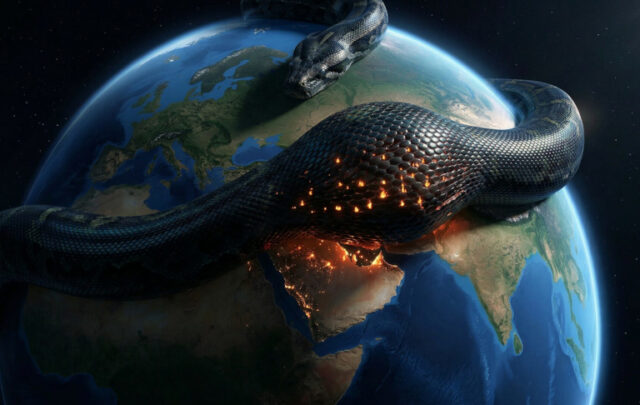
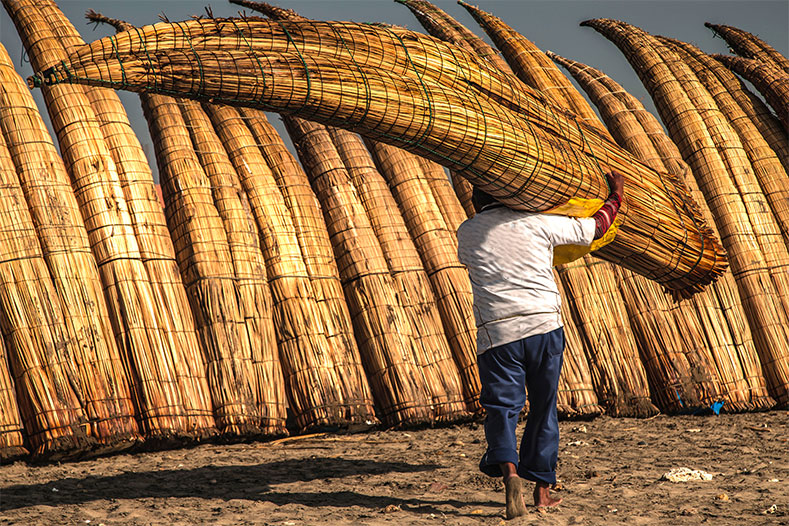
Featured image via Adobe Stock.