

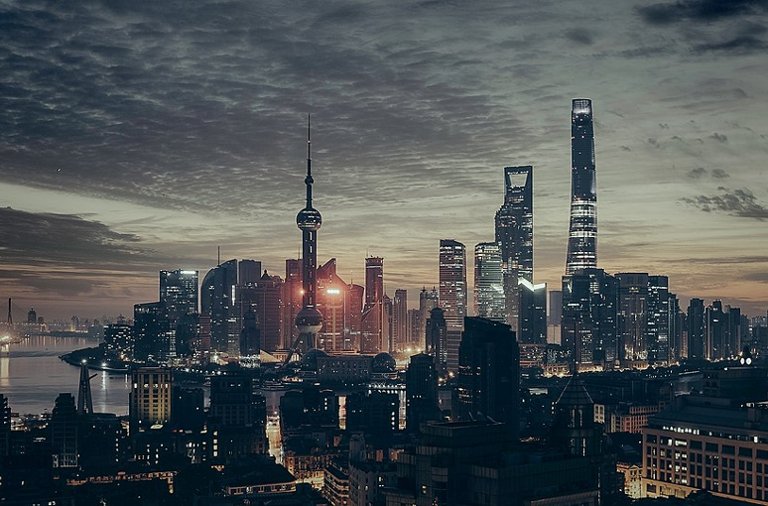
Back home after 10 days in China, I am slowly recovering from the effects of the jet lag and I can start putting some order in my impressions from what I saw and experienced.
First of all, the meeting I attended: it had an ambitious title, “Earth-Humanity Reconciliation.” It was a rather large-scale event organized, among others, by UNESCO, the Club of Rome, and the Shanghai University of Engineering Science. It was a marathon of presentations and discussions among researchers from 15 different countries, and I did my best to absorb as much as I could.
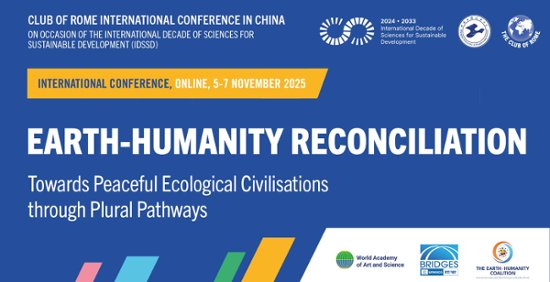
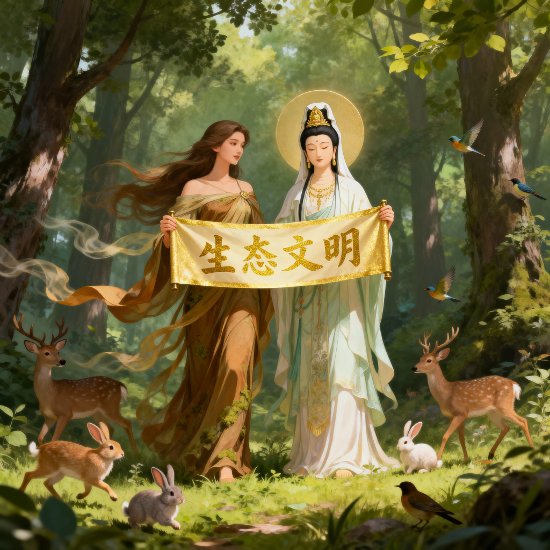
The meeting reinforced my impression that the Chinese are serious about the energy transition. They adopted the concept of “Ecological Civilization,” 生态文明 (shēngtài wénmíng), which is now an official government policy, enshrined in the Chinese constitution. The idea is that Nature and the human economy must be in harmony with each other, a concept also expressed as “The Two Mountains.”
Just talk? I would say no. When the Chinese set their minds to doing something, they usually do it, and they do it seriously. It’s not that there is no greenwashing in China, but the Chinese have understood one thing: if they don’t quickly free themselves from fossil fuels, they will not be able to maintain the prosperity they have built through decades of hard work and sacrifice.
China imports almost all the oil and gas it uses, which is expensive and makes the country strategically vulnerable. They still use coal, which remains the main source of electricity for now (60% of the total power production, against about 40% from renewables), but it is highly polluting and can’t last forever. The conference discussed how to achieve “Net Zero” emissions; the current government plan is to get there by 2060. It may be too late to avoid major damage, but the Chinese are known for exceeding expectations when they put their minds to it. In this, they are being helped by the population having stopped growing, and starting now a slow decline. It will reduce the pressure on resources and generate less pollution.
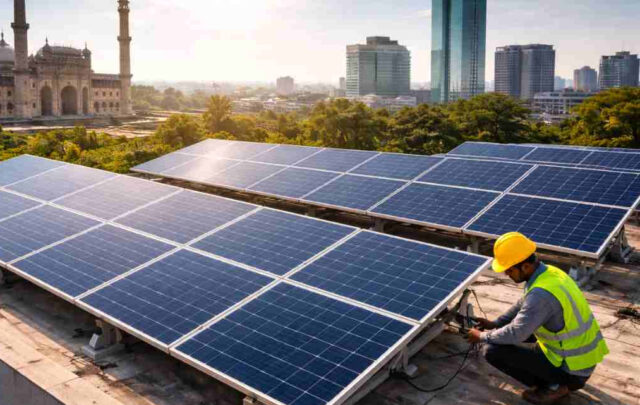
China’s success in renewable energy has been nothing short of astonishing. The Chinese industry is now capable of producing photovoltaic systems at costs so low that they beat all other sources, except perhaps wind. Not to mention new, low-cost batteries, electric cars, automation, robots, and the electrification of the economic system in general. These are all areas where China is gaining a technological advantage over the West that could soon become impossible to bridge. And the point is not so much that they are moving faster than us (intended as “the West”). The point is that while they are moving forward, we are moving backward. Instead of investing in the future, we are struggling to continue using obsolete technologies. What to say? We will get what we deserve.
Thus, the growth of renewable energy production in China is exponential, while coal production is stalling and is expected to decline in the coming years. The results are clear to see. Chinese cities were once known for being horribly polluted, but today, if you walk along the busy boulevards of Shanghai, you can smell the aromatic plants growing at the sides (apart from the areas where the main smell is that of Chinese restaurants!). And the only noise you hear is the humming of electric motors. The scooters are all electric. Most private cars are electric, while heavy traffic is not yet electrified, but they are working on it.
So, should we learn from China how to solve our current impasse? I think so, and you may be interested in a recent book by Chandran Nair and others, Understanding China. Below, Nair is shown while giving a talk at the Shanghai meeting.
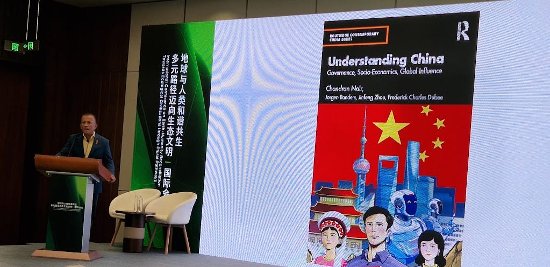
Chandran Nair is one of the few non-Chinese intellectuals who take seriously the Chinese experience and discuss how it could be applied in the West. He exposes the concept of the “strong state,” which I discussed in a previous post. I wrote that, “In his book The Sustainable State (2018). Chandran Nair forcefully makes the point that no serious measures can be taken against threats such as pollution or climate change if the state is not strong. That does not mean a dictatorship: it means a state that enjoys citizens’ trust, supports itself on a fair taxation system, and can clamp down on the attempts of the lobbies to carve the nation’s wealth among themselves.”
Is it a good recipe to adopt for the West? The fact that the Chinese system has been so successful up to now doesn’t mean it will easily adaptable to the West. Nor it is evident that the Chinese system will be able to face the challenges awaiting humankind in the near future: mineral depletion, pollution, and climate change. But one thing is sure: the Chinese are doing something good and we have a lot to learn from them.
To finish, here, the concept of “ecological civilization” is illustrated by the Goddess Gaia, together with her Chinese colleague, the Goddess Guanyin 觀音.



Comments
We changed commenting systems on September 10, 2026 as part of a site-wide functionality and security upgrade. Your past comments have not disappeared, and you can still log in with your old Disqus account credentials if you wish. Contact us with any questions.
For several months now, I've put everything else aside and focused a lot of long hard hours radically re-imagining "the energy transition," with the fact that about half of the energy we're using in modern civilization is, at its end use, heat. So we do not need to "electrify everything, nor run all of our energy through wires as electricity. Instead, we need to radically amplify our direct use of heat in every local location we can, as if our lives depended on that. They probably do.
I'm not opposing wind and PV solar. In fact, I'm all for it, but in a new integrated paradigm. Anyone reading here who wants to consider this with me is welcome to get in touch and lend a hand. Not as working for me, but working with us.
It turns out that solar thermal got sidelined for no good reasons, in favor of electrifying everything. But I now fully understand that we can deliver most of the heat we require using sunlight in many places. I'll be publishing about this discovery in stages in Resilience, soon, provided the new editor will welcome these submissions.
Good article here–I always like Ugo and perspectives about China's energy and environmental challenges and successes.
I recently read two articles on Substack about this. Robert Bryce brings up these points:
-China consumes more coal than the rest of the world combined — and it will keep doing so for decades to come.
-China is now building 227 gigawatts of coal-fired capacity. When all those coal plants are brought online, China’s coal-fired generation capacity will total about 1.4 TW, meaning China’s coal fleet will be more than seven times larger than the US coal fleet.
-China’s production of natural gas and nuclear energy has grown 1.4 times faster than solar and wind combined.
And Doomberg writes:
-According to a recent Reuters report, China’s CTL [coal to liquids] industry consumed 276 million tons of coal last year, a staggering total that is expected to double within the next five years…Not all of this coal is used to make oil products, though—an unexpectedly large share is being used to produce synthetic natural gas.
The same article points out that the CTL build-out is in response to trade issues with the US, which goes to show that int'l harmony is very important too. Not to mention human rights issues, which drive some of the int'l political issues that impact sustainability.
Thanks for the updated info. Also, Diamond as well points out the impacts of friendly/hostile neighbors on "collapse."