

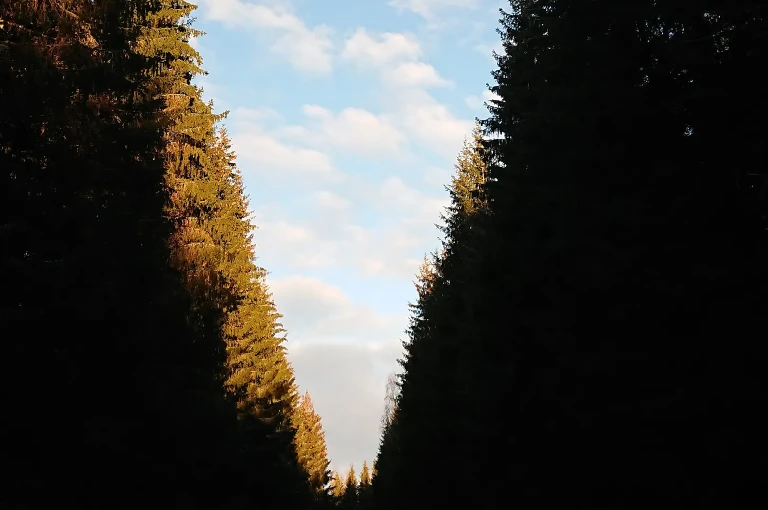
Recently, The Guardian featured an interesting article by Tess McClure about the fate of abandoned landscapes, with a special focus on Bulgaria: The great abandonment: what happens to the natural world when people disappear? As of the 2021 Bulgarian census, almost 300 villages were completely abandoned, and more than 1,000 had populations below 30. For someone that has lived in rural Sweden for most of his life, this is of course a rather familiar view. I have visited a number of abandoned hamlet or lone crofts and have even taken down a few such buildings for reuse of the material. Since the 1950s, some scholars estimate up to 400m hectares – an area close to the size of the European Union – of abandoned land have accumulated across the world.
We are not only bad
Many seem to embrace the opinion that abandonment by humans essentially is a good thing as it will “leave more to nature”. This view is obviously based on the notion that humans are inherently bad for nature as well as not being part of it. For sure, it is not hard to find examples of how humans screwed up both nature and their own ecological foundations. But as the article demonstrate, the human influence can also be beneficial for many species, “rather than always being antithetical to nature, human presence can help make life possible for a vast array of species”. A human made pond is not necessarily worse – or better – than a beaver made pond (we have beavers on our farm, I like them very much, even if their logging is a bit irregular).
Most people, in Europe at least, will see forest as the natural pristine stage that we should strive for. But forests are just one of many biomes possible in temperate climates and a “forest” is not necessarily a dense forest plantation but a patch work of woods, swamps, ponds, open spaces etc. Earlier, large herbivores, beavers and other ecosystem engineers kept the land dynamic. Homo agricola took, to a large extent, over that role, in the more traditional forms of landscape management. The semi-natural grasslands of Europe is in that perspectives descendants of those mega-herbivore landscapes. This is not only the case of Europe, research from South America also points to that the mega herbivores created a savanna like landscape in huge parts of the continent.
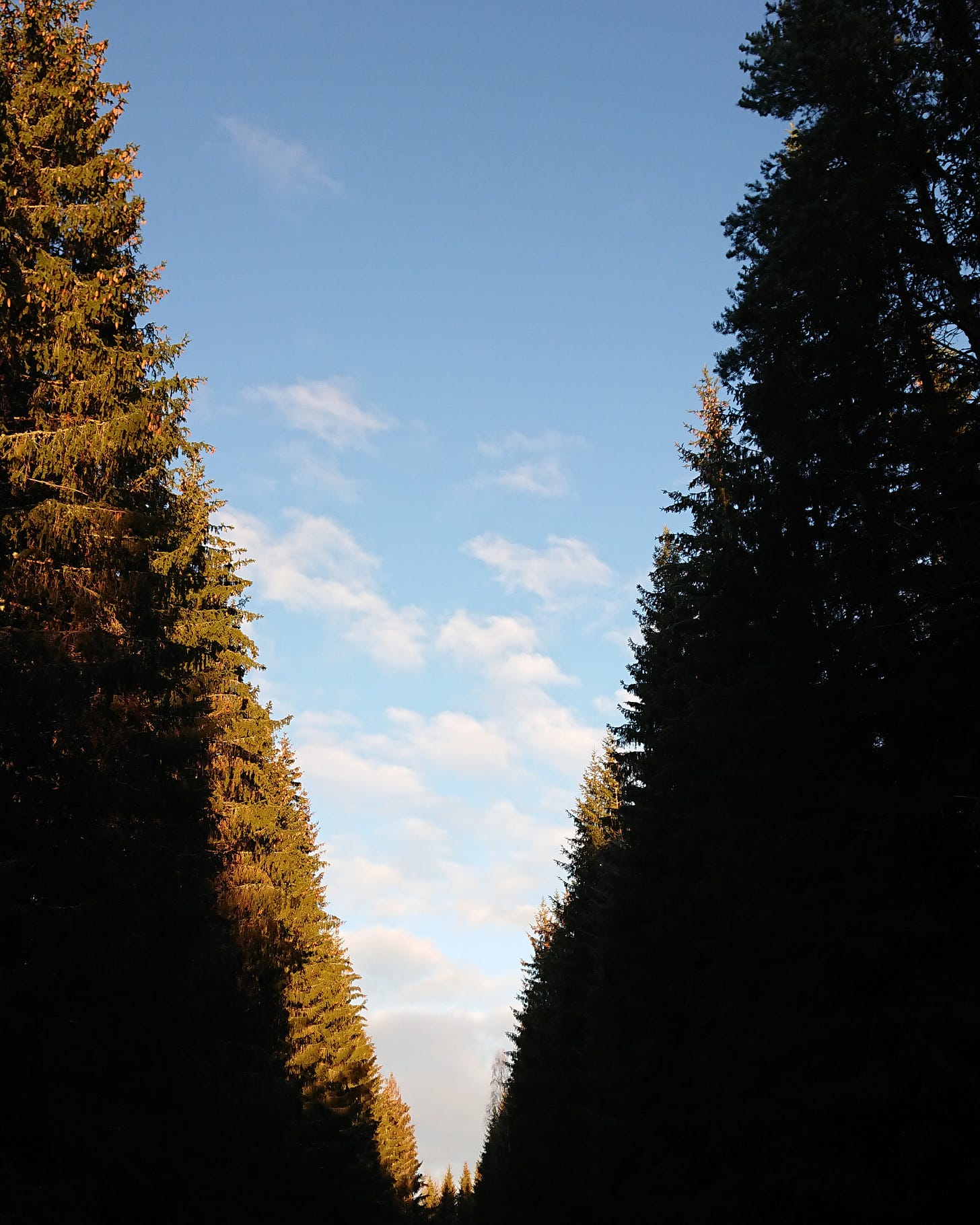
Spruce plantation on abandoned crop land on both sides of our entry road (not our land!) Photo: Gunnar Rundgren
Carbon myopia
In a recent paper in PNAS, Matthew Hayek and colleagues set out to demonstrate how much carbon that can be stored through afforestation of land currently used for grazing cattle. I will not go into detail, but in their main scenario 184 million hectares of grasslands in temperate climates would be converted to forests and that would sequester 125 Gt carbon dioxide over a period of 75 years. For me, this paper have all the signs of “nature-based-solutions” carbon myopia, i.e. the perspective that how we manage landscapes is all about maximizing carbon storage in ecosystems.
In their view, the choice stand between a very low beef production and a high rate of carbon sequestration though afforestation. They don’t even mention that some of the land they propose to plant full of trees is the land that has the highest biodiversity in Europe. Instead they talk about afforestation as “ecosystem restoration” stating that (dense) forests would be the natural ecosystem in those areas, which has been discussed above.
Their calculations are based on an average of 15 kg of beef produced per hectare and year from the grasslands they propose to plant with trees. In my own very small farm (with five mother cows), the natural grasslands, which has a modest productivity, yields in the range of 80 kg of meat (carcass weight) per year. Research from France and the UK shows a higher production and the Knepp estate, famous for its rewilding, yields 54 kg of live weight (which would equal around 27 kg of carcass weight) from a mix of game and cattle. The figure used indicates that they either made mistakes or included a lot of land that is abandoned or has a very low productivity, which in turn would mean that trees hardly would grow there. The assumed net primary production of pastures is very low, just 1 ton of carbon per hectare and year. In Sweden, which has a harsh climate and most pastures are on marginal lands, it is estimated to 2.8 tons.
The researchers’ calculations are also based on the rather heroic assumption that these forests/plantations will thrive and grow well and not be harmed by insects, fires, storms or any of the other things causing massive damage to trees. In addition, they don’t assume any use of the wood at all, which in my view implies that the land will be bought by government and put in a reserve. Meanwhile their research is also based on the assumption that soil carbon storage in the forests created would be five times as high as soil carbon storage in the grasslands to be planted. I can find no support for that assumption, on the contrary, I find many sources claiming the opposite (that above ground carbon storage is considerably higher in forests than in grasslands is not disputed, the whole definition of a tree is that it has a wooden structure that is built by carbon). In Sweden, research points to that the soil carbon content of grasslands and forests is quite similar but a bit lower in forest soils.
Don’t afforest the Arctic
It is particularly absurd that, according to the research, the Murmansk region has a very high potential for replacing beef from pasture with forests. Murmansk is considerably colder than Anchorage in Alaska and just a bit warmer than Kiruna in Sweden. I find it hard to believe that there is any beef cattle grazing there – most of the region is Sami country with reindeer. Talking about that, recent research also points to that it is a very bad idea to try to afforest arctic and subarctic lands. Interviewed by 8point9 lead author Assistant Professor Jeppe Kristensen says that the unique characteristics of Arctic and sub-Arctic ecosystems make them poorly suited for tree planting for climate mitigation. How much sunlight is reflected back into space, without being converted into heat (the albedo effect), is more important than carbon storage for the total energy balance.
Come down from the satellite please!
This research is just one of many similar articles the last decade, where researchers use global datasets, meta-analyses, artificial intelligence and satellites to determine the best land use – or the best diet, or the best what not. Another such example was the The global tree restoration potential published in Science 2019 which promoted the planting of 0.9 billion hectares forests, popularly interpreted as 1 trillion trees, for carbon sequestration. That article was, rightly, heavily criticized.
In my view, this kind of research is essentially irrelevant. But it is also harmful if it is construed as policy advice, which the example clearly is: “this work can aid the design and improvement of policies related to natural climate solutions”. They are arrogant, in that that they pretend that we humans know what is the best, that we should – or even can – control nature. They are deceptive, because there are so many error factors and biases built in such assessments and the results are predicated on those initial assumptions anyway. They are prime examples of that as soon as technology allows some kind of new research, it will be made, regardless of its utility. They are harmful, because they neglect – and reject – the local communities that in most cases already know quite well how to manage the land.
Just the other day, UNESCO declared the fäbod system (seasonal grazing in mountain areas) of Norway and Sweden a world heritage.* The seasonal grazing creates a varied landscape with an open forest canopy and very high biodiversity, combining the biodiversity of the forests, bogs, mountains and grasslands. The fäbod system, the Sami reindeer management, my cows or my apple orchard will never fit into any of these global analyses.
Global projections and scenarios, like the one above, disregard people, culture and nature and try to isolate one aspects for optimization, in this case carbon, in other cases something else. But the Earth system and the important human sub-system of the planet cannot and should not be based on optimization or maximization of one aspect, be it carbon, things or money. How humans are in nature is something that is constantly negotiated, adapted and adjusted with and in the landscape. As a minimum, researchers should cross check their data with the realities on the ground. Preferably, researchers should come down to earth and get their hands and feet dirty, instead of sitting in their skylabs. I have some spare shovels.
* The paper identifies even higher potential for afforestation of grasslands in the Eastern USA (and in some other places). I am not in a position to have any opinion about that.


Comments
We changed commenting systems on September 10, 2026 as part of a site-wide functionality and security upgrade. Your past comments have not disappeared, and you can still log in with your old Disqus account credentials if you wish. Contact us with any questions.
On the potential for reforesting the eastern US, where I live; I understand that the northeast largely IS reforested, after much of the land was clearcut for firewood and lumber a century or two ago. Oil and gas for heating (not to mention insulation) "allowed" the forests to grow back; also farms in New England were abandoned for richer, easier land further west. I don't see a whole lot of potential for afforestation here; if it isn't already in woods it's either towns and roads, or farmland. True, the CAFOs and the grazing land that feed into them, and the huge acreage in corn and soy to feed the animals in CAFOs, should be abandoned–but much of it should be replaced with small, polycultural farms. Including livestock. And anyway most of that is further west. There is one prospect for reforestation–all the clearcutting going on in the southeast to create pellets to ship across the ocean to burn for electricity generation, in an environmental and climate outrage that absurdly gets credits for being "clean energy" because although it generates more CO2 than the coal it replaces, it's supposedly carbon neutral because the trees will grow back. This bullshit should be stopped. I expect they replant those areas in pine plantations, but a tree plantation is not a forest and if you want carbon sequestration you should leave the existing forests alone.
if you want carbon sequestration you should leave the existing forests alone
Here's an example of how your approach can affect land use:
Much of the land on the Hamakua Coast of Hawaii Island was in sugarcane rotation for over 100 years. When producing sugar was no longer economic, the sugar companies sold off all their many thousands of acres of land.
The new owners wanted to do something productive with the land and leased it to companies that planted trees for commercial forestry. The trees grew very fast, but the original intended market (pulp for paper) didn't pan out, and after some of the trees were harvested and sold to China, it turned out that exporting logs wasn't that profitable either. A proposed plywood mill never got financial backing.
Another company saw all the remaing tree plantation as a good source of fuel for carbon-neutral power generation (the trees were grown first, so surely carbon neutral) and converted an old sugar mill powerplant to burn wood. Lawsuits from environmentalists delayed the project and were eventually successful in getting the utility power purchase contract voided. The power plant sits idle and oil is burned in its place.
Ninety percent of the original tree plantations are still standing, but now with no known economic use. The lesson learned by landowners from all this is that trees, once planted or allowed to grow naturally, will likely never be able to be harvested.
This leaves large landowners here, including the ex-sugar land purchasers, in a quandry: what can they do with their land? For the moment, it is being used as poor grade pasture for cattle. If these landowners can't do anything more productive, they may end up subdividing the land for real estate developments. Polyculture farms would be nice, but the most likely farming would be "gentlemen farms" for the relatively wealthy. That has its pros and cons, too.
So, even though commercial forestry is hugely productive here and could sequester large amounts of carbon if the trees are used as lumber somehow, or at least provide carbon-neutral electricity if the trees are burned in a power plant, commercial forestry has been effectively banned because, once planted, trees must be "left alone".
This means that the only way tree planting in Hawaii will ever take off is if someone is willing to pay enough money for the carbon sequestered by them. So far, that hasn't happened. This situation may also affect tree-planting for carbon sequestration in general. Who is going to pay to plant trees that can only be left alone?
PS You probably meant "native forest" by "existing forest", but I thought this example of commercial forestry was interesting.
First, burning wood for power generation is NOT carbon neutral, It emits more CO2 than coal, plus the deforestation leads to immediate loss of sequestered carbon–eventually the trees grow back and the same sequestration happens as before you cut the trees, but meanwhile there are net emissions from this on top of the CO2 coming out of the smokestack.
Second. I’m not a fan of the trillion tree idea–I doubt there is that much scope for it, aside from who pays for it. Places capable of supporting forest are already forested unless the forests have been cut either for cities or for agriculture, both of which are still needed. Where trees have been cut for lumber or paper, they will grow back without human help unless all seeds are removed along with all the trees–which should not be done anywhere. But your question, who will pay someone to leave or to plant trees, the answer is these offset schemes. I’m not a fan of those either, as they have huge room for abuse and fraud, often removed indigenous stewards from land, and pay people to do what should be done anyway INSTEAD of putting stop to pollution.
I don’t much like your implication that all land must be turning a profit for its owner, so if forests can’t do that then of course they must be cut to either sell for timber or paper, or to replace with cattle ranches or cropfields.
No, Mary, it's carbon neutral because the carbon was sucked from the atmosphere wile the tree grew. You started your count too late.
Nobody can 'pay' enough for carbon – money is underwritten by energy, and no other form can march fossil burning. Which is already falling away from underwriting the debt (inverted, debt is increasingly not repayable).
Are you serious in that first line? Those burning North American and eastern European wood to generate electricity in the UK and western Europe get to count all the carbon the tree sequestered prior to their cutting it, as well as the carbon sequestered by the tree that will eventually grow to full size in its place to claim carbon neutrality? By that logic, deforestation is a boon to the climate rather than the second biggest cause after fossil fuel burning, because the wood isn’t burned in between, so I guess we could help out by clearcutting all our forests, all over the world.
I was assuming grown-for-firewood trees, sorry if we crossed on that. Not old-growth already-existing; that's a reduction of carbon sink/stock, granted. I planted a forest 30 years ago, burn the thinnings and regard the process as carbon-neutral, indeed because there's more growth than thinning, as a sink.
But the big picture is the ADDITION of underground carbon, via the fossil burn, to the above-ground arena That is not sequesterable in trees; indeed the first 3 trillion planted, would be replacement of the already-razed (we agree).
Using thinnings doesn’t count as emissions in my view–or at any rate, it’s sustainable. I suppose firewood always adds to emissions, although I’ve heard the wood would emit the same CO2 if it rots, just much slower. Here it has never been necessary to plant trees or thin them–the land is so hilly, the foothills of the Appalachians, that most land is wooded, and replants itself if it has been cut. The native forest is very diverse–I had to know over 100 trees in my tree identification class–and many are high quality hardwood like oak, hickory, walnut. In 16 years we have yet to cut a live tree for firewood–there are always enough downed, or dying trees plus some cut because they were unhealthy and threatening a building, or shading a garden.