


The climate change deniers frequently offer three contradictory responses as their position becomes more and more untenable in the face of mounting evidence, to wit: 1) There is no climate change, 2) it’ll be cheaper to adapt to climate change than prevent it, and 3) climate change is good for us—it will improve agriculture and open the Arctic to resource exploitation.
It is the second of these that I wish to discuss. There is no solid evidence that adapting to climate change will be cheaper, nor do the deniers provide a clear picture of what adapting would mean. In other words, they have no comprehensive plan; they are simply trying to muddy the waters to stall efforts at addressing climate change because the business interests behind them do not want to bear the costs.
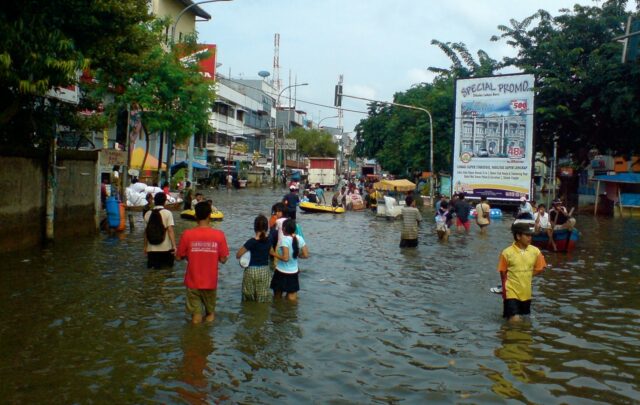
The number one reason adaptation will be so costly is that climate change is a moving target. Sea level, temperature, and severe weather are not going to simply reach a new constant level to which we can adapt for the long run. On the contrary, these are all moving targets. Infrastructure improvements made today which are meant to last 20, 30, even 50 years are unlikely to address the ever-rising sea level, temperatures and severe weather in those periods. We have been consistently surprised by the pace of climate change. There is no reason to believe that the surprises will magically cease.
Take as an example Miami’s attempts to adapt to climate change. In the face of so-called “rain bombs”—a recent one dropped 9 inches in 11 hours in one location and 20 inches in another—and rampant sea-level rise, the city is having a hard time keeping up. Consider this: “[T]he National Oceanic and Atmospheric Administration forecasts that south Florida could see almost 11 extra inches of ocean by 2040.”
Which leads us to a second reason adaptation will be costly: It doesn’t easily lend itself to cookie-cutter solutions. The specifics of any location and infrastructure will dictate what needs to be done and custom work always costs more. In Miami’s case sea-level rises compromise the area’s ability to drain water into the sea. The drainage system relies primarily on gravity to do that job. Gravity will be less effective as waters from drainage canals meet ever-rising sea waters that encroach further and further inland.
The article linked above states:
Miami Beach has spent about a decade raising roads, installing pumps and improving its infrastructure in a multimillion-dollar effort to buy time.
But the amount of rain that did fall last week [the “rain bomb” in June] is the sort of extreme-weather event that infrastructure planners don’t design for, if only because it would be too expensive to construct stormwater systems capable of moving that much water that quickly.
What the infrastructure planners are already telling us is that adaptation as a sole strategy will be too expensive and may always lag the ever-greater demands put on water and other infrastructure.




Comments
We changed commenting systems on September 10, 2026 as part of a site-wide functionality and security upgrade. Your past comments have not disappeared, and you can still log in with your old Disqus account credentials if you wish. Contact us with any questions.
Nonetheless, adaption will happen, and is best thought about. We are not going to stop the juggernaut, and the juggernaut requires energy. For a brief period there, the Green/Left vote convinced itself they could transition society away from fossil fuels, and keep the lights on. Business went with them – money-making is agnostic.
But money is underwritten by energy, and the GND energy scenario doesn't do the trick. So business – and society – are backpedalling. Voters are mirroring this; the reduction of the Green vote representing a basic need to survive, and the consequent dumping of nice-to-haves.
The irony is that we WILL end up on renewable energy, and living much more simply. But it looks like we are going to go there in a very non-egalitarian way.
Perhaps there's some snap-back going on? Didn't the Greens make gains in France today?
On that last–If Indian farmers are wearing stillsuits to go outside, their crops won't survive either.
What Kurt says about contradictory arguments reminds me of what in psychoanalysis is called kettle logic. The name comes from Freud's example of a man who, in response to being accused of breaking a borrowed kettle, gave 3 contradictory defenses: He never borrowed the kettle, the kettle was broken already, and that he returned it unbroken. It appears that climate change deniers are indulging in the same logic as the man in Freud's story. Just like the man wanted to avoid being held responsible responsible for the kettle, they want to avoid doing anything about climate climate change.