


(Conversation recorded on March 25th, 2024)
Show Summary
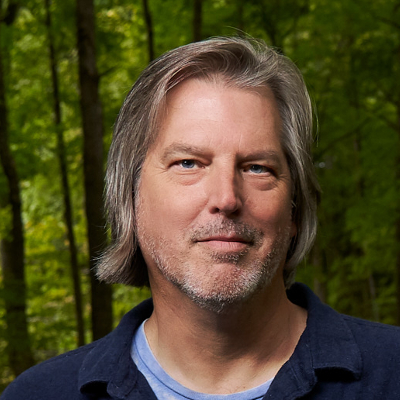
In this episode, Nate is joined by educator and indigenous researcher Vanessa Andreotti to discuss what she calls “hospicing modernity” in order to move beyond the world we’ve come to know and the failed promises that “modernity” has made to our current culture. Whether you refer to it as the metacrisis, the polycrisis, or – in Nate’s terms – the human predicament, Vanessa brings a unique framing rooted in indigenous knowledge and relationality to aid in understanding, grieving, and building emotional resilience within this space. What does it mean to live and work within systems that are designed to fail, embedded in an aimless culture? How do we as individuals steady ourselves and create inner strength before engaging with such harrowing work? Importantly, what could education look like if founded in the principles of intergenerational knowledge transmission and emotional regulation, that are centered on our collective entanglement with the Earth?
About Vanessa Andreotti
Vanessa de Oliveira Andreotti is the Dean of the Faculty of Education at the University of Victoria. She is a former Canada Research Chair in Race, Inequalities and Global Change and a former David Lam Chair in Critical Multicultural Education. Vanessa has more than 100 published articles in areas related to global and climate education. She has also worked extensively across sectors internationally in projects related to global justice, global citizenship, Indigenous knowledge systems and the climate and nature emergency. Vanessa is the author of Hospicing Modernity: Facing humanity’s wrongs and the implications for social activism, one of the founders of the Gesturing Towards Decolonial Futures Arts/Research Collective and one of the designers of the course Facing Human Wrongs: Climate Complexity and Relational Accountability, available at UVic through Continuing Studies.
Watch on YouTube
Show Notes & Links to Learn More
00:00 – Vanessa Andreotti Works + Info, Hospicing Modernity
05:10 – Planetary Boundaries
07:11 – Interest convergence
07:38 – Universal reason
08:08 – Epistemicide
10:31 – Huni Kuin people in the Amazon fighting against carbon trading
14:24 – Infinite growth cannot exist on a finite planet
16:12 – Superorganism
21:45 – Daniel Schmachtenberger + TGS Series
23:29 – Theory of Change
38:38 – Wide boundary intelligence
46:29 – Oxytocin, dopamine, serotonin, acetylcholine
46:20 – Oxytocin and in-group/our-group
47:05 – Oxytocin and co-dependence
52:03 – Identity and belonging
54:01 – Consciousness beyond human conscious
55:28 – Krishnamurti
56:21 – University of the Forest
58:32 – The majority of serotonin is produced in the gut, food’s impact on mental health
1:01:25 – Individualism and Collectivism
1:06:10 – Zak Stein + TGS Episode
1:06:49 – Emotional dysregulation in youth
1:08:05 – Depth Education
1:22:16 – Mental Health crisis
1:25:35 – SAND conversation with Vanessa Andreotti and her daughter Giovanna Andreotti





Comments
We changed commenting systems on September 10, 2026 as part of a site-wide functionality and security upgrade. Your past comments have not disappeared, and you can still log in with your old Disqus account credentials if you wish. Contact us with any questions.