

Conversation recorded on October 4th, 2023)
Show Summary
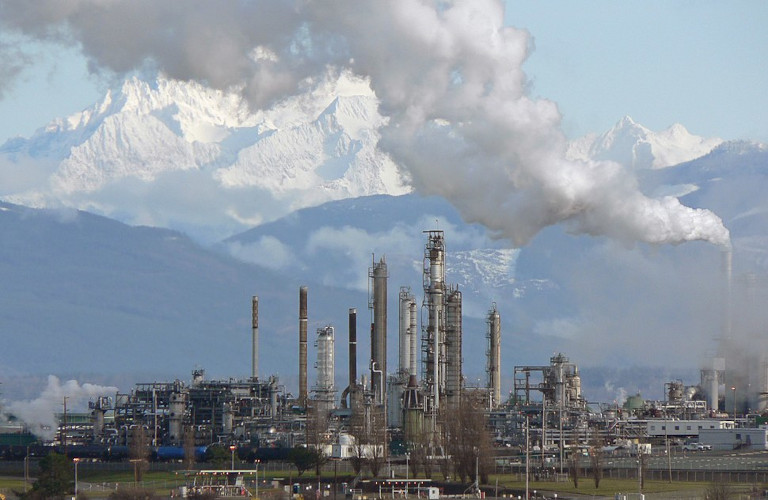
On this episode, Nate is joined by energy industry professional Joris van der Schot to explain the basics of oil refineries, their limitations, and other cultural narratives about energy. Oil is the lifeblood of our economies, yet most of us know so little about how it actually becomes all the different final products that we use. Just how massive is the scale of our energy consumption? How flexible and resilient are oil refineries to shifting oil demand? Can we keep an open mind to realistic and helpful innovations while also grounding our preparations for the future in practical energy strategy ahead of The Great Simplification?
About Joris van der Schot
Joris van der Schot is a former Royal Dutch Shell executive with over a decade of international experience in the oil industry, where he held roles as a control systems engineer, corporate strategy advisor, refinery economist and lastly, the company’s global aviation gasoline supply manager.After a sabbatical year in Provence, Joris left the oil industry and set out on a quest to accelerate the clean energy transition through breakthrough technology. He currently works at French scale-up Energy Pool, providing storage and other flexibility services that enable the integration of renewable energy on the electricity grid.
Watch on YouTube
Show Notes & Links to Learn More
00:25 – Joris van der Schot works + info
01:59 – Jurassic named after the Jura Mountains
04:45 – Human relationship with fire, Joris van der Schot on Man’s Metabolism
05:20 – Woodstock
05:30 – Niagara Falls, Rhine Falls
06:35 – IEA Barrel of Oil Equivalents + IEA Energy Sankey Data Tool
06:40 – A Niagara of Oil
07:37 – Sankey Diagram
09:45 – Mitochondria the powerhouse of the cell, ATP
12:23 – Geological variations in oil
13:58 – Peat, Joris van der Schot on Energy and GDP: the Dutch Golden Age
16:20 – Very Large Crude Carriers (VLCC)
20:30 – Chemistry of oil
29:09 – Record summer heat and all time hottest September – theories of sulfur removal being the cause
31:25 – Crackers
33:09 – Sulfur and acid rain
35:05 – Geoengineering
35:40 – Just Stop Oil Frankly Series
37:50 – Flexibility in refinery production
39:39 – Lack of new refineries in the US
40:45 – Europe refinery closures
41:52 – Emission impact of tar sands
43:10 – Energy intensity of schemes to pull carbon out of the air
44:01 – Natural systems that remove carbon from the air
45:53 – Exponential growth in microchip revolution – difference from solar development
49:29 – Primary vs final energy – increased efficiency with electrification
53:26 – Sodium batteries
53:38 – Iron rust battery storage
54:25 – Demand side energy solutions
55:10 – Industry centered when and where energy is available
57:15 – Reality Blind Vol. 1 – Nate Hagens and DJ White
58:42 – 80000 Hours
1:01:08 – Heliomimicry
1:04:05 – Google investment in fusion
1:06:03 – Reality Roundtable
Additional Reading:
Revisiting the cold case of cold fusion | Nature





Comments
We changed commenting systems on September 10, 2026 as part of a site-wide functionality and security upgrade. Your past comments have not disappeared, and you can still log in with your old Disqus account credentials if you wish. Contact us with any questions.
So given refineries can be retrofitted to certain tasks and mix different grades, I imagine some emphasising jet fuel more as the diesel and gasoline demand dries up exponentially over the next 15 to 20 years. (This is going to be a FAST disruption because big business have just figured out how much money they can save going electric!) A third of Australia’s stock exchange – our largest industrial groups like BHP, Bluescope, etc – have a plan to Overbuild Australia’s 2020 electricity supply by 5 TIMES times to make green steel, aluminium, etc. Industry going green https://energytransitionsinitiative.org/
On Solar Radiation Management – there are other less toxic particles they’re proposing to use. According to Dr David Keith, if we try to cool over half our warming, we get into really serious side effects – EG: Some of the models say if we try to cancel ALL our warming, we might also cancel the Asian monsoon! This would create a fresh water crisis for hundreds of millions of people! But on the other hand, SRM is so CHEAP it’s tempting for some first world nation that notices their economy hurting to go for it alone. In Kim Stanley Robinson’s book Ministry for the future India gets hit hard by the world’s first wet-bulb killer heatwaves. 20 million people die. So India just DOES SRM. I guess my question is how much economic pain are first world nations going to endure before someone cracks and starts SRM on their own? It could completely solve climate change for certain countries – while terrible side effects kick in for others. So who gets their finger on the planet’s thermostat dial? As the ABC’s Future Tense asked, what’s the worst that could happen? The answer from climate scientists? Nuclear war! On the other hand – if we get this right – it could give us decades more time to sort out climate change. http://www.abc.net.au/radionational/programs/futuretense/geoengineering/12477026
Nate hasn’t done the math on where renewables will ‘land’ us? Renewables are doubling every 4 years. They are about to explode out exponentially. In 2025 so many solar factories will open they’ll have FOUR TIMES the capacity of all the solar built in 2022 – nearly a terawatt per year. 5.8% from 2025 basically ALL THE WORLD’S power in 17 years, so from 2025 that’s 2042.
https://xenetwork.org/ets/episodes/episode-184-eroi-of-re/
By 2030 America will have up to 15 TIMES the EV battery capacity – meaning almost 100% of cars could be EV. (This is just a comparison for illustration purposes. It’s NOT an assertion that America will stop importing cars and build 100% EV’s themselves. These batteries will of course be split between EV, household, business, and grid utility sectors.)
https://www.cnbc.com/2023/01/05/map-which-states-will-build-the-most-ev-batteries-in-2030.html
Clean tech and EV’s are all growing SO FAST that the head of the International Energy Agency predicts that oil DEMAND will peak by 2026 and decline from there. https://www.iea.org/news/growth-in-global-oil-demand-is-set-to-slow-significantly-by-2028
Experts think demand for ALL FOSSIL FUELS will peak soon, and phased out WELL before 2050!
http://theconversation.com/theres-a-huge-surge-in-solar-production-under-way-and-australia-could-show-the-world-how-to-use-it-190241
Basically, people are going to be shocked at how fast things change across the next 10 years, let alone 20.
TRUCKS: The mantra to run industry on renewables is “Electrify Everything”. Tesla Semi’s 40 ton truck can already go further than a driver is allowed to drive on a shift – as long as that driver recharges during his half our break. Janus Electric in Australia run giant 100 ton trucks on a battery swap system that charges up to 10 truck batteries from solar on the warehouse roof! https://www.januselectric.com.au/ Systems like this could allow slow charging of the batteries. Less stress on the grid and batteries. Australia’s road-club the NRMA will be deploying off-grid charging stations for normal EV’s. https://www.mynrma.com.au/electric-vehicles/news/off-grid-charger-powers-solar-race
This means no oil tankers driving down the highway to fill up the station every week. Install this once and it might last decades. Direct electric processes are just more efficient. EG: EV’s turn 80% of the sunlight stored in them into forward motion – but gasoline cars only get 20% of that thermally stored energy. When we Electrify Everything including thermal coal and gas, we’ll only need to replace 40% of the original thermal energy in fossil fuels! https://www.sustainabilitybynumbers.com/p/electrification-energy-efficiency
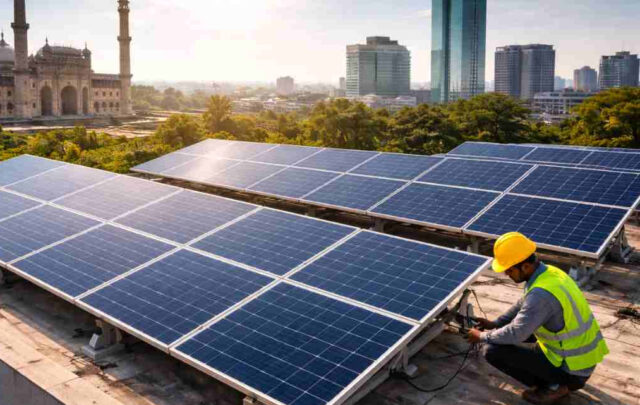
OVERBUID: Today’s renewables have a high enough EROEI. They are now so cheap we can overbuild the grid a number of times to get through winter. This means super-abundant super-cheap power the rest of the year – “Super-Power” as Tony Seba calls it. https://youtu.be/fsnkPLkf1ao Super-power may just give us so much virtually ‘free’ power it finally removes the massive energy cost of e-fuels, getting hydrogen and CO2 from seawater and combining them into endlessly renewable jet fuel. https://bravenewclimate.com/2013/01/16/zero-emission-synfuel-from-seawater/
MINING: All the big miners are starting to go electric. Catepillar, Liebherr, Fortescue, Komatsu and Hitachi have their own new super-sized EV mining kit they are testing and optimising for mass production. But forget the new trucks – it’s the old trucks where the action will be! They’ve got funding to electrify 8,500 diesel mining trucks into electric in the next 3 years, but of course want to grow so they can electrify a MILLION old mining trucks by 2030! https://www.mining-technology.com/features/mining-vehicle-electrification
Watch a MOSTLY electric 240 TON hybrid ELECTRIC MINING TRUCK burn past it’s dinosaur diesel cousin going UP HILL while charging! Watch 60 seconds here: https://youtu.be/6TxMeHRq1mk?t=213
SMELTING: Then there’s electric arc smelting and new industrial thermal batteries that act like turbo-charged heat pumps that store excess wind or solar power as industrial heat at 1500 C! They only lose 1% per day. Hydrogen can smelting iron (as a reductant), and even boost industrial heat up a notch. https://rondo.com/how-it-works https://en.wikipedia.org/wiki/Thermal_battery
INDUSTRY GOING GREEN: An Australian think-tank for a THIRD of our entire stock exchange have a plan. They have giants like BHP and Bluescope Steel, etc. They get Overbuild. They plan to overbuild Austrlaia’s 2020 electricity supply by 5 TIMES times! NOT for our electricity grid! But for their industrial needs to make all the green steel, aluminium, transport, and other products they want to sell. 5 times! Wind and solar are 1/4 the cost of nuclear (Lazard) and still going down! https://energytransitionsinitiative.org/