

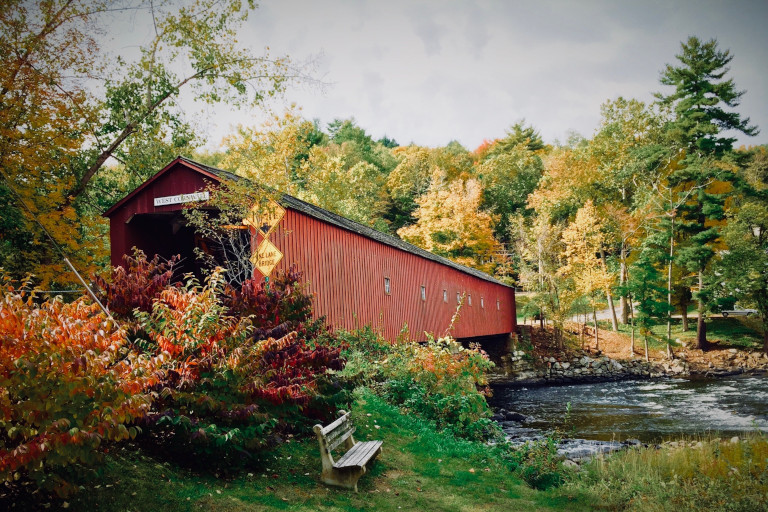
Today is Indigenous Peoples’s Day in my part of the world. It is actually a holiday in my office, so I’m in the garden rather than at my desk. I don’t know how I feel about this holiday yet. I mean, yes, by all means honor the people who were here when the colonizers showed up, who suffered hell under those colonizers and many generations thereafter, and who, remarkably, are still here to offer us wisdom and kindness. Yes, to all that! But this holiday did not begin as that, and its origins have left a foul taint on the day that has yet to be exorcized. In fact, I am not entirely sure that in my part of the world we are all celebrating the same holiday. Many, even where I work, may be pausing in their labors to honor something else entirely.
This was Columbus Day. Truthfully, for me, it wasn’t Columbus Day for very long. Though the federal holiday was first celebrated 12 October 1937 — as an attempt to curb bigotry against Italian-Americans by celebrating their contributions to North American history — I don’t remember being out of school for Columbus Day when I was a kid, nor was it a prominent holiday when my sons were in school. (But then there was a fall break around this time of year; they were out of school regardless.) I think the holiday crept into my awareness some time between Son#2’s graduation and our move to New England several years later. Maybe it was always a thing elsewhere but was kept out of New Mexico, where the Knights of Columbus couldn’t overcome the animosity toward Columbus sufficiently to even print a positive portrayal of the man in public school history books. The state is about 11% Native after all. (And a very vocal 11% at that…)
In any case, there was no Columbus Day to concern me in New Mexico. But there was no Indigenous Peoples’ Day either, even though that began in South Dakota back in 1990. November is Native American History Month, and in New Mexico that’s when the books on Native history and culture fill the front display tables in libraries and bookstores, with Thanksgiving near the end of the month largely celebrated as a Native holiday. Though with an inexplicable focus on turkey and football. (Of course, those don’t fit into the Pilgrim version of the story either, so…)
However, when we washed up on the eastern side of the continent, suddenly there was this very official holiday honoring the very person who initiated all the horror and destruction — and who participated in a good deal of it himself, bragging about it in a series of journals that rank about equal on the disgusting scale with concentration camp record keeping and slave advertisements. To say that I am not inclined to celebrate Columbus Day is putting it mildly. Nor could I understand why anyone would. That Massachusetts did was one of the early indications — along with the confederate flag flying across the street, pervasive fears of racist South Boston, and many car vanity plates proudly stamped with variants of Masshole — that Massachusetts is not nearly as progressive as it likes to portray itself.
Almost as soon as I was aware of this holiday, I was also aware of a voluble backlash against it. I wonder if it was celebrated as Columbus Day even once in the last half century without Native peoples rightfully calling foul. In 2021, the day was finally officially rebranded as Indigenous Peoples’ Day, but… Schools in New England call it Columbus Day as often as not. The Old Farmers’ Almanac lists both names in its 9 October entry this year. And I’m pretty sure that more than a few of my co-workers, and perhaps some in my personal circle, do not know what colonialism meant and means to Native peoples — nor that Columbus, whose name gives us the word for colonialism*, is so particularly unworthy of fond remembrance.
(*Both are derived from the Latin, colonus, meaning “farmer”. Columbus’ given name in Italian was Cristoforo Colombo. His Spaniard employers called him Cristóbal Colón. Colonial is an adjectival form of his Spanish name, meaning “like Columbus”, though it can also be derived directly from Latin to mean something like “as a farmer”. But that doesn’t make any sense of the way the word is used. In any case, celebrating Columbus Day is almost literally celebrating colonialism.)
Even though I am off work for Indigenous Peoples’ Day (I think?), I haven’t been able to erase the original name from the day. The original intent of this holiday was not to honor Natives nor remember their stories. Columbus Day, while perhaps created with the best of intentions, aiming to stop the oppression of Italian immigrants, can only be perceived as a slap in the face to Native folks. One among many…
So I don’t know how to feel about it. Renaming the holiday feels hollow to me, a desiccated bone thrown to the water protectors and other Native activists — even as those activists are still suffering abuse while simply trying to keep poison out of our lands and waters. Some of those unlawfully arrested in 2021 are still fighting for acquittal, though there have been recent victories. Yes, it was necessary to get rid of Columbus Day, sooner rather than later, but a more genuine form of honor might have been to listen to Native needs and demands — or at least stop attacking peaceful protesters.
To make matters worse, leading up to this sham holiday, I have been reading a couple books that are pushing into the borderlands of cultural appropriation. One is a description of the feminine divine in many cultures and the ways women might look to these archetypes and deities for guidance and strength. The author is well aware of the dangers of rootless modern people snatching up yet more territory in their quest to find some sort of home and meaning in life. She constantly cautions her readers to tread lightly on other peoples’ faiths and world views. And best to not tread at all. Look, learn, and take inspiration — but leave the sweat lodges and the shamanic drumming to the peoples who created and still embody these cultures. But still, printing a laundry list of goddesses and saints seems a touch insensitive. How much are indigenous cultures expected to give? And what do we give them in return? A lately repackaged holiday with its origins poorly plastered over with empty lauds…
The second book is actually not in the borderlands. It is a prime example of clueless white people engaged in cultural theft for fun and profit, right down to white sage incense and medicine bundles. If I were to give this book to some of my New Mexican friends, they would hunt down the author and… well, I don’t want to go there… So this has set my mind to screaming. I’ve filled pages in my personal journal with jagged-lettered rants, written with so much emotion my hand could hardly keep up.
Have we really not had enough of the callous entitlement of white people? Does this book need to exist? Are there people who will buy it? (For the record, I did not… reading it is a favor that I am regretting.) Why is this story still possible? And is it, truly? Is the author of this cultural appropriation even benefitting from the theft? Is she happier or healthier or wiser? Is she telling the truth? Because she uses these cultural tools haphazardly and mindlessly and does little to reconcile her daily life with the the world views behind these tools. To the contrary, she is proud of her high status in the culture that has systematically destroyed the peoples who created these tools and their homelands.… And so on…
I finally concluded that the story is highly unlikely. It’s impossible to find peace when your paycheck is dependent upon spreading harm — no matter how much incense is wafting around.
But one other conclusion that I can draw from this all this is that my goal of building a strong, localized, place-based community is not just economically intelligent, nor even an ecological necessity — it is the only path to a just system that will not allow for rubbishy things like holidays for colonizers and cultural theft. Living local is a moral imperative. I know many people don’t like that word. Morals are quite passé because we moderns are loathe to admit that we live in community with others — whether we want to or not — and morals are the limits we impose on the self so that we do not harm our communities. The word literally means “pertaining to manners” and is Cicero’s translation of the Greek, ethikos, which has a meaning that encompasses such things as mood, disposition, mores, customs and manners. Morals are how we create justice — a fair community — and living in a localized and radically embodied community is a vital prerequisite to morality.
There is much less scope for harm of all kinds when we bind ourselves to living within biophysical limits, in acknowledged reciprocity with others. There is no colonialism or cultural appropriation when we live in place, in rooted community. There is no taking without giving back and much less taking from far away — because that is materially and energetically costly and therefore difficult to recompense. There is also less need to take from elsewhere when your community provides all needs — from food and shelter to holidays and deities and meaning.
A robust community, a place that lives without causing harm to itself and other places, a people that recognizes fundamental interdependence — in short, a good-mannered culture — takes care of itself. It is a culture of care. No need for much trade. No tolerance for theft of life or lifeways. No desire for being of superior status because superiority has no definition in an interdependent world. And work is done to meet needs, not generate profits — meaning, among other things, that there are no paychecks. There is never a conflict between your ability to live well and your need to live equitably with others.
This is justice. And I’m beginning to think that this is the only way to get there.
So maybe today, on Indigenous Peoples’s Day, we could all explore what it means to be native to a place. Maybe we could spend some time today learning how indigenous peoples the world over have managed to create cultures and communities that have lasted for millennia, successfully adapting to all sorts of changes — except the advent of colonialism. Maybe we could see how to fit our lives within the just boundaries of our own communities so that we do not perpetuate the damages of colonialism and other projects of modernity. Maybe we could just practice some nice manners. Be kind, considerate, caring in all that you do and all that you are.
Christopher Columbus was an average Renaissance guy with typically shallow morality. He was intentionally sundered from all community or relationship except with those who would fund his ambitions for wealth and renown. This is not a role model. This is the exact opposite. Be as unlike Columbus as you can and you will be happy, no need to go seeking and thieving the cultures of others. I think that’s the message for today.
Tomorrow, I’m going to dive deeper into the reasons that cultural appropriation — or any form of theft from elsewhere — is not merely wrong. It does not work. Ever. So… to be continued…


Comments
We changed commenting systems on September 10, 2026 as part of a site-wide functionality and security upgrade. Your past comments have not disappeared, and you can still log in with your old Disqus account credentials if you wish. Contact us with any questions.
I agree about the ugliness of any celebration of Columbus but am happy to transition it to Indigenous Peoples Day. And I disagree almost totally with the rejection of “cultural appropriation.” Yes there are instances of offensive, thoughtless repurposing of someone else’s culture, but the idea that no one should ever use any artifact, plant, speech, technique or ritual that comes from elsewhere is absurd. Along with the idea that we can solve this “problem” by relocalizing, raising our own food and other needs on our own land (we should relocalize our economies, though). My own land (technically not mine as I live on a land trust but have a lifetime lease) is in West Virginia and hers is in Vermont. This is the real appropriation from indigenous people. I have no indigenous blood as far as I know–my ancestors came from England, Ireland, and I guess eastern Europe on the Jewish side. Maybe I need to go back there? Where does Eliza need to go back to? This wouldn’t work. We can’t give most of the land back to the natives–but we can stop abusing them, stop putting pipelines across their land, or mines in their sacred places…and I think it would help if we acknowledged them respectfully and took leadership from them. As for sweat lodges and smudging and such, I see no reason not to use such practices, don’t think you need a minimum percentage of native blood…or of the blood of those most recently making dreadlocks a custom; I don’t think only the author of a song should be allowed to sing it. When I was a kid, sometimes one of us would protest that a sibling was doing something that was “my do.” My mother would say, “Imitation is the sincerest form of flattery.” She was right.
I grow food in my garden that comes from this continent, often developed and improved by the people of this continent, as well as the one to the south, and much that was originally grown by my ancestors in Europe or the Middle East, some from Asia, no doubt some from Africa–and I do it without apology. I’ll bet Eliza does too. I think we do well to embrace multiculturalism, to enjoy and use gifts from all the peoples and places of this world, to which all of us are native. What we need to lose is the arrogant assertion of the superiority of one culture and people over others, and the violent theft of land and resources it’s used to justify.
Selection via evolution is a pragmatic business. Individuals can be disenfranchised by being out-competed as a species, or as an individual within one. All species are capable of overshoot and collapse.
Every human living, is the result of a 1,1,1,1,1,1,1,1, winning sequence. All it takes, is one pre-reproduction individual to be a 0; and the sequence is broken. Much woke virtue-signalling is made of the most-recent 1 event, but that lacks perspective, by several orders of magnitude.
By all means empathy; by all means egalitarianism (sharing). But that doesn’t remove the fact that there are ALREADY 6-7 billion too many of our species, present. That is the human dilemma, and we can trace it to a flawed but inevitable selection process; those who think short-term tend to grasp more energy/resources, quicker (they don’t worry about future shortages). They therefore win when they meet more thoughtful husbanders of resources (cannons beat spears).
We in the ‘west’, ‘global north’, ‘first world’ – choose your metaphor – are the ultimate expression of short-term-gain thinking (and the Green New Deal types are merely an extension of that). That approach had to overrun its resource-base, and has done so. Worse than that, it has levered underground-stored energy to lever its own overshoot – to a level we can only describe as ‘gross’.
To be writing such a piece as the above, a person will be empathetic to a high degree, but I’m willing to be they are not cranially-wired to see the bigger problem in context/proportion.
https://dothemath.ucsd.edu/2015/04/programmed-to-ignore/
It doesn’t matter what some holiday is for – although we all need to hang our narratives on something – it matters what we are going to do, to soften the coming bottleneck.