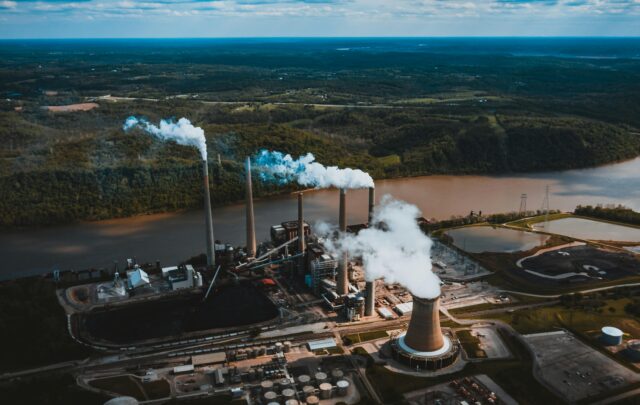
In this Frankly, Nate describes the Carbon Pulse – a one time massive consumption of fossil hydrocarbons at a pace millions of times faster than they were created. He outlines the many shapes that this pulse could take, as well as some shapes it will never take. Compared to previous carbon pulses that led to mass and minor extinctions, how does the modern pulse compare? What can what we know about ecology and human behavior tell us about the most likely paths into descent? Can thinking about these graphs on such grand geologic time scales help guide us away from the Precipice and towards a more Sapient Future?
Teaser photo credit: Assorted diatoms as seen through a microscope. By Prof. Gordon T. Taylor, Stony Brook University – corp2365, NOAA Corps Collection, Public Domain, https://commons.wikimedia.org/w/index.php?curid=246319
Nate Hagens is the Director of The Institute for the Study of Energy & Our Future (ISEOF) an organization focused on educating and preparing society for the coming cultural transition. Allied with leading ecologists, energy experts, politicians and systems thinkers ISEOF assembles road-maps and off-ramps for how human societies can adapt to lower throughput lifestyles.
Nate holds a Masters Degree in Finance with Honors from the University of Chicago and a Ph.D. in Natural Resources from the University of Vermont. He teaches an Honors course, Reality 101, at the University of Minnesota.
Tags: carbon pulse, fossil fuel consumption
Related Articles
'SELECT SQL_CALC_FOUND_ROWS wp_posts.ID
FROM wp_posts LEFT JOIN wp_term_relationships ON (wp_posts.ID = wp_term_relationships.object_id)
WHERE 1=1 AND wp_posts.ID NOT IN (3498291) AND (
wp_term_relationships.term_taxonomy_id IN (1,3,8995)
) AND wp_posts.post_type = \'post\' AND ((wp_posts.post_status = \'publish\'))
GROUP BY wp_posts.ID
ORDER BY wp_posts.post_date DESC
LIMIT 0, 3'
As sweeping deregulation accelerates under Donald Trump, long-standing nuclear safety regulations are being rolled back with little public scrutiny, raising new concerns about risks to both human health and the environment.
Would you rather have abundant and affordable energy or a clean, healthy planet where wildlife can flourish? It sounds like an either/or choice, but it doesn’t have to be.
We continue down a path of collective destruction, in part because of a belief system so pervasive it feels like reality itself. Recognizing our deep interconnectedness is essential to building a more just and sustainable future.