

I’m guessing that few people the world over will have failed to notice the big-ticket news items last week – most importantly, the official launch of my new book Saying NO to a Farm-Free Future at the Groundswell Festival in Hertfordshire, and secondly the release of the 2022 global energy figures by the unironically named Energy Institute.
Okay, so I’m joking about the newsworthiness of my book. But last I looked it was riding high in the Amazon charts, at No.1 in its Soil Science category (?), No.2 in nanotechnology (??), and No.5 in distribution management, whatever that is. Vindication.
More on that and the Groundswell Festival in a moment. But first let’s take a quick look at the energy figures. Probably the one that will steal most of the headlines is that solar energy consumption leaped more than any other form of energy use last year with an impressive 24% climb. It now constitutes fully … er … 2% of global energy consumption, with a growth rate that appears to be slowing from the 2010s. Meanwhile, fossil fuel use and carbon dioxide emissions from energy also climbed. Not by much (0.4% and 0.9% respectively). Still, more fossil fuels were used and more carbon dioxide emitted from energy last year than ever before in human history. Percentage-wise, about 82% of global energy consumption came from fossil fuels in 2022 – down only 3 percentage points from 2015 when global leaders agreed to try to limit climate change (but up 6% from that year in absolute terms).
In other words, there’s no sign of an energy transition out of fossils yet.
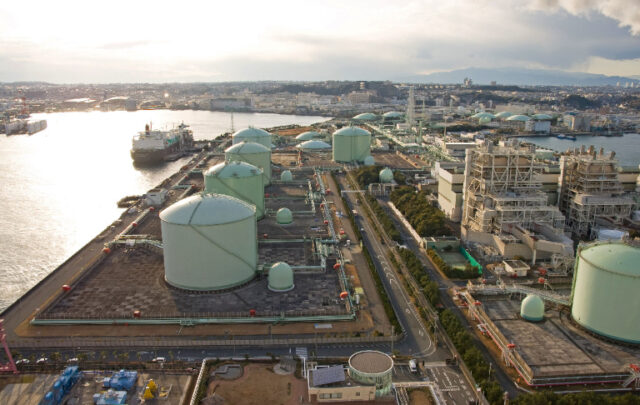
In a recent post I calculated that to quit fossil fuels by 2050, we’d have to lose 16.9 exajoules of fossil energy annually between now and then, more than the entire fossil fuel use of the world’s fifth largest fossil fuel using country, Japan. Well, now we need to lose 17.6EJ annually which is … even more than more than the entire fossil fuel use of Japan.
This is of some relevance to the theme of my new book, as I’ll suggest in a moment.
But first a few remarks on how my two book launches, the local one and the official one, went.
The answer is pretty well, and thanks for asking. I was lucky to have two great interlocutors at my respective launches, the irrepressible ffinlo Costain and the effervescent Sarah Langford, and I thoroughly enjoyed talking with both of them about my book. Audience questions ranged from the generally supportive to the appropriately quizzical and thence to the occasionally hostile, but by and large the book got a pretty good reception. Even the reviews so far have been largely positive – for example here, here and even here. I expect there’ll be some brickbats to come, but it’s been remarkably mellow so far. Even so, the reviews and the launch Q&As have raised various issues of interest that I hope to address in the fullness of time.
The question at the launches that I’ve found hardest to deal with runs along the lines of “Okay, so no to a farm-free future, I get that. But what are you saying ‘yes’ to? If techno-fixes don’t work, what does work? And how can we bring it about?”
…to which my answer has been something along the lines of agrarian localism and food sovereignty, the details of which have to be hammered out through specific local politics by multitudes of people and can’t be itemised as a blueprint in a few pages of a book or in an answer at a talk. If that will be a less satisfactory answer to some than “…by rolling out new technology X” to me it’s nevertheless more plausible.
But maybe I need to burnish it into more of a soundbite. If so, it’ll have to be quite a complicated one. As suggested in Chapter 6 of my new book I think we’re now experiencing the beginning of the end of the ‘modernism’ that the ecomodernists champion – an end that I welcome, because I don’t think it can deliver a just or congenial way of life long-term to human or non-human organisms. But the path beyond modernism looks rocky, and I don’t relish treading it. Still, I’d rather tread it knowingly than cling to shopworn contemporary political nostrums that claim to know how to reconstruct a useable modernism.
So yeah, answers below please if you have a good suggestion for how I can frame all that in a cheery, upbeat jingle. Intellectually, my analysis from Chapter 8 on how humans need to become a good keystone species might do it. But I fear I’d then have to spend a lot of time explaining what I meant by ‘a good keystone species’. And then it wouldn’t be a soundbite.
The larger problem that I have, which becomes all too apparent when I venture beyond the familiar and usually comforting environs of my farm or my online village to attend events like Groundswell, is that I seem to be looking at the world and the human future as if through a different window to most of my fellow humans. Like it or not, I just don’t think the high-energy, high-capital cocoon of the global political economy is going to protect us privileged denizens at its centre for too much longer, let alone anyone else. We need to start implementing something radically different. Radically different, from the roots up. Not just some window dressing of the status quo, as with the case for microbial protein manufacture or carbon trading schemes.
On the latter front, I found Groundswell interesting in that it seemed to be peopled with a large contingent of so called ‘conventional’, big-scale farmers who were (a) concerned about how they were going to stay afloat financially in the harsh light of the post-Brexit subsidy regimen, (b) anxious to develop better carbon sequestration metrics to emphasize that their livestock weren’t the climate catastrophe they’re too often painted, and (c) vulnerable to the blandishments of numerous business ventures in attendance at the festival offering their services to farmers as carbon portfolio managers.
I’m sympathetic to the plight of these farmers and I despair at the way they and their livestock are being wrongly scapegoated for the ills of our wider society. But I think they’re deluding themselves if they suppose that better carbon metrics, carbon pricing or claims about soil carbon sequestration are going to save their businesses or save the world as we know it from climate system breakdown. Meanwhile, the corporate vultures of the carbon offsetters and the precision fermenters are circling. I believe that existing producers of food here in the UK ought to be concerned. And so should existing eaters of food.
When the case for being allowed to continue doing what you’re doing falls on deaf ears politically, it sometimes leads to a stark choice: to give up or to fight. My time at Groundswell led me to believe we’re now closer to that choice than I’d previously thought. To deliver a renewable local food system in the UK, I think it’ll be necessary for a lot of the kind of farmers who were at Groundswell along with other local landowners to ally with local communities against corporate food system rationalisers. I said as much in a discussion panel I was on, but I’m not sure how much the remark landed. Different vistas, different windows. A few people came up to me after the session and expressed their appreciation, though, which gave me a modicum of hope. Meanwhile, another panellist told me I was wrong about my energetic claims in respect of microbial protein. In her opinion, a bright future for it beckons.
I’ll say more about that in another post. For now, I’ve written this short piece to lay out the energetic issue as I see it. If you think I’ve got something wrong in it, I’d appreciate hearing your critique.
Meanwhile, as I mentioned earlier, fossil fuel use and the resulting carbon dioxide emissions continue their inexorable rise. Humanity just doesn’t seem capable of decarbonising its existing energy system. The idea that it makes sense to add a vast new demand for low-carbon energy to produce food that can otherwise be grown with free and zero-carbon sunlight makes no sense to me in that context. There will be no food factories on a dead planet, and there will be no low-carbon manufactured food in a fossil-fuelled energy system.


Comments
We changed commenting systems on September 10, 2026 as part of a site-wide functionality and security upgrade. Your past comments have not disappeared, and you can still log in with your old Disqus account credentials if you wish. Contact us with any questions.
“It would soak up ALL historical CO2 emissions” – No, it would soak up all of the historical emissions caused by deforestation, but none of the other emissions. If we reforested, the forests would reach the carbon equilibrium that was reached before they were chopped down.
In some situations, grassland can potentially sequester more carbon than forests. We need to eat less meat (and stop feeding grains to livestock) and reforest, but becoming vegan and using tonnes of energy to produce factory food is not the answer.
You should read Chris’ excerpt where he discusses the energy requirements of factory food (https://www.resilience.org/stories/2023-07-03/saying-no-to-a-farm-free-future-excerpt/)
FOREST LOST: We have lost a third of our forests to both crops and grazing – 2 billion hectares. It took 9,000 years to lose the first billion hectares – an area the size of the United States. Then in the last 100 years we cut down the next billion hectares! 2 Billion hectares of forest are gone – a third of the world’s forests – largely to grow crops and graze cattle. “Two billion hectares of forest – an area twice the size of the United States – has been cleared to grow crops, raise livestock, and use for fuelwood.”
https://ourworldindata.org/deforestation#the-world-has-lost-one-third-of-its-forests-but-an-end-of-deforestation-is-possible
FOREST DENSITY: The biologists give a mid-range of forests at 1,600 trees per hectare
https://nhsforest.org/how-many-trees-can-be-planted-hectare/
Multiplied by the 2 billion hectares of forest to be regrown that’s 3.2 TRILLION trees.
We know just 1 TRILLION trees would sequester a third of our historical carbon emissions.
Once these trillion trees are fully grown, these new forests could capture between **488 and 1012 billion tons of CO2**. That’s about ¼ to ⅓ of all human CO2 emissions so far (**2.2 trillion tons**).
https://www.plant-for-the-planet.org/trillion-trees/
Therefore 3.2 TRILLION trees would pretty much sequester all historical emissions! If 1 trillion trees happens to be on the lower side, 1/4 of emissions – there’s good news. The Trillion Trees project says: “But there is good news: we can restore up to 1 trillion trees without encroaching on agricultural land.” That is – BEFORE inventing Precision Fermentation and rewilding all our livestock areas to forests – studies of satellite maps show we can ALREADY grow 1 trillion trees. So now we’re talking a total of 4 Trillion trees WITH Precision Fermentation!
Whilst renewables account for around 30% of electricity production, solar only accounts for about 5%. I would be interested to see the sources of the claims that wind is doubling every 4.5 years – according to ourworldindata.org, it doubled over the last 7 years. Whilst solar did double over the past 4 years, that does not necessarily mean it will continue to double for the next 17 years. And total renewables has only increased from 18% in 2003 to 30% in 2022.
Even if we increase solar at a rate of 6% per year, this will be too little too late. As you point out if we want to continue business as usual and have factory manufactured food, we’ll need a lot more electricity generation. If we are tripling the electricity generation, then we are talking 50 years for solar to take over, yet we need to stop emitting CO2 yesterday.
You missed it – the 17 years is linear, not exponential. It’s what we’re committed to with the factories ALREADY BEING BUILT TODAY – NOT the doubling curve solar is on. That is, without a single new factory being started, assuming all the solar panel factories being built today come online in 2025 is FOUR TIMES all the solar capacity built in 2022, which is nearly 6% of WORLD ELECTRICITY EVERY YEAR = 17 years to meet today’s energy requirements from solar alone! Linear – without any extra growth in solar factories – and at these prices you can be sure there will be more.
https://xenetwork.org/ets/episodes/episode-184-eroi-of-re/
Now add into that the very new solar factories started in America under Biden’s IRA policy and you have that doubling trend being maintained. Why? More efficient new solar panels use less materials, are cheaper to produce and are being produced at scale. The learning curves have another 7 years to go in price reductions before stabilising – renewables + batteries + PHES are now the cheapest power we’ve ever had. The market is just starting to realise this and are going to be screaming for more. Also, this fact blows my mind! Australia was so recalcitrant politically on climate change until recently – but the market has another thing in mind. Cost!
* In March 2022 the world hit one terawatt of solar PV. By 2025 they’ll do this EVERY YEAR.
* With growth in wind and pumped hydro and other green tech, we can hit global net zero well before 2050.
* Australia will hit 80% to 90% renewables in 7 years – by 2030 – as our deployment rate has doubled every 4 years for the last decade. Solar and wind are now the cheapest electricity source period. As scale increases there are even more learning curves still to be applied which will bring the price down further. They are being built 3 times faster than everything else combined.
http://theconversation.com/theres-a-huge-surge-in-solar-production-under-way-and-australia-could-show-the-world-how-to-use-it-190241
“2% of global energy consumption”
It saddens me when people that appear to take environmental matters seriously fall for the memes that people like Mark Mills push. He’s a climate denier that pushes lies like renewables being such a small fraction of global ENERGY use – instead of counting what really matters – Electricity. It’s a cheat. The way ahead isn’t just to replace fossil fuels with clean electricity – it’s to Electrify Everything! That means transport fuels being replaced by EV’s (and even huge Aussie 100 ton ROAD TRAINS are now EV with the Janus battery swap system.) It means industrial heat being replaced by heat pumps and electric arcs, diesal mining trucks being replaced by Janus-like systems or even trolley-trucks or electric conveyor systems, smelting coal being replaced by green hydrogen for green steel, etc.
So when people like Mills try to minimise the accomplishments of renewables – they count the raw joules in all the oil and gas and coal burned. But this is a cheat! I don’t CARE about the original heating joules to push the steam turbine that eventually sends power down the lines to run my fridge. Thermal systems like coal power plants and oil ICE cars throw out the majority of their thermal energy! Indeed – ICE cars throw out 80% of the energy given them where EV’s USE 80% of the electricity given them! What matters isn’t the calorific value of oil or gas or coal, but how many GW of electricity they produce or how many miles of driving they do. Forget counting heat calories and start thinking how all transport and industry is going to be electric. Count GW out, not oil at the well. Count KM’s out, not oil’s heat value in the tank. And ICE wastes 3.4 TIMES more energy than an EV! It’s just more honest and accurate to count the electrical work done. Everything else is literally just hot air blowing away as wasted energy!
Instead, we can see that renewables are 30% of electricity today. http://www.aljazeera.com/news/2022/1/20/interactive-how-much-of-your-countrys-electricity-is-renewable-infographic
It will be about a third in 2025.
https://www.weforum.org/agenda/2023/03/electricity-generation-renewables-power-iea/
But here’s the thing. Solar is doubling every 4 years, which blitzes oil’s doubling time of every decade in the 20th century. So many solar panel factories are being built today that by 2025 they will build 940 GW per year. That’s FOUR TIMES all the solar built in 2022, which is nearly 6% of WORLD ELECTRICITY EVERY YEAR = 17 years to the job from solar alone! https://xenetwork.org/ets/episodes/episode-184-eroi-of-re/ Wind is doubling a bit slower – ever 4.5 years. Remember the old example of bacteria in a Petri dish. Assume you know it doubles every minute, and the dish will be full in an hour. When is the dish half full? In 59 minutes! The bacteria has been almost invisible for 50 minutes then in the last 10 minutes goes from a tiny blotch to an eighth, then a quarter, then a half, and suddenly the dish is full! Nothing happens forever – then suddenly it takes over. The average citizen is largely ignorant of the huge breakthroughs in mining technologies, supply lines, and refinements in renewable tech that have got us to this point. That’s the invisible bacteria breeding in the dish for the last few decades. Suddenly – we will see wind and solar conquer the grid. It’s about to explode exponentially across the next decade. People will be astonished at how much gets built out in just the next 10 years alone.
Caveat: as we “electrify everything” we’ll probably have to triple the electricity we use. Also, there’s going to be 2 billion extra people on earth. So that “third of the grid” renewables will have by 2025 starts to look smaller. It doesn’t matter – as I’ve been explaining above – they’re on a doubling curve. Super-abundant renewable energy made from super-abundant materials (no rare earth’s REQUIRED – just sometimes used for niche purposes.) The geopolitics for petro-dictators look quite dire!