I sat down for an interview with Scott Johnson of the Institute from my home in rural Ireland; we chatted about the Irish elders I’ve talked to, and how their close communities and traditional culture allowed them to survive crises like the bank strikes of the 1960s and 70s.
The Low Technology Institute, in Wisconsin, USA, researches ways of adapting to the difficult future we see ahead — they do a blog, podcast, and videos, and offer regular workshops and memberships, and they’re well worth your time
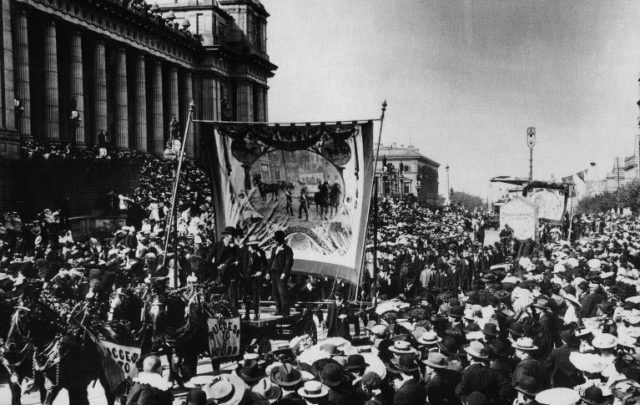
Top photo: Eviction scene in Ireland (ca 1888) by Robert French. The Lawrence Photograph Collection via Wikimedia Commons https://commons.wikimedia.org/wiki/File:Eviction_scene,_Ireland_(23426826123).jpg

Former newspaper editor Brian Kaller wrote his first magazine cover story on peak oil in 2004, and since then has written for the American Conservative, the Dallas Morning News, Front Porch Republic, Big Questions Online and Low-Tech Magazine. In 2005 he and his family moved to rural Ireland, where he speaks to schools and churches, and writes a weekly column for the local newspaper.
Tags: Ireland, traditional communities
Related Articles
'SELECT SQL_CALC_FOUND_ROWS wp_posts.ID
FROM wp_posts LEFT JOIN wp_term_relationships ON (wp_posts.ID = wp_term_relationships.object_id)
WHERE 1=1 AND wp_posts.ID NOT IN (3492035) AND (
wp_term_relationships.term_taxonomy_id IN (5,8988,9001)
) AND wp_posts.post_type = \'post\' AND ((wp_posts.post_status = \'publish\'))
GROUP BY wp_posts.ID
ORDER BY wp_posts.post_date DESC
LIMIT 0, 3'
In this presentation for The Climate Dialogue Group, Richard Heinberg shares his insights into why a world of climate disruption and energy volatility demands a shift from maximizing growth to strengthening community resilience.
This chapter of the Seeds Series explores “relationality” as a foundation for regenerative cultures, drawing on insights from various interviewees to show how empathy, accountability, place-based belonging, and interdependence can help heal the social and ecological fractures of modern life.
Nandita Bajaj, executive director of Population Balance, defies stereotypes. She chose not to have children and has dedicated her life to research and advocacy on how pronatalism, overpopulation, and human supremacy fuel social inequality and ecological overshoot, and to confronting tough questions about humanity’s outsized footprint on Earth.