

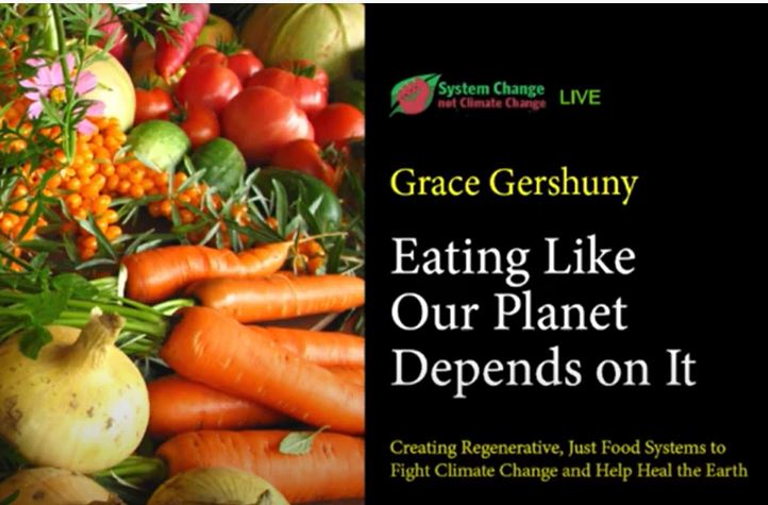
System Change Not Climate Change talks with Vermont-based author, educator, and grassroots activist Grace Gershuny about her vision for transforming the U.S. food system into one that is regenerative, just, and accessible to all, stressing the ties between the organic food and other movements, including Black Lives Matter, LGBTQIA+ rights, water sovereignty, and, of course, climate.
Gershuny has written critical books on the subject: Organic Revolutionary: A Memoir of the Movement for Real Food, Planetary Healing, and Human Liberation; Start with the Soil; The Rodale Book of Composting; and The Soul of Soil. She teaches and serves on the board of directors of the Institute for Social Ecology and has taught at several Vermont colleges.
Grace Gershuny’s website is at http://www.organic-revolutionary.com
System Change Not Climate Change is a network of ecosocialist activists.
Visit us on the web at http://systemchangenotclimatechange.org
Follow us on Facebook at https://www.facebook.com/SystemChangeNotClimateChange/



Comments
We changed commenting systems on September 10, 2026 as part of a site-wide functionality and security upgrade. Your past comments have not disappeared, and you can still log in with your old Disqus account credentials if you wish. Contact us with any questions.