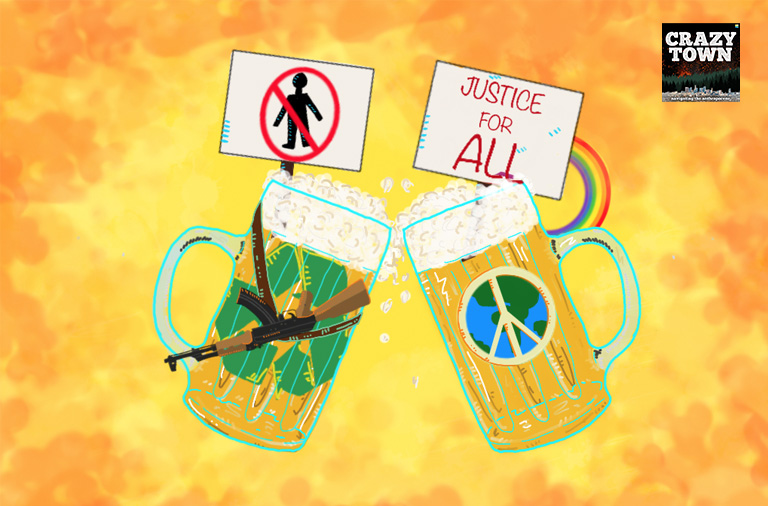
We’ve seen a frightening rise in recent years of violence and violent rhetoric by so-called ecofascists, who use environmental and resource limits arguments to justify hateful views around immigration and population. But does that mean those of us who are concerned about ecological limits should keep our mouths shut? Rob, Jason, and Asher explore why squelching discussions about limits might actually backfire and fuel ecofascist views instead, while wrestling with some of the skeletons in the environmental movement’s closet. Speaking of skeletons, wait until you hear our “theories” about Rachel Carson and Aldo Leopold.
- Richard Heinberg’s article “Systemic Change Driven by Moral Awakening Is Our Only Hope”
- Robert Paxton, a professor emeritus of social science at Columbia University who is widely considered “the father of fascism studies,” defined fascism as “a form of political practice distinctive to the 20th century that arouses popular enthusiasm by sophisticated propaganda techniques for an anti-liberal, anti-socialist, violently exclusionary, expansionist nationalist agenda.”
- Leah Sottile’s Rolling Stone article about Matt Shea and her fantastic podcast Bundyville: the Revenant
- GQ article “What Is Eco-Fascism, the Ideology Behind Attacks in El Paso and Christchurch?”
- New Yorker article “Environmentalism’s Racist History”
- White nationalists and climate change
- The menace of ecofascism
- Questionable quote from Jennifer Wright’s article “The Eco-Fascists Are Coming” in Harper’s Bazaar: “If every member of the United States lived in an area with the population density of Brooklyn, New York, all 327 million of us could fit into New Hampshire. (As someone who lives in Brooklyn by choice, I can promise you, it’s quite pleasant.) With some changes in the layout of our cities and our expectations about suburbia as a default living situation, even assuming certain U.S. regions become entirely inhospitable, we could accommodate not only the refugees likely coming to us from Latin America, but those around the world.”
- Jason Bradford’s report The Future Is Rural