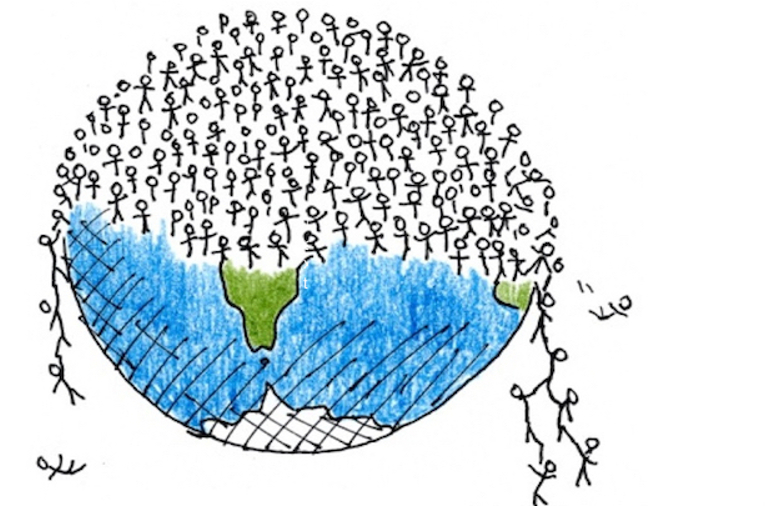
It has become something of a mantra within the sustainability movement that innovations in technology will save the world and all of us in it, but we tend to forget that technology played a big part in getting ourselves into this mess in the first place. In a manifesto released back in August, author Richard Heinberg, who is also the Senior Fellow-in-Residence of the US-Based Post Carbon Institute, explains why technology, which is widely heralded as our saviour, is not the secret sauce to solve all our environmental troubles. He joins us to discuss his arguments in the manifesto which is titled, “There’s No App for That: Technology and Morality in the Age of Climate Change, Overpopulation, and Biodiversity Loss.”
Teaser photo credit: thinglink.com
Related Articles
'SELECT SQL_CALC_FOUND_ROWS wp_posts.ID
FROM wp_posts LEFT JOIN wp_term_relationships ON (wp_posts.ID = wp_term_relationships.object_id)
WHERE 1=1 AND wp_posts.ID NOT IN (3468799) AND (
wp_term_relationships.term_taxonomy_id IN (3,5,9001)
) AND wp_posts.post_type = \'post\' AND ((wp_posts.post_status = \'publish\'))
GROUP BY wp_posts.ID
ORDER BY wp_posts.post_date DESC
LIMIT 0, 3'
By Neelakshi Joshi, Resilience.org
In areas around the world, growing opposition to climate action signals a new disruptive wave that researchers call an “urban greenlash,” a backlash against climate plans and policies in cities.
October 9, 2026
By Vicki Robin, Coming of Aging
A thriving village is a collective creation. People, place, participation, creativity, and inclusion are the ingredients.
October 9, 2026
By Erik Assadourian, Gaianism
So, it’s time we Make America Go Away from the Deep Ocean. Yes, the MAGADO movement.
October 8, 2026






Comments
We changed commenting systems on September 10, 2026 as part of a site-wide functionality and security upgrade. Your past comments have not disappeared, and you can still log in with your old Disqus account credentials if you wish. Contact us with any questions.