


The panel of discussants at the first session of ASPO-9 in Brussels. From left to right, Pierre Mauriaud (Total); Jean-Pascal van Ypersele (IPCC); Kjell Aleklett (ASPO); Colin Campbell (ASPO); Paul Hohnen (Greenpeace). During the discussion, Colin Campbell, founder and honorary chairman of ASPO, said “I am convinced,” referring to the talk on climate change by Van Ypersele. A good scientist can always recognize good science when he sees it. Unfortunately, it seems that many people involved with peak oil studies don’t often interact with serious climate science and their view of it remains linked to the distortions presented in the mainstream media


One of the most interesting talks at the recent meeting on Energy organized by the Club of Rome in Basel, was the one given by Ian Dunlop, of ASPO Australia (photo on the right). It was not so much on energy, but on the interconnection of energy with climate change. It was up to date and saying the things that needed to be said. That is, Ian Dunlop didn’t shy away from saying that climate change is threatening the very existence of our civilization and that we must do something quick about it. It was an excellent talk, give a look to the slides if you have a moment, here is the link.
What I found surprising were the several comments that I heard later on from people attending the meeting. Some of those who didn’t have a specific background on climate science seemed to be shocked. They didn’t know, it seems, that the climate situation is so bad and that it is so urgent to act – but they now recognized the problem. This experience of mine in Basel parallels very well the one I had in Brussels for the ASPO-9 conference, when climate scientist Jean-Pascal van Ypersele gave a good talk on climate change. Also there, the reaction of some of the people attending the conference was of surprise; they never had a chance, apparently, to hear a comprehensive report on the climate situation.
Of course, I have no statistics about the average competence in climate science of the people who work with peak oil and similar subjects (let’s call them “depletion scientists”). But my experience with this issue has been often disheartening: many depletion scientists are badly outdated in what they know about climate science and a few (just a few, fortunately!) make a banner of their ignorance and they fall for the most obvious propaganda tricks diffused by denialists or scoff at the whole idea with the simplistic statement “not enough oil for climate change”. Alas, things are much more complex than that!
That doesn’t mean that depletion scientists are not smart people; by all means they are. And it doesn’t mean that there doesn’t exist a parallel bias on the part of climate scientists who, often, appear to be totally oblivious of the situation in terms of resource depletion. The point is that we all suffer of narrow vision. The Internet is vast and we tend to go in depth only in the areas that we know well; the rest of our information often comes by a haphazard mix of what we read in the media. In this, we all suffer of “confirmation bias.” (see below)
So, what you get from the media about climate change is that it is all a question of small details: did we see a warming during the past 10 years? What is the meaning of “hide the decline”? Didn’t scientists fear “global cooling” in the 1970s? And so on. Even people who are on the side of climate science often seem to engage in the debate worrying about minor details. How many tons of CO2 can we save if we install double paned glasses in public buildings? Should we use public transportation instead of a private car for commuting? So, the general impression that you can get is that climate change is a minor issue affected by great uncertainties.
That the results of more than half a century of work in climate science have been reduced to such narrow terms in the media is a victory for denial: it is a way to keep people in the dark about what is really happening. But climate change is not something that can be stopped by double paned windows. It is a major upheaval of the whole earth ecosystem and it has the potential to do to us immense damage. The problem must be faced for what it is, in its complexity, and with the risks that come with it. Uncertainty is not an excuse for doing nothing: what we don’t know is what is most dangerous for us.
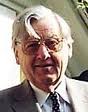
So, it is very good to see that a good scientist can always recognize good science when he sees it. It has been the case of Colin Campbell (left), founder and honorary chairman of ASPO, who stated to the audience “I am convinced” after having heard the talk by Van Ypersele at the ASPO-9 Brussels conference. It was the same for several colleagues at the Basel meeting after the heard the talk by Ian Dunlop. I also noticed in other occasions that climate scientists can understand the depletion message when they hear it presented for what it is. They are good scientists, too.
So, it is time to recognize good science when we see it. And it is time to tell everyone how things stand, just as Ian Dunlop did in Basel.


Comments
We changed commenting systems on September 10, 2026 as part of a site-wide functionality and security upgrade. Your past comments have not disappeared, and you can still log in with your old Disqus account credentials if you wish. Contact us with any questions.