‘Culture Integral to Agriculture’
Sabina Zaccaro, IPS
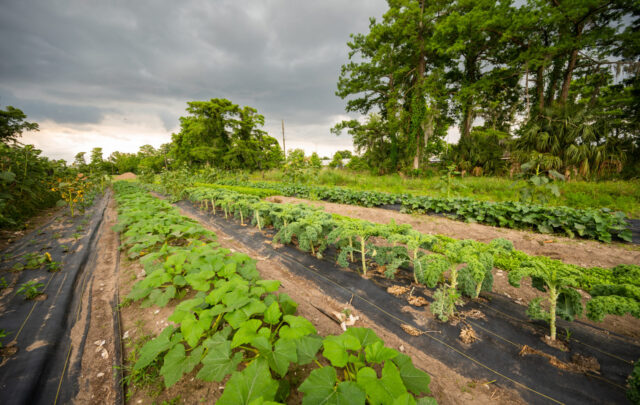
Biodiversity in agriculture is about culture. Traditional knowledge and culture are as important as research and investment, say farmers, researchers and academics gathered in Rome for the International Day for Biodiversity on Saturday.
While biodiversity day is an occasion for many to talk about preserving endangered species, the focus at the Rome meet organised by Bioversity International is food and agriculture. Bioversity International, based in Maccarese outside Rome, is dedicated to the conservation of agricultural biodiversity.
Bioversity points out that there are about 30,000 edible plant species, of which three — rice, wheat and maize — provide 60 percent of calories for human beings. But the value of these staples is hardly recognised.
“When you talk about biodiversity people around the table are essentially from ministries of environment, and they come from a background of nature conservation and protection,” director-general of Bioversity International Emile Frison tells IPS. “For them, traditionally, agriculture has been the enemy, the one that encroaches on the environment.
“What we realise today is that there is much greater attention to biodiversity in agricultural ecosystems and also to agricultural biodiversity itself. We can no longer just care about protected areas, we must look at how we can make the entire biodiversity more useful to people.”
The international year on biodiversity is hardly the time to forget agricultural biodiversity and the farmers who sustain it, says Antonio Onorati of the International Planning Committee for Food Sovereignty, a global network of civil society organisations concerned with food sovereignty issues and programmes.
As not just the custodians of biodiversity but its creators, farmers ask “to be responsible for the diversity of what we plant, producing our seeds, creating new varieties in cooperation with researchers,” Onorati said. Participatory plant breeding, as this is sometimes called, aims to ensure that research is directly relevant to farmers’ needs.
Researchers increasingly recognise that traditional knowledge is a value. The traditional farmers’ system of exchanging seeds — now overwhelmed by industrial production — is key to maintaining traditional varieties that can better adapt to new climatic conditions, . Frison says.
“We must give voice to the food communities,” says Carlo Petrini, founder of Slow Food International that seeks to promote environmentally friendly modes of production, natural resources and biodiversity conservation. Slow Food International based in Italy initiated Terra Madre (Mother Earth), an annual world meeting of food communities that gathered farmers and food producers from 155 countries last year.
“The virtuous conservation practices of thousands of food communities can really compete with the big economic entities, and with the market,” says Petrini. “In this sense they are an economic subject, not a political subject, though they are not heard by decision-making powers.”
Traditional farmers’ knowledge should be preserved and transmitted to future generations, says Petrini. “The knowledge and the memory of humble people are extraordinary, and they must be transmitted to future generations; they will serve as a granary of knowledge when, one day, we will be affected by shortage of ideas,” Petrini told IPS.
Women can have a big role to play here. In the Italian community of Teramo in Abruzzo region, “for centuries women have done the so-called ‘virtues’ in May; they collect all the leftovers from the winter such as dried fruit or leftover pork. When spring arrives, all this food is put together and cooked with fresh vegetables in a dish called virtu teramane, which is a masterpiece of flavour and represents the fight against food wasting. The message is no food must go waste.”
(21 May 2010)
related: The Economics of Ecosystems and Biodiversity report
No-Till Farming Improves Soil Stability, Research Finds
ScienceDaily
A joint Agricultural Research Service (ARS)-multi-university study across the central Great Plains on the effects of more than 19 years of various tillage practices shows that no-till makes soil much more stable than plowed soil.
The study was led by Humberto Blanco-Canqui at Kansas State University at Hays, Kan., and Maysoon Mikha at the ARS Central Great Plains Research Station in Akron, Colo. ARS researchers Joe Benjamin and Merle Vigil at Akron were part of the research team that studied four sites across the Great Plains: Akron; Hays and Tribune, Kan., and the University of Nebraska at Sidney.
No-till stores more soil carbon, which helps bind or glue soil particles together, making the first inch of topsoil two to seven times less vulnerable to the destructive force of raindrops than plowed soil.
The structure of these aggregates in the first inch of topsoil is the first line of defense against soil erosion by water or wind. Understanding the resistance of these aggregates to the erosive forces of wind and rain is critical to evaluating soil erodibility. This is especially important in semiarid regions such as the Great Plains, where low precipitation, high evaporation, and yield variability can interact with intensive tillage to alter aggregate properties and soil organic matter content.
Tillage makes soil less resistant to being broken apart by raindrops because the clumping is disrupted and soil organic matter is lost through oxidation when soil particles are exposed to air…
(13 May 2010)
Is the Urban Farming Movement Here to Stay?
Vanessa Barrington, Civil Eats
Urban farming has the potential to help us take charge of the foods we eat, green our cities, build community, and increase food security for urban residents.
Everyday, there’s articles about backyard chickens, bee keeping, or urban yard sharing. Clearly urban agriculture is at the top of the trend pile. But is it just a trend, or a part of a sustainable future?
Recently I attended a panel discussion in San Francisco at The Commonwealth Club (presented by INFORUM), about how today’s urban farming movement began and where it’s going. Attendees were treated to a variety of perspectives from four pitchfork-toting farmerpreneur leaders of the urban farming movement in the San Francisco Bay Area.
Panelists included Jason Mark, co-manager of Alemany Farm; editor-in-chief, Earth Island Journal, Novella Carpenter, author of the book Farm City about her farm Ghost Town Farm, Christopher Burley, founder, Hayes Valley Farm, and David Gavrich (aka The Goat Whisperer), founder of City Grazing. The panel was moderated by Sarah Rich, writer; editor; co-founder, The Foodprint Project; and co-author, Worldchanging: A User’s Guide for the 21st Century.
The panel started off with a discussion about the most recent “back to the land” movement and how it differed from today’s urban farming movement.
Back in the 60s and 70s young people migrated back to the countryside to make a go of farming. Novella Carpenter’s parents were part of that movement. But it didn’t last. People found that growing food is very hard and rural life can be extremely isolating. The motives of today’s generation of farmers are different, and more communitarian. They’re not trying to drop out. They’re trying to engage more fully with the world around them.
…What about bureaucratic hurdles to farming in urban areas?
They do exist but each panelist had different experiences. Gavrich has said he’s had no problems in enlightened San Francisco but recommends anticipating problems and getting everything in writing. He has a “goat clause” in his agreement with the railroad line he maintains stating that all landscape is done by natural means.
Mark echoes that San Francisco has been extremely supportive and that the mayor has laid out a food policy proposal that is sweeping and visionary. He does cite “getting the city staff to connect with the mayor’s policies” as a hurdle.
…Can urban farming help us rebuild our food systems and increase food security?
Urban farming can certainly increase access to fresh fruits and vegetables to city dwellers but we need to look at how the food is distributed and find creative ways to get the food to the people who most need it. The most sustainable way of all to provide food is to teach people how to grow their own.
…Panelists were asked what role education plays in the movement.
Chris Burley says it’s crucial. In fact Hayes Valley Farm’s mission is not even so much to produce food, but to serve as an urban agriculture resource that provides education and advocates behavioral changes. “We can’t change what we don’t know. We need to become more aware of our impact. Food is the gateway drug to a more sustainable lifestyle. Through learning about food, little by little, we’ll become more connected and thrive as a community,” said Burley.
…In conclusion: here are the panelist’s best 60-second ideas to change the world.
David Gavrich – “Get leadership and political people to think holistically. Think about the impact beyond what we see. Look at externalities. If we do that, it will be clear that we’ll be better off farming in our communities.”
Chris Burley – “Crop mob. Get together and transform a backyard. Have a potluck.”
Novella Carpenter – “Every city should have a demo farm. It could be a cool tourist thing with a person managing it and showing people how to raise chickens and bees and how to can and process vegetables. There should be an ‘office of urban farming.’”
Jason Mark – “Find a little bit of land and a little water, find a friend and find someone to help. Connect with you neighbors doing the same thing. Personal actions alone don’t do it. Progress happens collectively.”…
(25 May 2010)
Fish Are Jumping—Off Assembly Line
Joe Barrett, Wall Street Journal
Josh Fraundorf remembers when yellow perch were so plentiful in Lake Michigan that people pulled out all they could eat with just a bamboo pole and some worms.
Now, they have to come to places like this old factory south of downtown.
With the lake’s population of wild perch decimated, Mr. Fraundorf is helping the fish make an unlikely comeback, raising about 80,000 yellow perch and tilapia in tanks inside a cavernous former crane factory that sat empty for decades.
That’s not all the factory produces. Stacked over the 10 four-foot deep tanks are hydroponic planting beds lit by lamps. The fish waste produces ammonia that microorganisms convert into food for lettuce and other plants, cleaning the water for the fish.
Fish and Lettuce in Harmony
With the population of wild yellow perch in Lake Michigan decimated, a company is helping the fish make an unlikely comeback in a cavernous factory, raising both fish and lettuce in a mutually beneficial relationship.
Sweet Water Organics has converted a former crane factory in Milwaukee into an indoor wetland, raising about 80,000 fish in tanks topped by beds of lettuce and other crops.
“It’s like an indoor wetlands,” said Mr. Fraundorf, 35 years old, who co-founded Sweet Water Organics Inc. with James Godsil, his partner in a separate roofing and construction business.
Yellow perch have dark stripes and grow up to 12 inches in the wild. In Milwaukee, the firm, sweet fish is usually served battered and fried with German potato salad, rye bread and beer.
Perch once dominated Friday fish fries, a Midwest tradition especially prominent in this heavily Catholic city. But the perch population in Lake Michigan collapsed in the mid-1990s, partly because of the proliferation of zebra mussels. The voracious mussels, which hitchhiked to the lake in the hulls of ocean-going ships, choked off the food supply for baby perch…
(14 May 2010)
French farmers bring rural reality to Champs Elysées
Lizzy Davies, The Guardian
As the busiest, most traffic-friendly road in the French capital, there is usually very little that is field-like about the Champs Elysées, or Elysian Fields.
Today, however, the cars that usually speed through the famous avenue were brought to a halt and the cobblestones paved over with grass as la France profonde took over the most urban landscape in the country.
By bringing in 8,000 plots of earth and 150,000 plants to the city and installing them, amid sheep and cattle, along three-quarters of a mile of the thoroughfare, struggling farmers are attempting to highlight an aspect of French life which they believe is too often overlooked by Paris.
In the ravages of a crisis which has seen production costs soar and product prices fall, representatives of the agricultural sector say farmers are being brought to their knees.
But William Villeneuve, president of the young farmers’ union, insisted the greening of the Champs Elysées was more a celebration than a protest.
“We are not here to bemoan our plight,” he said. “We are here to promote our trade.” The farmers wanted to make French consumers reflect on “what they have on their plates” and how it got there, he added.
Organisers of the event, which cost private investors €4.2m to stage and was due to run today and tomorrow, said they hoped to attract up to two million people to the newly bucolic avenue running from the Arc de Triomphe to the Place de la Concorde.
From wheat and mustard to grapevines and Limousin pigs, the avenue’s pavements have been carpeted with lorry-loads of produce from all over France, among it 650 fully grown trees and a vast array of flora intended to symbolise the country’s biodiversity…
(2X April 2010)
Indian State of Kerala Starts 10-Year Conversion to All-Organic Farming
Matthew McDermott, Treehugger
The southern Indian state of Kerala has officially announced a new farming policy which aims to covert all agriculture in the state to organic methods over the next ten years. In the first phase 30,000 hectares converted, The Hindu Business Line reports, and then proceeds in a “phased and compact manner.”
The policy advocates adopting a compact area group approach in organic farming by encouraging formation of organic farmers groups, clubs, self-help groups and cooperatives for the purpose of cultivation, input production, certification and marketing.
There is need for ensuring organic farming approach in all the watershed development areas and extend support, including capacity building and financial assistance, for soil and water conservation measures through ongoing programmes.
In order the facilitate the transition, the policy highlights the need to provide interest-free loans to small and marginal farmers…
(19 May 2010)