Click on the headline (link) for the full text.
Many more articles are available through the Energy Bulletin homepage
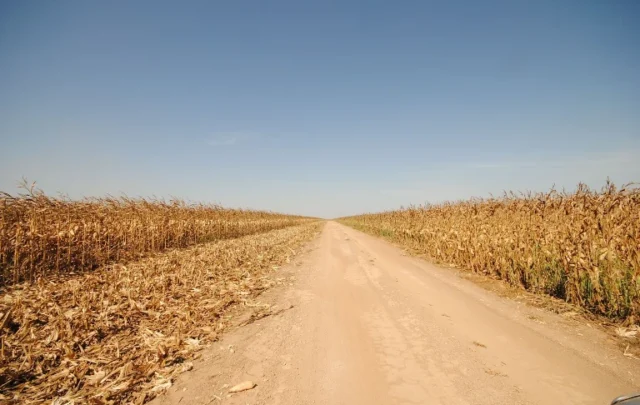
UN sees rise in ‘land grab’ for food security
Javier Blas, Financial Times
Overseas agriculture investment by developing countries is “on the rise” due to food security concerns, the United Nations said yesterday, but it warned that similar moves to secure food in the past had been “mostly unsuccessful”.
The UN Conference on Trade and Development (Unctad) said in a report that foreign direct investment flows in agriculture jumped to $3bn (€2bn, £1.8bn) annually in the 2005-2007 period, up from $600m during the 1990s.
Unctad’s World Investment Report is the first detailed analysis of FDI flows behind the so-called farmland grab trend, in which countries such as Saudi Arabia or South Korea invest in overseas plots. The investors plan to export most crops back to feed their own populations…
(18 Sept 2009)
The “key messages” from the report can be accessed here. The report itself is behind a paywall. -KS
The Coalfield Uprising
Jeff Biggers, The Nation
When the Environmental Protection Agency declared this year on September 11 that all pending mountaintop removal mining permits in four Appalachian states stood in violation of the Clean Water Act and required further review, Lora Webb didn’t have time to join in any celebrations. As she and her husband, Steve, a coal miner, packed up their possessions and left his family’s ancestral property outside Lindytown, West Virginia, Lora was more concerned about finding a place to sleep that night.
For the past few years, ever since a massive twenty-story dragline landed on a ridge near their home, the Webbs had endured twice-daily, bone-rattling explosions and the quasi-apocalyptic storms of coal dust and fly rock that blanketed their home and garden. Lindytown’s creeks and mountain hollows no longer exist, and a once-thriving community has been reduced to a ghost town. “It’s unreal. It’s like we’re living in a war zone,” Lora Webb told a local newspaper last fall.
By the spring of this year, the Webbs were one of the last holdouts in the area. Hoping to avoid displacement, they pleaded with the West Virginia Department of Environmental Protection (WVDEP) and various federal agencies to enforce mining laws. Lora Webb even toted a jar of coal dust to Capitol Hill. In the end, though, they threw up their hands in bewilderment at the government’s inaction and sold their beloved home to Massey Energy, the Richmond-based corporation that runs the nearby Twilight mountaintop removal site. Then they were issued a sixty-day order to evacuate.
(30 Sept 2009)
Jumpin’ Jack Verdi, It’s a Gas, Gas, Gas
Pepe Escobar, tomgram
Oil and natural gas prices may be relatively low right now, but don’t be fooled. The New Great Game of the twenty-first century is always over energy and it’s taking place on an immense chessboard called Eurasia. Its squares are defined by the networks of pipelines being laid across the oil heartlands of the planet. Call it Pipelineistan. If, in Asia, the stakes in this game are already impossibly high, the same applies to the “Euro” part of the great Eurasian landmass — the richest industrial area on the planet. Think of this as the real political thriller of our time.
The movie of the week in Brussels is: When NATO Meets Pipelineistan. Though you won’t find it in any headlines, at virtually every recent NATO summit Washington has been maneuvering to involve reluctant Europeans ever more deeply in the business of protecting Pipelineistan. This is already happening, of course, in Afghanistan, where a promised pipeline from Turkmenistan to Pakistan and India, the TAPI pipeline, has not even been built. And it’s about to happen at the borders of Europe, again around pipelines that have not yet been built.
If you had to put that Euro part of Pipelineistan into a formula, you might do so this way: Nabucco (pushed by the U.S.) versus South Stream (pushed by Russia). Be patient. You’ll understand in a moment.
At the most basic level, it’s a matter of the West yet again trying, in the energy sphere, to bypass Russia. For this to happen, however — and it wouldn’t hurt if you opened the nearest atlas for a moment — Europe desperately needs to get a handle on Central Asian energy resources, which is easy to say but has proven surprisingly hard to do. No wonder the NATO Secretary General’s special representative, Robert Simmons, has been logging massive frequent-flyer miles to Central Asia over these last few years…
(1 Oct 2009)