


Local sourcing and organic foods are among the top 20 hottest trends for 2009 for restaurants and it’s no wonder.
People want tasty, clean, farm-fresh fruit and vegetables from farmers they know and they want to support their local communities and businesses, according to the National Restaurant Association (NRA).
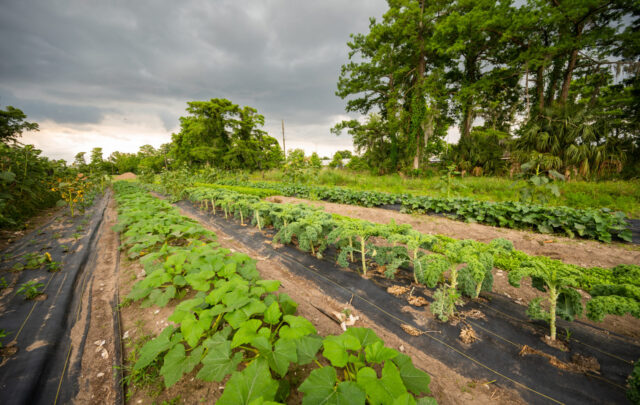
Accommodating these “philosophy-driven” desires would actually help establish a “community-based food system” where small, independent farmers grow and sell their produce at farmer’s markets, farm stands, supermarkets, specialty food shops and restaurants and work with a network of food processors and distributors.
Such a food system was in place 50 years ago but it has been systematically broken down in favor of an “industrialized food system” designed to increase production and provide the nation with cheap, plentiful and easily accessible food. The United States became a top food producer in the world as a result but problems with food quality as well as food safety and security have developed. The number of general farmers and the destruction of their close-knit rural communities have also resulted. However, change is coming and restaurateurs may help lead the way.
Nationwide, the food industry generated $566 billion in sales in 2008 as one of the country’s largest employers with 13 million employees in 945,000 locations, reports the NRA. In Michigan, restaurant jobs in 16,565 eating-and-drinking places represent 9.9 percent of the state’s total workforce of 4.4 million.
And out of a total GDP of $381 billion, agriculture is the state’s second largest industry pulling in $63.7 billion annually compared to $68.4 billion from manufacturing, according to the Michigan Department of Agriculture (MDA) and the U.S. Bureau of Labor Statistics.
However, a community-based food system has a long way to go before it becomes part of the mainstream and this affects restaurants in many ways.
In deciding whether or not to purchase locally grown foods, an Iowa State Extension (ISUE) study found that restaurant operators must consider:
• seasonality and availability of products
• adequate supply to meet needs of the restaurant
• product packaging and labeling to meet safety regulations
• ease and efficiency of ordering and payment
Currently, many chefs are getting their local food by driving to the farms or by having the farmers deliver fresh products to them because there is little infrastructure available to them to provide their needs, said Jason Gollan, president of Gollan and Company, a Frankfort consulting firm (http://en.wikipedia.org/wiki/Frankfort,_Michigan) that specializes in local food marketing strategies.
Consequently, distributors are popping up all over the country. Cherry Capital Foods, for example, is trying to establish a regional system in the Grand Traverse area. Meanwhile, Sysco, a $3 billion broad-line distributor, is seeking to provide local foods to its customers as a brand. Last year it sold $1 million in local food in Michigan, said Gollan, “a mere drop in the bucket” but a step in the right direction because they know how to do the job.
The local food system has primarily been a social movement, said Gollan. Policymakers have recently gotten involved and developed various means for start-up businesses. Now businesspeople are seeing the viability of local food and setting up infrastructure to make it happen at a profit and with greater accessibility.
Regions like the state’s northwest are also rebuilding their local economies by forming partnerships among businesspeople, economic developers, schools, grocers, restaurateurs and food retailers, reported the Great Lakes Bulletin News Service.
State initiaitves, like the MDA’s Agricultural Innovation Program, provide yet another opportunity for local economic development. This competitive grant seeks to establish, retain, expand, attract or develop value-added processing and production operations in Michigan through innovative financing assistance to processors, agribusinesses, producers, local units of government and legislatively-authorized commodity boards in Michigan.
Organic food producers contribute to changing the food system. As more people prefer organics, organic farming represents a profitable alternative for local economic growth and sustainable agriculture since farmers tend to sell to local markets. More acreage is also dedicated to organic farming. From 1997 to 2005, the number of U.S. certified organic acres grew by 63 percent, while Michigan certified organic farmland increased by 166 percent.
In actuality, the number of industrialized farms converting to organic farming methods remains steady, but small. Michigan’s 45,500 certified organic acres comprise only 0.4 percent of the state’s total farmland and 1 percent of the total 4,000,000 certified organic acres in the country, according to the Michigan Organic Farm and Food Alliance (MOFFA). But the potential for growth is there, especially when organic food processors/handlers are figured into the economic mix. The USDA reports that there were over 3,000 organic-certified facilities nationwide in 2004, with 41 percent of those located on the Pacific Coast and almost 800 in California alone.
Local organic food is admittedly more expensive than food from large, industrialized farms, but organic advocates claim that prices in the industrialized food system are cheap because their true cost omits governmental price supports, direct payments or tax breaks and road infrastructure.
All these efforts have barely dented the present industrialized food system. Michigan residents, for example, spend $26 billion on food with only 10 percent coming from the state’s farmers, according to a 2001 MLUI study.
“Michigan has the second most diverse agriculture in the United States [with 150 crops],” said Kami Pothukuchi, associate professor of urban planning at Wayne State University. “We could add another $2.58 billion to the state’s economy if the state’s residents diverted 10 percent of their current food dollars (including eating out) on Michigan-sourced foods.”
The deeply-entrenched industrialized food system made up of a handful of “mega-corporations” that control food production, processing, distribution and preparation is standing in the way of change, she said
This system was developed in the 1950s when most American businesses were creating systems for mass production and economies of scale. Because volume is critical to the profitability of this system, farming methods developed to support a large-scale, energy-intensive monoculture that uses huge amounts of water and chemicals for herbicides, insecticides, and fertilizers. Tons of animal waste products also accumulate and pollute land, water and air because factory farming methods keep animals indoors and free of disease instead of allowing them to graze in pastures.
Actually, the cost of the industrialized food system outweighs its benefits. For example, most food in the industrialized system ends up in supermarkets after traveling an average 1,300 miles to get there. Fruits and vegetables may spend seven to fourteen days in transit. So freshness and taste are sacrificed for the products’ ability to travel.
Transporting products has been possible through low-cost fuel. However, when oil reached $144 a barrel last summer, the expense incurred over such long distances proved problematic. World food prices averaged an increase of 43 percent over the past year, while the Consumer Price Index estimates that U.S. retail food prices increased in 2007 by 4 percent, the largest spike in 17 years—with more expected to come.
Meanwhile, restaurants will continue to play a major role in developing a community’s economy as nearly every community has at least one restaurant and most communities have many food-and-drink establishments, said a recent ISUE report. Restaurants and producers are forming stronger connections with their customers and obtaining premium prices for their products.
The time is ripe for change—and profits!
Olga Bonfiglio is a professor at Kalamazoo College in Kalamazoo, Michigan, and author of “Heroes of a Different Stripe: How One Town Responded to the War in Iraq.” She has written for several national magazines on the subjects of social justice and religion. Her website is www.OlgaBonfiglio.com.



Comments
Welcome to the new Resillience commenting system!
We have moved from the former Disqus commenting system to a new system as of September 10, 2026.
We made this change because of privacy concerns regarding Disqus. It's also part of a set of changes to bring more services to the Resilience community under a single login: commenting, (coming September 2026), and online courses (coming 2027). Unfortunately, your old Disqus comments may not reliably link to your account in this new system. Please contact us if you have any questions or concerns.