

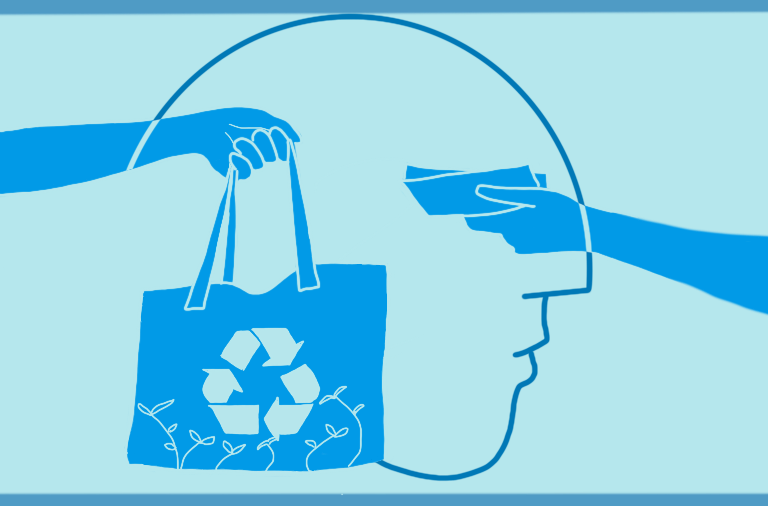
 Prepare to observe the spectacle of the two great economic paradigms of the twentieth century crashing to the ground, locked in mortal combat.
A hundred years past, markets ruled freely: fortunes were made, workers abused, bubbles blown. According to the Austrian School of economists, led by Ludwig von Mises, this was all as it should be: despite any temporary pain or inconvenience, the unfettered market always knows best how to allocate goods and organize investment and labor.
But the ensuing pain and inconvenience were just too much for the various stripes of Marxists and socialists, some of whom led a revolution in Russia to establish the first state-controlled, planned economy.
The catastrophes of the Great War and the Great Depression led to the ascendancy of John Maynard Keynes, the British economist who argued that even capitalist economies needed regulation and controls in order to avoid excessive manias and subsequent implosions.
Keynesianism reigned supreme throughout the middle decades of the century, as the US, Britain, and nearly every other country adopted regulations on banking, finance, and industry, in many cases going so far as to nationalize railroads and other central features of the productive economy.
Meanwhile, rival economist Friedrich von Hayek and his followers quietly plotted the Austrian School’s revenge—the occasion for which was offered by the stagflation of the 1970s. Von Hayek, who had raised a generation of followers (including Milton Friedman) at the Chicago School of Economics while toiling in obscurity, was now prominently rewarded with the so-called Nobel prize in economics (there actually is no prize in economics offered by the Nobel family), and his acolytes Margaret Thatcher and Ronald Reagan promised to show the world the way back to freedom and prosperity: government was the problem, they proclaimed, and privatization the solution!
The ensuing three decades have seen economists crowding back to the “Let Markets Rule” side of the ship, as they giddily praised the wonders of globalization and free trade.
Now with the Collapse of 2008, economists are rushing to announce a new era of neo-Keynesianism: lack of regulation in the finance industry has led to a cataclysm of unimaginable proportions, and only massive government intervention can put us back on track.
Sadly, this time the tracks have been moved, maybe dismantled altogether. The two great economic paradigms of our age simply took too much for granted. They assumed that economies run on money and labor, whereas real economies also need energy and natural resources. They assumed that because population, resource extraction, and available energy had grown throughout the 19th and 20th centuries, they would continue to grow in perpetuity; all that was necessary was to properly adjust the relations between money, market forces, and government regulation. No one (within the economics profession) stopped to think that limits to Earth’s supplies of fossil fuels, topsoil, water, and other resources might impose ultimate limits on economic activity.
The fields of ecological economics and biophysical economics have sprung up in the past two or three decades to fill in this enormous blind spot of conventional economic thinking, but both are currently marginalized to the point of irrelevance.
In the months and perhaps years ahead we will see a titanic battle to the finish between the free marketers and the state controllers over who is right about the economy, and about who is capable of restoring the beatific condition of perpetual growth. Sadly, neither camp has the answer this time around. Humanity has reached a significant physical limit to growth—Peak Oil—that will spell ruin to all economic philosophies that fail to take such limits into account.
How long will it take the theoreticians to figure this out? How much of our remaining wealth will they destroy in a futile attempt to prove one or another of their paradigms to be eternally true? How far will society unravel before someone in charge begins to question the received wisdom?
Let’s hope their learning curve is short.




Comments
We changed commenting systems on September 10, 2026 as part of a site-wide functionality and security upgrade. Your past comments have not disappeared, and you can still log in with your old Disqus account credentials if you wish. Contact us with any questions.