


Click on the headline (link) for the full text.
Many more articles are available through the Energy Bulletin homepage
Gasoline’s Cheap Again, But Peak Oil Still Looms Large
Robert Bryce, Energy Tribune
Given the news from the past few months, it borders on the foolhardy to preach about the looming dangers of peak oil. Doing so seems a bit like warning about the possibility of drought while standing without an umbrella in the midst of a torrential downpour.
Indeed, the price of oil has plummeted from its July peak of $145 per barrel (for West Texas Intermediate at Cushing, Oklahoma) to under $80 by early October. The price collapse coincides with a big drop in oil demand.
… Before going further, I readily admit that I have, for several years, had a rather flippant attitude toward peak oil. When asked my opinion, I would generally respond: so what? My rationale being, we will only know that we’ve hit peak oil when the event has actually passed. And second, regardless of prices or supplies, we will only move away from oil when something else comes along that is cheaper/cleaner/more convenient, or all of the above. Thus, I’ve long felt that all the fretting about peak oil has been largely misplaced and that even if the peak were imminent, there would be little that the U.S. or any other country could do to avoid the difficult energy transitions that are looming.
That said, I’ve spent a good bit of time over the past couple of months talking to two of the sharpest analysts in the oil business: Peter Wells and Charley Maxwell. And both are convinced that peak oil is real, it’s coming, and the pain that will accompany its arrival will be severe.
… What sets Wells apart from the pack of alarmists is that he has done the deep and dirty analysis of individual field production data. In fact, Wells utilized field output info supplied by Denver-based consulting firm I.H.S., which owns one of the world’s most extensive oilfield databases. This same field-by-field data was utilized in 2006 by an I.H.S. subsidiary, Cambridge Energy Research Associates (CERA), to come up with their study on future global oil production, which claimed that global output could reach an “undulating plateau” of 130 million barrels per day by 2030. The study concluded that the peak oil argument “is based on faulty analysis which could, if accepted, distort critical policy and investment decisions and cloud the debate over the energy future.” The study also claimed that the remaining global oil resource base is about 3.74 trillion barrels.
Wells took the same data and came up with a far different conclusion. He estimates that global liquids output will peak in about 2015 at no more than 100 million barrels per day. And that’s when things will get very interesting for automakers like Toyota and, of course, for the rest of us.
… During his presentation in Portland, Wells said that the world is near the halfway point with regard to oil reserves. That is, we have produced about 1 trillion barrels of oil and there’s about 1 trillion barrels left to produce. But the problem is that new discoveries are not keeping pace with demand. “World peak exploration success was hit in 1960,” said Wells.
(26 November 2008)
As author Bryce writes, this article represents a major change in his thinking bout peak oil. -BA
Robert Bryce is managing editor of Energy Tribune and author of “Gusher of Lies: The Dangerous Delusions of “Energy Independence.””
Food Crisis & Peak Oil (Audio)
Nafeez Ahmed, UK Indymedia
Are we running out of oil and food? Why are prices fluctuating? Are we leaving behind a catastrophic legacy for our children? Learn about how global food and energy crises will affect you over the coming years, and how the global system must change to meet our food and energy needs.
Nafeez Mossadeq Ahmed is executive director of the Institute for Policy Research & Development in London. He teaches International Relations at Sussex University. His research on international terrorism was officially used by the 9/11 Commission in Washington DC, and on 22 July, 2005 he gave expert testimony in US Congress on the failure of Western security policies at the hearing, “9/11 Commission Report One Year Later: Did They Get it Right?”
In the lecture he points out that 1 billion people are currently hungry — one 1/6 of the worlds population. He asks who controls food and provides figures for some key parts of the global food production process — 6 companies control 85% trade in grain, 3 control 85% of the banana trade, 4 control 84% of US grain production, etc. The green revolution, soil erosion, climate change, global warming, drought are all covered.
Peak oil, the Olduvai theory ( http://dieoff.org/page224.htm ) and the imminent acute global energy crisis are described. He points out that there is currently the capacity to feed the whole of the planets population — the current problem is one of distribution.
He talks about alternative and renewable energy, the financial system and how we might use what we have to plant a seed to create a better, post-industrial society.
(26 November 2008)
The section on peak oil begins about 40% into the talk. Nafeez Ahmed has done his homework – he cites Chris Skrebowski, Colin Campbell, Jeffrey Brown (“Explort Land Model”), the Energy Watch Group and the IEA’s recent report. I hadn’t heard Ahmed before and I was impressed by the wide-ranging nature of his talk.
Nafeez Ahmed covers similar themes in a 2007 talk. See next item. -BA
The End Of The World As We Know It? (text and audio)
Nafeez Ahmed, UK Indymedia
Part three (see part one and part two) of an article by Nafeez Ahmed on the history of imperial genocide follows, the subject of this article was the subject of recent public meeting, The Hidden Holocaust – Our Civilizational Crisis.
Today, we enter into a new year which brings us yet closer to the imminent convergence of global ecological, energy and economic crises that threaten not only the end of our species, but the end of all species on the Earth.
In previous posts in this series, we reviewed the origins and evolution of the modern world system through a long historical process of protracted military and economic violence, violence that continues today in the imperial atrocities being committed across diverse strategic peripheries in the Middle East, Central Asia and Northwest Africa.
This global system is hugely destructive of human life. Devoid of the capability to recognize and enact ethical values, it is driven purely by the imperatives of profit, efficiency, growth, and monopoly. Consequently, it is not only destructive of human life; it is destructive of all life, nature, and even itself.
It is now generating multiple crises across the world that over the next 10-15 years threaten to converge in an unprecedented and unimaginable way, unless we take drastic action now.
These crises can be categorized broadly into four key themes:
1. Climate catastrophe
2. Peak oil
3. Food scarcity
4. Economic instability
(November 2007)
The first two parts of the talk, The Hidden Holocaust – Our Civilizational Crisis, analyzes world history leading to the present crisis. -BA
Iraq’s Oil: The Greatest Prize Of All ?
Big Gav, The Oil Drum: ANZ
… The subject of Iraqi oil is one which has fascinated me for a number of years, so in this post I’ll outline why I believe that Iraq probably has the world’s largest oil reserves – or, as Daniel Yergin once said of the middle east, it is “the greatest single prize in all history” (echoing a similar statement by George Kennan at the end of world war 2).
Conclusion
As we frequently find elsewhere, there is very little in the way of transparent data regarding Iraq’s oil reserves, so many interpretations of what is going on seem to be basically political in nature.
However, given the history of Iraq’s oil industry and its largely undeveloped state (even when considering well known reserves), I think some of the higher estimates for Iraq’s oil reserves are likely true. The oil that could be extracted will have much lower extraction costs, assuming the security situation can be fixed, than anywhere else – its entirely possible that if Iraq’s oil industry had developed unhindered in the past, high cost oil developments like Canadian tar sands projects might still be in the planning stages, and only justifiable on energy security grounds.
The Iraq Oil Ministry is continuing trying to get the oil law passed, and predicting potential production in the 10 million barrel per day range (even the limited sell off supposedly under consideration could result in an increase in production to 4.5 million barrels per day, according to the Wall Street Journal).
It is numbers like these that make me think the global decline rates we will see post peak won’t be as steep as some people fear in the medium term – however I hope that the Iraqis manage to free themselves from outside influences and get to determine the fate of their own property, rather than an occupying army ensuring that foreign oil firms take the lion’s share of the income this oil generates.
As a final note, I’d point out that given that there is some uncertainty about how much oil really is there its best to apply the precautionary principle and assume we are approaching the peak oil point in the near future, and take steps to reduce our dependence on oil as quickly as possible. In addition, as long as the occupation continues the security situation is likely to remain unstable – an example of a geopolitical feedback loop in action that serves to keep actual production below theoretical limits.
On a related note, if Iraqi production capacity can be ramped up to the levels mentioned above the country will replace Saudi Arabia as the world’s swing producer – giving the country (both the government and those groups able to disrupt production in similar fashion to the rebels operating in Nigeria) a large amount of influence over global oil prices.
(27 November 2008)
Gravity check
KMO, C-Realm Podcast
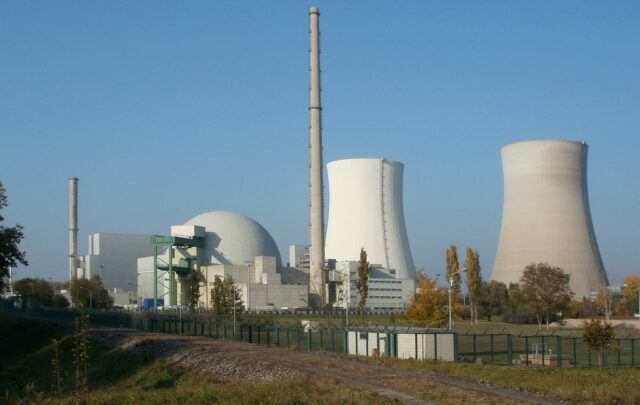
KMO welcomes Professor Howard Margolis to the program. The idea was to talk about human cognition, but try as he might, KMO can’t keep the C-Realm airship in the metashpere, and the conversation relentlessly spirals in on the topic of Peak Oil and the potential for nuclear energy as a means of avoiding the Malthusian Correction. Later, Albert K. Bates reminds us why we should not view nuclear fission as a panacea for our energy woes.
(26 November 2008)



Comments
We changed commenting systems on September 10, 2026 as part of a site-wide functionality and security upgrade. Your past comments have not disappeared, and you can still log in with your old Disqus account credentials if you wish. Contact us with any questions.