


Registration is still open for the 2008 ASPO-USA Sacramento Conference, Sept 21-23
Visit ASPOUSA.ORG for agenda and registration details
Contents
– After the hurricanes
– OPEC, production, and prices
– In the Congress
– Briefs
1. After the hurricanes
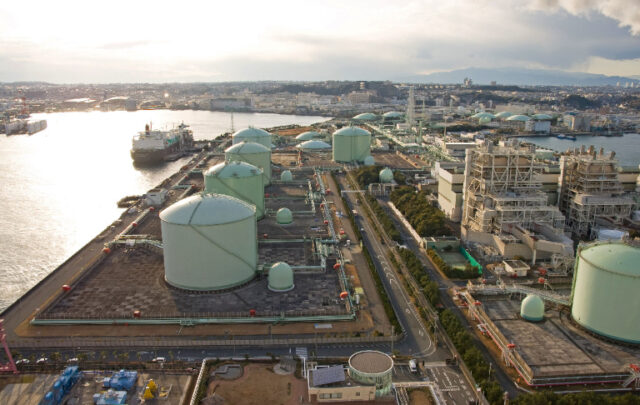
A last minute jog to the east left most Houston refineries without major wind and water damage from Ike; however the hurricane caused unprecedented damage to the electric grid around Houston and in western Louisiana. Some 16 refineries which produce about a quarter of US gasoline supplies were shut down from lack of power and crude or are facing delayed flooding from swollen rivers. About 4.5 million people could face weeks of power outages. In Beaumont, TX damage was so extensive that local officials estimate it could take more than a month to restore power.
Refining problems began on September 1st when over 3 million b/d of Louisiana production was shut down or operated at reduced capacity due to Gustav. Because of power problems and a slow recovery of production from Gulf platforms, production continued at about 1.5 million b/d below normal during the week between the hurricanes. As Ike approached over 4 million b/d was shut down.
Much of the production from these refineries is sent through two pipelines with a combined capacity of 3 million b/d to southern and east coast states. It takes about 18 days for oil products to make the pipeline trip from Texas to New Jersey; therefore the impact of reduced refining is only now being felt across the southeast.
Prices jumped rapidly and shortages developed over the weekend when motorists flocked to stations to fill up their tanks. For the next week or so, the situation can only get worse. Major product pipelines are closed or nearly so due to lack of product. By the end of the week there should be little or no new gasoline, diesel, and jet fuel arriving at terminals south of Washington which will have to make do with local stocks.
How long this situation will exist is unknown. The federal government obviously will encourage the Texas and Louisiana power companies to give top priority to restoring power to refineries and pumping stations as the economic and political damage wrought by widespread fuel shortages will be costly. On Sunday, the Department of Energy began releasing oil from the Strategic Petroleum Reserve to refiners. Estimates of how long it will take to restore power to the bulk of the petroleum infrastructure range from one to two weeks. Texas Senator Bailey Hutchinson was told to expect that power outages will last for eight or nine days.
Even as power and offshore oil production is restored, the distribution network will be largely empty and an abnormal amount of gasoline and diesel will be resting in hoarders’ gas tanks. After production starts, moving the fuel to southern and east coast distributors will take anywhere from one to three weeks. Shortages, much higher prices, and possibly some form of fuel allocations could persist for a month or more.
2. OPEC, production, and prices
A combination of an unusually controversial OPEC meeting, a second Gulf hurricane, and an unraveling world economy combined to make last week memorable. The week started with Hurricane Ike aiming at Brownsville (TX), where it would do minimal damage to oil facilities, and various OPEC officials predicting that there would be no changes in production levels at the Tuesday meeting despite the $40 a barrel drop in prices over the summer.
Oil prices, which had reached $107 on Monday, fell after Ike emerged from crossing Cuba in a much weakened condition. Once Saudi Oil Minister al-Naimi said that market is well supplied, oil fell some more.
The OPEC meeting, which lasted well into Wednesday morning, was obviously contentious. Some members were very concerned about oil falling below $100 a barrel confronted the Saudis who are sensitive to the political ramifications of a production cut prior to the US elections. After hours of wrangling, the cartel nominally agreed to cut real production, as distinct from notional targets, of about 500,000 b/d.
An added feature of the meeting was the appearance of a large delegation from Russia, led by the Vice Premier, asking to strengthen ties with OPEC. This action set off alarm bells in Europe and the US over the prospect that Moscow could use an alliance with OPEC to exert all sorts of political pressure around the world.
Within hours of the OPEC “compromise,” Saudi officials were assuring world markets in private that they would ignore the decision and continue to pump as much oil as was needed. This assurance was all the markets needed to ignore the OPEC decision and send oil prices down to $102 a barrel. Over the weekend, OPEC’s President said that the compromise production cut already appears to be ineffective against the “speculators” who are driving down prices and that the cartel will take “more practical” steps when in meets again on December 17th.
Meanwhile, back in the Gulf, Hurricane Ike’s path kept shifting to the north so that by week’s end, it was pointed directly towards the refinery-laden Houston Ship Channel. Oil companies rushed to shut down Gulf oil production and refineries in the storm’s path. Prices, however, kept falling as Ike only reached Category 2 intensity after hitting Cuba so was not deemed by traders to be much of a threat to oil facilities. On Friday oil prices fell below $100 in New York for the first time since April as the markets focused on the slowing global economy rather than the hurricane. Oil closed out the week at $101 and in special Sunday electronic trading fell to $99.
3. In the Congress
Lawmakers will return to Washington today to pick up where they left off in the bitter fight over energy legislation in hopes that they can pass some sort of energy bill prior to the election. After months of criticism and rising voter concern about high gas prices, Congressional Democrats now seem willing to pass a bill that would permit drilling off the Atlantic and Pacific Coasts with Florida’s Gulf Coast still off limits. The proposed measure would permit drilling within 50 miles of shore with the approval of the adjacent state and 100 miles without such approval. Without the proposed bill, the moratorium will expire on September 30th and would then permit drilling within three miles of shore.
In return the Democrats are seeking more spending on renewable fuels and conservation efforts. The situation is very much in flux. Offshore drilling could be rolled into a catchall spending bill for next year.
Another major issue is the reenactment of tax credits for renewable energy, particularly wind generators. Without such credits manufacturers claim the wind industry in the US would collapse and move to Europe. No one in Congress is particularly against renewing the credits, but for months the bill has been held hostage as part of an ongoing debate over tax policy.
It now seems likely that Congress will pass loan guarantees for the US automobile industry. Detroit has been hemorrhaging money in recent months and maintains they will be bankrupt before they have a chance to build a new generation of fuel-efficient vehicles.
4. Briefs
(clips from recent Peak Oil News dailies are indicated by date and item #)
• Over the weekend Nigerian militants declared war on the oil industry in the Niger Delta after two days of gun battles with security forces. The MEND says they have attacked flow stations, a gas plant, oil pipelines, and an offshore platform. (8/14, #6)
• Shell extended its force majeure on Nigerian Bonny Light crude oil exports. The action, freeing the company from contractual obligations, was extended because of security concerns in the oil-rich Niger Delta region in Nigeria and because the Anglo-Dutch oil major had found more leaks at a Bonny Light pipeline. (9/13, #8)
• U.S.-Venezuela ties plunged to their lowest point in years as the two countries ejected each other’s ambassadors. Chavez said he will not send an ambassador to Washington before Bush leaves office in January and claimed that Bolivia is the victim of a US plot. He has threatened to halt oil exports to the US. (9/13, #10, #11)
• In Mexico leftists oppose conservative President Felipe Calderon’s idea of luring more private firms to the flagging state-run oil sector via incentive contracts, but with centrists broadly on board, a compromise is in sight. (9/13, #12)
• A CNN/Opinion Research Corp. poll found that 35% said the price of gasoline was their highest concern. That was followed by availability of good jobs (28%), high taxes (18%) and mortgages or home values (18%). (9/13, #13)
• An independent report by Michael Masters and Adam White showing that record amounts of speculative investment drove oil prices to record peaks in 2008 confirms that stronger market regulation is needed, federal lawmakers said. (9/11, #14)
• Conventional wisdom in Washington holds that speculative money flooding into the market from index funds pushed up oil prices earlier this year. But a regulatory report released Thursday shows that those funds actually were cutting their stake in the oil market as prices were soaring. That data, based on private trading data gathered by market regulators, contradicts parts of a report released by Washington lawmakers on Wednesday. (9/13, #14)
• US ethanol refiners are unlikely to use as much corn in the coming year as the government estimates due to weak margins and high corn prices, a trade group said Friday. (9/13, #16)
• California’s two energy agencies Friday endorsed a plan that would require utilities to obtain a third of their electricity from renewable sources by 2020. Unfortunately, the state appears likely to miss its current target of garnering 20% of its electricity from renewable resources by 2010. (9/13, #18)
• Thousands of British travelers were stranded when the country’s third-largest tour operator collapsed under pressure from high fuel prices and a sagging economy. 9/13, #20)
• Anti-government protests in Bolivia have reduced the Andean nation’s gas exports to Brazil by one tenth after protestors damaged a pipeline on Wednesday. Supplies to Argentina, which also shares a border with Bolivia, also have been affected. (9/12,#9)
• China’s industrial output in August grew at its slowest pace in 18 months because of weaker exports and the Olympics. (9/12, #10)
• US government officials in charge of collecting billions of dollars worth of royalties from oil and gas companies accepted gifts, steered contracts to favored clients and engaged in drug use and illicit sex with employees of the energy firms, federal investigators reported Wednesday. (9/11, #15)
• Rising oil prices saw the US trade gap swell in July to its widest level since March 2007. The trade deficit widened to $62.2bn in the month from an upwardly revised estimate of $58.84bn in June. (9/12, #14)
• Biofuels could make up 10-15 percent of the global fuels mix in 20 years, although getting to that level will be more difficult than some might expect according to a recent report. (9/12, #18) [Editor’s note: count us among the skeptics.]
• Global demand for oil is being driven by fuel subsidies and high economic growth in India and China, Nobuo Tanaka, Executive Director of the International Energy Agency, said. (9/11, #4)
• According to the IEA, August global oil supply fell by 1 million b/d to 86.8 million b/d on North Sea maintenance, the BTC pipeline outage and lower OPEC supply. Non-OPEC output is revised by -180 kb/d for 2008 and by -85 kb/d for 2009. (9/10, #10-11)
• Barclays slashed its fourth-quarter oil price forecast by 21 percent after weakening demand prompted OPEC to urge members to curb excess supply. (9/11, #6)
• In Pakistan, as the mercury level crossed 39 degrees Centigrade on Wednesday, the residents of Karachi endured another day of prolonged and recurring power cuts due to the serious electricity shortfall faced by the Karachi Electric Supply Company. (9/11, #3)
• Iraq won’t award temporary oilfield services contracts to international companies before a bidding round aimed at bringing in foreign expertise to boost crude production. Iraq will instead go ahead with new long-term exploration contracts before approving a new energy law. (9/10, #13)
• Lawmakers loyal to President Chavez gave final approval on Friday to a bill allowing the Venezuelan government to seize total control of the nation’s fuel distribution system. Distributors including subsidiaries of British Petroleum, Exxon Mobil, and Chevron, will have 60 days to negotiate the sale of their businesses to the government or face expropriation. (9/19, #11)
• Ford is ready to seek low-interest loans backed by the U.S. government for new fuel-saving technologies. (9/9, #14)
• Russia’s Natural Resources Ministry will intervene if BP’s venture TNK-BP fails to close a deal to sell control of the Siberian Kovykta gas field to Russia’s Gazprom by the year’s end. (9/9, #15)
• Russia aims to extend its control over energy deliveries to the West and it is important that European countries push forward on efforts to diversify routes for oil and gas supplies, a senior U.S. official said on Monday. (9/8, #14)
• Genetically engineered bacteria could make cellulosic ethanol cheaper to manufacture, researchers reported in a finding that may unlock more energy from the waste products of farming and forestry. Ethanol from cellulose is being promoted as an environmentally friendly alternative to fossil fuels, with the advantage that it does not use food crops such as corn as raw materials. (9/9, #18)
• StatoilHydro, Norway’s largest oil and gas company expects the price of oil to fall to less than $100 barrel by year end amid near-record OPEC production and slowing global economic growth. (9/8, #6)
• Robust fundamentals have spurred a sharp increase in thermal coal price forecasts by Merrill Lynch. Strong demand will in part be supported by thermal coal’s position as by far the cheapest source of energy for power generation despite the dramatic price increase over the past year. (9/8, #7)
• A $300 billion investment in boosting oil production is underway which could see the Arabian Gulf deliver 10 million barrels of crude a day in added capacity by 2015, more than half from Saudi Arabia alone, according to project research firm Proleads. “Recent analysis of total global oil production and development projects indicate that world crude production capacity from all sources has the potential to rise from 87 million barrels per day to as much as 108 million by 2015,” said Emil Rademeyer, director of Proleads. (9/8, #10) [Editor’s note: we would be inclined to bet the ranch against a net gain of 21 million barrels a day seven years from now.]
• Most states in India have gone through a bad summer and have yet to recover from a
crippling power crisis. A delayed and elusive monsoon is leading to poor water storage and consequently lower power generation; floods in Orissa and Bihar caused a disruption in the supply of coal; and the annual maintenance shutdown of some of the thermal power plants in some States have all contributed to this severe power deficit.
(9/8, #13)
Quote of the Week
The presidential campaign will only make this problem [energy policy partisanship] worse as Democrats and Republicans posture for voters back home in a vain attempt to look as if they’re doing something about the pain at the pump.
— Washington Post editorial





Comments