


NOTE: Images in this archived article have been removed.
 One of the vexing parts of the runup in oil prices is Saudi Arabia. No, not that it has so much oil and the world is sending so much money over there to buy it. Instead, it’s that almost the sum total of our knowledge that the Saudis can keep supplying the oil is that they say they can.
That’s right — the Saudis, unlike almost every other top-tier petro-state on the planet, won’t let any outsider look over their detailed oilfield data. You can get the name of the field, and an estimate of reserves. But experts like to examine more arcane data on an oilfield to get a feel for how long a particular reservoir can keep flowing, and at what rate.
The oil markets like such transparency too. Then they know precisely how much oil to expect from where if there’s a crisis, like an oilfield seized by Nigerian rebels, or the threat of war with Iran.
But with the Saudis — the world’s largest oil suppliers — the world has little more than the Saudis’ word for it. As Roger Diwan, a Saudi expert at PFC Energy in Washington told me, “We need to trust or not to trust. And nobody trusts.”
Part of the outcome of this failure of trust is that oil prices have doubled over the last year. And you know what has happened as a result with gasoline prices.
I’ve got a story on this topic on the Business Week web site today. It turns out that some of the Saudi promises are doubtful.
As my colleague Stanley Reed wrote in Business Week recently, just two weeks ago King Abdullah gathered together the leaders of OPEC, the CEOs of Big Oil, and several world leaders in an effort to show that the kingdom would and continue to supply a safety margin of oil supply for years to come. Saudi officials said the kingdom would raise its current production of about 9.5 million barrels a day to 12.5 million barrels a day, and that, if need be, they could manage to increase to 15 million barrels a day.
But consider some field-by-field data for the Saudi fields that I was leaked yesterday. They cover the next five years — through 2013. According to this data, the maximum production is somewhat less — 12 million barrels a day. And that’s the maximum.
It’s equivalent to your car’s maximum speed — true, you can get it up to 120 miles per hour, but you can’t keep driving that fast for a long time; setting aside the police, your car won’t tolerate it. The sustainable speed, if you want to keep your car, is more like 70 or 80 miles an hour.
Well, in the Saudi fields, the sustainable level of production is going to be about 10.4 million barrels of oil a day, according to the person who leaked the data.
What does this mean? That the world needs to keep focusing elsewhere to reduce prices, mainly for the moment on lowering consumption.
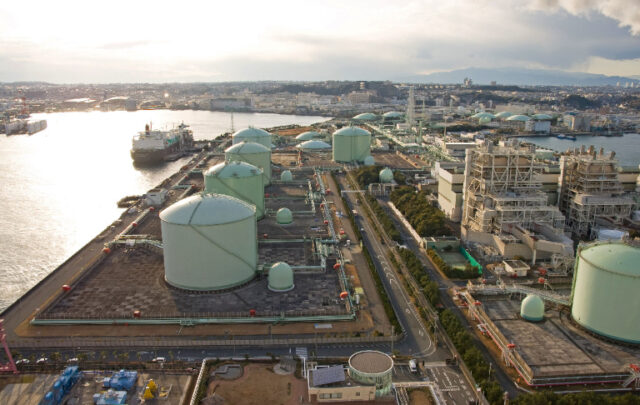
Photo: MiikaS
Rights: Creative Commons
Steve LeVine covers foreign affairs for BusinessWeek. He previously was correspondent for Central Asia and the Caucasus for The Wall Street Journal and The New York Times for 11 years. His first book, The Oil and the Glory, a history of the former Soviet Union through the lens of oil, was published in October 2007. Putin’s Labyrinth, his new book, profiles Russia through the lives and deaths of six Russians. It was released this week.





Comments