


Click on the headline (link) for the full text.
Many more articles are available through the Energy Bulletin homepage
Oil crisis fuels blame game
Paul Richter, Los Angeles Times
With the stakes high and the issue complex, speculators, consumers, Saudi Arabia, environmentalists, the Bush administration and congressional Democrats have all come under fire.
—
Runaway oil prices have set off a furious new blame game in which political leaders and key economic players are scrambling to deflect responsibility for the deepening crisis.
With outraged consumers protesting in the streets of many countries, oil producers are blaming speculators, speculators are blaming consumers and politicians are blaming one another. Consequences could entail not just a tarnished image but real damage to economic interests and political fortunes.
“Everybody’s got their preferred culprits,” said Frank A. Verrastro, a longtime U.S. energy official who is now director of the energy program at the Center for Strategic and International Studies in Washington. “Nobody wants to look in the mirror.”
The process of assigning blame underscores the complexity of a crisis with multiple causes and explosive implications.
(19 June 2008)
No mention of peak oil or geological constraints. -BA
Sue OPEC
Thomas W. Evans, New York Times
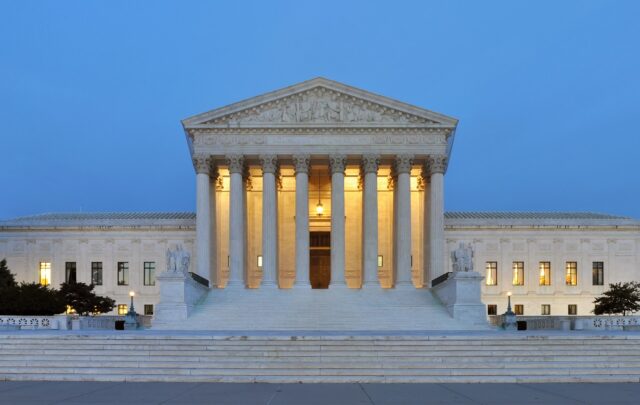
THE president of the United States has the power to attack, and perhaps destroy, the Organization of the Petroleum Exporting Countries, the illegal cartel that has driven the price of oil over $130 per barrel. This can be accomplished without invasion or bombing. No special legislation is needed. The president need simply allow the states to seek relief in the Supreme Court under our antitrust laws.
The oil ministers of the OPEC countries meet periodically to set production quotas for the cartel’s members and in the process establish an artificially high price for crude oil. Under our antitrust laws, this is illegal.
… If the president allowed the states to sue OPEC, his actions would undoubtedly anger political leaders in the Middle East and create the need for diplomatic initiatives to limit the fallout. But how stable is the Middle East right now? And isn’t starting a lawsuit better than starting a war?
Thomas W. Evans, who was an adviser to Presidents Ronald Reagan and George H. W. Bush, is the author of “The Education of Ronald Reagan.”
(19 June 2008)
Jeffry J. Brown writes: “Re: “Exponential Growth in Delusional Thinking.”
Sue OPEC
Darren Bush, Harry First and John J. Flynn; Los Angeles Times
Acting brazenly as a cartel, the organization is breaking U.S. antitrust laws.
—
… High gas prices have now gone from consumer irritation to a serious threat to our national economic health. Our antitrust laws are tailor-made to help out in such a crisis.
… Imagine suing OPEC members for the amount they overcharged for petroleum products the U.S. government purchased. Then triple that amount — for that is what can be awarded to consumers injured by cartel activity. Imagine the seizure of OPEC assets to pay this award, such as Venezuelan government-owned Citgo headquarters in Houston or Saudi Arabia’s Aramco assets in New York.
… If we are afraid of OPEC, remember that our decades of putting up with this cartel have done nothing to reduce oil prices.
Darren Bush is a law professor at the University of Houston. Harry First is a law professor at New York University. John J. Flynn is a law professor at the University of Utah.
(19 June 2008)
If you have a hammer, everything looks like a nail. If you are a law professor, every problem looks as if it can be solved with a lawsuit. -BA
SUING OPEC
Kevin Drum, Political Animal, Washington Monthly
June 19, 2008
….A trio of law professors take to the pages of the LA Times today to argue in favor of a bill allowing the government to sue OPEC for antitrust violations:
The cartel’s economic effect on the U.S. has been devastating, dating from the oil embargo in the 1970s, which led to the first U.S. fuel shortage since World War II, to today’s unstoppable escalation of pump prices. Just in the last three years, crude prices rose from $54 to nearly $140 a barrel – which means U.S. spending on imported oil has gone from about $185 billion a year to an expected $440 billion this year.
….Imagine suing OPEC members for the amount they overcharged for petroleum products the U.S. government purchased. Then triple that amount….Imagine criminal charges filed against key cartel individuals when they come to the U.S.
Imagine! For starters, imagine just how popular this would make us in the Arab world. If we believe in truth-in-advertising, we really ought to rename this the “Al-Qaeda Recuitment Act of 2008.” Or maybe “Smoot-Hawley II.”
Snark aside, what’s ironic is that this proposal has gained currency at precisely the time that OPEC’s cartel power is pretty much gone. Cartels are designed to artificially reduce supply and keep cartel members from competing against each other and driving prices into the ground. Today, though, demand for oil is so high that no collusion is needed. OPEC members are pumping at full capacity and prices are skyrocketing anyway. …
(19 June 2008)
According to the venerable Wiki, the Smoot-Hawley Tariff Act :
was an act signed into law on June 17, 1930, that raised U.S. tariffs on over 20,000 imported goods to record levels. In the United States 1,028 economists signed petition against this legislation, and after it was passed many countries retaliated with their own increased tariffs on U.S. goods, and American exports and imports plunged by more than half. In the opinion of some economists Smoot-Hawley Tariff Act was responsible for the severity of the Great Depression…
Kevin Drum has two other energy-related posts Thursday:
Thinking out loud about oil (Is oil in a speculative bubble?)
Chart of the day (vehicular travel in the U.S. is down noticeably)


Comments