


Click on the headline (link) for the full text.
Many more articles are available through the Energy Bulletin homepage
Castro: Oil costs and development
Fidel Casto Ruz, Cuban government
Reflections by the Commander in Chief
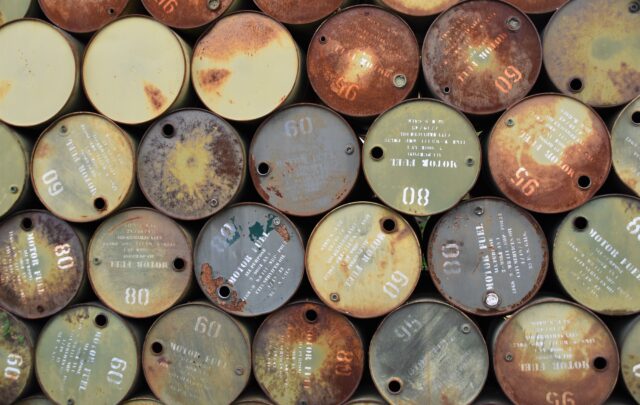
Chávez said it very clearly in Riad: developing countries spend upwards of a trillion dollars in oil and gas. He proposed that the OPEC, which was nearly dissolved before the establishment of the Bolivarian government – which chaired and preserved this organization over 8 years – assume the tasks the International Monetary Fund was created for but has never fulfilled.
The dollar is in a state of free fall, he said. We are paid with paper notes. We can and ought to guarantee a supply of fuel, both to developed countries and to those struggling to develop that need to import it. The OPEC can grant development credits with long grace periods and a yearly interest of only 1 percent that poor countries can pay with the goods and services they can produce. He mentioned the sum of 5 billion dollars in development aid which Venezuela loans Caribbean countries which desperately need to import this essential commodity.
Chávez could invoke an illustrative example which Cuba is well aware of: with what it costs to import a single barrel of oil at the end of 2007, 13.52 tons of light oil could have been purchased in 1960, including their transportation, that is to say, nearly 50 times the amount today. In these circumstances, a country like the Bolivarian Republic of Venezuela would continue to supply the United States with oil for practically nothing. The earth would continue to sink as its oilfields are drained of the oil that supports them.
I can imagine what headaches these calculations bring him and see how just and noble are his hopes for equality and justice for the peoples of what Martí called our America and Bolívar, in his struggle against the Spanish empire, described as a single nation.
At the time, a balance could still be maintained. Neither the empire’s diabolical idea of transforming food into fuel, nor the climate changes science has discovered and proven, still existed.
(19 November 2007)
Southeast Asian leaders back nuclear energy
Thomson Financial
Southeast Asian leaders offered their backing Tuesday for the use of nuclear energy despite concerns over safety in a region prone to earthquakes and volcanic eruptions.
…Association of Southeast Asian Nations (ASEAN) leaders agreed to establish a ‘regional nuclear safety regime’ to ensure that plutonium, a key ingredient for atomic weapons, does not fall into the wrong hands.
(20 November 2007)
Economic Brief: Nuclear Revival in Europe Increasingly Likely’
Power and Interest News Report (PINR)
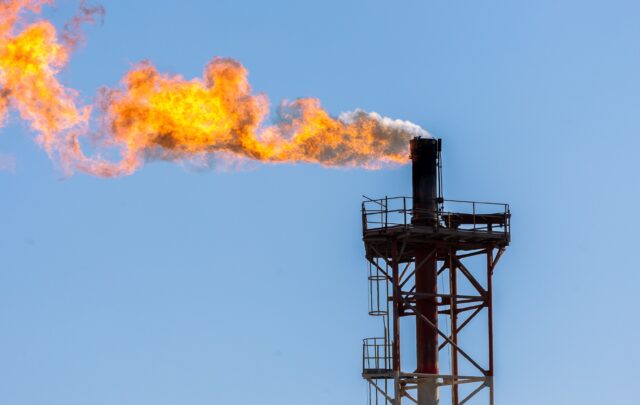
Recent news reports from Europe suggest that a nuclear revival in the European Union is increasingly likely. Soaring hydrocarbon prices and lasting uncertainties regarding hydrogen-based solutions are making the combination between civil atomic power and alternative energy a promising prospect for governments in the European Union. [See: Economic Brief: The New Role of Coal in Energy Security” ]
Umberto Quadrino, the C.E.O. of Italy’s energy company Edison, said in an interview with the daily La Repubblica on November 12 that after 20 years of a de facto moratorium on nuclear power, European decision makers are re-considering the atomic option. “France, Finland, China and the United States,” Quadrino declared, can count on “lower prices” for electricity and on “less CO2 emissions” due to nuclear energy. Quadrino expressed such views in Rome, where a World Energy Congress is debating key nuclear issues amidst worries about oil’s sky-rocketing prices and global warming.
Additionally, recent news from Russia confirms that technology in nuclear power generation is rapidly becoming a fundamental resource in energy markets and trade.
The Power and Interest News Report (PINR) is an independent organization that utilizes open source intelligence to provide conflict analysis services in the context of international relations.
(13 November 2007)



Comments
Welcome to the new Resillience commenting system!
We have moved from the former Disqus commenting system to a new system as of September 10, 2026.
We made this change because of privacy concerns regarding Disqus. It's also part of a set of changes to bring more services to the Resilience community under a single login: commenting, (coming September 2026), and online courses (coming 2027). Unfortunately, your old Disqus comments may not reliably link to your account in this new system. Please contact us if you have any questions or concerns.