


Click on the headline (link) for the full text.
Many more articles are available through the Energy Bulletin homepage
Tokyo Frets as Nuclear Shutdown Hits Energy
Kyoko Hasegawa, Agence France Presse
Worries about energy supply in Japan grew Thursday as officials said an earthquake-hit nuclear plant would stay shut at least for the summer amid fresh safety fears.
The powerful earthquake killed 10 people, injured more than 1,000 and destroyed hundreds of buildings, forcing Japan’s fast-growing automakers to curtail production.
Measuring 6.8 on the Richter-scale, it struck just nine kilometers from the world’s largest nuclear power plant, where smoke billowed for hours and a small amount of radioactive water leaked.
The Nikkei business newspaper, citing unnamed sources, said the government would keep the Kashiwazaki-Kariwa plant shut for at least a year as the operator, Tokyo Electric Power Co. (TEPCO), conducts a safety study.
Officials in Tokyo declined to comment, but a local representative in the plant’s hometown of Kashiwazaki said it would not be used at least through the summer, the peak months for electricity demand.
(20 July 2007)
Accidents dim hopes for green nuclear option
Brad Knickerbocker, Christian Science Monitor
The recent earthquake in Japan and accidents at two German power plants raise questions on the safety of nuclear energy as a cleaner alternative.
—
As concern about global warming has swelled in recent years, so has renewed interest in nuclear energy. The main reason: Nuclear plants produce no carbon dioxide or other greenhouse gases tied to climate change, at least not directly.
New reactor designs make plants safer than those operating in the days of the accidents at Chernobyl and Three Mile Island decades ago, advocates say. And there’s no group of OPEC countries in unstable parts of the world controlling the main raw material – uranium.
But that was before an earthquake in Japan this week rattled the Kashiwazaki nuclear power plant. The plant’s operator “said it had found more than 50 problems at the plant caused by Monday’s earthquake,” The New York Times reported, adding:
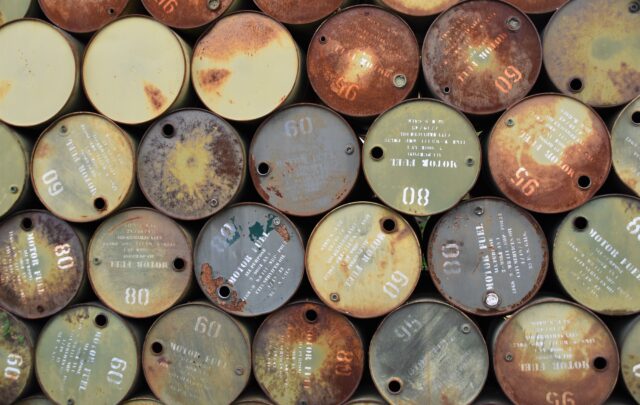
“While most of the problems were minor, the largest included 100 drums of radioactive waste that had fallen over, causing the lids on some of the drums to open, the company said…. The company said that the earthquake also caused a small fire at the plant, the world’s largest by amount of electricity produced, and the leakage of 317 gallons of water containing trace levels of radioactive materials into the nearby Sea of Japan.”
Meanwhile, accidents at two German nuclear reactors last month prompted German Environment Minister Sigmar Gabriel to call for the early shutdown of all older reactors there, reports Bloomberg News.
(19 July 2007)
Japans Nuclear Plant Leak to be Reference for Javanese
Jems de Fortuna, Tempo
Semarang: A leak at the Tokyo Electric Power Co (Tepco) nuclear-powered electric generator plant has made the residents around Gunung Muria (Jepara, Pati and Kudus, Central Java) grow stronger as regards resisting the government’s plan to build a nuclear plant in their area.
“The government and Batan (the National Atomic Energy Agency) must be unselfish and cancel the plan,” said Hasan Aoni Azis U.S., Deputy Chairman of Rekso Bumi Society (Marem), when contacted by Tempo, yesterday (17/7).
Marem is a community group around Gunung Muria, which has often been campaigning to reject the nuclear plant in Jepara during the last two months. ..
Due to the earthquake that killed nine people and wrecked 300 buildings, Japan has closed down three of its nuclear reactors.
Hasan referred to the result of a survey by the Indonesian Institute of Sciences (LIPI), the Bandung Institute of Technology (ITB) and the Agency for the Assessment and Application of Environmental Technology, which stated that Muria Peninsula and Gunung Muria were fault areas with high potential of volcanic earthquakes. ..
(18 July 2007)


Comments
Welcome to the new Resillience commenting system!
We have moved from the former Disqus commenting system to a new system as of September 10, 2026.
We made this change because of privacy concerns regarding Disqus. It's also part of a set of changes to bring more services to the Resilience community under a single login: commenting, (coming September 2026), and online courses (coming 2027). Unfortunately, your old Disqus comments may not reliably link to your account in this new system. Please contact us if you have any questions or concerns.