


Click on the headline (link) for the full text.
Many more articles are available through the Energy Bulletin homepage
The Psychology of Energy Efficiency
Tom Konrad, Ph.D; EE/RE Investing
Efficiency is unquestionably the largest, cheapest, and cleanest wedge among the many we need decarbonize our energy economy. Energy efficiency tends to cost just 1 to 3 cents per kWh saved, far less than even coal-fired generation. Every renewable technology, from wind to solar, to biomass, has trade-offs. At the very least, we have to decide if the energy we are using for one purpose is not better used for something else.
Energy efficiency is the exception to this rule: you can not use a kilowatt-hour or a BTU over and over again. Given these advantages over generation, it’s amazing that energy efficiency is nevertheless so extremely cheap. Given an even moderately efficient [pun intended] market, you would expect that all the cheap energy efficiency measures would long ago have been taken until the marginal price of the next efficiency measure was above the marginal price of added electricity generation.
So why hasn’t it?
(19 Feb 2007)
Bay Localize (Audio)
Jason Bradford, The Reality Report via GPM
This week’s guest is Kirsten Schwind, Programs Coordinator for Bay Localize, a coalition of groups working towards a localization strategy and projects in the San Francisco Bay Area. The show will discusses how localization is emerging as a strategy common to diverse interest groups, such as climate change, social justice, peak oil, local business, economic security, anti-sprawl, sustainability, and political self-governance activists
(26 Feb 2007)
A Greener and Healthier Holi
Alex Steffen, WorldChanging
During the festival of Holi, hundreds of millions of Indians celebrate the return of spring by playfully covering each other in bright dyes, lighting a ritual fire, perhaps drinking hallucinogenic bangh drinks, and eating and dancing and laughing into the night. Holi, like almost everything else about India, involves a number of complex traditions, traditions which seemed, to my uninformed perspective, to sum up to a day on which everyone treats one another as equals, forgets about the cares of the world and tries to savor the happiness of living. It’s a heck of a good time.
But if the traditions are complex, one story about Holi is simple: it’s an environmental nightmare. The bonfires — many households light their own — use forests of wood, while the water games (water balloons, spraying with hoses and so on are part of the fun) present a huge draw-down of potable water. But worst of all are the colors themselves. The dyes used are almost always industrial dyes sold in bulk, many of which contain heavy metals, asbestos and other chemicals which are highly regulated or banned in other countries.
…The overall point here — whether we’re in India or Indiana — is that we can no longer in good conscience create holidays and celebrations with such massive ecological footprints. The direct ecological impacts of celebrations are huge, but the indirect costs are to my mind something much worse, for they go to the very heart of our culture and lives
(5 March 2007)
Colorful photos at the original article. -BA
Emerald greening: Kinsale joins Willits in seeking energy self-sufficiency
Anne Weller, Willits News
Residents of Kinsale, in Ireland’s County Cork, are creating projects and working groups to promote energy efficiency and local sustainability. The move, which they hope will wean Kinsale off its dependence on fossil fuels, is being aided by the youthful energies of the area’s Permaculture College.
My husband Brian and I visited with Kinsale’s Transition Town group last September.
City Councilwoman Isabelle Sutton is keen to make Kinsale more energy-independent. Her relationship with the town council is similar to Willits’ relationship with former City Councilmember Ron Orenstein.
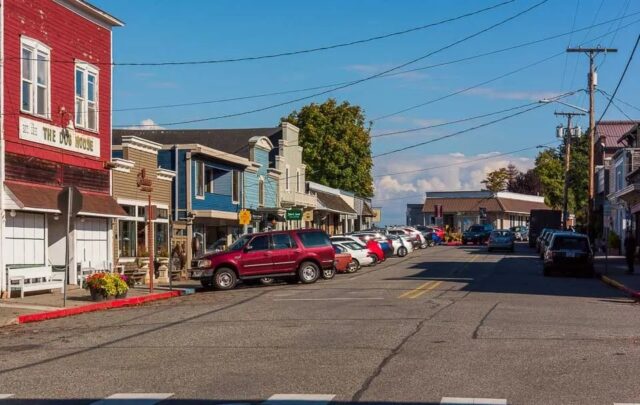
Kinsale is like Willits in many ways. The small town rests in a mostly rural valley surrounded by hills filled with homesteads and farms. The town of Kinsale is the center of commerce and local interest. Residents live far away from the city of Dublin, and about an hour from Cork (about the size of Santa Rosa). Perhaps they are luckier than we are in their tourism climate: Kinsale is situated on a beautiful bay; it’s an old fishing village with photogenic buildings, gardens and homes.
(7 March 2007)
‘Corporate Hippies’ Seek Their Bliss in a New Environmental Economy
Felicity Barringer, NY Times
…Students still gravitate toward nongovernmental organizations, advocacy groups and government, but a large plurality of the current generation interested in environmental work are looking elsewhere, particularly to financial firms, small businesses and even corporations. They seek employment there because, among other things, they think that is where they can have the greatest impact.
…Take Samantha Unger, 27, a graduate of Barnard College and the school of engineering at Columbia University. She started with a summer job in a California program, trading state-issued pollution-emission credits. Now she trades credits for greenhouse gas emissions at Evolution Markets, a company in White Plains.
“I would call myself a corporate hippie,” she said. “I’m in the business of definitely caring for and supporting environmental growth and change for the better, but I also believe in the growth of business. And from the beginning I have believed there should be a cost associated with pollution.”
…None of the academics, employers or young professionals would call these boom times for environmental employment; plenty of graduates with degrees in environmental science must work at finding a job. But all say they are witnessing both an upward trend in the number of jobs and a change in the definition of environmental work.
“The issues themselves have changed — climate change is far and away an example of that,” said Kevin Doyle, the national director of program development for the Environmental Careers Organization, a nonprofit group that places recent graduates in environmental internships at federal agencies, businesses, nonprofit groups and state and local governments.
“Businesses as businesses are becoming actors of environmental sustainability, either because they want to, or they feel they can do good public relations, or because they have to,” Mr. Doyle said. “The axis of influence is starting to shift from a more exclusive focus on activists and government. You can work in business because you’re an environmentalist.”
Mr. Doyle and others named several paths to environmental work: law, government, nonprofit groups and, increasingly, management and finance, often in alternative energy.
(7 March 2007)



Comments
We changed commenting systems on September 10, 2026 as part of a site-wide functionality and security upgrade. Your past comments have not disappeared, and you can still log in with your old Disqus account credentials if you wish. Contact us with any questions.