

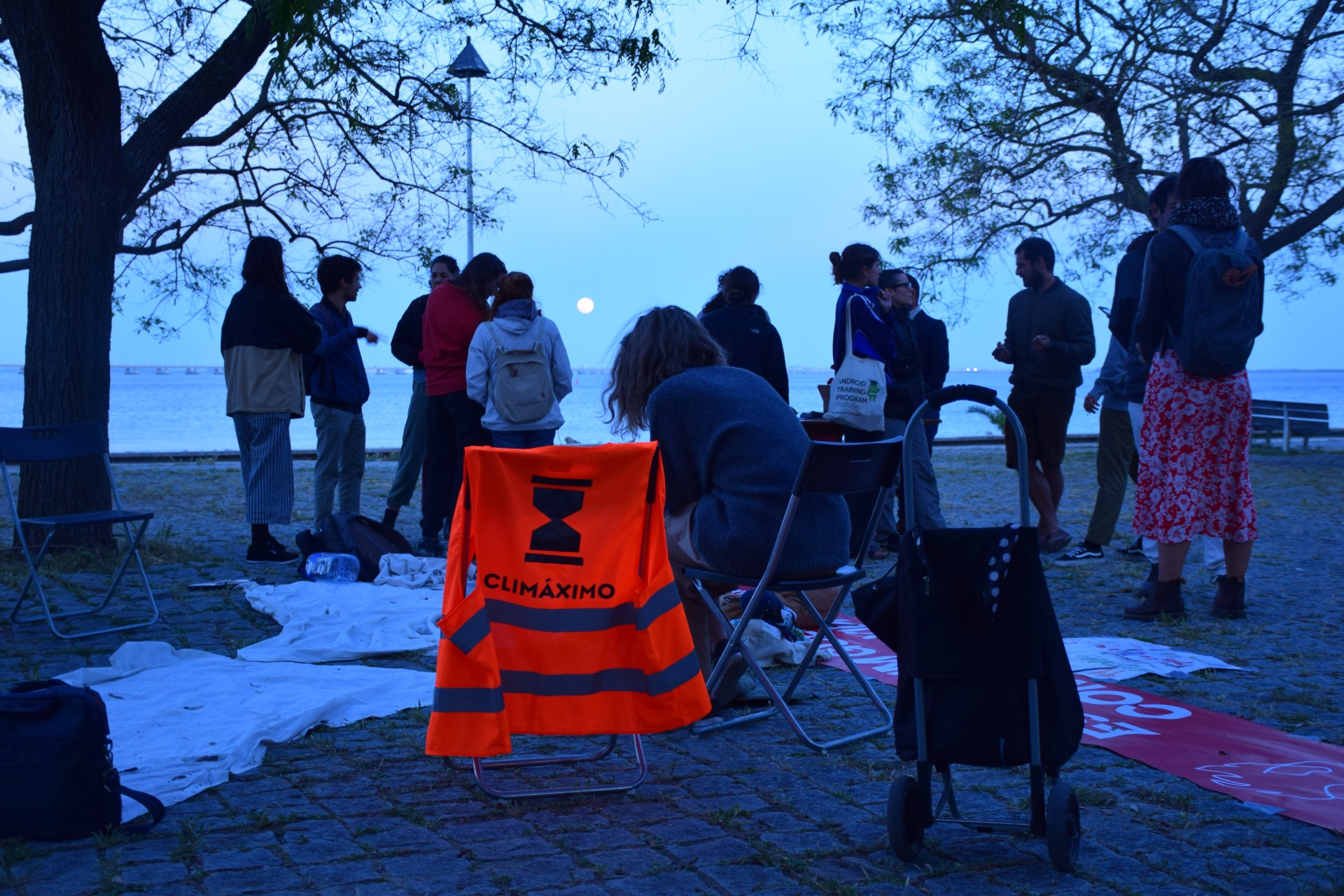
Every local movement has them. The food bank director who knows every volunteer by name. The organizer who keeps the transition town group meeting through the slow years. The co-op manager who covers the shift nobody else can. The person who runs the repair cafe and also, somehow, the mutual aid group chat at midnight. When we talk about community resilience, people typically think seed banks, solar microgrids and local supply chains. But resilience also means these people. They hold movements together, often at the expense of their own well-being, until the strain leaves many burned out.
Activist burnout is treated as a private matter, something an individual should manage with better boundaries. It is better understood as a structural risk to the communities we are trying to build.
I am a clinician, and much of my work is with people who carry a lot of responsibility. The pattern I see among executives through CEREVITY, the practice I co-founded, is strikingly similar to the one I see among organizers. A 2026 CEREVITY report, 88% of High Achievers Say Success Made Them Lonelier, reviewed 312 high achievers who sought therapy through the CEREVITY network; 88 percent said success had made them lonelier, and 61 percent said they had fewer people they could be fully honest with. In a separate CEREVITY review of 298 chief executives who sought therapy through the network, 63 percent said they had hidden how serious their strain was from their boards.
Those were corporate leaders, not activists, and they were people who chose to seek care, so the figures illustrate a pattern rather than measure a population. But the mechanism is the same. The more people depend on you, the fewer places you have to set the weight down, and the more costly it feels to admit you are struggling.
Organizers have particular reasons to stay quiet. The cause feels bigger than they are, so their own fatigue seems trivial by comparison. Admitting strain can feel like letting down the people the work is for. In volunteer groups, there is often nobody whose job it is to notice. And because the dependable person keeps showing up, everyone assumes they are fine.
Exhaustion that stays hidden does not stay contained. It shows up as shorter tempers in meetings, decisions deferred because nobody has the energy to make them, and the quiet withdrawal of the person who used to hold the group together. Then one day they step away entirely, and the group discovers how much of its memory and momentum lived in one tired person.
Engineers have a name for a component whose failure takes down the whole system: a single point of failure. Many local organizations have human ones. A few warning signs:
- One person holds the passwords, the donor list, the landlord relationship and the volunteer schedule.
- Meetings cannot happen, or decisions cannot be made, when that person is away.
- Nobody else has led a meeting, run an event or spoken to the press in the past year.
- The person describes taking a week off as impossible rather than inconvenient.
A community garden with one irrigation line would add a second. A group with one irreplaceable organizer needs the same thinking.
Low-cost structures that spread the load
None of these require a grant or a new staff position.
- Rotate roles on purpose. Chairing meetings, coordinating volunteers and handling communications can rotate every few months, so skills and relationships live in more than one person.
- Write real handovers. A one-page document for each core task, covering who to call, where things are and what usually goes wrong, turns a crisis into an inconvenience.
- Check in honestly at the start of meetings. A two-minute round of “how are you actually doing” normalizes saying “I am stretched” before it becomes “I am done.”
- Schedule rest as a group norm. Planned breaks for key volunteers, announced in advance, signal that stepping back is part of the work, not a betrayal of it.
- Normalize outside support before a crisis. Peer support circles, mentoring between experienced and newer organizers, and confidential counseling all work better when they are talked about openly, early, and without stigma.
Resilience includes the people
We already accept that resilient systems need redundancy, diversity and slack. A watershed with no buffer floods. A food system with one supplier fails. The same logic applies to the human core of a movement. A community that runs its best people to exhaustion is borrowing against its own future.
If you are one of those people, the exhaustion you feel is not proof that you are weak or uncommitted. It is information about a system that has asked one person to carry too much. Telling someone you trust, handing off one task, or talking with a licensed clinician is not stepping back from the work. It is how the work continues. If you ever feel unsafe, call or text 988, the Suicide and Crisis Lifeline in the United States, at any hour.
The most important infrastructure in any community is the people who keep showing up. Protecting them is resilience work too.




Comments