


Almost 20 years ago, in 2007, I published a paper titled “Confessions of a repentant hydrogenist” describing the arc of thought that made me first an enthusiast for the idea of hydrogen as an energy vector and storage medium, and then becoming a full-spectrum skeptic. Marcus Rupérez Cerqueda went through the same path, and here are his reflections.
It is not that hydrogen is bad as a molecule. But as a technology, it is a zombie that has been haunting us for decades. Why so much interest in a technology that, by now, is wholly obsolete? Probably for the simple reason that politicians prefer technologies that don’t work. Pies in the sky that can be used to prevent any change. And a technology that doesn’t work can always be used to request more funding for research projects.
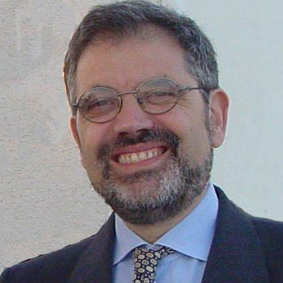
Marcos Rupérez Cerqueda is a Spanish industrial engineer who spent years building green hydrogen projects before the numbers made him abandon the idea of hydrogen as the great energy carrier of the future. He tells the story in his book Inner Degrowth: From Energy Collapse to Existential Void, with a foreword by Antonio Turiel. Here he talks about how a true believer slowly stopped believing.
How did you end up in hydrogen?
It felt like the obvious choice. I grew up surrounded by the idea of environmental solutions: my father is an engineer who chaired an environmental foundation, and we lived in one of the first bioclimatic houses in my region of Spain. So I studied industrial engineering and then did a master’s in hydrogen at Aalborg University in Denmark.
The logic seemed impeccable. Most of the energy our civilisation uses is not electricity. It’s fuel, heat, molecules. Renewables give us electricity. Hydrogen looked like the bridge between the two: make it from wind and solar, store it, move it, burn it or turn it back into power whenever you need it. A clean molecule for everything electricity couldn’t reach. At the time, that wasn’t a fringe idea. It was close to a consensus about the long-term future.
What did you actually work on?
Real equipment, not slides. I spent several years at a hydrogen research centre in Aragón, the Fundación Hidrógeno Aragón, on applied projects: a fuel cell vehicle, and the energy system of a sailing boat that went around the world. Electrolysers, compressors, tanks, fuel cells. Things that were installed and running, with measured numbers.
That matters, because the disillusionment didn’t come from reading a critic. It came from the equipment itself.
So when did the doubts start?
Slowly, and that’s the uncomfortable part. There was no single moment of revelation at first, just small frictions. The efficiency figures in brochures were always a little better than what we measured. Each component, looked at alone, seemed acceptable. The electrolyser was “only” losing so much, the compressor “only” so much. You get used to evaluating each step on its own, and each step can always be defended.
Then one afternoon, with my business partner, we sat in front of a spreadsheet and did the whole chain from start to finish, for one very common use: renewable electricity in, electricity out. Around 40% of the energy is lost in the electrolyser. Roughly another 10% goes into compressing the hydrogen so you can store or move it. And the fuel cell loses 40 to 50% turning it back into electricity. Of every 100 units of clean electricity you put in, only 20 to 25 come back out.
We looked at each other. A good battery gives you back something like 85 to 90 of those 100. That wasn’t a gap the next prototype was going to close.
Couldn’t better engineering fix it?
Some of it, at the margins. But the core of the problem is thermodynamics, not engineering. Every conversion of energy from one form to another has losses, and using hydrogen as a carrier means stacking several conversions one after another: electricity to chemical energy, compression or liquefaction, then chemical energy back to electricity or motion. You can polish each step. You can’t make the chain short.
And efficiency is only half of it. Hydrogen is the lightest molecule there is. Per kilogram it carries a lot of energy, but per litre, almost nothing, so you have to compress it to hundreds of bar or cool it to around minus 253 degrees to store any useful amount, and both cost more energy. It escapes through the smallest gaps and makes some metals brittle. None of these are scandals. They are simply properties of the molecule, and a business plan doesn’t change them.
Why did the sector keep going if the numbers were so clear?
That surprised me more than the physics. Inside the sector, a lot of people knew. You could hear it in corridors at conferences, in private conversations. But almost nobody said it on stage. Public funding, announcements and headlines kept flowing towards the same promise, and the distance between what was presented and what came out of the spreadsheet was enormous. Careers, grants and companies, including my own, depended on the story continuing.
Much later I read Ugo Bardi’s “confessions of a repentant hydrogenist”, written back in 2007, and I recognised the whole arc: the enthusiasm, the first doubts, the moment the numbers win. What struck me was that it had been written almost twenty years earlier. The hydrogen economy seems to come back in waves, and each wave is sold as if the previous ones had never happened.
Is there any place left for hydrogen?
Yes, a narrow one. Hydrogen is already essential as a chemical, for fertiliser and in refineries, and making that hydrogen cleanly is a real goal. The mistake was never hydrogen itself. It was selling it as a universal energy carrier: for cars, for heating homes, for storing electricity at scale. In those roles, physics takes most of the energy before it reaches you.
What happened when you turned the same eyes on other technologies?
I looked at oil the way I had just looked at hydrogen, without the label I’d been taught to put on it, and found the opposite story. Oil is extraordinary. Dense, stable, it sits in a tank for years without losing energy, and it crosses the planet at a fraction of the cost of moving the same energy any other way. That doesn’t make it good. It means the problem was never finding one magic replacement technology. It’s that the whole industrial civilisation rests on a substance that is enormously difficult to replace, and that we had been treating as if it were infinite.
What’s the lesson you took away?
To always do the full count. Most of our technological beliefs are ones we’ve been told, not ones we’ve checked. Hydrogen was the case where I happened to be in a position to check, and the belief didn’t survive. The same question can be asked of batteries, of synthetic fuels, of any technology presented as the piece that finally closes the puzzle: has anyone, including me, done the whole calculation, or have we simply decided to believe it?
That question is where my book starts. Where it ends is a longer story.
Marcos Rupérez Cerqueda is a Spanish industrial engineer with a master’s degree in hydrogen from Aalborg University. He worked for years on green hydrogen projects before questioning their promise, and now works on rural technology development in the Spanish Pyrenees. He is the author of Inner Degrowth: From Energy Collapse to Existential Void (foreword by Antonio Turiel), available at https://www.amazon.com/dp/B0HKP51F57





Comments