

On Hanukkah Eve in 2006, a windstorm slammed into the Pacific Northwest. Wind gusts reached up to 100 mph along the Washington and Oregon coasts, and as high as 80 mph inland. Over 1.8 million residences and businesses lost power across the region. In Washington state alone, 1.2 million homes went dark. Puget Sound Energy reported 75 percent of its circuits damaged. The Seattle Post-Intelligencer couldn’t publish for the first time in 70 years. Eighteen people died, most from carbon monoxide poisoning in the days that followed as people ran generators in enclosed spaces.
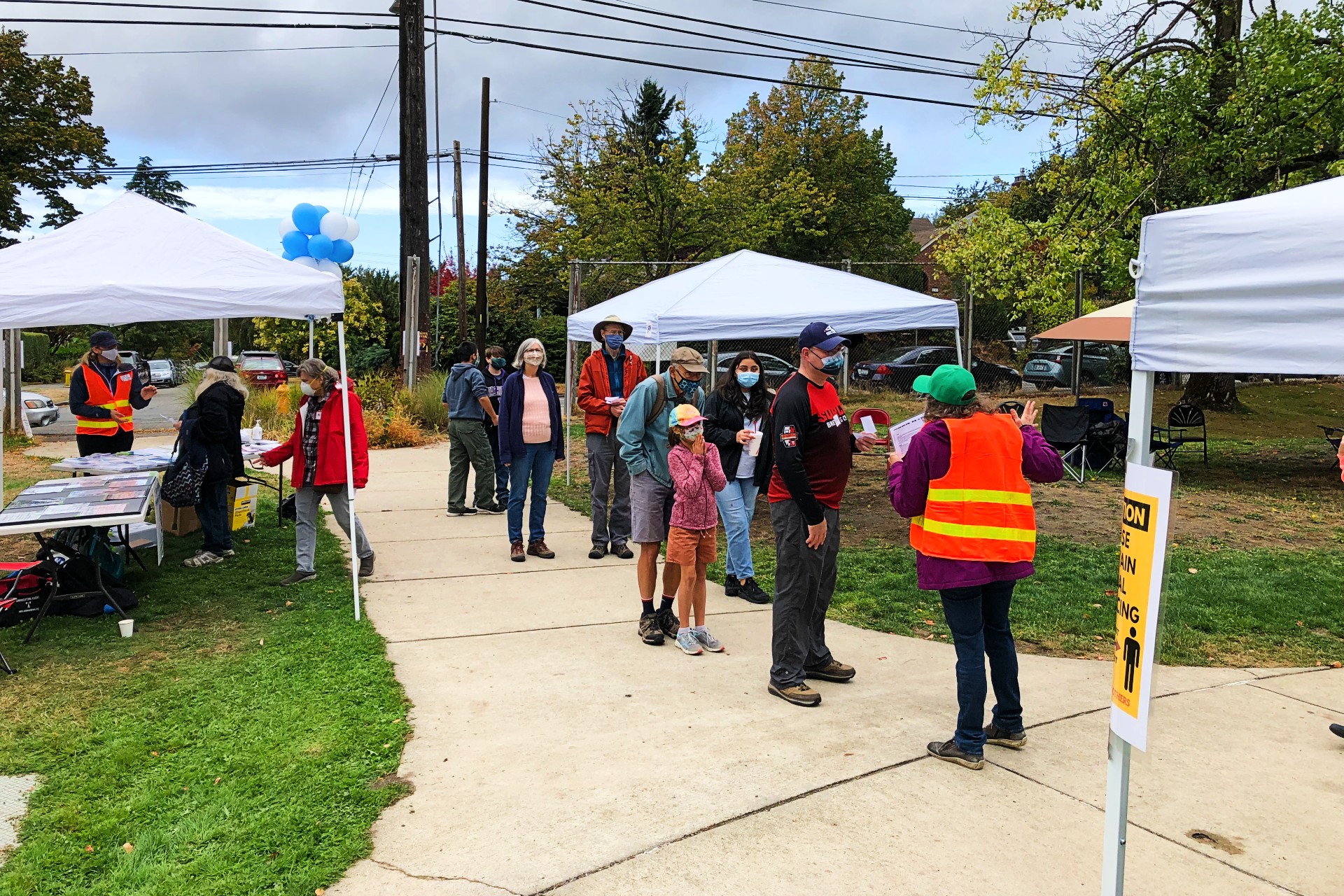
When days without power became over a week, West Seattle residents gathered each morning in parks and on street corners to share vital information and help one another. Who could make coffee? Which restaurants were serving hot food? Where could people go to get warm? Sometimes, someone offered a warm shower.
Even after power was restored, several West Seattle neighborhoods decided to formalize what had worked, establishing meeting points in places like parks and business districts. Margie Carter, an educator in Seattle, coined a term for this: “Connecting on Corners.” With help from the Seattle Office of Emergency Management, members of the Connecting on Corners organizations were introduced to similar groups in Magnolia and Wallingford. They later brought their efforts to the Seattle City Council, which provided startup funding for equipment.
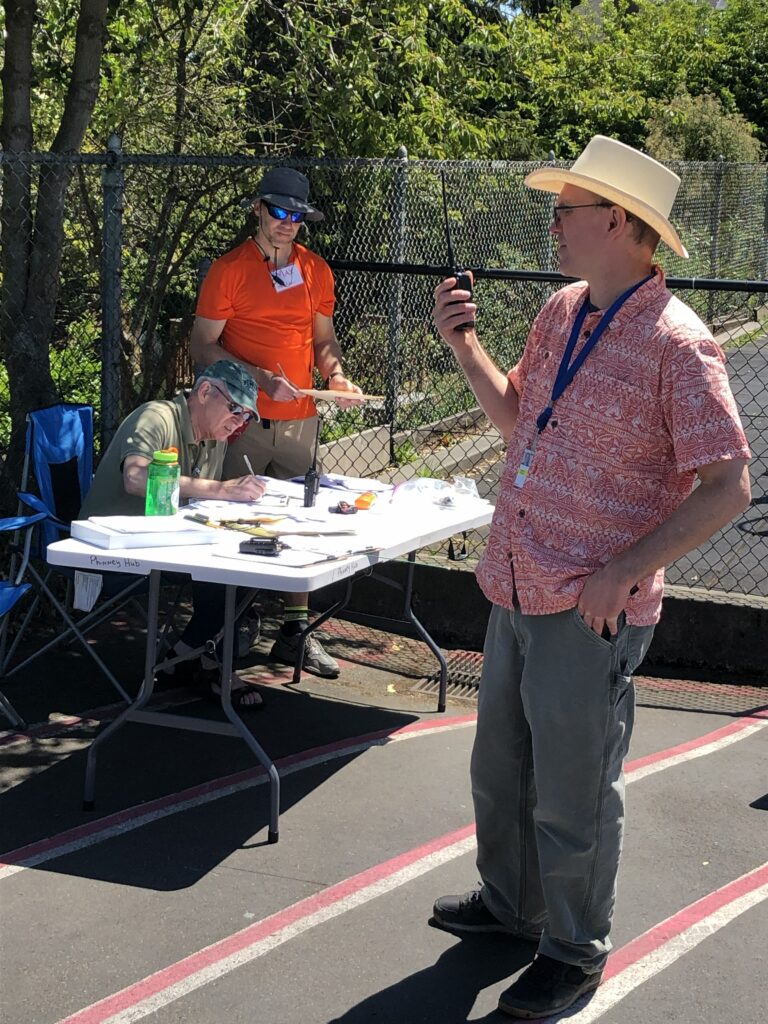
Today, Seattle has 68 emergency hubs scattered across the city. At each community-organized gathering point, neighbors can share information, resources, and skills when natural disasters knock out power and water, or impede roads. The hubs build on a pattern documented by writers who study disasters: ordinary people play a critical role in responding to a crisis.
In her book The Unthinkable, journalist Amanda Ripley points out that post-disaster, most regular people remain calm, orderly, and helpful. “Regular people are the most important people at a disaster scene, every time,” she says.
Rebecca Solnit, who explored disaster response in A Paradise Built in Hell, describes a similar pattern: “The great majority of people are calm, resourceful, altruistic or even beyond altruistic, as they risk themselves for others.” That’s what drives hub design. They provide essential civic infrastructure that helps neighbors organize and support one another when disaster strikes.
To make that support accessible across Seattle, the network aims to put a hub within about a 10-minute walk of everyone, with standardized equipment and trained volunteers ready to help neighbors when first responders are overwhelmed. Reaching that goal will require roughly twice the current number of hubs, say Ann Forrest and Cindi Barker, who have overseen the volunteer-run network for eight years.
What It Takes on the Ground
When Jim Durand first got involved with the Phinney Emergency Hub, it was dormant.
“Another guy and I became co-captains, but we were like a hub of two. We just couldn’t get it started,” he said. “Then he had to step back to attend to health matters and by myself, I wasn’t making much progress.”
Jim inherited a mailing list with dozens of mystery names. He’d send things out and never got responses. With Ann’s help, he held a meeting. Three or four people showed up. “Then we started getting together every month, and the momentum just built,” he said. “It seemed like a gift because I didn’t take any steps. It just happened.”
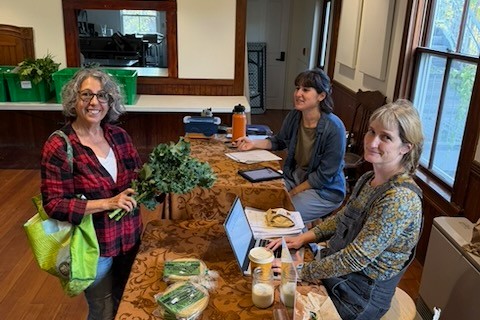
Jim soon realized that people simply didn’t know the hub existed. To get the word out, the group set up a table at the Friday farmers market. “Talking to people face to face really makes a difference,” Jim says. “Explaining things one-on-one, answering questions. Everybody responds in a similar way and they say ‘that makes perfect sense.’” They’d sign up 12, 18 names at a time. Phinney Ridge now has 12 active volunteers and a growing mailing list of 270 people.
Jim has an eye out for more involved residents who might want to come to meetings. “That’s been pretty successful.” They hold a virtual meeting every month. They’ve held drills and started four committees. The Household Preparedness Committee is planning a skills fair, with tables on storing water, identifying fall hazards, and other preparedness topics.
Hubs aren’t disaster relief stations where professionals serve victims. They’re gatherings where neighbors who need help meet neighbors ready to give it, which Jim believes is its real value. “Knowing that there are people out there ready to take action, ready to practice for this, that can be comforting,” he said.
Jim envisions a successful activation when the hubs face a real test. “When the dust settles and people discover the hub is set up, then everybody kind of comes out of the woodwork wanting to help. The hub will sort of become the social meeting point, the gathering place,” he explained. “It’s like a town square in a disaster environment.”
Who’s Missing
Ann and Cindi support communities from the ground up: building teams, getting gear, practicing, hosting classes. They practice every summer with field exercises—community “actors” showing up with scenarios. Your household needs drinking water. Your pet is lost. The gas station just caught fire, but local emergency services are overwhelmed.
“We’ve figured out what works and what doesn’t work over the years,” Ann noted. She explained how tried and tested strategies can be a boon for areas in crisis. “To grow in communities that are more strapped for time, they just want to know how to do this. They don’t want to invent.”
A common constraint they have noticed, however, is about who gets involved. “A hub only happens in communities where people have time to volunteer. In Seattle, it’s mostly white, affluent, retired people,” Ann explained. “So we don’t have hubs in our underserved neighborhoods.”
The group hopes to change that by becoming a more formal organization and working more closely with the city.
How to create an emergency hub
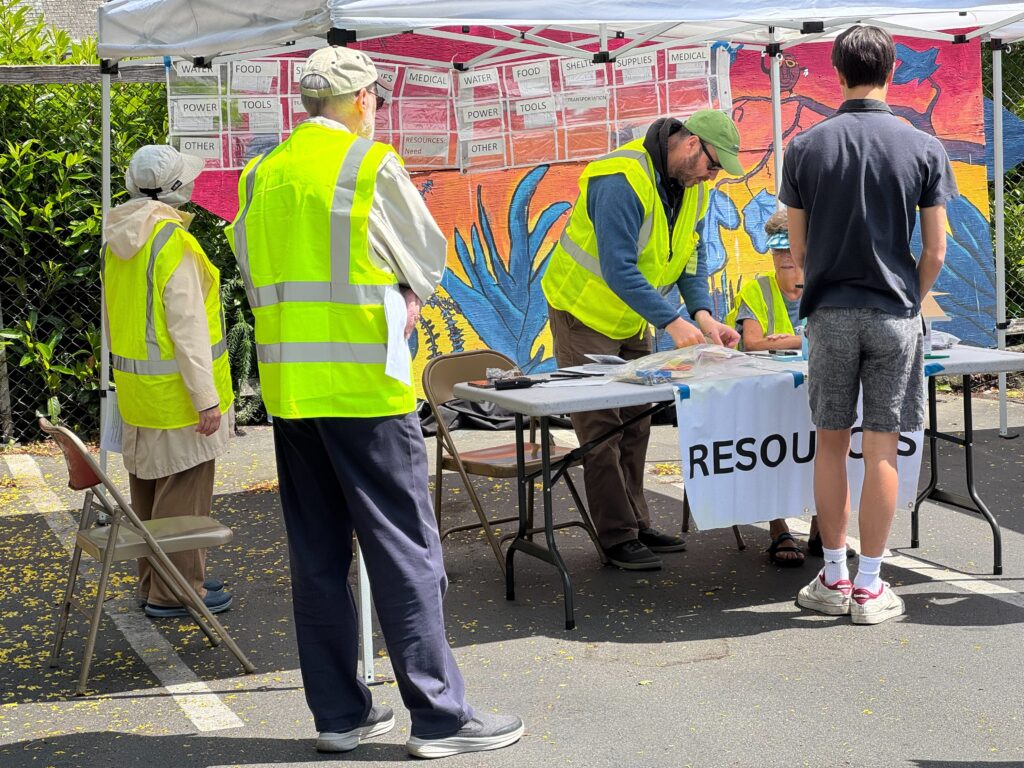
A well-outfitted hub has four canopies that residents can visit, each available to all residents based on their needs:
- Share information. Neighbors can let family and friends know they’re safe, report someone missing, or find out which pharmacies are open. Updates received by radio are posted on whiteboards for everyone to read.
- Match needs with resources. Someone has spare diapers; someone else needs them. Hubs connect people to exchange supplies directly, rather than accumulating donations that volunteers cannot manage.
- Match people and skills. A neighbor who needs plumbing help can find a plumber.
- Provide practical and accessible guidance. Print materials in multiple languages offering information people would otherwise search for online.
Everything it takes to stand up a hub after a disaster goes in a five-foot-wide waterproof tool chest outdoors in a public gathering place. The unmarked chests blend in well in parks, such as next to a tennis court. Whiteboards, tables, four canopies, signage, education binders, job descriptions. Cost: $4,500.
Building connections is building preparedness
“Volunteerism is going down,” Jim observed. “It’s harder to hold events and get people to come out and socialize. With changing times and the Internet, everybody becomes more global, less community-focused. That social glue needs maintenance.”
Those connections are important for preparedness. “A tight-knit neighborhood will have an advantage over a neighborhood with a lot of apartments or condos where people don’t have as much interaction,” Jim said.
Preparedness also starts at home: households that prepare for a disaster reduce demand on hubs and first responders, freeing them to help others.
Seattle Emergency Hubs holds monthly Captain meetings on the fourth Thursday at 7 pm. Find the hub nearest you at seattleemergencyhubs.org.



Comments