

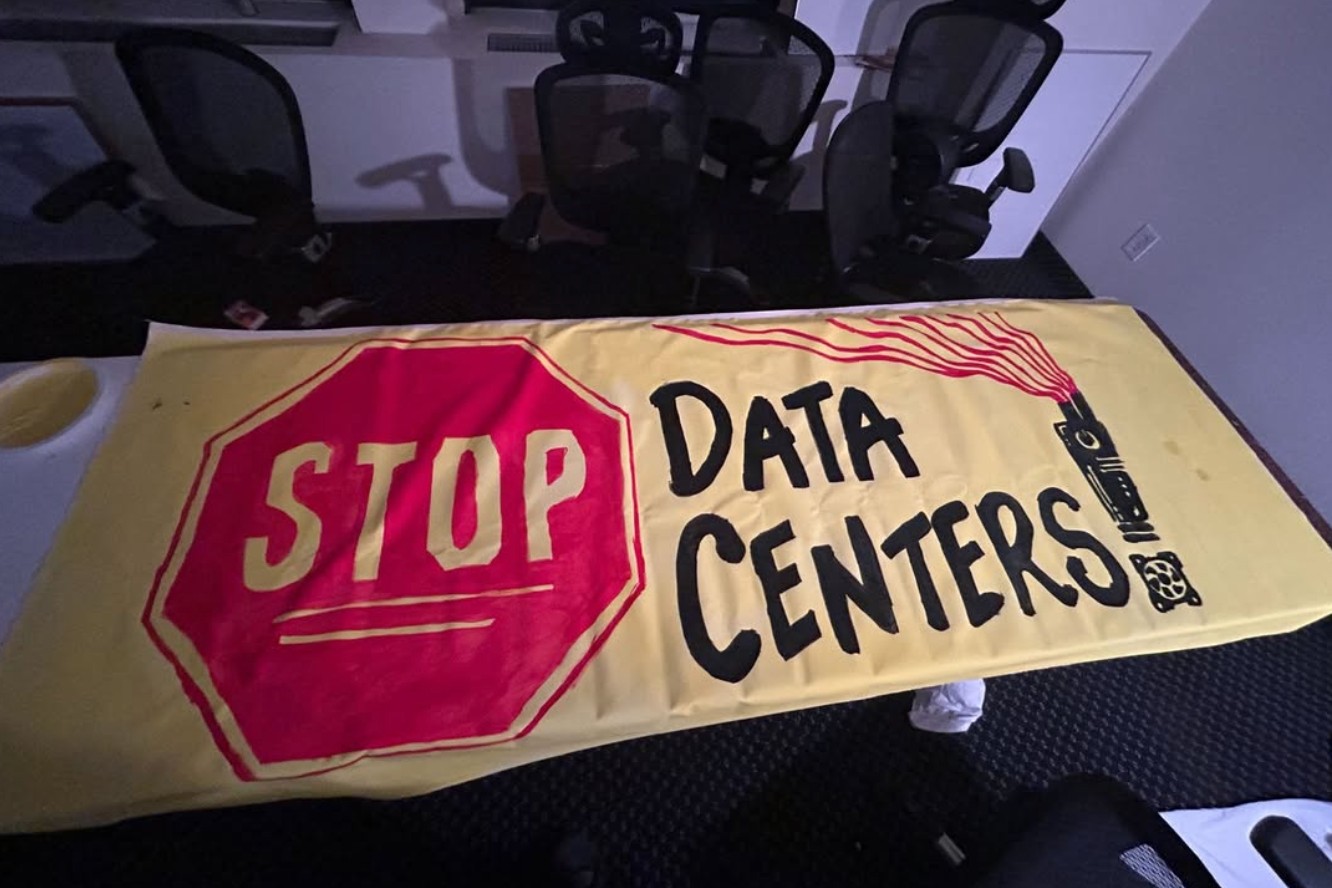
Communities across the U.S. are fighting back against data center developments — and winning. According to a recent report, at least $260 billion in data center projects were cancelled so far this year thanks to the efforts of local organizers. While Donald Trump has thrown his support and funding behind expanding AI infrastructure, opposition remains strong: an NBC News poll found that nearly 70% of participants do not support AI data center construction.
That is unwelcome news, of course, for those poised to profit from the AI boom. And reports have uncovered campaigns already working to undermine resistance to data centers. Several of these online disinformation campaigns are run by groups overseas and aim to discredit and influence data center protests in the U.S. For instance, in June, OpenAI published a report claiming that its model was used by accounts originating in China to generate content supporting a covert influence operation attempting to manipulate legitimate conversation about data centers.
In July, an investigative report by Alethea, a tech company that assesses online threats, found that countries such as Russia and Iran were responsible for spreading data center misinformation. To be fair, as many experts explained, these acts alone are not entirely responsible for the tension between those who embrace AI development and those fighting against it.
As bad actors, both within and outside of the U.S., seek to derail momentum and sideline community voices, those challenging data center development must remain informed and vigilant, taking care not to succumb to disinformation designed to stymie collective action. Here’s how we do it.
First, what are data centers? These facilities house the computing infrastructure used to train artificial intelligence models and generate results through a process known as inference, making them essential to the AI industry. According to a Pew Research Center analysis, more than 3,000 data centers are operating in the United States, while more than 1,500 others are in various stages of development. Today, 38% of Americans live within five miles of at least one operational data center, and as their numbers grow, communities are raising concerns about noise, rising electricity bills, heavy water consumption, and air pollution.
To maintain resistance to further development, it is imperative to base your opinions on factual information. Community organizers and protesters must seek out and share credible information rather than relying on blogs, essays, and articles that offer speculation or opinion without solid evidence.
Independent research organizations increasingly provide publicly available analysis of data centers’ environmental impacts. A recent report from the think tank Next10 and researchers at Santa Clara University, for example, found that data center operators in California often avoid disclosing how much water they use. Such research can give communities a strong evidentiary basis for organizing and holding operators accountable. Fact-checking organizations can also help by publishing explainers and reports that challenge false claims about data centers. Government records obtained through the Freedom of Information Act offer another valuable source of reliable evidence.
It goes without saying that protesting AI data centers is a legitimate cause. Communities have the right to protect their lands, health, and access to natural resources, and advancing this cause requires focusing on facts and science to avoid misdirection and keep achieving their goals. Demands for transparency and accountability, hard-won results of organizing, are critical, as questions about the extent of environmental damage remain unanswered. In fact, investigating some of the harm of these centers may require long-term empirical studies. Currently, several pieces of legislation, some at the federal and state levels, request investigations into the environmental impact of AI data centers.
A recent survey of Northern Virginia residents found divided “views on living near and among data centers”: half of respondents support data centers in their communities, while the rest are neutral or opposed. Even opponents may disagree over strategy, with some favoring a permanent ban on AI data centers and others supporting a temporary moratorium. Such divisions create openings for disinformation campaigns targeting data center protestors. Sustaining effective resistance will require residents to keep talking, identify their shared concerns, and build consensus around a common position.




Comments
We changed commenting systems on September 10, 2026 as part of a site-wide functionality and security upgrade. Your past comments have not disappeared, and you can still log in with your old Disqus account credentials if you wish. Contact us with any questions.