

Yesterday morning we launched our National Data Center Tracker, and within hours we had a major new project to add to it, as well as legislation aimed at preventing projects like it from being built on federal public lands.
The ground is moving fast.
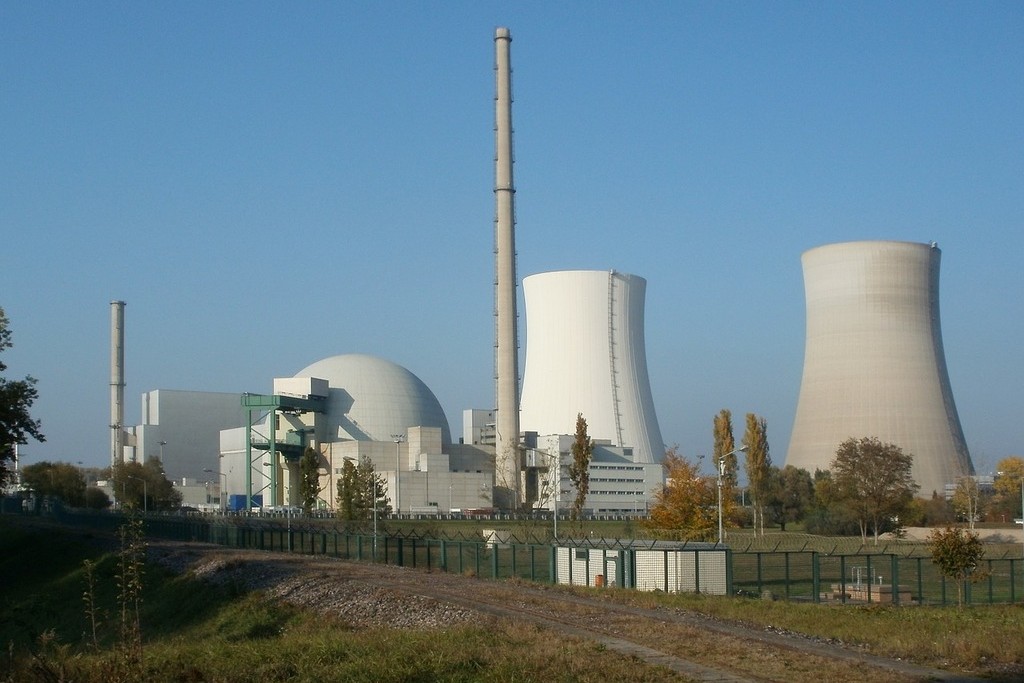
NPR reported Wednesday that nuclear startup Valar Atomics is proposing a massive data center complex on more than 9,000 acres of Bureau of Land Management (BLM) land near Price, Utah. The project, called Project Beehive, would include data centers powered by roughly 456 small nuclear reactors, along with a facility to produce nuclear fuel and facilities for storing nuclear waste.
According to company documents reviewed by NPR, the reactors would collectively produce around 9.6 gigawatts of electricity for the data centers, plus additional thermal energy for other industrial uses. Utah currently produces around 4 gigawatts of electricity on average, though its peak generating capacity can reach roughly 10 gigawatts during the summer.
At almost the same time, Oregon Senator Ron Wyden introduced legislation that would prohibit the development, sale or transfer of federally owned public lands for new data centers and associated infrastructure nationwide.
Project Beehive
Valar’s federal proposal is still at the beginning of the process. BLM’s Utah office confirmed to NPR that it has received the company’s application and is reviewing it for completeness. The agency said that if the application moves forward through the required National Environmental Policy Act process, the public will have opportunities to weigh in.
Valar is already laying out a timeline. Company documents call for non-nuclear construction to begin as soon as the end of this year, with the first reactors coming online sometime in 2028.
The 9,000-plus acres of BLM land are only part of the project. Utah state records show that Valar also sought a special-use lease covering roughly 640 acres of state trust land in Carbon County. The Trust Lands Administration Board unanimously approved the lease on September 17, according to KSL.
The federal application is much larger. Project Beehive would spread across more than 9,000 acres near Price and combine the data centers, hundreds of reactors, nuclear fuel production and nuclear waste storage in a single proposed complex.
And we’d already come across Valar before any of this surfaced.
We’ve Seen Valar Before
Our tracker already contained another Valar project near Green River, Utah. The company had applied for roughly 10,200 acres of BLM land for a data center co-located with small nuclear reactors before deciding not to pursue the site. We kept it in the tracker as withdrawn.
That history looks a little more important today. A roughly 10,200-acre Valar proposal near Green River appeared in the federal record and was later dropped. Now another Valar proposal has surfaced near Price involving more than 9,000 acres of BLM land and hundreds of nuclear reactors.
The Public Lands Fight Is Already Bigger Than Valar
Our Public Lands tracker now has 16 data center sites sitting on land the public owns, each tied to a public document placing it there.
South of Boise, Rhea Data’s Blacks Creek Campus would put a four-million-square-foot data center campus on 3,226 acres of BLM land beside Blacks Creek Reservoir. In Nevada, Copia Digital’s Bergen Data Center is proposed on 744 acres of BLM land north of Las Vegas. In Arizona, the Frontier Data Center would occupy 620 acres of BLM land in Pinal County, while the Harquahala Data Center would occupy another 275 acres in Maricopa County. All three remain proposed.
The tracker also includes public-land projects that are much further along or have already run into trouble. Townsite Solar 2 outside Boulder City, Nevada was proposed on 89 acres of BLM land about 1.6 miles from Lake Mead National Recreation Area. Its approval was challenged, and BLM later asked the Interior Board of Land Appeals to set aside the agency’s own approval so the application could undergo additional review.
Federal land controlled by other agencies is part of the buildout too. The tracker includes proposed or active data center projects at Energy Department sites in Kentucky, Ohio and South Carolina, along with projects on state-owned land and other BLM applications scattered across the West.
And the 16 mapped sites still don’t capture everything sitting in the federal pipeline. BLM records also contain applications that don’t yet have enough public location information to map, including a Prometheus Hyperscale proposal in Wyoming involving rights-of-way for a road, telecommunications line and water pipeline, and another Valar nuclear-powered data center proposal in Utah whose public record still doesn’t disclose its size or exact location.
The federal push behind these projects is coming from the top. President Trump’s July 2025 executive order directed federal agencies to make appropriate federal sites available for qualifying data center projects, and our tracker shows Interior later telling BLM state directors to identify public lands that could take data centers.
Now there’s movement in the other direction.
Wyden’s new legislation would prohibit the development, sale or transfer of federally owned public lands for new data centers and associated infrastructure. His office said the bill followed reporting that more than 17,000 acres of public land across Oregon, Nevada, Arizona, Idaho, Wyoming and Utah were being considered for data center development.
None of that changes the law today. Valar’s application is still before BLM, the other proposed projects remain in various stages of the process, and Wyden’s legislation has only been introduced.
But one day after launching the tracker, there’s already another 9,000-plus-acre project to follow and another major federal response to add to the record.
We’ve added Project Beehive and will keep following what happens next.
Explore the National Data Center Tracker. Search your ZIP code, look around your state, watch a project you care about and send us anything we’ve missed.





Comments
We changed commenting systems on September 10, 2026 as part of a site-wide functionality and security upgrade. Your past comments have not disappeared, and you can still log in with your old Disqus account credentials if you wish. Contact us with any questions.
Sounds like a dystopian Sci-Fi plot to me.