

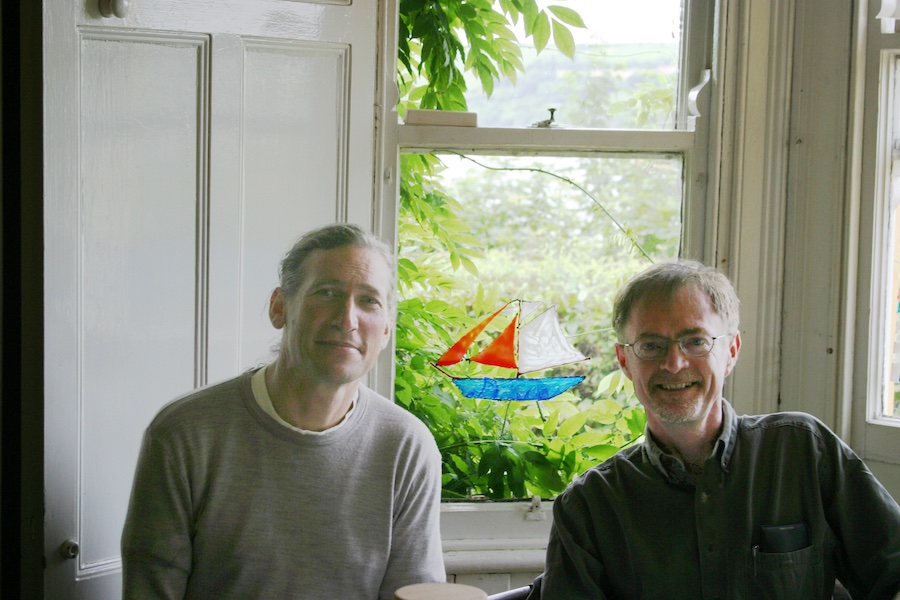
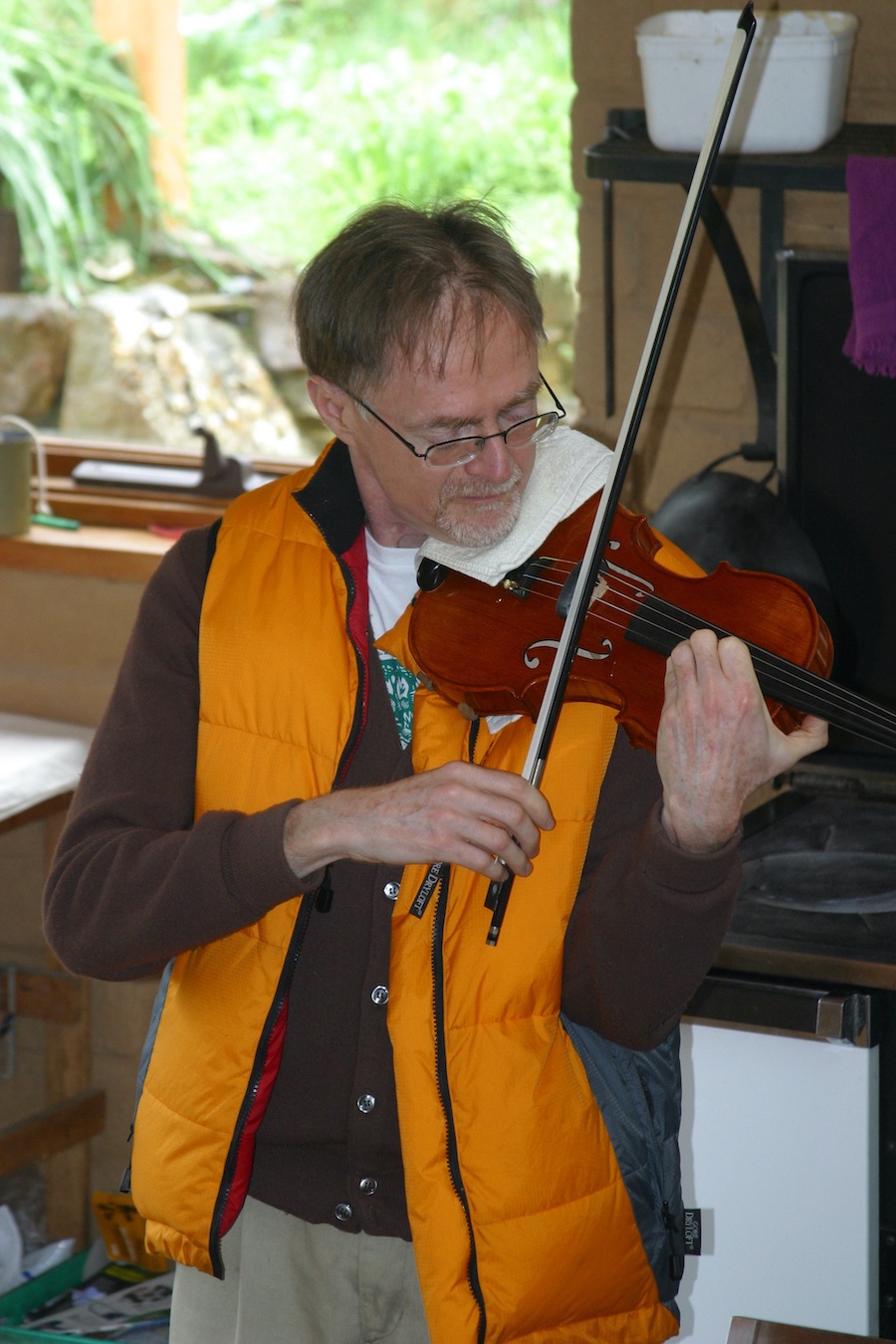
David and Richard at The Yellow House, Kinsale, Ireland, June 2005.
It is with great sadness that I acknowledge the death of a man who has perhaps done more than anyone else to alert the world to the predicament of declining oil and other fossil fuels in the fate of industrial civilisation. Richard Heinberg, aged 75, succumbed to pancreatic cancer two weeks after diagnosis, no doubt a shocking experience for his wife Janet Barocco and his colleagues at the Post Carbon Institute where Richard has been the senior fellow for nearly 20 years. My thoughts go out to those who were closest to Richard.
I first met Richard in Kinsale, Ireland in 2005 where we both invited speakers at a small conference organised by local permaculture teacher and activist Rob Hopkins (who later became well known as the co-founder of the Transition Towns Movement). That conference ‘Fuelling the Future’ included local luminaries such as Colin Campbell, the retired petroleum geologists who helped trigger the wave of awareness about Peak Oil that itself peaked a few years later, after the Global Financial Crisis.
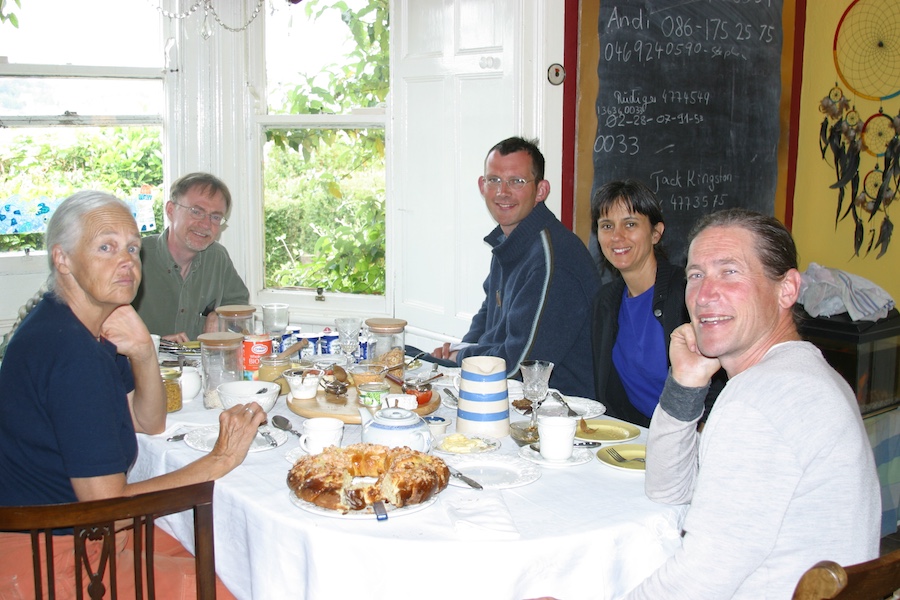
Being hosted at the Yellow House on the Kinsale harbour, Su Dennett and I got to know Richard and Janet, which in turn led to us inviting Richard to Australia for a joint speaking tour the following year.
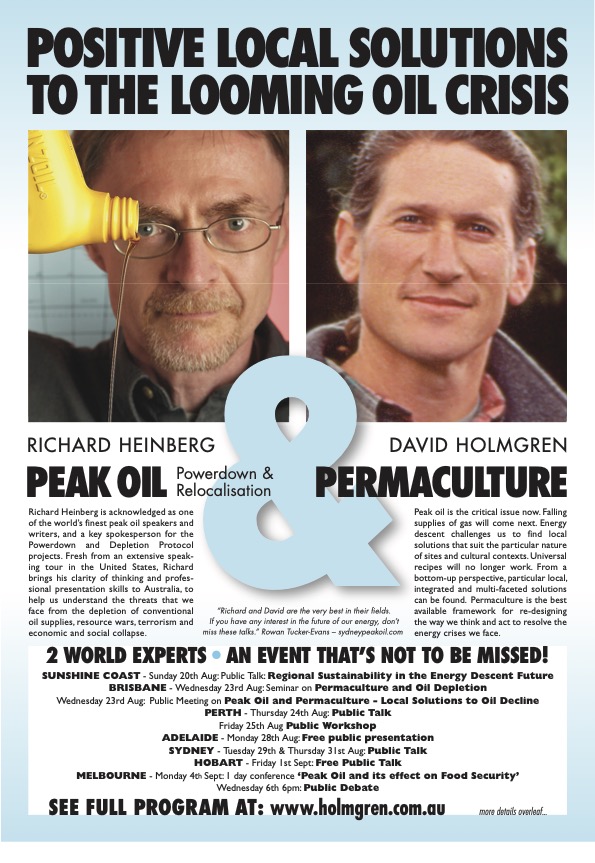
On the “H Squared” capital city tour Richard presented the “bad news” about Peak Oil and I presented the “good news” with an early version of my Aussie St story. The experience of working together, and hosting Richard at Melliodora, deepened my appreciation of Richard as a person with a broad knowledge of science, history and culture. This knowledge formed the basis of his influential book The Party’s Over: Oil, War and the Fate of Industrial Societies published in 2003, within a year of my Permaculture: Principles and Pathways Beyond Sustainability. Although the alignment between our ideas in those books was quite close, as authors we were quite different.
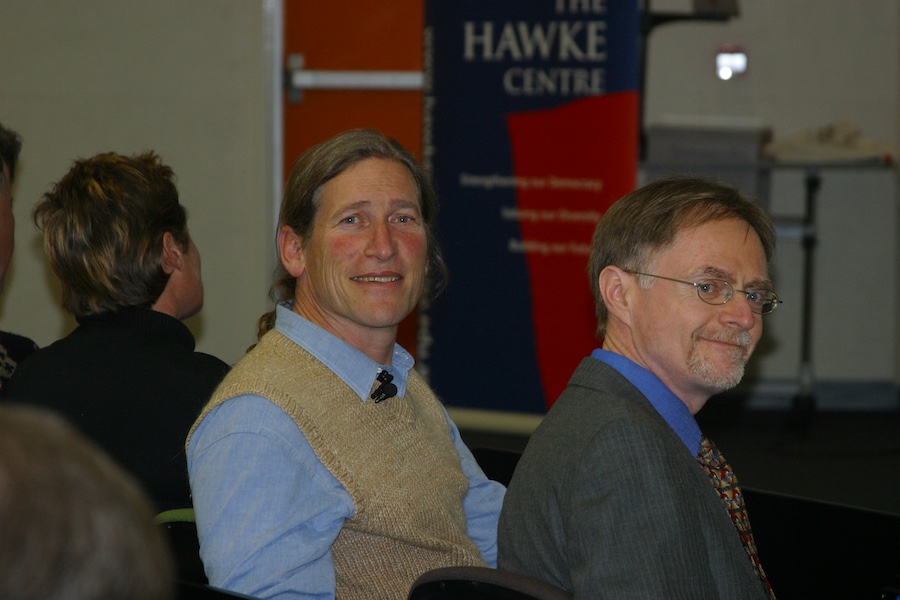
For me, research and writing have been an episodic activity between more practical ventures and focus. Over a lifetime of writing, Richard authored 14 books, including his last Power: Limits and Prospects for Human Survival (2021), which I regard as his master work. Perhaps more extraordinary, his monthly Museletter started in 1992 and ran to 400 issues. On our hectic schedule around the continent, Richard was working on his next book.

A prolific writer, teacher and communicator trying to alert students, policymakers and the public to the limits to growth on a finite planet, Richard was, in my experience, also humble and a good listener, always interested in different perspectives. We now know that the Peak Oil date predictions of Campbell and others, which we both promoted, turned out to be premature by perhaps a decade or two, depending on how you measure it. However, the basic thesis laid out in The Party’s Over still stands: that while the unravelling of globalised industrial systems is driven by a great diversity of forces and factors, primary amongst those is the peak and decline in global oil production.

Adam was the founding editor of Energy Bulletin in 2003, providing online information about Peak Oil following a suggestion by Richard Heinberg. Energy Bulletin was later rebranded Resilience.org and hosted by Richard’s Post Carbon Institute.
I believe the geopolitical and psychosocial chaos that many people in both rich and poor countries are now experiencing is more strongly shaped by that barely noticed or discussed peak than climate change, the much more focused on, flipside of the fossil fuels coin. Whatever historians make of what happened to globalised industrial civilisation, amongst the great cacophony of voices trying to explain the process as it unravelled, I think they will recognise Richard Heinberg as one of the clearest voices articulating the predicament and gently indicating the adaptive strategies and pathways. Beyond intellectual acknowledgement of permaculture and kindred movements, at home he and Janet lived modest lives and made their own small working relationship to nature through gardening and raising chickens. But forever the empathetic observer and thinker, what Richard learnt from chickens was much more important for him, and us, than any eggs they produced.
One of the surprises in getting to know Richard on our tour was his discipline in practising his violin each day, a small part of his parallel life with music. I think his lecture to the New England Conservatory of Music, following a performance with a young guitarist of Paganini’s “Sonata Concertata for Guitar and Violin”, shows clear communication of complex but important ideas about the role of music and the arts in easing and assisting the transition to a world of less; an incredible contribution.
In our 2022 conversation reflecting on 50 years since the seminal Limits to Growth was published, a book that did so much to shape our respective lives, I remember Richard, suffering Covid at the time, seemed tired and perhaps more gloomy about the future than he was back in 2006. Perhaps the energy of putting out the message for so many years, as well as the social divisions in his own country already taking their toll on a sensitive but persistent man who clearly articulated what he believed was best for the collective (of people and nature) over the longer term.
While the unravelling of the world we have known gathers pace, there is naturally an intensification in the search for those to blame for this or that symptom of humanity’s predicament. In this context I believe Richard’s writings and recordings continue to help, move people towards healthy adaptations and away from the whirlpool of reaction and blame.



Comments
We changed commenting systems on September 10, 2026 as part of a site-wide functionality and security upgrade. Your past comments have not disappeared, and you can still log in with your old Disqus account credentials if you wish. Contact us with any questions.
I really appreciate all the wonderful remembrances being published. And thanks for this one David!