

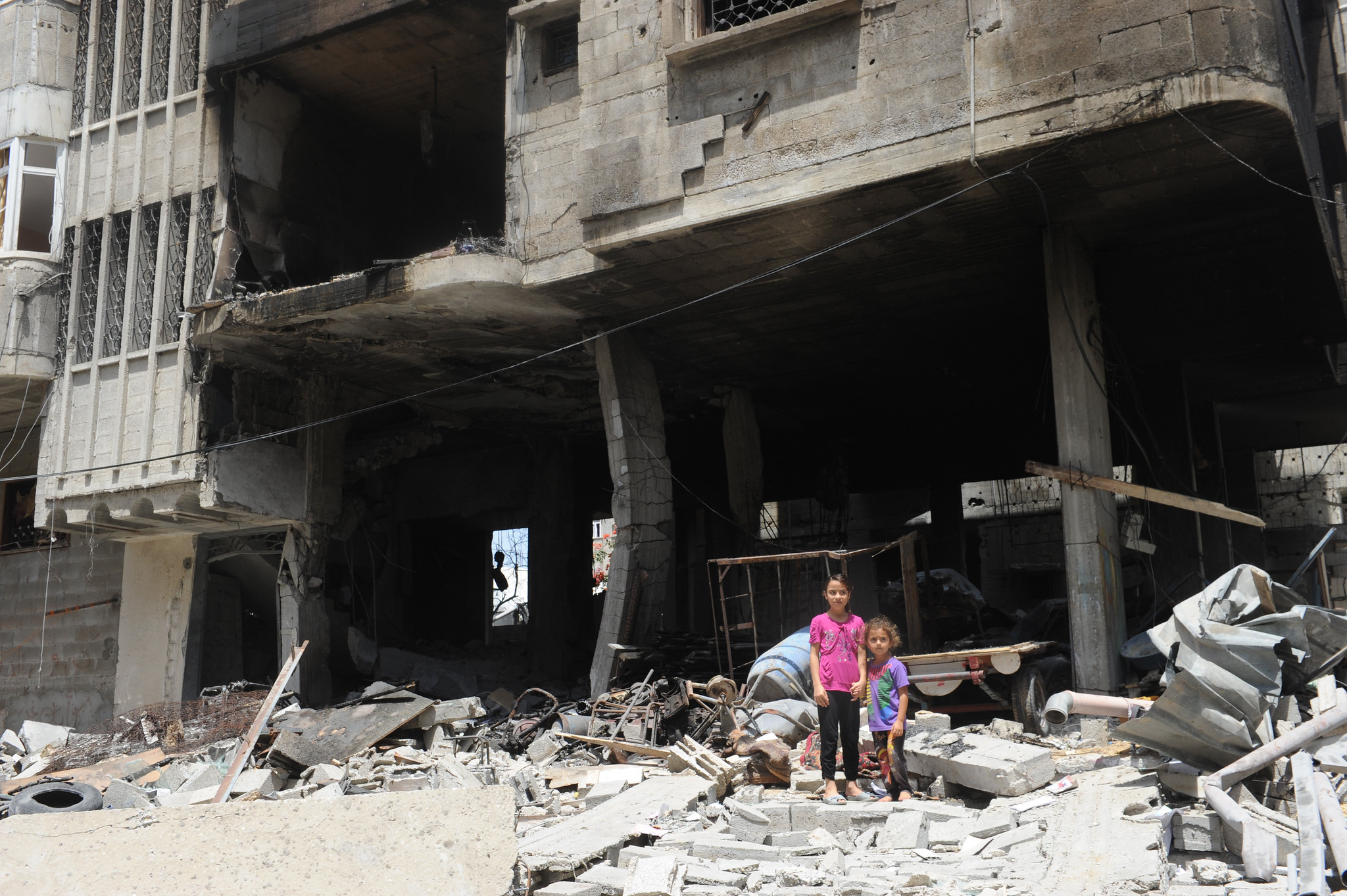
At the World Economic Forum’s Annual Meeting in Davos earlier this year, Canadian Prime Minister Mark Carney delivered a special address, in which he posited a rupture in the post‑World War II diplomatic consensus in the West on how global economies are organised and global security across diverse political systems. This consensus had enabled 75 years of peace (however imperfect). Now wars and geopolitical tensions are driving record military spending worldwide. According to a recent UN report, if current trends persist global military expenditure could reach between $4.7 and $6.6 trillion by 2035—potentially more than doubling today’s level—diverting critical resources from sustainable development, foreign aid, education and healthcare.
Meanwhile, in February, the New START (Strategic Arms Reduction Treaty), which limited nuclear weapons and certain short-and medium-range missiles, quietly expired. A new nuclear arms race is now underway. Currently, nine countries possess about 13,000 nuclear weapons. By 2030, China will build an additional 1000, North Korea will increase its 150 weapons to 200, South Korea, Japan and European leaders have publicly said they will seek nuclear “deterrent” capabilities, while France announced a new “advanced deterrence” program that includes adding more nuclear warheads.
Rapid ecological changes driven by global population growth, fossil-fuel-based economies, mass consumer societies, natural resource depletion, biodiversity loss, environmental pollution, and climate change have breached several planetary boundaries. These dynamics are pushing us closer to catastrophic tipping points that pose an existential risk to humanity.
Making matters worse, growing inequalities and an increasingly influential billionaire class are putting into question our 300-year commitment to Enlightenment ideals such as rationalism, humanism, secularism, evidence-based science, and democracy. Billionaires like Peter Thiel and Elon Musk are challenging the foundations of modernity and instead promoting visions of an autocratic, techno-feudalist, corporatist future shaped by artificial intelligence, automation, and space travel.
These converging historical crises compel us to confront some fundamental questions: What does it mean to be human in this new human era? How do humans understand one another? What might genuine global understanding look like, and how might it help relieve the fears and distrust at the root of hatred and conflict? How might a new understanding help prevent wars and foster harmony among humans and with the natural world?
At the Club of Rome, we, like so many other organizations, are grappling with these questions as we continue to use our work to explore solutions for peace. Our Planetary Peace Initiative examines peace as a systemic concept involving peace within oneself, peace with other people, and peace with nature. Planetary peace is a holistic, dynamic, regenerative force, rooted in justice, sustainability, global understanding and cooperation. Rather than addressing the symptoms of national insecurities, this vision targets the structural causes: ecological degradation, extractive and exploitative economic systems, misuse of technologies, and the enduring legacies of colonialism. It calls for “wholistic” transformation of all systems of life around the principal ideas of regenerative living, regenerative economics and the building of eco-civilizations. While we do not have final answers, we believe that our past focus on “peace” as the absence of wars is totally inadequate to bring about real peace in the world.
In the coming years, global interdependencies and connectivity are likely to both deepen and become more intricate. Most human-scale challenges (climate change, biodiversity, urbanisation, hunger, poverty, etc.) are better understood not just as national concerns but as planetary ones. These planetary challenges cannot be solved by national-level analyses and tools. They require understanding undergirded by a planetary consciousness.
Restoring human-nature sovereignty may be the most important condition for peace in the Anthropocene. Our planet is a living system. Living systems work on regenerative principles, processes, and cycles. If we breach those, they die, and we die. Applying principles of living systems, planetary peace calls for long-term planet-wide bioregional cooperation that prioritises regeneration over extraction and depletion, equity over domination, and collective flourishing over individual gain.
As part of this, the understanding that people are the ultimate sovereigns is key to enduring peace. Sovereignty does not reside in Presidents, Prime Ministers, or institutions. It rests with citizens. Planetary Peace also emphasises the essential role of youth leadership, intergenerational dialogue and the integration of diverse knowledge systems, including science, Indigenous wisdom, and systems thinking, in shaping sustainable and peaceful futures.
In this new era, characterised by multiple coalescing political, social, cultural and ecological ruptures, commonly known as polycrisis, the task before us is not simply to prevent the next war: it is to rethink peace itself. We can achieve planetary peace with pluriversal, bottom-up politics that are mindful of cultural and local conditions. We must create post-hegemonic futures that embrace diverse worldviews, rebalance global power structures and cultivate harmony within and among humans, and between humans and nature. This may be the only path to peace in this new human era.



Comments
Welcome to the new Resillience commenting system!
We have moved from the former Disqus commenting system to a new system as of September 10, 2026.
We made this change because of privacy concerns regarding Disqus. It's also part of a set of changes to bring more services to the Resilience community under a single login: commenting, (coming September 2026), and online courses (coming 2027). Unfortunately, your old Disqus comments may not reliably link to your account in this new system. Please contact us if you have any questions or concerns.
As similarly noted by Mary Parker Follett in The New State (highly recommended), 106 years ago: "We have thought of peace as the passive and war as the active way of living. The opposite is true. From war to peace is not from the strenuous to the easy existence; it is from the futile to the effective, from the stagnant to the active, from the destructive to the creative way of life." See full text at https://follettfdn.org/follett-writings
This strikes me as an excellent summary of the polycrisis we face, but the proposal at the end is so vague it seems almost useless.