

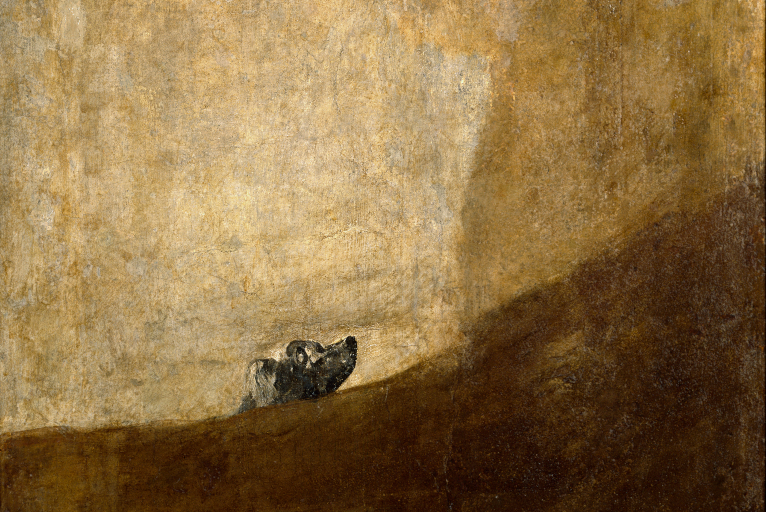
Essay Five in the series of five essays called The Abyss of Civilization.
Overview
A single structure and a single process underlie the last six thousand years traced in this series. The structure is civilization. The process is the eradication of relational being (RBE) wherever it exists and whenever it reemerges. This simplicity, however, is quickly obscured. As social, political, and ideological formations multiply, their growing complexity conceals the underlying mechanism. Nearly everything else about life since our species moved – our institutions, beliefs, conflicts, and self-descriptions – belongs to the level of secondary detail.
The evidence strongly suggests that our hunter-gatherer ancestors were well integrated with their world through animism and presence in the field of relationality. Their way of life produced a healthy and intact psyche and endured roughly fifty times longer than our brief stage of civilization. By contrast, we have been living what Thoreau later called “lives of quiet desperation” even before he wrote those words in 1854.
Naturalistic theory (NT) shows that close comparison of life before and after civilization is an exceptionally powerful way to understand our species. And yet, as we have seen throughout this essay series, historians, archaeologists, and other scholars have shown little interest in origins or in tracing connections between the distant past and the world we inhabit today.
The emergence of intensive urbanization in Mesopotamia marked a decisive break in the way people had lived for roughly 294,000 years. New practices and environments produced new customs, values, and behaviors that quickly began to weaken relational being (RB). Because this transformation unfolded over a very short span, it must have produced a profound collective shock to the psyche. But again—what scholars have even identified that?
Applying what I have termed the onto-historical method reveals that early in Sumerian civilization, blocking access to critical resources—stored grain, water, land—initiated the process of RB erosion. Dependence on centralized provisioning reduced autonomous participation in the field of being, shifting relational being from a lived condition to a managed allowance. In this way, the material conditions and administrative practices in ancient Sumer established the first systematic restriction of being and relationality.
Tragically, this occurred naturalistically—that is, as a development arising from new conditions that produced human harm. There was no decision point to initiate or accept the change, although these early effects could still have been reversed through a return to healthier practices and values. Instead, the new conditions of congestion and anonymity exerted a particularly adverse influence on men, intensifying dominance, aggression, and competition within their emerging gender roles. These shifts led to patriarchal consolidation of power within early city societies by about 3500 BCE.
There were no priests or religion at that time, despite the overly casual terminology archaeologists often use (one reason why getting this story straight is so difficult). Instead, an all-male class of “mediators,” who controlled large agricultural estates and managed the distribution of grain surplus, were the first to begin eradicating—albeit unintentionally—relational being.
Between 2700 and 2400 BCE, relational being became increasingly symbolically mediated as the first fully articulated religious systems began to take shape. At this point, priests were more deliberately and indirectly engaged in eradicating RB through their mediation of invisible and transcendent gods. More direct methods followed soon thereafter, beginning with the attack on the ontological feminine.
The Western Mythos
The Western variant of civilization emerged around 550 BCE, when the Hebrews adopted many Babylonian values and myths while redacting their own texts to portray those sources in a highly pejorative manner. This maneuver, which I term a negative ontological transfer, initiated a more insidious phase of RB erosion that now operated primarily through indirect means. Ascetic practices and beliefs were incorporated into a developing “purity regime” that reinforced boundaries and order alongside an emerging theological regime (TR). Christianity later universalized Hebrew monotheism and intensified these themes. Three centuries later, Augustine constructed a nascent religious self organized around an internalized and enduring conflict between sin and salvation.
After a millennium of Catholic theocratic dominance, northern Europe became more powerful and innovative than the south. The Protestant Reformation, considerably more austere and interiorized than medieval Catholicism, crystallized this shift. The Protestant individual emerged at the threshold of the modern age, functioning as a microcosm of the European project itself—global conquest, colonization, missionizing, and capitalist expansion now internalized as personal discipline, moral surveillance, and self-regulation.
As we saw in Essay Four, around 1500 CE the TR aligned with emerging forms of secularization and shared deep structural affinities with them. The increasingly interrelated sociocultural processes of modernity not only made this amalgam necessary but required it to operate in far more sophisticated and elaborate ways to eradicate RB than ever before.
To carry this out, indirect transcendent processes increasingly took the lead over earlier symbolic mechanisms. Their primary RB mechanism was the proliferation of seemingly endless chains of abstractions that often conflicted with one another, making the world progressively harder to understand. This dynamic is critically important because it has contributed directly to the catastrophe our species faces today, and it will be examined more closely in the next section.
Yet we must never lose sight of the TR’s power behind the scenes even as secular forces appear to gain ascendance. Under the more complex conditions of the modern era, it could no longer manage the world as it had in the Middle Ages. Secularism naturalistically assumed this role not only for the sake of efficiency but also to shield Christianity from ineptitude while it continued to symbolically mediate and influence people’s lives. A double screen thus emerged: first, secular predominance within the secular–religious amalgam; second, religion positioned behind that screen to continue its symbolic and ideological functions. Beneath both remained the ongoing eradication of RB, a process that will persist as long as civilization itself endures.
The Death of Meaning in Modernity
Relational being is closely linked to meaning, especially among pre-civilizational peoples. In their environment, direct and immediate responses arose because life in nature provided them. As societies grew larger and more complex, meaning became more abstract and ambiguous. Beginning around 1500 CE, however, this tendency intensified dramatically. We must track this development closely because it profoundly shaped the modern world and our lives today.
Two major processes drive this shift. First, abstractification—as clunky as it sounds—operates externally, detaching meaning from embodied participation and transferring it into symbols, systems, metrics, and models. Mentalization is the interior counterpart: the relocation of reality, responsibility, and conflict into the mind. Direct relation to the physical world is increasingly displaced as life is interiorized into thoughts, attitudes, identities, and pathologies. Together these two processes—A/M—erode RB to an extent never previously achieved.
Note: I do not discuss the post-structural/French diffusion of meaning here, as my focus is on the dominant system-building strand aligned with the U.S. hegemonic infrastructure.
- Separation
Separation was the first mechanism of A/M in the modern age. In a sweeping move to dismantle unity and being, reality itself was pulled apart, much of it during the first two centuries of the European project. Binaries such as mind/body (Descartes), secular/religious, subject/object (Bacon), rational/emotional, individual/society, ruler/ruled, and European/“native” marked the initial disentanglement of relational being in this era.
Divisions of this sort—though to a far lesser extent—had existed since early in the ancient Near East. Over the past five centuries, however, they became so pervasive that any sense of unity or totality began to feel unnatural. Reality itself was progressively pulled apart. A proliferation of dualisms divided the world into opposed domains, with objectivity (science) and rationality (Enlightenment thought) among the most influential. These frameworks established durable boundaries between mind and world, subject and object, fact and value, reason and nature. Treated as permanent rather than provisional, such divisions fractured the previously interrelated flow of meaning. What had once been experienced as continuous and relational became segmented, weakening meaning’s ability to cohere across domains and leaving it increasingly vulnerable to diffusion.
- Scientization and Mathematization
From 1500 to 1850, secularism generated its progeny—capitalism, science, objectivity, rationality, energy-intensive processes, and their mechanical realization in the Industrial Age. Together these developments provided powerful support for the conceptual evisceration of the world. Thick relational being was under attack everywhere: in the colonial possessions alongside the deaths of so many Indigenous peoples, and in Europe as well. Nobody was spared.
A detailed history of A/M processes is not possible here, but the evidence shows that meaning became ever more divided and diffuse. By the mid-nineteenth century the process entered hyperdrive. James Clerk Maxwell’s unification of electricity, magnetism, and light into a single field theory in 1864 is emblematic of this transition. His work helped finalize the divorce between lived physical intuition and scientific authority. From that year until the eleventh hour of the eleventh day of the eleventh month of 1918—the end of World War I and a telling sign of Europe’s strange partiality for numerical order—the world of thought and meaning took another sharp tumble toward abstractification and mentalization.
Led by astounding developments in chemistry, biology, and especially physics, the new regime reshaped the sociocultural sphere and extended A/M in three principal ways. First, research into the fundamental elements of reality became largely mathematized or instrument-mediated, so that even our understanding of the physical world was thoroughly abstractified. The physical world itself became largely unobservable, counterintuitive, probabilistic (soon thereafter), and accessible only through symbolic mediation.
Second, this sub-microscopic view of reality made the fragmentation of formerly coherent understandings of the world de rigueur. Academic disciplines accommodated the shift by multiplying subfields and specializations. As a result, any comprehensive perspective became increasingly unlikely.
Third, the “hard” sciences developed immense prestige. This fed directly into racist conceptions of European superiority and its supposed right to control much of the globe while also reinforcing the idea that non-scientific disciplines were inherently inferior. Suddenly the humanities and social sciences, closer to the understanding of relational being, were placed on notice to adopt similarly mathematical and empirical forms of explanation. The resulting style of thinking spread into governance, daily life, religion—essentially everywhere within the sociocultural sphere.
Bertrand Russell and Alfred North Whitehead represent the culmination of this second phase of A/M in Principia Mathematica, completed in 1913. Russell worried that philosophy had fallen behind science and set out to make philosophy as verifiable as science itself. He might have read Nietzsche, who had mocked such pretensions twenty-five years earlier: “The craving for certainty is a craving for stupidity” (The Gay Science, §347). Instead, Russell and Whitehead placed their “analytical philosophy” on a highly mathematical foundation, substituting mere quantity for quality as the arbiter of reality.
Thus, meaning became ever more abstractified. But this quest for order and pure knowledge by destroying the very basis of ascertaining truth serves as the final clutching of an exhausted leviathan. The entire European project and its pretensions to representing the glittering heights of civilization died among the carnage in of trenches of World War One.
- Manic Purification
The “first responders” to the five-alarm fire of the Great War were the adherents of logical positivism (LP), operating from Vienna, close to the scene. They believed their philosophy was urgently needed to restore order to a suddenly chaotic world. A simplified explanation will suffice: logical positivists, even more than the analytical philosophers who preceded them, sought utter certainty—at least in matters of meaning. Where analytical philosophy still treated philosophy as a forum in which rival claims could be heard and contested, the positivists instead created rules governing what could even count as a claim. Their aim was to remake philosophy along the same empirical verification path as science.
This drive for absolute certainty mirrored the Allies’ determination to ensure that German aggression could never threaten them again—through humiliation and massive reparations. Both responses proved profoundly short-sighted and doomed to failure, as World War II soon shattered the pretensions of each. One might hope that the love of wisdom, supposedly intrinsic to philosophy, could have done better. If ever there was a moment for reappraisal—and the need was obvious—it was then.
A few poets and writers did take stock of the catastrophe that had just exposed the lie of civilization and Europe’s outlandish pretensions along with it. W. B. Yeats in his masterful The Second Coming and T. S. Eliot in The Waste Land saw this clearly. But too few listened. Logical positivism instead pushed meaning even further into abstraction. What a perverse irony that a movement claiming to restore meaning first had to destroy it.
The vocal leaders of the “Vienna Circle” were so adamant about the correctness of their beliefs—and so ascetic about the rules they fashioned to construct their philosophy and police its application—that the movement invites comparison to a cult. It was not, of course, but these undeniably brilliant thinkers were so addicted to equations, clarity, and proof that the posture can reasonably be called pathological. It takes exceptional intelligence to dwell in the house of abstractification at the heights they reached—but at what cost? One begins to see how these men (and the few women granted entry to that domicile) became so immersed in endless chains of abstraction, and so habituated to relating to the world only through the mind, that they grew increasingly detached from any robust sense of RB or from the world of suffering and injustice. Such realities could still be felt and detected, but only in a markedly blunted way.
The best way to explain this is through a disturbing convergence of A/M with the purity regime analyzed by the anthropologist Mary Douglas. As discussed in Essay Three, this regime first emerged among the Hebrews around 550 BCE. In such moments an elite group enforces strict boundaries between what is deemed acceptable—transcendent, obedient spirituality—and what is deemed unacceptable (for example, dirt or women’s menstrual cycles). In both the earlier and later cases, the purity regime emerges in response to extreme stress or psychological shock: exile in Babylon and, much later, World War I.
Such regimes did succeed in maintaining order among the Hebrews. Christians later emulated and attempted to displace them for nearly two millennia. But this entire pattern proved wholly inadequate for the fragile and disjointed twentieth century. Fascism readily stepped into the vacuum created by this tepid response to catastrophe, drawing on deeply ingrained civilizational myths such as blood and soil. At the same time, the bureaucratic model of detached, dispassionate efficiency sustained by A/M continued operating in the background. It was precisely this inheritance from modernity that made the Holocaust possible, as Zygmunt Bauman makes clear.
But it was more than that. As always, RBE remained the operative mechanism. The more people are estranged from being—and deranged as a result—the more capable they become of participating in, or tolerating, horrors so extreme that our horror stories render them bland and reassuring by comparison. By this point another force had also gained ascendancy, creating further havoc: the sheer speed with which new ideas emerged only to be rejected or absorbed. Just as quantum physics succeeded relativity within a single decade, LP rapidly displaced AP. Meaning was not only becoming detached; change itself was now too rapid to be integrated in any coherent way.
- Linguistic Reduction
The failure of fascism was a failure of transcendence, albeit in its most malignant form. The “thousand-year Reich” barely survived a decade. Nothing endured. European pretensions collapsed first with the First World War and then—since the lesson had not been learned—again with the abomination of Nazism a generation later. Into this wreckage stepped the U.S. hegemon, promising order, security, and liberty to a traumatized world. Expectations were high; for a brief moment it seemed that history might take a different turn. Ho Chi Minh’s 1946 letter to President Truman requesting American support for Vietnamese independence from French rule captures this moment of hope. It was rejected, because the United States had already committed itself to global dominance and management, and the seeds of that great tragedy were casually sown.
Overtures for equality and liberty from the “Third World” were therefore anathema. The architects of this real mission set in motion a vast apparatus—unprecedented in scale and ambition—of science, technology, research, military development, and abstract informational systems that soon came to dominate, even overwhelm, American life.
Several objectives were achieved simultaneously: replacing emotionally charged, myth-bound political systems (such as fascism) with technical and engineering modes of operation; rendering these modes easily universalizable; quantifying and discretizing them for interchangeable use across platforms and institutions; and detaching them from historically contingent and embodied processes in order to neutralize rival ideologies, including communism, while preserving ample space for American propaganda. What emerged was far more extensive than what Eisenhower would later warn about in 1961: a military–corporate–government–science–computational complex that quickly acquired momentum beyond the control of its own technocrats. For our purposes, this complex powerfully accelerated abstractification and mentalization while further diffusing meaning, profoundly reshaping academic life and the disciplines themselves.
Noam Chomsky is emblematic of this phase of A/M for several reasons. He joined MIT in 1955 and has remained associated with the institution for more than seven decades. Research and defense expenditures at MIT were expanding rapidly just as the linguistics department he joined was taking shape. Chomsky benefited from this environment, with some of his early research directly funded by the U.S. government. As Chris Knight notes in Decoding Chomsky, he also associated with prominent defense figures at MIT such as John Deutch, later director of the CIA.
Second, Chomsky’s work was highly valued by the Pentagon because aspects of his research aligned closely with the development of computer systems suited for command-and-control applications. Although he did not participate directly in such work, he never publicly criticized it, despite his well-known opposition to U.S. foreign policy.
Third, Chomsky’s linguistic theory extended A/M while aligning closely with the growing emphasis on science and discrete information in American intellectual life. He argued that language is innate, did not arise through evolutionary processes, and is not fundamentally about communication but about organizing thought within the individual. Meaning therefore resides primarily within the mind, largely detached from the body, instincts, and emotion. Chomsky demonstrated in extraordinary detail how his “universal grammar” (UG) operated, rendering the system internally coherent. Constructing such a framework required genuine intellectual brilliance.
Outside the theory itself, however, much of the supporting evidence has since eroded, even if the model retains limited uses. The critical point is how seamlessly his linguistics fit the postwar American episteme—a knowledge structure increasingly oriented toward science, abstraction, and discrete information. The theory was readily embraced because it could be rendered into units that were quantifiable and measurable. As a result, it suffers from weak external validity, having been devised largely outside the lived human context of interaction, relationship, and communication. Without historical development, bodily grounding, and social friction, UG becomes highly idealized and difficult to empirically verify. As many critics have noted, it raises unresolved problems: how could something innate arise almost spontaneously, yet outside evolutionary processes? The broader lesson is that once language is encapsulated and detached from its surroundings, it loses meaning even as it becomes more programmable.
The final concern is Chomsky’s close association with Jeffrey Epstein over several years—close enough that his wife reportedly referred to him as “their one true friend.” This relationship continued even after Epstein’s imprisonment for sex with a minor, and Chomsky publicly defended him against women who denounced Epstein, dismissing their criticism as “hysterical.” Such a response suggests not only a troubling tolerance for patriarchal patterns but also raises a deeper question: why would Chomsky align himself with a figure drawn from the financial elite at all? Perhaps his highly abstracted intellectual orientation dulled his sensitivity to women’s suffering.
- Computation and Mind
While computerized processes were already embedded in postwar defense and university research ecosystems (roughly 1945–1965), this earlier period did not yet establish computation as a dominant model of mind. The final phase of A/M—with far more advanced applications—consolidated later (1965–1990). By then linguistic reduction and cognitivist framing had already constructed a model of “mind” as discrete information processing, making it possible to translate meaning into binary form.
Once thinking processes were rendered into discrete units governed by rules—where context was stripped of embodied meaning and treated merely as input—the transition to computational systems became almost inevitable. Within this framework, cognition could be modeled as symbol manipulation operating over formal structures. Binary processes, integral to computation, thus emerged as the logical culmination of this trajectory.
This mode of thinking was on full display during the Vietnam War—a war that might have been avoided with a simple “yes” to Ho Chi Minh a generation earlier. The aptly named “whiz kids”—analysts and statisticians who moved seamlessly from the military to Ford and then into the Defense Department—administered the war in a highly quantitative, data-driven manner. Metrics such as enemy-to-U.S. death ratios, sortie rates, and bombing tonnage became central to how “progress”—always progress—in Vietnam was conducted, interpreted, and reported by a largely compliant press. As the Netflix documentary on Seymour Hersh shows, U.S. military slaughters in Vietnamese villages were widespread and actively encouraged by the need to inflate “body counts” up the chain of command, all the way to the White House.
Marvin Minsky best represents this phase, given how central he was to the highly abstractified and amoral thinking at the core of this final stage of A/M. By the early 1970s, working at MIT, Minsky helped define intelligence as internal symbol manipulation rather than embodied sense-making. His co-authorship of Perceptrons (1969) was decisive in this regard. It effectively blocked embodied, analog, learning-based approaches rich in continuous, situated meaning while reinforcing rule-based, top-down models suited to increasingly sophisticated computational operations.
But typical of this phase, Minsky himself appears to operate with no discernible moral code, much like Chomsky in the previous phase. At this end stage of meaning manipulation there is no longer any external referent—no “there” there. Disembodied, ethereal processes become meaning itself, or the sole rationale for doing anything at all. Like Chomsky, Minsky waves off critics’ objections as moot. This is possible not only because of his technical brilliance but because his position aligns so closely with the hegemonic zeitgeist. Yet Minsky goes further. He argues that mind—reduced to a series of interacting mechanisms—is a machine, and that reality itself can be repaired through better models. By the late 1980s this way of thinking had become so well established it was scarcely questioned.
Finally, Minsky was even more deeply entangled with Epstein than Chomsky. Over the course of a nine-year association he participated in, and helped arrange, scientific seminars both before and after Epstein’s conviction, including events held on Epstein’s infamous island. The most serious allegation is that Virginia Giuffre accused Minsky—in court documents and in her autobiography Nobody’s Girl—of having sexual relations with her at Epstein’s behest when she was underage. While the allegation was never proven, Giuffre was never shown to have fabricated any of her claims during her years as an advocate for Epstein’s victims.
Minsky’s tawdry relationship with Epstein serves as a warning about the coziness and corruption of elite arrangements—especially among men—but also about how the diffusion of meaning, particularly by its principal architects, erodes the very basis of accountability, whether to oneself or to society. And yet worse is to come.
Necrology
This final phase of A/M consolidates when its formalized modes of thought are first normalized and then internalized—a process that largely settles into place during the 1980s. Few today would openly endorse Minsky’s nightmarish claim that “mind is machine,” yet the assumptions required to make such a claim workable now operate as background conditions across the sociocultural sphere. We are inevitably shaped by them, just as we have been shaped by the earlier phases of A/M since the 1500s, by the theological regime that emerged around 550 BCE, and by still earlier religious formations. Across this long arc, the mechanisms of RBE have steadily propelled civilization forward even as they constrict and diminish the human psyche.
But perhaps not much longer. Once meaning has been drained of substance and we have been reorganized into disconnected consumption units, the remaining scope of thought shrinks to the management of immediate and superficial needs. What, then, is left to take from us? The vital and grounded dimensions of life—those rooted in body, instincts, emotions, and the unconscious—had already been eroded long ago. What remained was conscious thought, the last domain of the psyche still available for civilization to condition and transmit its abstractions.
Now even that final refuge—dismissively compared with machines and computers—is beginning to fade. We continue to cling to life more than a century after the civilizational idea itself effectively died, but for how much longer? Are we even needed anymore? There is growing evidence that many elites no longer think so. They may be even more clueless than the rest of us, but we still allow them to place our entire species at ever greater risk.
To understand how this came to pass, we need to retrace our steps one last time—this time only half a century.
The neoliberal forces that have shaped public life since roughly 1980—and in some respects earlier—are extensively studied, even if scholars disagree about their causes and interpretations. Their main features are well known: privatization, the concentration of wealth and power in extremely small elites, hostility toward the vulnerable, facile ideological narratives sustained by relentless propaganda, the shift to financial capitalism, the expansion of criminalization and imprisonment, and the normalization of pervasive surveillance.
As readers of this series already understand, my focus has been on the deeper consequences of developments like these. They have been horrific. To an extent never seen before, the sense of real community has been gutted and with it shared purpose, lingering immanent traditions, and confidence in the future. The feeling of security has largely disappeared, even among the more prosperous classes and countries. More isolated than ever before, we struggle to relate to one another authentically as we once did.
RBE has been with us since roughly 4000 BCE, but the events of the past century have been unusually concentrated and pervasive. While the planning behind neoliberalism and the operatives who carried it out are important to understand, it could never have succeeded to the extent that it did—if at all—had the demos not already been so impaired by the previous four phases of A/M.
It is not that we were powerless to resist, and some did. Rather, we never fully understood what was happening in the first place. Although neoliberalism clearly functioned as a right-wing secular and fundamentalist movement in service of elite power, larger forces have been at work. What we call neoliberalism is therefore more than a political or economic project. It represents the penultimate moment in the final phases now bringing the long civilizational arc toward its end.
The Necrological Spiral
We have never even attempted to overcome civilization—that dynamic and destructive extension of the collective human mind—by returning to relational being and healthy values. There have been opportunities. The two best occurred at the very beginning in ancient Sumerian and again just after World War I. But rather than learning our lesson in 1918, we spent the next sixty years enduring fascism, another “great” war, many smaller ones, life under a brutal hegemon, and the mounting problems of global poverty and overpopulation.
Into this opening neoliberalism poured its poisonous policies and practices, radically separating us from one another and erasing what remained of community. After half a century of that treatment, what is left?
Nothing.
Or rather, the giant hole at the center of our species began to become unmistakable around twenty years ago. With the final push of the War on Terror, the mass adoption of the internet, and the digitization of the economy and finance, what I call necrology began to set in—roughly between 2005 and the global financial meltdown of 2008.
I borrow the term from the Cameroonian political theorist Achille Mbembe. In Necropolitics he argues that the point is not simply that authorities determine life or death, but that modern political orders increasingly organize entire zones of death—what he calls “death-worlds.” Mbembe builds on Michel Foucault’s concept of biopolitics—the management of life—extending it to show that colonial regimes have long operated necropolitically, a dimension largely absent from Foucault’s Europe-centered analysis.
Mbembe later expanded his thesis, arguing that necropolitics was increasingly shaping the modern world and that large regions had effectively been designated for abandonment and mass death. I extend his insight further: the entire world has now been so designated. Some countries remain safer than others and elites are already building fortified enclaves, but there is no real escape.
We are all imperiled by surpassing Earth’s carrying capacity at the very moment meaning itself has been hollowed out. Nothing is being “administered” anymore. We are witnessing the violent death throes of civilization itself.
Life under necrology
Like a fire burning out after consuming the last of the forest, civilization has exhausted its fuel. In this metaphor Homo sapiens is the fuel. We have nothing left to surrender, and new projects or transcendent pushes are no longer possible to shape us. This is why, even if we were somehow able to moderate the climate catastrophe, civilization itself cannot be salvaged.
The limits have been reached. They cannot be exceeded.
If anything exposes the lie behind civilization’s claim of boundless expansion, it is death itself. Many progressives fault capitalism for this condition, but that economic system arrived very late to the party. While everything accelerated dramatically in modernity, the fix was in long ago when our ancestors accepted such myths as cutting up Tiamat to create an orderly world, or the better-known command, “Be fruitful and multiply, and fill the earth and subdue it” (Genesis 1:28). Civilization has always promised endless frontiers—both to feed its ravenous appetite and to seduce us into compliance. Bigger (greed) and better (progress) are the two master illusions that keep the demos in line.
But an even deeper mechanism is at work. The destruction of physical reality—including the body—is always accompanied by a heightened emphasis on our capacity to think. It is not only that fragmenting the psyche leaves us confused and compliant. This system functions most effectively through the mind. When we are integrated, we remain immersed in the field of relationality and resist its corrupting and decadent prerogatives. Isolated conscious thought, by contrast, greatly eases the transfer between the collective mind and the system itself.
But now even the last vestige of our humanity—conscious thought—has been subsumed by the machines we created, and there is nothing left but destruction for its own sake. Let’s consider a few examples.
The most striking example has been the ongoing genocide of Palestinians in Gaza. We watched it unfold on social media and protested in the millions, yet the people who run the world did not listen or even appear to break a sweat. The constant devastation of the Congolese people and the starvation now spreading through Sudan are less visible but equally horrific. Even during the neoliberal era, we could still summon enthusiasm for the project of humanity through efforts like Band Aid (1984), Live Aid (1985), and Live 8 (2005). Today we barely even notice.
The bombing of Iran by Israel and the United States provides further proof. Necrology was not yet fully predominant even after 9/11 when Bush Jr. invaded Iraq. At that time a coalition of allies was still assembled, rationales were offered (“they hate our freedom”—never oil), and the American public had to be fed enough clever lies to bring them on board. Today there is no coalition, no rationale, not even a discernible plan.
Now consider Joscha Bach, whose work provides one of the clearest intellectual expressions of life in the necrological age. If you attempt to read his magnum opus, Principles of Synthetic Intelligence, you will find it as exhausting as it is bewildering. Sentences routinely pile together several polysyllabic terms without defining a single one. The argument wanders so far into abstraction that it increasingly requires artificial intelligence itself simply to decode what is being said.
Grasping it is more difficult still, but it is clear that his central thesis is that the mind can be understood through the framework of AI. Notice the reversal, even from the already advanced decay in the previous phase of A/M. Minsky at least placed mind first. Under necrology we are told that we can learn how we think by comparing it to a thing—a computer.
This is a macabre fantasy world for scientists like Bach, made possible only after six thousand years of RBE and a century of intensive A/M. It is the complete opposite of relational being – of living and engaging deeply in the present and concrete world. Human beings who were already struggling to get by on conscious thought alone are now stripped of even that final vestige of psyche.
This is necrology, and it is proclaimed in a strangely dispassionate and assured manner. There is not the slightest hint of an alternative, much less any suggestion that one should be considered. But even if such cognitive scientists could pause for a moment, they are now too far removed to ask the most basic questions: “Is this good for humanity?” and “What are the negative consequences?”
This entire vast project must be interrogated—multi-trillion-dollar tech monopolies, the “gee-whiz” TED talks, and the full range of AI endeavors—and challenged. This is not an attack on technology or computers. There is nothing inherently wrong with either. They are tools, only as good as the context in which they are used, the values applied, and the purposes they serve. Simply calling a computer or AI a wrench helps demystify them immediately. But telling us that our tools are better than us, or even more human than we are, is deeply pathological. Indeed, it is monstrous.
But even here necrology has emptied that term of meaning. Comparing our monsters today with those of two centuries ago reveals how this happened. In 1818, Mary Shelley wrote Frankenstein, one of the greatest novels in history and the first with a science fiction premise. Look how very human the eponymous creature is. We know his origin because he was created by a human being. Frankenstein is the embodiment of the physical—so visible and realistic that his otherness is shunned by society. He becomes an outcast with no status or agency, the opposite of the modern individual. He turns to literature for consolation and to learn how to become more human.
In addition to what feminist critics have said about the patriarchal aspects of the novel, I contend that the creature is also an ontological representation of the author. Mary Shelley was only eighteen when she wrote Frankenstein. Highly educated and the daughter of a famous feminist pioneer, she nevertheless occupied an uneasy position in society as both a woman and a brilliant writer. In this sense she stood in a contradictory place—simultaneously privileged and constrained. Women who are deeply aware of the contradictions of patriarchy often experience profound conflict and distress. Men like Dr. Frankenstein, by contrast, especially those who are highly placed in society, are granted far greater freedom to act. When that freedom is combined with scientific experimentation, excess becomes more likely—and potentially very dangerous.
There is much more to say about this extraordinary book, but the larger point here is that Europeans of that era remained closer to the physical, embodied, and immanent dimensions of life. They were also more willing to accept the critique of society that Frankenstein provides. It is sobering to realize that meaning was not only more coherent then, but that people could and did learn from great art.
And what of today’s monsters? They are not even identified. I am referring to the technocrats and patriarchal elites we are trained to admire. Someone like Elon Musk can express open enthusiasm for downloading the contents of the human brain onto a hard drive, while the legions of Bachs helping to make such visions possible receive little serious criticism. The monsters of our time are as invisible as the code they create.
Meanwhile, we also do not recognize the controlling myths of our own time. The omnipresent depictions of zombies and vampires—based on far inferior books and television—might suggest that our monsters still appear in the flesh and foretell an imminent apocalypse. But this is not the case. These creatures are not truly alive, nor do they suffer like the deeply human creature in Frankenstein. Further, we bear no responsibility for them because we did not create them. The purpose of our deadened horror genre is instead to numb us to the actual horrors unfolding just outside our homes. It should therefore come as no surprise that Joscha Bach could casually muse in an email to Jeffrey Epstein about the potential advantages of global warming as a solution to overpopulation—five billion people deleted just like that.
The end of civilization
Our ongoing race toward extinction is a horror beyond horrors because it unfolds largely without question, without even so much as a eulogy. Our monsters are far more dangerous than a Frankenstein or Dracula. They are invisible—written in code, embedded in systems, and expressed in civilization’s slow-motion suicide. Not “with a bang but a whimper,” as T. S. Eliot wrote in The Hollow Men.
The louder horrors are still very much with us in the form of extreme mass suffering, of course, but they are now addressed in a quiet way. Necrology is the pure sadistic and visceral delight in destruction, and it is becoming harder to restrain by the day—even for such practical purposes as protecting the earth, saving our species, or preserving civilization itself.
Giving in to futility, despair, and nihilism only intensifies necrology and plays directly into the hands of our pathological elites. Another avenue—far healthier and profoundly liberating—is to fight back. We should be fed up with the patriarchal elites who regard us as peasants to use and abuse.
This approach also guards against the postmodern retreat inward, where we tend our own gardens and work—oh yes, constantly work—on ourselves so that we will be acceptable and tidy for ourselves and the machine. No more “thoughts and prayers” after every school shooting. No more self-help books, meditation retreats, or corporate wellness seminars. No more idolizing celebrities and billionaires. And an end to thinking that scholars and experts—with some important exceptions—have anything meaningful to tell us about how to live, resist, and go down fighting. So yes, an end to politeness too.
I hardly need to tell you how this will turn out—you already know the situation is desperate. Allowing Donald Trump to dismantle the entire infrastructure of environmental protections and alternatives with barely a whimper? Our lack of reaction is precisely what Primo Levi was warning about, and it is this—more than any other factor outside of RB—that has brought us to this point where we are wobbling at the edge of the cliff, or rather, the abyss.
Civilization is the abyss. Its deepest error is the refusal to recognize that there is no inherent cosmic meaning or moral order behind reality. Friedrich Nietzsche was wrong about the origins of this condition, though he lacked access to the ethnography and ancient history that might have revealed it. The problem did not begin with the shift from the early Greek philosophers to Socrates and Plato. It began much earlier, with the first steps out of nature and into sedentary and complex societies. Hunter-gatherers engaged fully in life with their psyches intact. They experienced far richer meaning and deeper relational being than we can now even imagine.
That is what we must recover as we fight back.
The author can be reached for correspondence by email at [email protected].





Comments
We changed commenting systems on September 10, 2026 as part of a site-wide functionality and security upgrade. Your past comments have not disappeared, and you can still log in with your old Disqus account credentials if you wish. Contact us with any questions.
“A single structure and a single process underlie the last six thousand years traced in this series. The structure is civilization. The process is the eradication of relational being (RBE) wherever it exists and whenever it reemerges.”
Kevin Nelson’s main thesis above, can be viewed from another perspective depending on how we define civilization. Civilization can be seen as the domination of increasingly complex hierarchical social structures based on human male supremacy. The process is not the eradication of relational being (RBE, social being, the Id) but the domination of the individual social being (self, ego). As one of the 19 or so ultra-social species (most of which are insects), eradication of RBE is impossible and an absolutely necessary sine qua non for human social existence, including the patriarchy.
How human society organizes, structures and institutionalizes itself is the way that the dilemma of the individual versus society is expressed. Throughout human history, this dilemma has played out in two fundamentally different ways of organizing society – hierarchically and horizontally. Horizontally dominant societies place the interests of society before that of individuals, conversely, hierarchical societies place the interests of individuals above that of society.
These two ways of organization coexist in all societies at all times. Most societies exist in a dynamic tension between these two organizational poles, with one form dominant and the other subservient. Politics can be seen as the struggle between individuals and society over finding some sort of balance between horizontal and hierarchical organization – and to what degree one of the two modes of organization is dominant.
The degree of horizontal and hierarchical dominance in a society may ebb and flow, but a cultural balance between the two modes is widely regarded as a social good. Balance is an indication of a healthy, vibrant, resilient society. Unbalanced societies are characterized by extreme inequality and male dominated hierarchical structures indicative of broken, dysfunctional societies in various stages of violent self-destruction.
You frame civilization as the domination of increasingly complex hierarchical structures rooted in male supremacy, suggesting this differs from my view—but it is precisely my argument. I demonstrate where and when this occurs and why it emerged. Patriarchy divides humans within the household, across society, and even biologically, serving as an extraordinarily effective mechanism for ensuring compliance and control.
Your distinction between hierarchical and horizontal societies is puzzling, given historical evidence. Hierarchical societies dominate, while horizontal ones are swiftly destroyed upon emergence—as seen with the Cathars of 12th-century Europe. Hierarchies rarely prioritize individual well-being; instead, they manipulate and control individuals to maintain power.
Why seek “balance with hierarchies” given their long record of destructiveness? I must disagree with the notion that there is widespread support for such an approach. If I understand you correctly, your horizontal model seems liek a viable alternative. For 95% of our existence, humans lived as psychologically healthy and integrated animistic hunter-gatherers—largely free from hierarchies (with few exceptions). They maintained intact and healthily connected psyches, a testament to the possibility of relational living.
These article have been great. Thanks. Twenty years ago I learned about secular animism. The secular part has to be abandoned, although I reject the idea of a deity.
Shulamith Firestone was one.
Secularism risks collapsing into a sterile dualism — cold-blooded atheism vs. religion. Spirituality feels like a third way but it too often retreats into a purely inward focus. Relational being (RB), however, is not solitary contemplation; or feeling good about your principles; it is active, embodied engagement with our surroundings – family, occupation (or unemployment line), and truly every person and animal we come across. It sometimes involves taking risks. Otherwise, thanks for introducing me to Shulamith Firestone—her radical clarity will surely resonate with me.