

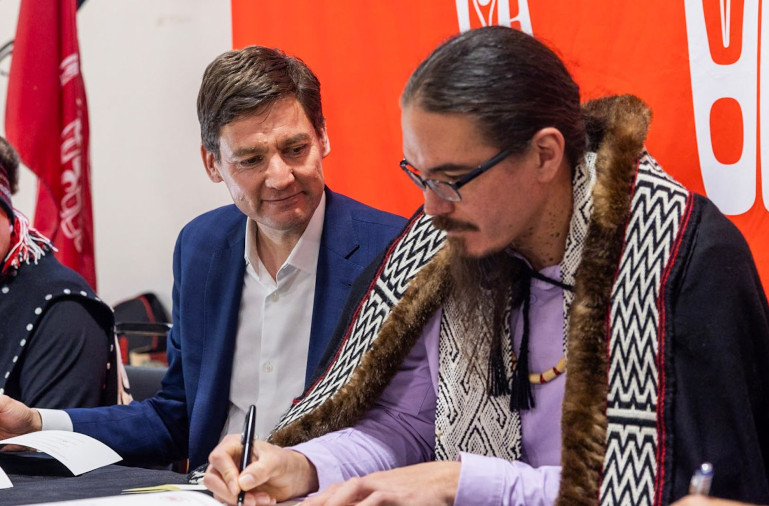
By affirming Indigenous land ownership, British Columbia and the Haida Nation are signaling a new era for Indigenous relations.
Twenty years ago, Geoff Plant, the then attorney general of British Columbia, made an offer to the Haida Nation. Many West Coast First Nations, including the Haida, had never signed treaties with the Canadian government ceding their traditional lands or resources, and Plant was trying to revive the faltering process of treaty making. He wanted to smooth over relations with Indigenous peoples, but he also wanted to help the province extract more resources from Indigenous lands. To entice the Haida—a nation known throughout Canada for its political savviness and resolve—he had what he thought was a bold bargaining chip.
Like many other officials, Plant viewed the BC government as the clear landlord of provincial lands, including those of the Haida Gwaii archipelago—10,000 square kilometers of forested islands located roughly 650 kilometers northwest of Vancouver, British Columbia, and the Haida’s home for at least the past 13,000 years.
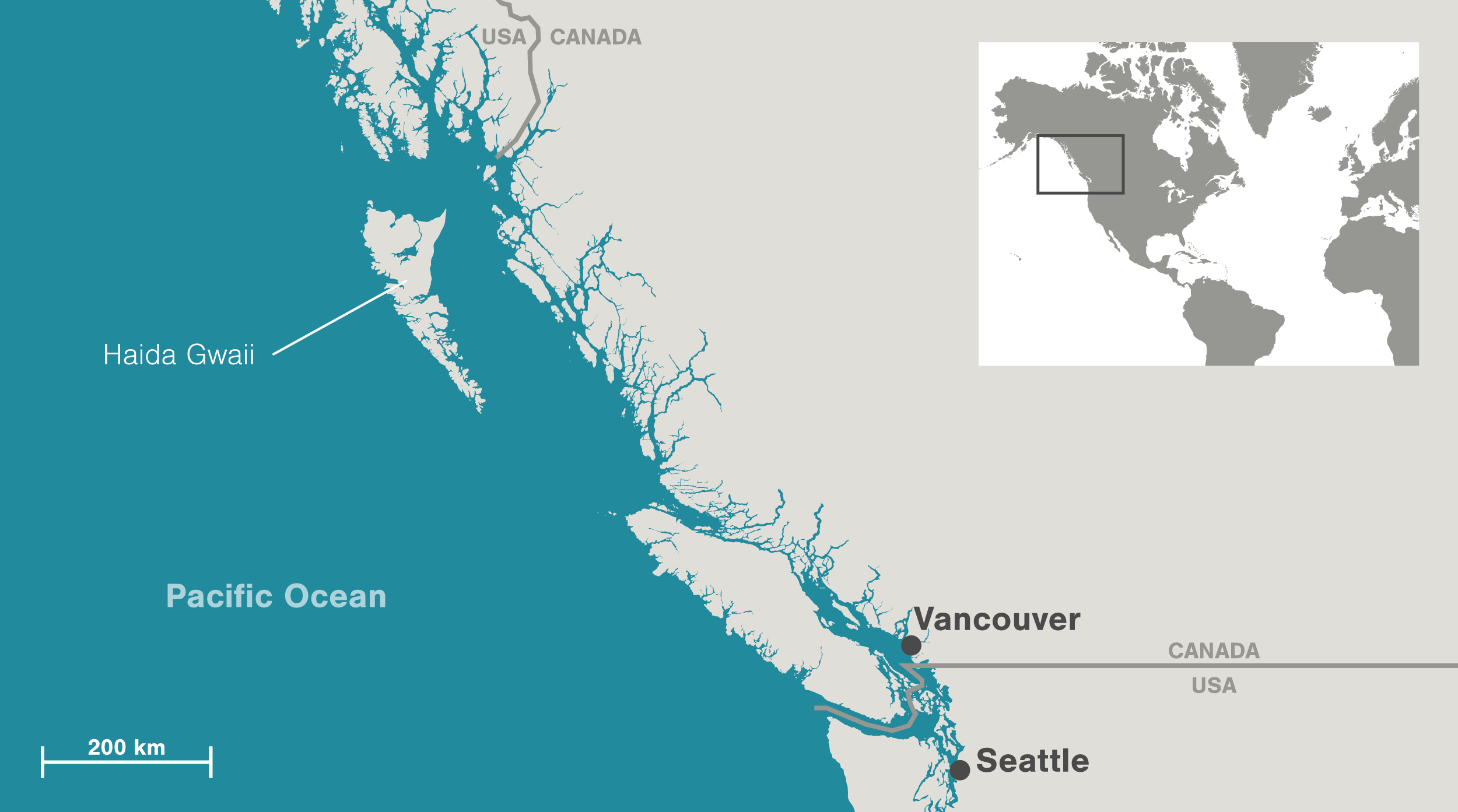
Haida Gwaii features 10,000 square kilometers of forested islands that the Haida Nation has been stewarding for at least 13,000 years. In addition to its 200-plus islands, the nation considers the airspace, seabed, and marine areas of Haida Gwaii part of its Indigenous territory. Map by Mark Garrison
So here was Plant’s pitch: the BC government would give the Haida control of 20 percent of their lands, but that would require the nation dropping a title case it had recently filed with the BC Supreme Court. Title refers to the inherent right to own and manage Indigenous territories based on traditional use and occupation. The Haida maintained that their territory included all of the land area in the archipelago, as well as the surrounding airspace, seabed, and marine waters.
The Haida saw Plant’s offer to the door.
“Why would we give up 80 percent of our land to get 20?” said Gidansda (Guujaaw), the then president of the Council of the Haida Nation, to media at the time. “This case is about respect for the Earth and each other. It is about culture, and it is about life.”
The Haida’s steadfastness paid off. Although Haida leaders have kept a potential court case in their back pocket all these years for leverage, they ultimately haven’t needed it. In April 2024, the Haida Nation and the province of British Columbia announced the Gaayhllxid/Gíihlagalgang “Rising Tide” Haida Title Lands Agreement. In it, the BC government formally recognizes Haida ownership of all the lands of Haida Gwaii. This is the first time in Canadian history that the colonial government has recognized Indigenous title across an entire terrestrial territory, and it’s the first time this kind of recognition has occurred outside of the courts. Experts say it marks a new path toward Indigenous reconciliation.
“It’s groundbreaking, really,” says John Borrows, a member of the Chippewas of Nawash First Nation and an expert in Indigenous law at the University of Toronto in Ontario. Although Indigenous title is widely considered an inherent right that doesn’t need to be granted by an external government or court, Borrows says, First Nations struggle to enforce it without legal backing. And so far, only two courts in Canada have recognized Indigenous title.
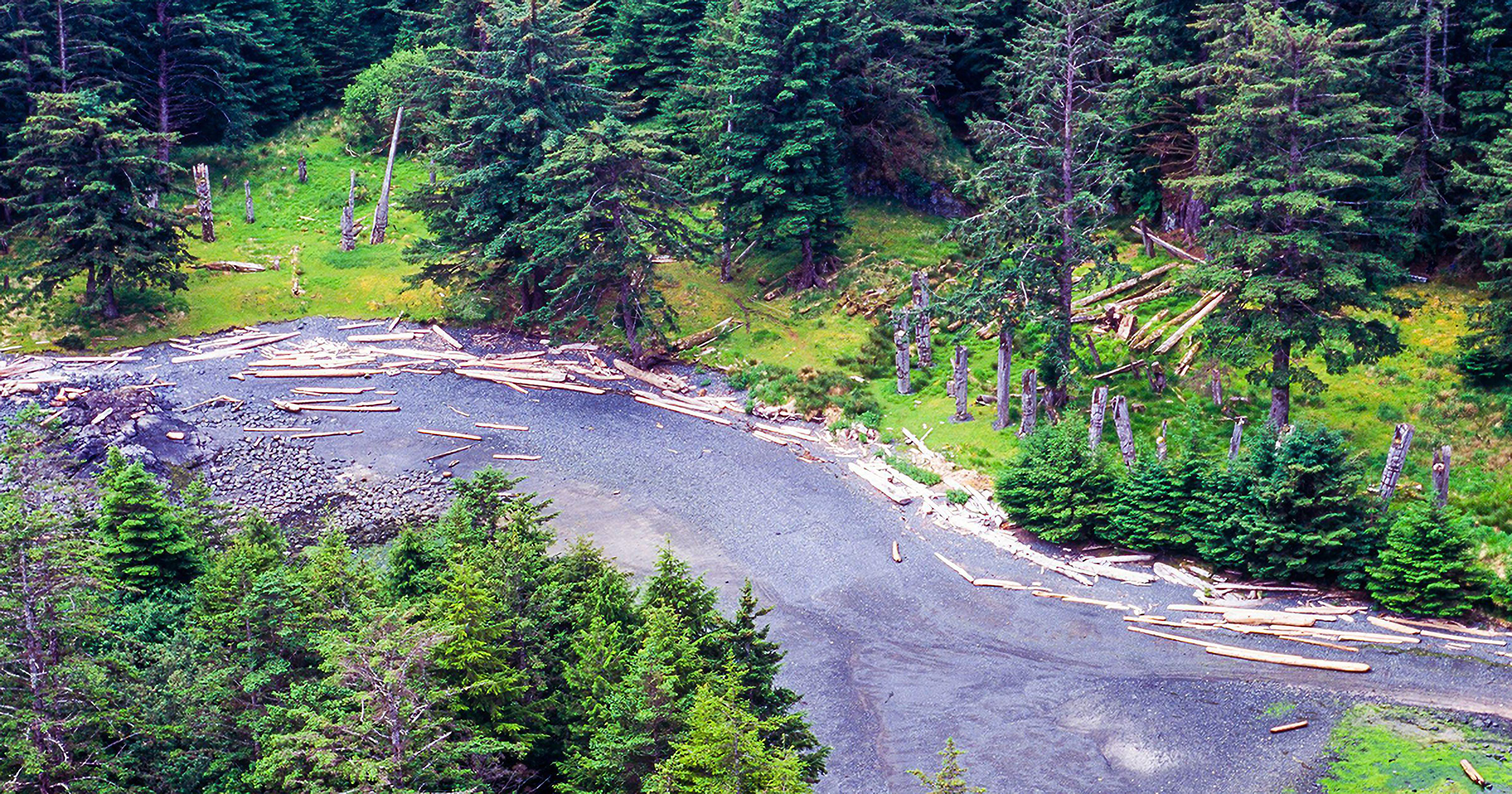
In 2014, the Supreme Court of Canada upheld title for the Tŝilhqot’in Nation in the interior of British Columbia, and just last week, in mid-April 2024, the BC Supreme Court affirmed it for the coastal Nuchatlaht First Nation. However, neither ruling recognizes title across an entire traditional territory, and since the 1970s, Canadian courts have urged federal and provincial governments to resolve such differences through negotiation. Now, with the United Nations Declaration on the Rights of Indigenous Peoples and growing public support on their side, the Haida and the province have finally done just that.
Gaagwiis (Jason Alsop), president of the Council of the Haida Nation, says the agreement ends a dark chapter in his nation’s history with the provincial government and provides a fair starting point for real reconciliation.
“What it signifies,” says Gaagwiis, “is a new foundation based on Yah’guudang, or respect, of recognizing this inherent title that preexisted [European contact] and will continue to exist as the basis going forward. And, essentially, the province kind of ceding their claim to this land.”
The new agreement will soon be enshrined into BC law, naming the Haida as the rightful owners of all 200-plus islands of Haida Gwaii, which they have been stewarding for millennia. After a two-year transition period, the Haida Nation will manage the 98 percent of its archipelago that was formerly considered Crown land, including protected areas and other forested lands. Having more of a say over the logging industry—which has clear-cut over two-thirds of the islands’ old-growth forest since 1950—has been a focus of the Haida’s title fight since the very beginning. The agreement won’t affect private property or municipal and provincial services, from highways to hospitals, which will continue to be regulated by the province.
“The idea that each legal system is recognizing the other one is a turning point,” Borrows says. “It’s also radically democratic and participatory.” This marks a new kind of relationship, which can draw on the best of Haida and Western influences, he adds. And unlike a treaty or court decision, which are more set in stone, this approach requires ongoing negotiation that can adapt and evolve with the times.
“It can keep people at the table, learning and working together with one another and trying to find that path to mutuality,” Borrows says.
The federal government of Canada is notably absent from the agreement for now. Both the province and the Haida Nation say their federal partners were delayed by procedural constraints but plan to sign on eventually. (The Feds were part of two other agreements—a reconciliation framework and a recognition of Haida governance—that led up to this title recognition.)
Gaagwiis says the Haida are also still negotiating with Canada over their rights to control the waters surrounding Haida Gwaii, which fall under federal government jurisdiction. These waters—teeming with shellfish, herring, sea cucumbers, five types of salmon, and more than 20 species of whales, dolphins, and porpoises—are not included in the land agreement but are paramount to the coastal First Nation and are a key part of its overall title declaration.
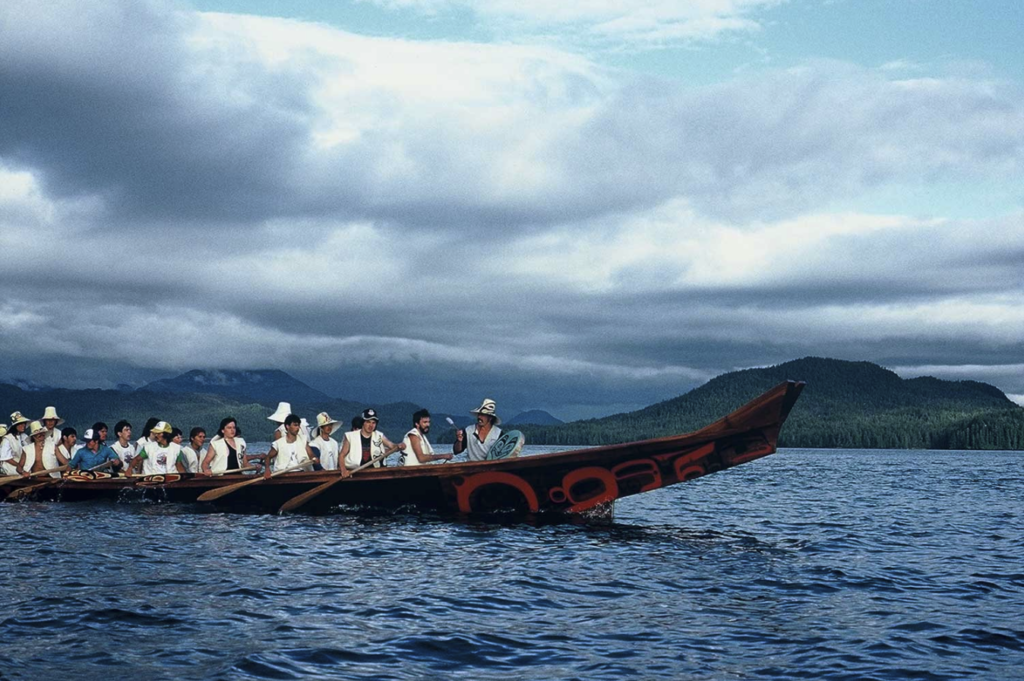
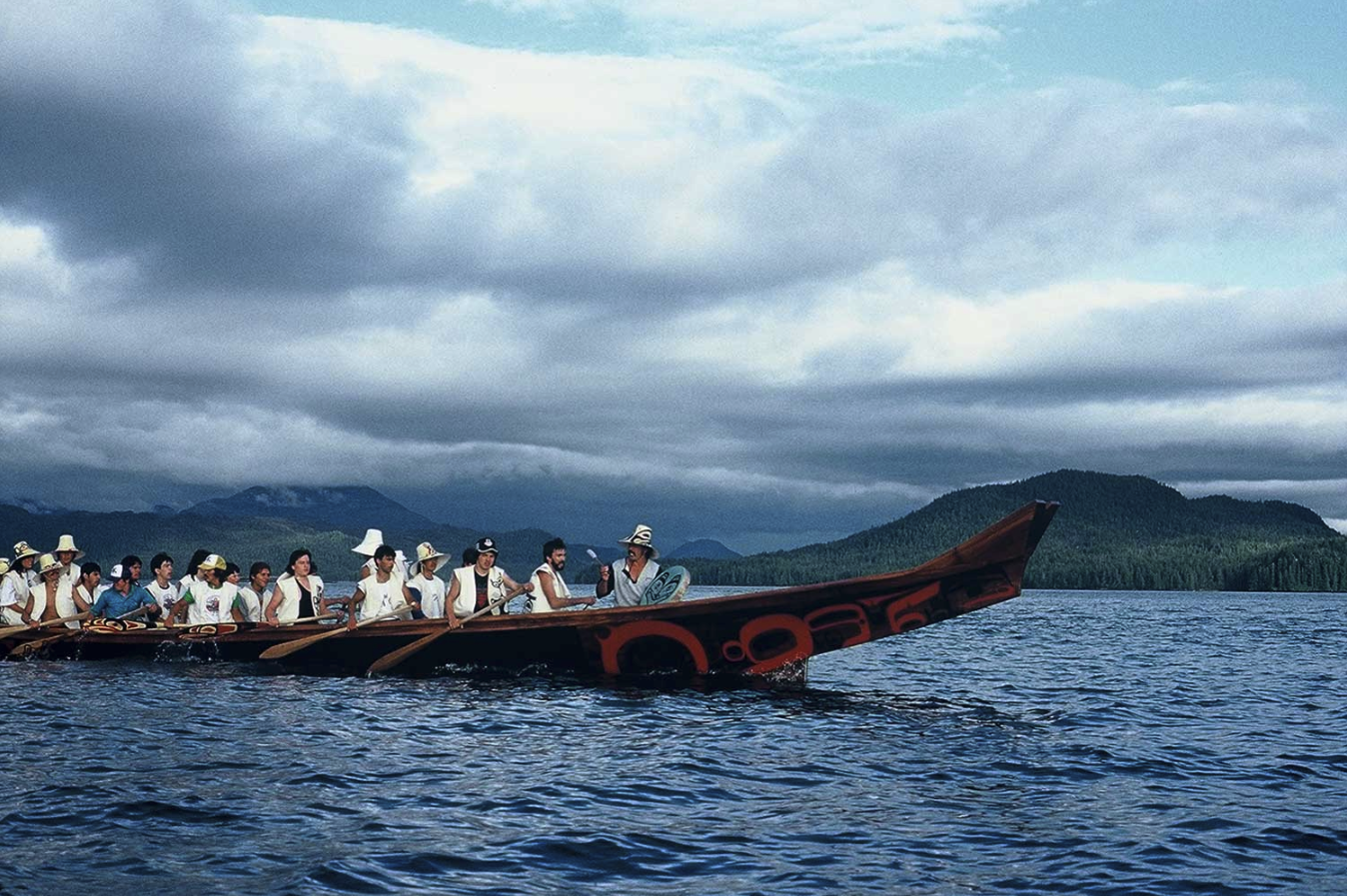
If marine areas or any other outstanding issues, such as financial compensation for past damages, can’t be sorted out through negotiation, the courts are still a fallback. The Haida Nation’s 20-year-old title claim, which hasn’t been judged in court, could still be heard as early as 2026.
While Indigenous people in Canada and abroad are hailing this land title agreement as inspiring and precedent setting, Murray Rankin, British Columbia’s minister of Indigenous relations, says the Haida’s unique circumstances made the process more successful.
“Haida Gwaii is not downtown Vancouver,” Rankin says. It’s a remote territory where the provincial government controlled the vast majority of the land, which is mainly protected and unprotected forest, as opposed to an urban environment comprised mostly of private properties. The population of Haida Gwaii is 45 percent Haida. The Council of the Haida Nation, which represents the Haida people, has a 20-year-old constitution, agreements with every local municipality, and widespread support from non-Indigenous residents. And they’ve been on better terms with the provincial government since 2009, when they hashed out the Kunst’aa guu-Kunst’aayah Reconciliation Protocol (which translates to “the beginning”).
Of course, they also have a strong historical claim to the archipelago, complete with extensive archaeological evidence. And, unlike some other Indigenous communities whose territories overlap, the Haida Nation doesn’t have to contend with competing land claims. A 2002 decision from the BC Court of Appeal on a forestry lawsuit called these facts “inescapable.”
All of this has created ideal conditions for negotiation that may elude other Indigenous communities, such as Cowichan Nation on the south coast of British Columbia, which is currently fighting the province in court over its own title claim. The province says it prefers negotiation, however. That’s in part because court rulings are not only costly but often opaque, Rankin says. “I hope [the Haida agreement] is a step toward other kinds of positive resolutions,” he adds.
Perhaps unexpectedly, the provincial government’s marked shift is a welcome one to Geoff Plant, the former attorney general who once offered the Haida 20 percent of their land. Plant now works for a Vancouver-based law firm and spends a lot of time in meeting rooms trying to convince business people of the benefits of acknowledging Indigenous title; he says doing so breeds better engagement, harmony, and certainty. And he now recognizes how flawed the government’s former approach was, which he compares to building and defending a wall between the province—which he once referred to as the landlord—and First Nations. “It’s clearer in hindsight what’s wrong with that,” Plant says.
Indigenous leaders in Canada and around the world have helped society reckon with the injustices Indigenous communities have faced, and power, public opinion, and legal precedent have all shifted in response. “We should see that, collectively, as an opportunity to build a better society,” Plant says. “Let’s figure out how to work constructively within that world rather than pretend that it doesn’t exist.”
The provincial wall may not have fully crumbled, but the tide is rising against it. And at least on Haida Gwaii, a colonial government is no longer lord of the land.



Comments
We changed commenting systems on September 10, 2026 as part of a site-wide functionality and security upgrade. Your past comments have not disappeared, and you can still log in with your old Disqus account credentials if you wish. Contact us with any questions.