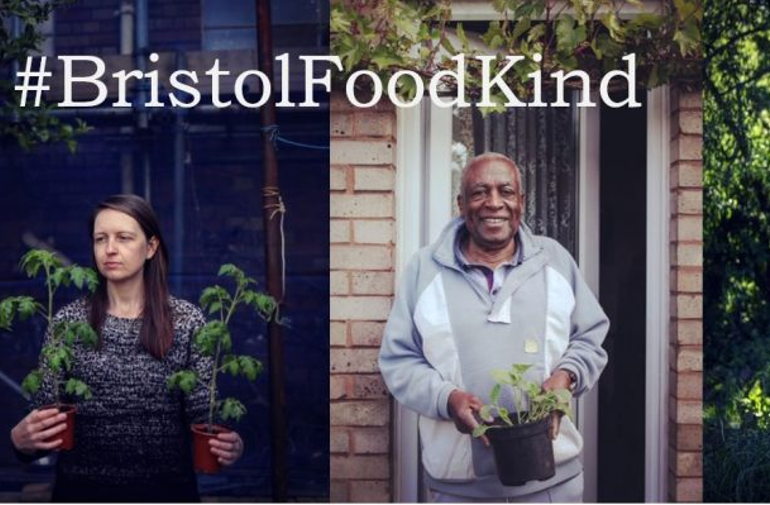
We’re producing a series of films to capture the incredible enthusiasm of people across Bristol for good food. From growing at home to cooking from scratch, stopping food waste to supporting local producers, Bristolians are finding new ways to make our local food system stronger than ever. We’ll publish the films here as they’re made – watch them and share them using #BristolFoodKind to help inspire others across the city.
Growing Food – share the film with friends using #BristolFoodKind
The most powerful way to communicate an issue is to focus on the voices of the people most effected. Create films that allow the community to tell their own story, connect the viewer to the people their culture and their environment. It is only then that we are able to understand some of these complex issues that now saturate mainstream and social media. We need to begin to focus more on the cause than the symptom, the solution and not the problem.
The source project is about using media to engage people in some of the many issues we need to embrace. Story telling from people who are driven by nothing more than a compassion moves us away from the traditional confrontational format, which does little more than foster an overwhelming sense of helplessness.
Tags: Building resilient food and farming systems, food growing, gardening, local food systems
Related Articles
'SELECT SQL_CALC_FOUND_ROWS wp_posts.ID
FROM wp_posts LEFT JOIN wp_term_relationships ON (wp_posts.ID = wp_term_relationships.object_id)
WHERE 1=1 AND wp_posts.ID NOT IN (3481796) AND (
wp_term_relationships.term_taxonomy_id IN (4,8988,8992,8997)
) AND wp_posts.post_type = \'post\' AND ((wp_posts.post_status = \'publish\'))
GROUP BY wp_posts.ID
ORDER BY wp_posts.post_date DESC
LIMIT 0, 3'
Two ways we can honor unions at this time of trial are to ask others to join union picket lines and to learn from their innovations and successes for whatever campaigns we are committed to today.
September 7, 2026
Comments
Welcome to the new Resillience commenting system!
We have moved from the former Disqus commenting system to a new system as of September 10, 2026.
Your past comments have not disappeared.
You can log in with your old Disqus credentials, as well as Gmail credentials or a Resilience account (formerly Resilience+). Login with Facebook and other credentials is coming soon.
We made this change because of privacy concerns regarding Disqus. It's also part of a set of changes to bring more services to the Resilience community under a single login: commenting, (coming September 2026), and online courses (coming 2027). Unfortunately, your old Disqus comments may not reliably link to your account in this new system. Please contact us if you have any questions or concerns.





Comments
Welcome to the new Resillience commenting system!
We have moved from the former Disqus commenting system to a new system as of September 10, 2026.
We made this change because of privacy concerns regarding Disqus. It's also part of a set of changes to bring more services to the Resilience community under a single login: commenting, (coming September 2026), and online courses (coming 2027). Unfortunately, your old Disqus comments may not reliably link to your account in this new system. Please contact us if you have any questions or concerns.