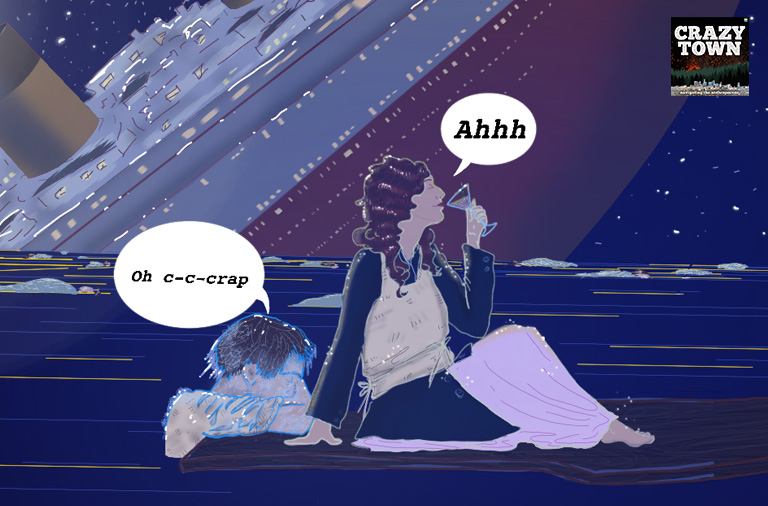
As we continue heading toward planetary disaster, like the Titanic steaming toward its rendezvous with a big freakin’ iceberg, we might want to figure out how to prepare and manage our lifeboats. In environmentalism’s seedy past, a famous ecologist used the metaphor of lifeboats getting swamped to argue for a “screw the poor and non-whites” strategy to deal with the limits to growth. In search of better ideas and better leadership, Asher, Rob, and Jason discuss how we can reinvent lifeboat ethics and find prosocial ways to manage humanity’s shared crises. Bonus: find out what to do if you should find that the soles of your feet have fallen off.
Asher became the Executive Director of Post Carbon Institute in October 2008, after having served as the manager of our former Relocalization Network program. He’s worked in the nonprofit sector since 1996 in various capacities. Prior to joining Post Carbon Institute, Asher founded Climate Changers, an organization that inspires people to reduce their impact on the climate by focusing on simple and achievable actions anyone can take.
Tags: building community resilience, Crazy Town
Related Articles
'SELECT SQL_CALC_FOUND_ROWS wp_posts.ID
FROM wp_posts LEFT JOIN wp_term_relationships ON (wp_posts.ID = wp_term_relationships.object_id)
WHERE 1=1 AND wp_posts.ID NOT IN (3481266) AND (
wp_term_relationships.term_taxonomy_id IN (5,9001,46432,47210,47212,47214,47441,47503,47544)
) AND wp_posts.post_type = \'post\' AND ((wp_posts.post_status = \'publish\'))
GROUP BY wp_posts.ID
ORDER BY wp_posts.post_date DESC
LIMIT 0, 3'
By Wolfgang Knorr, Climate Uncensored
From climate collapse to permanent war, our nervous systems are stuck between numbness and panic. A climate scientist argues that surviving the polycrisis means learning to move deliberately between neural states and building smaller, more grounded movements that protect our ability to care without breaking.
April 20, 2026
By Nate Hagens, The Great Simplification
From the archive | Having spent twenty years articulating the more-than-human predicament, Nate Hagens shares a timely first-pass framework for action and response organized around what to do now, which could be applied in various contexts and at multiple scales.
April 17, 2026
By
To find our way in our climate journey, we don’t need more information, we need orientation. Join us for a conversation with Katharine Wilkinson about Climate Wayfinding on May 28, 2026.
April 16, 2026