Post Carbon Fellow Sandra Postel recently gave a talk on ‘Will We have Enough Water? Adapting to a Warming, Water-Stressed World’ for the Moos Family Speaker Series on Water Resources. Watch the video here, Sandra’s talk begins at 4:20.

Will We have Enough Water? Adapting to a Warming, Water-Stressed World
By Sandra Postel, originally published by University of Minnesota, College of Biological Sciences
February 18, 2013
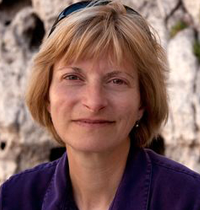
Sandra Postel
Sandra Postel directs the independent Global Water Policy Project, and lectures, writes and consults on global water issues. In 2010 she was appointed Freshwater Fellow of the National Geographic Society, where she serves as lead water expert for the Society’s freshwater efforts. Sandra is co-creator of Change the Course, the national freshwater conservation and restoration campaign being pioneered by National Geographic and its partners.
During 2000-2008, Sandra was visiting senior lecturer in Environmental Studies at Mount Holyoke College, and late in that term directed the college’s Center for the Environment. From 1988 until 1994, she was vice president for research at the Worldwatch Institute. Sandra is a Pew Scholar in Conservation and the Environment, and in 2002 was named one of the Scientific American 50, an award recognizing contributions to science and technology.
In 1992 Postel authored Last Oasis: Facing Water Scarcity, which now appears in eight languages and was the basis for a PBS documentary that aired in 1997. She is also author of Pillar of Sand: Can the Irrigation Miracle Last? (1999) and co-author of Rivers for Life: Managing Water for People and Nature (2003). Her article “Troubled Waters” was selected for inclusion in the 2001 edition of Best American Science and Nature Writing. Sandra has authored well over 100 articles for popular, scholarly, and news publications, including Science, Scientific American, Foreign Policy, The New York Times, and The Washington Post.
Tags: agriculture, small-scale irrigation, Waste, Water Supplies
Related Articles
Water and Security in the Middle East: Lessons from the Iranian Crisis
By El Habib Ben Amara, Resilience.org
Water, through its progressive scarcity, is redrawing the map of vulnerabilities and powers. Countries that make its management a factor of internal cohesion and regional cooperation will be better equipped for the decades to come.
March 5, 2026
Ravmed: Where the Mountains Guard the Seeds of Life
By Umed Qurbonbekov, Home Planet Fund
Ravmed’s story is not just about wheat. It is about people who refused to let their heritage disappear, who safeguarded what their ancestors handed down, and who continue—season by season—to plant a future rooted firmly in the past.
March 5, 2026
NOW! IT’S TIME
By Zia Gallina, The Subversive Farmer
There are simpler, healthier paths we can take. With instability in more than our climate systems, it is time to examine where we live, where we draw the line.
March 2, 2026