


Click on the headline (link) for the full text.
Many more articles are available through the Energy Bulletin homepage.
America Beyond Capitalism: Is It Possible?
Gar Alperovitz, Dollars and Sense
The following article is adapted from “America Beyond Capitalism: Reclaiming Our Wealth, Our Liberty and Our Democracy,” a new paperback edition of which will be published this month by The Democracy Collaborative and Dollars & Sense.
“Black Monday,” September 19, 1977, was the day 34 years ago when the shuttering of the Youngstown Sheet and Tube steel mill threw 5,000 steelworkers onto the streets of their decaying Midwestern hometown. No local, state or federal programs offered significant help. Steelworkers called training programs “funeral insurance”: they led nowhere since there were no other jobs available. Inspired by a young steelworker, an ecumenical religious coalition put forward a plan for community-worker ownership of the giant mill. The plan captured widespread media attention, the support of numerous Democrats and Republicans (including the conservative governor of the state at the time), and an initial $200 million in loan guarantees from the Carter administration.
Corporate and other political maneuvering in the end undercut the Youngstown initiative. Nonetheless, the effort had ongoing impact, especially in Ohio, where the idea of worker-ownership became widespread in significant part as the result of publicity and educational efforts traceable to the Youngstown effort—and because of the depth of policy failures and the continuing pain of deindustrialization throughout the state. In the more than three decades since that effott, numerous employee-owned companies—inspired directly and indirectly by the effort to save the Youngstown mill—have been developed in Ohio. Individual lives were also changed, among them that of the late John Logue, a professor at Kent State University who established the Ohio Employee Ownership Center, an organization that provides technical and other assistance to help firms across the state become worker-owned.
There has also been an evolution in the position of the United Steelworkers union. In the late 1970s the union saw worker-ownership as a threat to organizing, and it opposed efforts by local steelworkers to explore employee-owned institution-building in cities like Youngstown. Over the decades, however, the union changed its position as its leaders saw the need to supplement traditional forms of labor organizing with other strategies. The union has now become a strong advocate of worker ownership, and is actively working to develop new models based upon the Mondragón Cooperative Corporation in the Basque country of Spain. This highly successful grouping of worker-owned cooperatives employs 85,000 people in fields ranging from sophisticated medical technology and the production of appliances to large supermarkets and a credit union with over 21 billion euros in assets.
The developmental trajectory from Youngstown to today illustrates what might be called “forced institutional innovation”—a process that, once underway, also suggests further possibilities for larger-scale and more refined development both within Ohio and elsewhere—especially as many other parts of the nation now experience the massive job losses and community decay that hit Ohio and other rustbelt states three decades ago. Critically, all involve new ways to give concrete meaning to the idea of democratizing capital….
(Jan 3, 2012)
Change money, change the world
Seán Dagan Wood, Positive News
Positive Money, a not-for-profit research and campaign group, believes it has identified the core problem behind the ongoing economic crisis, as well as the solution. The issue, the group says, is the way in which money is created.
The Bank Charter Act 1844 made it illegal for anyone but the Bank of England to print and issue notes in England and Wales. However, following deregulations, the advance of computer technology and the law not being updated, it became possible for banks to create digital money – numbers in an account – in the form of loans, overdrafts and other credit.
According to Positive Money, by creating a digital loan, at the same time the bank is creating a deposit in the borrower’s account, which means it is creating money that did not previously exist.
Josh Ryan-Collins, senior researcher at nef (the New Economics Foundation), said it is a myth that banks are just intermediaries. “In the UK there is no compulsory deposits reserve ratio,” he said, meaning that banks do not need savers’ money held in reserve in order to lend money to borrowers.
Positive Money reports that of all the money in existence in the UK, 97% is now digital with only 3% being cash currency.
Established in 2010, the group is calling for the right to ‘print’ digital money to be allocated exclusively to the Bank of England. Positive Money has created draft legislation for this purpose, which it says is “watertight and substantial” and if put in place would ensure the banking system works in the best interests of society…
(Dec 2, 2011)
Social enterprise stock market receives funding
London loves business
The world’s first stock exchange for social enterprises will be set up in London with the help of money raised from dormant bank accounts, the government has announced.
The Social Stock Exchange (SSE) will be established in the capital with the help of £850,000 from the dormant accounts and it should help improve access to capital for social entrepreneurs.
Money from the accounts will be used to create a social stock exchange, a securities exchange and a secondary business – the Early Stage Investment Exchange – to generate a pool of equity-investment-ready social enterprises for its first sale of stock.
SSE believes the money will be vital in creating a thriving social investment marketplace. A formal regulated investment exchange for the social sector will help offer investment to social enterprises wishing to grow, it believes.
The funds for SSE are part of the £3.1m raised from dormant bank accounts for Big Society projects across the country. Other schemes will help the long-term unemployment start their own businesses, help vulnerable young people into work and fund a community energy project…
(Dec 28, 2011)
‘Just-in-time’ business models put UK at greater risk in event of disasters, warns thinktank
Fiona Harvey, the Guardian
The UK could stand “at most a week” of disruption if a natural or man-made disaster struck before severe problems, economic and social, that would bring chaos to the country, according to a new report from the international affairs thinktank Chatham House.
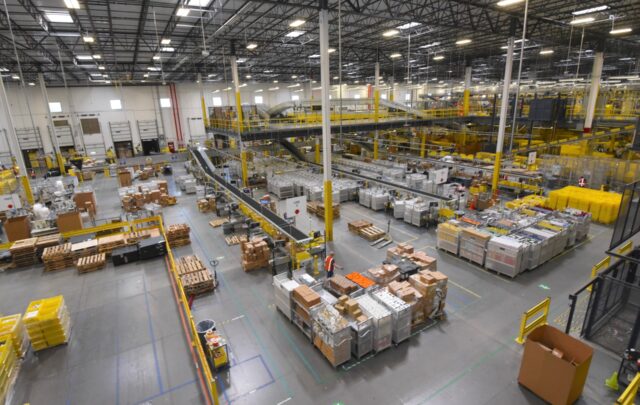
The authors blame a complacent reliance on the globalised economy and the widespread adoption of “just-in-time” business models that stress lean, ultra-efficient operations with little slack built in for any unforeseen circumstances or stock held in reserve.
With public services and businesses being run as if constantly in crisis mode, even in normal circumstances, there is little flexibility when a real crisis strikes.
The problem is compounded as national and local governments are underprepared for disasters, despite a growing range of intensifying threats and recent experiences around the world, from the Icelandic ash cloud to the nuclear crisis in Japan.
“Slow-motion” crises such as water shortages, resource scarcity and the impact of climate change also present a range of new difficulties that will put added strain on the public and private sectors, they say.
Beyond a one-week disruption, “costs can escalate rapidly once transport networks (or major production centres) are disrupted for more than a few days”, according to the report, entitled “Preparing for high-impact, low-probability events”, from the Royal Institute of International Affairs. As the economic impact is felt, vital infrastructure, from food and water supplies to energy and communications network, could fall under threat, it says.
Bernice Lee, lead author of the report, said: “The frequency of high-impact, low-probability events in the last decade signals the emergence of a new ‘normal’. Apparent one-off high-profile crises such as 9/11, Hurricane Katrina, the Macondo oil spill and the Japanese earthquake and tsunami were all mega-disasters… marking the beginning of a crisis trend.”…
How We Got Here With the Economy and How to Get Out
Robert Freeman, Common Dreams
It’s easy to get fixated with small-bore issues on the economy, even if they don’t seem so small-bore at the time. Stimulus packages. Bailouts. Debt ceilings. Deficit commissions. Payroll tax-cut extensions. They seem like life and death issues while they’re being fought out.
But, in fact, they are distractions from the one real question that dominates all others, which is this: for whom should the economy be run? Should it be operated “to promote the general welfare” of 297 million people, the 99 percent? Or should it be run to benefit 3 million, the one percent?
Right now, the answer is that the economy is a machine, with the government as its operator, for transferring two hundred years of accumulated national wealth to those who are already the most wealthy, the one percent. And we should be clear about two things: this is a choice; and it’s working. The rich are getting much richer while everyone else is being stripped of their incomes, their assets, their retirement security, and all the elements of the social safety net enacted since the Great Depression.
Until we confront the fact that the collective impoverishment of the many for the selective enrichment of the few is a choice — the consequence of an explicit policy regime going back 30 years — nothing will change. But if we can muster the maturity to confront this fact, that we are here by choice, and find the courage to act on it, we might yet be able to save the country. If we do not, then we are surely lost.
To understand how we got here, we need to quickly review the economic history of the last sixty years. Then we can discuss what to do going forward.
At the end of World War II, the U.S. bestrode the world like a colossus. Its only industrial rival, Europe, had blown its brains out 30 years before, in World War I. And it did it again, in World War II, with Japan joining in. In the history of the world, there has never been such asymmetry in power between one country and all the rest.
It was U.S. capital that rebuilt its allies’ economies, through the Marshall Plan in Europe, and through military spending in Asia. U.S. factories boomed, to service not only its own vast and ravenous market, but those of all the rest of the world. All the equipment (and much of the food) to rebuild the industrial world came from America.
It was truly the Golden Age. There was enough wealth so that capital, labor, and government could all drink deeply from the seemingly inexhaustible spring of capitalism.
….The government should invest in the nation’s infrastructure which the American Society of Civil Engineers rates a “D”, down from “D+” only three years ago. This would employ potentially millions of now-unemployed workers, turning unemployment checks into tax payments to the Treasury. It would also bring the platform on which all the rest of the economy operates up to twenty-first century standards. Fortunately, the government can borrow long term at 2%, a fraction of the payback from such investments.
I’ve written elsewhere about a Manhattan Project-like investment in a green economy. Such an investment would revive employment, restore American competitiveness, help pay down the national debt, reduce our crippling dependency on middle east oil, and reduce carbon emissions into the environment. In all of these ways, it would be a win for virtually everybody in the economy, everybody in the nation, and for much of the planet.
I say “virtually” because it would not benefit those who have wrecked the economy and profited so mightily in the process: the money lenders, who would see less demand for borrowed money; the weapons makers, who would face a less hostile world; and the oil companies, whose crippling grip on the economy would be reduced. And we shouldn’t have any illusions about how hard these forces will fight to ensure that nothing changes. They will, and unless we fight back, well, nothing will change….



Comments
We changed commenting systems on September 10, 2026 as part of a site-wide functionality and security upgrade. Your past comments have not disappeared, and you can still log in with your old Disqus account credentials if you wish. Contact us with any questions.