

Resources are dwindling, including minerals, timber, water, and soils. Almost all ecosystems are being damaged, including the atmosphere, oceans, and forests. Species are being lost at an alarming rate. Seven of the nine major “planetary boundaries” impacts have now exceeded safe levels.
The World Wildlife Fund’s (WWF) “Footprint” measure shows that Australians today are using five to seven times the per capita amount of productive land that would be available to all in 2050.
Then there are the social and cultural effects. Inequality is rising, and social cohesion is decaying. There are rising rates of personal distress. According to the World Health Organization (WHO), depression is so widespread that it is now the leading cause of poor health worldwide. Faith in democracy is declining while people are turning to authoritarian and fascist rule.
But the factor I argue is more important than all of the above is the probable imminent collapse of the global financial system. Global debt has tripled over the past three decades, is much higher than before the global financial crisis, and is now generally regarded as unpayable.
If the global population grows to the projected 10 billion by 2050 and everyone becomes as rich as Australians are now (with a steady 3% annual growth rate), the world economy would be over 10 times its current size. But the current level is grossly unsustainable: the WWF estimates that, at present, 1.7 Earths would be needed to meet global resource demand sustainably.
These numbers show that we are far beyond sustainable levels of production and consumption. Many see these factors as inevitably leading us towards a catastrophic collapse of our current global economic and social systems. These threats cannot be eliminated unless there is a dramatic reduction in production and consumption, and the growth- and profit-driven global economic system is scrapped. And to do this, we need the Transition Towns movement.
The most important social movement in the world today is the Transition Towns movement. While this may be a bold claim, I believe they are the answer to the seriousness of the global “polycrisis.” In their current form, however, they can still be refined to better support the kind of contribution we need.
Thriving, highly self-sufficient communities, run by cooperative, conscientious, self-governing citizens living very frugally, should be the vision the Transition Towns movement illustrates and promotes as a global solution to the polycrisis. Yet this does not seem to be the movement’s central driving motivation. Is Preston, Brixton, or Stroud working to be such a model and to tell the world? If so, say so loudly.
The same criticism can be levelled at the Ecovillage movement. Even some of its members worry that it gives the impression that it is only about providing a pleasant escape for just a small few.
Several further problems need to be addressed. First, the movement is explicitly and deliberately reformist rather than revolutionary. It advocates practices and structures that can be readily incorporated into a society still organised around market forces, profit, growth, and capitalism. For example, encouraging “anchor institutions” such as hospitals and councils to purchase locally merely relocates jobs from other places.
Second, the movement does not prioritise achieving sufficiently dramatic reductions in resource throughput. Such reductions are impossible without major systemic and cultural shifts. Although reduction is acknowledged, it is not treated as the central objective.
In my view, the movement also falls short when it comes to taking collective control of a town’s situation, day‑to‑day functioning, and long‑term fate. Most initiatives spring from individual enthusiasts or small groups. What’s largely missing is a sense that the town as a whole is deciding what it wants to become, and then acting on that vision, instead of leaving its future to market forces and the profit motive. That doesn’t have to mean banishing markets or profit altogether, but it does mean putting them in their place.
Imagine something different: town‑wide and neighbourhood assemblies meeting regularly, deciding what needs to be done, and then organising through committees, rosters, cooperatives, and working bees. Are there homeless or unemployed people in the area? The obvious next question should be: what are we going to do, together, to end this? In Rojava, Kurdish communities already operate this way at the neighbourhood level, taking collective responsibility for education, security, policing, and other activities.
Another major fault line is politics, or rather, the effort to avoid it. The left has long criticised the Transition Towns movement for its deliberate refusal to be openly political, in its language or, more importantly, in its practice. For many on the left, this is a fatal misstep because they see the central task as confronting and ultimately overcoming capitalism itself.
From that perspective, the movement is not just strategically naïve; it actually helps defuse anger at the existing system, channelling energy into what critics see as modest, system‑friendly reforms. Ecovillage materials and many of the projects they celebrate rarely mention capitalism, let alone the need to move beyond it. In fact, most of the initiatives described could comfortably exist within the current economic order.
Critics of the movement have a point, at least for now. In its current form, much of the Transition Towns effort can seem timid, comfortable operating within the status quo rather than challenging it. The movement could make a far bolder claim: that it is working towards a new kind of settlement, one that is essential if we are serious about tackling the global crises we face.
The alternative, simpler way of living can only be built and run by “ordinary” people at the grassroots, as they gradually transform their towns and suburbs into genuine Transition Towns. The success or failure of the degrowth movement will depend on the mentality, values, ideas, and dispositions of conscientious and responsible citizens, and on the kinds of sustainable, simpler communities they can create together. This cannot be done from the top down. That is, by the centralised state. This is why it is a mistake to focus on socialist goals and strategy at this stage. We can only achieve the required policies when a majority of people adopt the degrowth perspective. We are at best decades away from that. The immediate task is to work towards such a culture.
In practice, that means long, patient work, helping people see the appeal and necessity of the degrowth perspective. Here, the Transition Towns and ecovillage movements are uniquely placed. They can “prefigure” the alternative by putting pieces of it into practice now, and, just as importantly, by making the case that this is the only path to a sustainable and just future.
There is only one social form capable of solving the polycrisis.
A sustainable and just society that everyone can share in and that does not generate the global problems we face today would resemble communities where:
- Most people live in small, highly self-sufficient local communities, largely independent of national or global economies, devoting local resources to meeting local needs.
- Mostly, local economies are not driven by profit, market forces, or growth, but focus on meeting the needs, rights, justice, welfare, and ecological sustainability, and on providing for all. For instance, this would mean eliminating unemployment and ensuring that everyone has a valued livelihood. Local economies would greatly reduce the need for transport, heavy industry, global trade networks, large cities, sewer systems, big dams, power stations, and extensive government and bureaucracy. Overall, we would rely on much simpler systems, infrastructures, and procedures.
- People in small communities take cooperative and participatory control over their local economies and development through voluntary committees, working bees, and town meetings.
- Caring, cohesive communities prioritise the welfare of their ecological and social systems and the quality of life rather than accumulating wealth.
- There would be a much diminished role for the centralised state, (a few small) cities, and more socially useful high-tech and medical research than there is now, if a few of the resources now wasted on unnecessary production were reallocated to them.
- There is a willingness to live far more materially simply than at present. Life goals would include enjoying community living, a relaxed pace, security, a valued livelihood, many skilled craftspeople eager to teach, and ample time for leisure and personal development. Working for money might take only two days a week.
The way such a society can dramatically reduce resource use is shown by our study comparing egg supply through the normal supermarket path with backyard and cooperative sources. The dollar and energy costs of the former were found to be 100 to 200 times those of the latter. In addition, local recycling of food nutrients into gardens eliminated the need for extensive transport, fertilisers, and sewers, while producing methane for cooking.



Comments
We changed commenting systems on September 10, 2026 as part of a site-wide functionality and security upgrade. Your past comments have not disappeared, and you can still log in with your old Disqus account credentials if you wish. Contact us with any questions.
Interesting where you went with that: Transition Towns have inadequate analysis – but here's what could happen next. I didn't quite see how we get to those model towns, which sound absolutely beautiful.
Eight years ago I published an article on this website entitled "A world made by hand" https://www.resilience.org/stories/2017-10-26/world-made-hand-2/ It described how my life was changing as I pursued a low carbon, frugal lifestyle anticipating what it would mean to live without fossil fuels.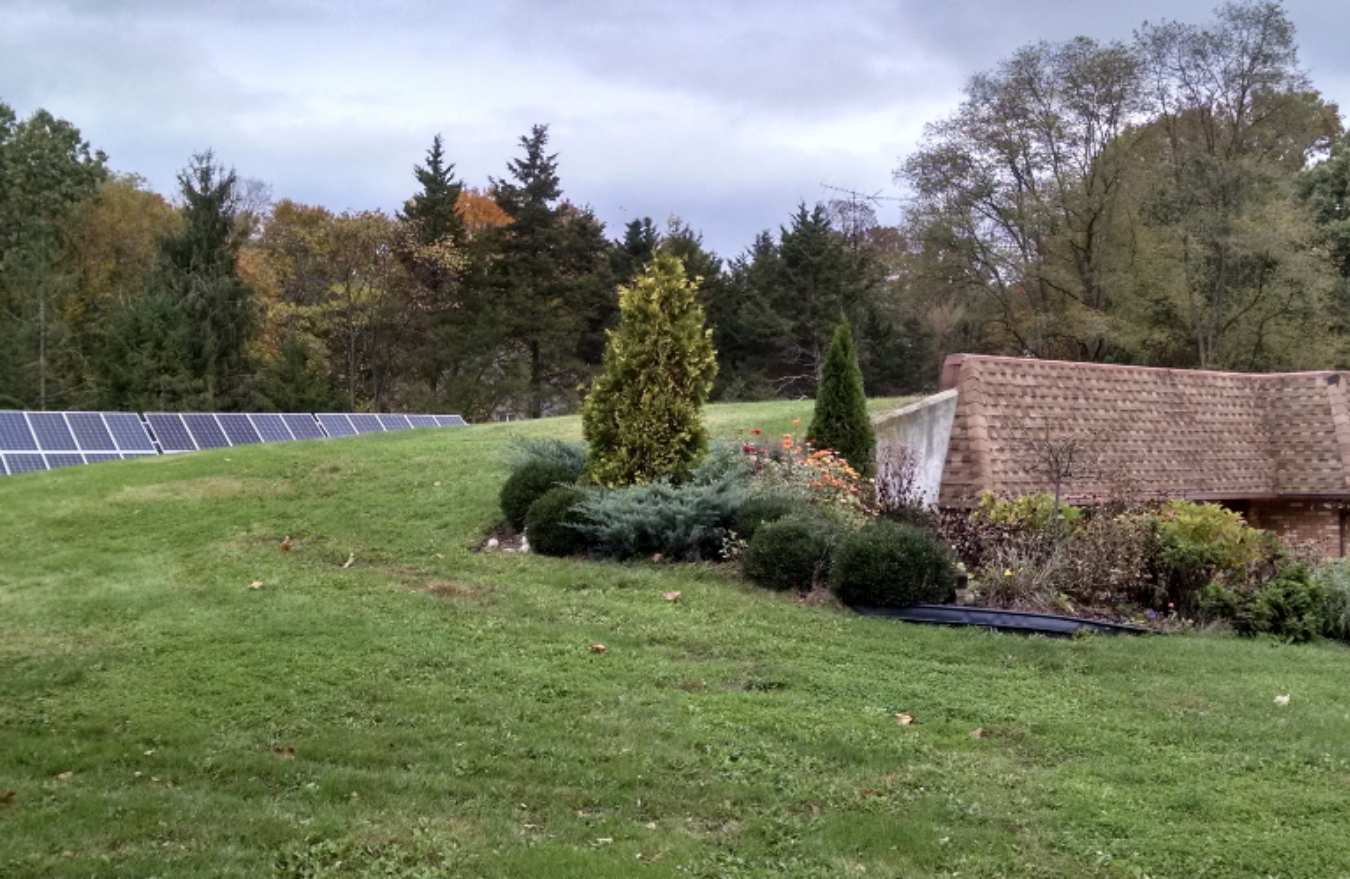 We live in an all electric, earth-bermed home powered by solar panels. We drive EVs also powered with solar panels. I see the polycrisis we face; the weather disasters we can't recover from, the geopolitics that divide us, nations using the limited energy and resources we have to build war machines for destruction as opposed to renewables. Our interconnected, global supply chains are breaking down. Resources for data centers are driving up prices for electricity and water. Wages no longer cover basic living expenses for the majority of people living in the developed world (America and Europe). What does this mean for people living in failed states?
One person commented that “when ‘stuff’ was made by hand, the world population was around 1 billion. So let’s examine the world of 300 years ago, when if you needed a pot, someone had to make it, if you needed flour, someone had to mill it. Idyllic? Blinkered is a more accurate description.” So I wrote a second article describing my life in more detail as we transitioned away from fossil fuels and towards renewable energy. https://www.resilience.org/stories/2017-10-30/a-response-to-a-world-made-by-hand/
It is becoming increasingly difficult for others to follow the same path as my family did. Prices were lower in 2004 when we began our journey. The problem was that too few families followed our example. There has been a growing attitude that social equality programs were the path forward as opposed to energy transition plans. We told people that if everyone didn't share in the solutions we were failing. There has never been an energy transition in which everyone shared in it at the beginning. I was telling people to reduce energy consumption, make your homes more energy efficient, and grow food in your backyard. The rich didn't want to be bothered with such sacrifice and the poor wanted the rich to pay for their social welfare programs.
So now we have waited too long, our situation has grown more critical, and nothing can prevent people from living with the consequences of the world we have made.
It seems like you are conveniently leaving out the fact that Rojava no longer exists. This failure points to a central issue faced by revolutionary ecological movements. Rojava has been subsumed by opportunistic Islamic fundamentalism in Syria. This opportunism is characteristic of the current iteration of human civilisation and it thrives in the game theoretic conditions imposed by the logic of extractivist short termism. The opportunistic tendencies in Syria were able to completely destroy Rojava militarily and politically since they were more willing to utilise short term tactics which may have unfortunate consequences.
This pattern has repeated throughout human history (Colonisation if the Americas and Australia being a prime example) and as a result self-reinforces the exact short termist logic which undermines humabity and the biosheperes long term interests.