


Click on the headline (link) for the full text.
Many more articles are available through the Energy Bulletin homepage
Worldchanging Interview: Bill McKibben
Sarah Kuck, Worldchanging
World renowned activist Bill McKibben on moral mathematics, motivation and the future of the climate change movement
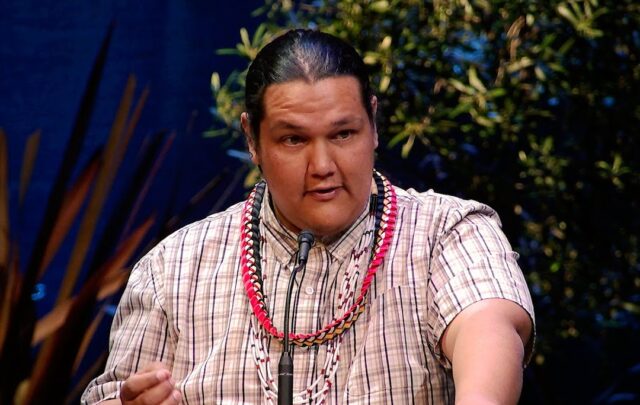
Bill McKibben has been writing and teaching about the environment and climate change for more than 20 years. During that time, he has seen the environmental movement evolve and change to include numerous other issues, from social justice to health care. I recently met up with McKibben to discuss the state of the movement and his latest project, 350.org. McKibben started the international campaign to make 350 ppm – the safe upper limit for atmospheric carbon – a household term, and to inspire the world to rise to the challenge of the climate crisis
… SK: What does a 350 lifestyle look like?
BM: There are a couple of answers. One is, we don’t know. There’s lots of technology and innovation and entrepreneurship that will come at us if we get policy and pricing right. Which is good news. It means there are some possibilities.
But one of the things it will look like is less homogeneous, and more local, than the world we live in now. People will be doing things that make sense where they are instead of using cheap fossil fuel to export exactly the same idea of everything all over the planet. .
SK: What do we need to do from the top-down to ensure that we reach 350?
BM: The most important thing is to get a strong science-based cap on carbon, nationally and internationally. To make that happen internationally, the thing that’s going to be absolutely hardest –- and there are many, many hard things and many hard forces to overcome, including the extreme vested interests around fossil fuel — but the hardest thing that really has to happen more than anything else is an agreement between the rich world and the poor world. Especially between America and China. We must find some way to convince the developing world not to burn the big piles of coal they have lying around. They are open to convincing because they are in trouble from climate change, but it won’t be for free.
… The tool that’s helping the most is the Internet. It wouldn’t have been possible to even think about real global organizing 20 years ago, five years ago really. And it is possible now. But it can’t be confined to things that happen on the web. I think that the web is integral, but you can’t just not sit around and send people email petitions. The real world remains important in the outcome of all of this.
(11 June 2009)
Bill McKibben is a Fellow at Post Carbon Institute.
Paul McCartney and Yoko Ono urge meat-free Mondays
Agence France Presse via Grist
Beatles legend and famous vegetarian Paul McCartney was joined by John Lennon’s widow Yoko Ono Monday to launch an appeal in Britain for “meat-free Mondays.”
McCartney said going vegetarian, even for just one day a week, was good for the environment because of research suggesting it cuts greenhouse gas emissions from the world’s livestock population.
(15 June 2009)
Town sets off on healthy path practicing 4 keys to longevity
Mary Brophy Marcus, USA TODAY
Fit and tanned, National Geographic explorer Dan Buettner has spent recent years traveling the globe, analyzing cultures where people live long, healthy lives, teasing out the secrets behind their enduring well-being.
He has christened these longevity hot spots “Blue Zones,” and has written a book about them, The Blue Zones: Lessons for Living Longer From the People Who’ve Lived the Longest (National Geographic, 2008). They include Sardinia, Italy, and Hojancha, Costa Rica, and he is just back from the isolated Greek island of Ikaria, where people nap often and enjoy regular festivals — sometimes five in one week.
Buettner and his colleagues now are taking what they’ve learned from these bucolic locations to the cozy Midwestern town of Albert Lea, Minn. The aim of non-profit organization AARP, sponsor of the project with Buettner’s guidance, was to help the residents there “live longer, better,” as the Vitality Project’s tagline espouses.
The project’s strategies are simple: eat more fruits and vegetables, walk instead of drive, stay productive and social well into old age, and seek inner fulfillment — things we all know will improve our quality of life, but we don’t always do, he says.
“Optimizing where you spend most of your day, minimizing the opportunity to eat unhealthy food, and helping people find meaning and purpose is tied to healthier, longer living,” he says.
(15 June 2009)
Queen turns corner of palace backyard into an allotment (text and video)
Caroline Davies, The Observer
Decades after she dug for victory, Queen Elizabeth gives the royal seal of approval to the grow-your-own movement
—
As a 14-year-old, she picked up a spade and joined with the rest of wartime Britain in the Dig for Victory campaign. Seven decades later, though no longer wielding the spade herself, the Queen, 83, has again embraced the “grow your own” movement.
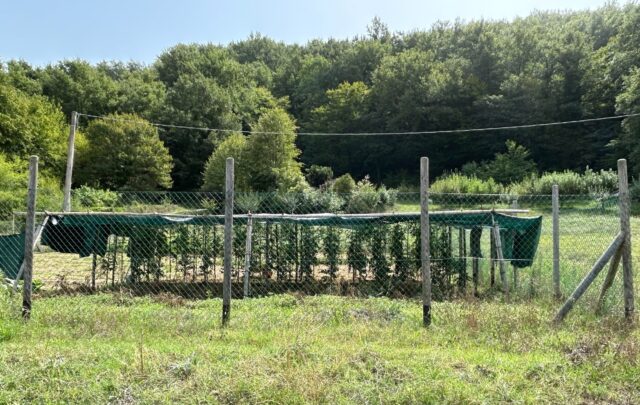
For the first time since the war, fruit and vegetables are to be found in an allotment-sized plot in the gardens of Buckingham Palace.
True, the yield will not be sufficient wholly to sustain the royal family and palace staff, while having a 39-acre back garden negates the inconvenience of allotment waiting list times of up to 40 years in some London boroughs.
But from now on, token quantities of fresh tomatoes, beans, onions, leeks, carrots and other homegrown produce will be transported to the palace kitchen.
(14 June 2009)
At the Guardian: Leo Hickman gives his verdict on the Queen’s new allotment.
Nearly Naked Riders Protest Oil Dependency
Lori Aratani, Washington Post
Tour de France?
More like Tour sans Pants.
Under semi-sunny skies, the District’s run of the fourth annual World Naked Bike Ride kicked off yesterday from Franklin Square downtown.
Technically, folks on hand for the event weren’t naked. D.C. has laws against indecent exposure, after all.
But several of the 30 or so riders found creative ways around that. A special tent was set up so riders could shed their street clothes and, using latex paint and other techniques, prepare for the ride in privacy.
“This is good for awareness,” said Chris Bracken, 24, of the District, who, along with two friends, was participating in her first naked ride. “Nudity is always a good way to get someone’s attention.”
The goal of the two-mile trip downtown was to protest oil dependency and promote bicycles as a transportation alternative. Of course, there are ways to make these statements while wearing clothes, but let’s face it — they’re not nearly as attention-getting.
(14 June 2009)
At TOD, westexas writes:
Given the demographics of the Peak Oil movement–generally middle aged to older guys–it occurred to me that ASPO could make a fair amount of money by pledging not to do a mass naked bike ride.


Comments
We changed commenting systems on September 10, 2026 as part of a site-wide functionality and security upgrade. Your past comments have not disappeared, and you can still log in with your old Disqus account credentials if you wish. Contact us with any questions.